Nuclear power is a hot political issue in South Korea
The main opposition New Politics Alliance for Democracy, which has more than 40% of the seats in the national parliament, has taken a negative stance on the use of nuclear power. In 2013, the alliance specified a “zero-nuclear” goal in its basic policy.
If the nuclear commission overturns the judgment about the safety of the Wolsong reactor, opposition parties and civic groups will certainly gather momentum.

 Debate heats up over aging nuclear reactor http://asia.nikkei.com/print/article/76444 KENTARO OGURA, Nikkei staff writer EOUL — Nuclear power is generating intense debate in South Korea.
At the center of the storm is the Wolsong No. 1 nuclear reactor in the city of Gyeongju, which is now offline as it reached the end of its 30-year design life. Some say it should be allowed to resume operations.
If its restart is not approved, the reactor will become the first such facility in South Korea to be decommissioned.
The Nuclear Safety and Security Commission has already delayed a decision on the issue twice — on Jan. 15 and Feb. 12. Attention is now focused on the South Korean nuclear watchdog’s next meeting, scheduled for Feb. 26.
The nuclear commission is acting on an application for an extension of the nuclear reactor’s operational life span, which was filed by Korea Hydro & Nuclear Power, a subsidiary of Korea Electric Power.
Mixed results
South Korea currently has 23 commercial nuclear reactors, which account for nearly 30% of the country’s total electricity generation. The 679-megawatt Wolsong No. 1 nuclear reactor is the country’s second-oldest.
The reactor’s 30-year design life expired in 2012. Although Korea Hydro & Nuclear Power had earlier applied for an extension of the reactor’s operational life span, the screening process dragged on. The facility was forced offline in 2012.
Stress test results from the reactor, which examined the facility’s resistance to unexpectedly large-scale natural disasters and other incidents, became available in January this year.
This was initially thought to have provided the nuclear commission with enough information for making a final decision on the future of the reactor. But different results were shown by the two stress tests — one conducted by the government-affiliated Korea Institute of Nuclear Safety and the other by a private-sector inspection team.
The two teams conducted inspections of the reactor in accordance with the government-set standards for stress tests. The Korea Institute of Nuclear Safety insists that the reactor “will be able to withstand a massive earthquake or any other serious disaster that could happen only once every 10,000 years.” But the private team claims that there are problems with the evaluation criteria for stress tests themselves and that “there are not sufficient grounds for arguing that the reactor should continue to operate.”
It is still unclear whether the nuclear commission will reach a decision at its next meeting, slated for Feb. 26.
Pain coming?
If the Wolsong No. 1 nuclear reactor is decommissioned, the South Korean government, which supports using atomic energy, as well as Korea Electric Power, will suffer serious blows.
The longer a nuclear reactor operates, the more profitable it gets. That’s because while initial investment costs are huge, operation costs, including for fuel, are low. Japan allows nuclear reactors to operate for up to 40 years, in principle. An extension of up to 20 years is also possible.
Kori No. 1, a 587MW nuclear reactor in the city of Busan, South Korea’s oldest such facility, started commercial operations 37 years ago. Even after its 30-year design life expired, it was allowed to continue operations for another 10 years.
The 650MW Kori No. 2 nuclear reactor is also still online despite being almost as old as the Wolsong No. 1 nuclear reactor. Kori No. 2 started commercial operations slightly later than Wolsong No. 1. Its design life is longer, at 40 years.
South Korean public opinion on nuclear energy was swayed by the Fukushima meltdowns in Japan in 2011. In 2014 unified local elections, an anti-nuclear candidate won a mayoral election in the city of Samcheok, Gangwon-do, where a new nuclear power plant is planned. In a referendum held later in the city, more than 80% of residents voted against the project.
The main opposition New Politics Alliance for Democracy, which has more than 40% of the seats in the national parliament, has taken a negative stance on the use of nuclear power. In 2013, the alliance specified a “zero-nuclear” goal in its basic policy.
If the nuclear commission overturns the judgment about the safety of the Wolsong reactor, opposition parties and civic groups will certainly gather momentum.
The South Korean government revised its long-term energy plan in 2014, making clear its policy of promoting the use of nuclear power in the future.
Even if the restart of the Wolsong No. 1 nuclear reactor is not approved, the government’s pro-nuclear stance will likely remain unchanged. New nuclear power plant construction projects, however, will probably face strong headwinds.
No comments yet.
1 This Month
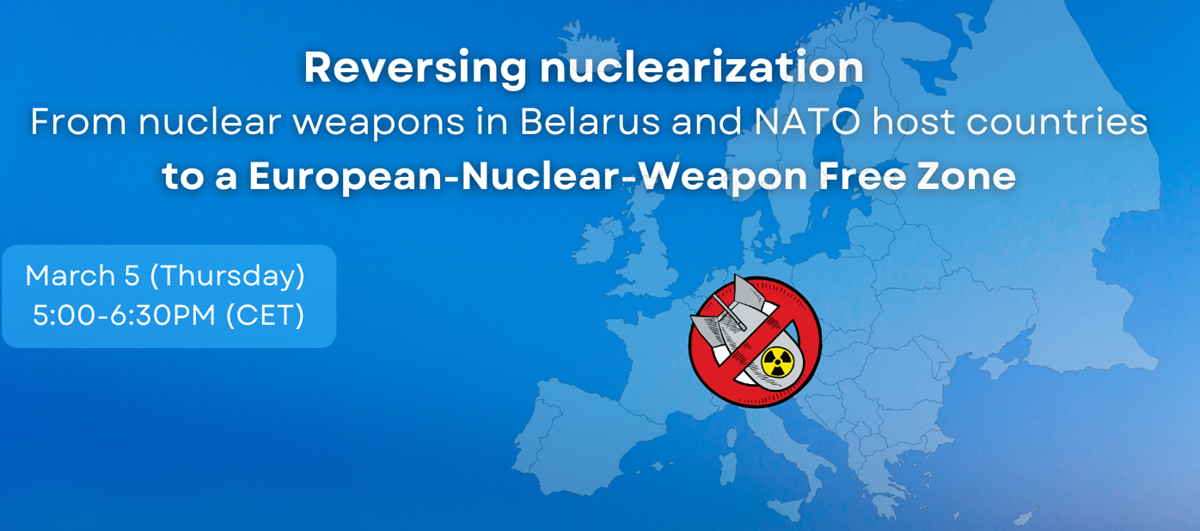
5 March -Online – Reversing nuclearization:
From nuclear weapons in Belarus and NATO host countries to a European-Nuclear-Weapon Free Zone
11am-12:30pm Eastern Time USA / 5pm-6:30pm CET

of the week – Advocating for a
nuclear free beach – https://www.samuellawrencefoundation.org/
The Samuel Lawrence Foundation advocates for a Nuclear Waste Free Beach at San Onofre, join us and take action!
10 March A LIVE WEBINAR THE REAL EFFECTS OF NUCLEAR POWER
What the Industry Isn’t Telling Us
1:00 PM Mountain, 2 pm Central, 3 pm Eastern. Live on the Keepers of the Water Facebook page

18 March Webinar @ 1 PM EST: An Assessment of SMR Projects: The Case of Canada
register for the zoom:
https://us02web.zoom.us/webinar/register/WN_o8BIIOUvQ2ONJR1nta65DQ#/registration

of the week – STOP SMALL MODULAR REACTORS IN CANADA
To see nuclear-related stories in greater depth and intensity – go to https://nuclearinformation.wordpress.com
-
Archives
- March 2026 (51)
- February 2026 (268)
- January 2026 (308)
- December 2025 (358)
- November 2025 (359)
- October 2025 (376)
- September 2025 (258)
- August 2025 (319)
- July 2025 (230)
- June 2025 (348)
- May 2025 (261)
- April 2025 (305)
-
Categories
- 1
- 1 NUCLEAR ISSUES
- business and costs
- climate change
- culture and arts
- ENERGY
- environment
- health
- history
- indigenous issues
- Legal
- marketing of nuclear
- media
- opposition to nuclear
- PERSONAL STORIES
- politics
- politics international
- Religion and ethics
- safety
- secrets,lies and civil liberties
- spinbuster
- technology
- Uranium
- wastes
- weapons and war
- Women
- 2 WORLD
- ACTION
- AFRICA
- Atrocities
- AUSTRALIA
- Christina's notes
- Christina's themes
- culture and arts
- Events
- Fuk 2022
- Fuk 2023
- Fukushima 2017
- Fukushima 2018
- fukushima 2019
- Fukushima 2020
- Fukushima 2021
- general
- global warming
- Humour (God we need it)
- Nuclear
- RARE EARTHS
- Reference
- resources – print
- Resources -audiovicual
- Weekly Newsletter
- World
- World Nuclear
- YouTube
-
RSS
Entries RSS
Comments RSS
 nuclear-news
Leave a comment