The nuclear industry ushered in the new Anthropocene Era
WE ARE SOWING THE SEEDS OF HAVOC. 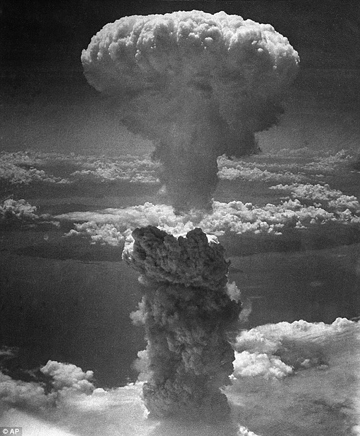 https://jpratt27.wordpress.com/2015/01/16/we-are-sowing-the-seeds-of-havoc/ JPRATT 27 Mark down this date: Monday, July 16, 1945 – the day that the first atomic bomb was detonated in the New Mexico desert.
It is also the geological marker of the start of the “Great Acceleration” – when mad-made activities began to take over from natural variability with such force that it has taken the human race just one generation to pretty much “stuff the planet.”
Welcome to the Anthropocene. Such geological epochs are normally measured in the thousands of years, but scientists have been able to narrow it down the switch from the Holocene to the Anthropocene to a single day because the radioactive isotopes emitted to the atmosphere and spread worldwide by that detonation have entered the sedimentary record. That has provided a unique signal.
Since then, humanity has altered the planet to such a degree (well, nearly 0.85C in fact) that Earth’s natural systems have been pushed beyond natural variability and now risk being destabilized – all in a single lifetime.
As James Dyke, lecturer in Complex Systems Simulation at University of Southampton, writes for The Conversation: “We are sowing the seeds of havoc on the Earth, it suggests, and the time is fast approaching when we will reap this harvest.” Giles Parkinson | Reneweconomy.com
China’s role in the nuclear marketing frenzy
 Chinese nuclear firms urged to boost presence overseas South China Morning Post 16 Jan 15 China will push its big nuclear firms to improve their competitiveness and boost their presence overseas as it bids to become one of the world’s dominant nuclear energy powers, Premier Li Keqiang said.
“To continue the struggle to become a strong nuclear energy power, China must comprehensively raise the industry’s competitive advantages, promote nuclear power equipment overseas…..
the country’s two biggest state nuclear companies, China National Nuclear Corp (CNNC) and China General Nuclear Corp (CGN), have agreed to invest in Britain’s Hinkley Point nuclear project.
Wang Zhongtang, the chief engineer at State Nuclear Power Technology Corp, said China was also well on its way to securing projects in Turkey and South Africa.
China has been making steady progress on its own third-generation reactors, including the Hualong I, jointly developed by CNNC and CGN for the purpose of winning overseas projects.
Zheng Hua, a deputy chief engineer with CGN’s reactor design unit, said last month that China hoped to develop Hualong I reactors in Britain, building on the agreement to invest in Hinkley Point.
China was also considering a plan to merge CNNC and CGN in order to pool their resources and improve their competitiveness overseas, sources said late last year. http://www.scmp.com/business/economy/article/1680957/chinese-nuclear-firms-urged-boost-presence-overseas
Japanese government mulls putting the nuclear financial burden on to consumers, as in UK


 Eiji Oguma: Planned protective measures show real cost of nuclear power Asahi Shimbun January 15, 2015 The industry ministry is discussing a new protective measure for nuclear power plants: the contract for difference (CfD) system.
The CfD, introduced in Britain, guarantees that electricity will be purchased at a fixed rate over a certain period of time.
The purchase price is calculated in consideration of the plant’s total cost, including future expenses, such as those for disposing of spent nuclear fuel and decommissioning reactors.
An agreement has been reached to apply the system to one nuclear power plant in Britain, with the reference purchase price set at 8.95 pence (around 15 yen or $0.13) per kilowatt-hour. That is higher than the corresponding price for a land-based wind farm, and comes with a longer guarantee period of 35 years.
A nuclear plant requires so much initial investment that there is no guarantee the cost will be recovered under the market economy. That is why the CfD and other protective measures for nuclear plants are being discussed in Japan ahead of the liberalization of the power retail market slated for 2016.
But various objections have been raised to the introduction of such measures.
First, the purchase price will likely be reflected in electricity rates, increasing the financial burden on consumers……….
Second, the decision process is not transparent………http://ajw.asahi.com/article/views/column/AJ201501150006
China well up in the throng to market nuclear technology to other countries
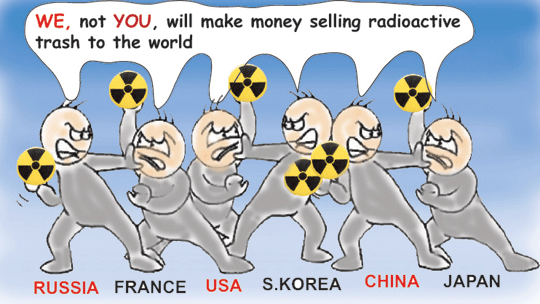
 China ready to sell nuclear fuel for NPPs in Ukraine and Eastern Europe — CNNC source http://itar-tass.com/en/world/771570 January 16, 15 Ukrainian energy sector workers are facing technical problems with American nuclear fuel loading into the Soviet-type reactors BEIJING, January 16. /TASS/. China is ready to sell fuel for nuclear power plants in Ukraine and Eastern Europe, a China National Nuclear Corporation (CNNC) source told TASS on Friday on the sidelines of the World Nuclear Spotlight forum.
According to the source, Chinese companies intend to sell the fuel to the countries that operate various types of Soviet-and Russian-made NPPs. Aside from Ukraine, China is viewing the possibility of exporting nuclear fuel to Hungary and Romania.
The source said Ukrainian energy sector workers are facing technical problems with American nuclear fuel loading into the Soviet-type reactors.
At the moment China is actively buying uranium mines with a view to exporting uranium to other countries in the foreseeable future. Asked about Russia’s possible claims to the Chinese manufacturers of nuclear fuel, he said that “there are no special restrictions.” “Despite the related agreements, the Russian side is unlikely to stop the supplies,” said the CNNC representative.
Russia and China have been actively developing co-operation in the nuclear sphere for many years. For example, State Atomic Energy Corporation Rosatom and CNNC signed a protocol to launch the discussion of possible formats of co-operation in the sphere of construction of nuclear power plants in third countries.
The Convention on Supplementary Compensation, or CSC, for nuclear damage, will come into force on April 15: Japan signed
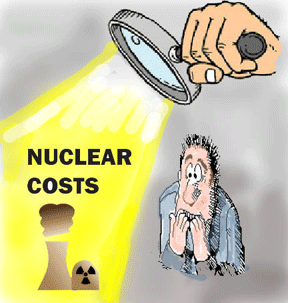
 Nuclear-Accident Fund Opens as Japan Signs After 17 Years, Bloomberg, By Jonathan Tirone Jan 16, 2015 Japan signed on to a global nuclear-compensation treaty in Vienna that will create a fund to help victims of accidents like the one that devastated Fukushima Dai-Ichi in 2011.
The Convention on Supplementary Compensation, or CSC, for nuclear damage, will come into force on April 15. The decision taken by Japan, with the world’s third-biggest installed nuclear capacity, ended a 17-year wait for the treaty to become legally binding……….
The convention will allow countries and companies to offset liability in the event of a nuclear accident. The U.S., with the world’s largest installed nuclear-power base, has championed the convention but struggled to get other leading atomic powers on board. Argentina, Morocco, Romania and theUnited Arab Emirates are the only other signatories………
Countries have struggled to reassure populations about the safety of nuclear power after a 2011 tsunami caused three Japanese reactors to melt down and forced 160,000 people to evacuate their homes. At a meeting next month in the Austrian capital, nations will consider a Swiss-led European initiative forcing nuclear operators to mitigate against accidents.
While the new compensation fund is intended to encourage nuclear trade between companies located in countries adhering to the pact, it won’t come without costs for U.S. manufacturers. Nuclear suppliers will be on the hook to pay at least $70 million in compensation in the event of an accident, according to the U.S. Department of Energy, which asked industry for comments last month.
“Initial great expectations for the CSC have been tempered by the long road to its entry into force,” James Glasgow, a partner at Washington-based Pillsbury Winthrop Shaw LLP, wrote last month in an article sent via e-mail. There are still “doubts that the CSC will gain sufficient members to constitute a global regime.”
To contact the reporter on this story: Jonathan Tirone in Vienna at jtirone@bloomberg.net
To contact the editors responsible for this story: Alan Crawford at acrawford6@bloomberg.net Ben Sills, Leon Mangasarian http://www.bloomberg.com/news/2015-01-16/nuclear-accident-fund-opens-as-japan-signs-after-17-years.html
Barack Obama and David Cameron on diplomacy with Iran
 Obama: There’s A Less Than 50/50 Chance Of Nuclear Deal With Iran NPR, EYDER PERALTA
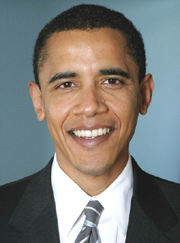 President Obama warned Congress that if they passed further sanctions against Iran, he would veto them.
The two leaders, speaking to the press after a series of bilateral meetings, stood shoulder to shoulder on all the issues that came before them. Cameron said that on Iran, he had been calling U.S. senators to tell them he didn’t think new sanctions would work against Iran.
During the almost two-hour conference, Obama and Cameron touched on terrorism, climate change, cyber security and foreign policy.
Here are some highlights of what they said:
— President Obama said the chances of a diplomatic deal with Iran are “probably less than 50/50.”
— But, he said, adding more sanctions would likely scuttle the deal and Iran would be “able to maintain that the reason they ended negotiations is because the U.S. was acting in bad faith.”
— “Congress needs to show patience,” Obama said, adding that at the moment a diplomatic solution is the “the best possible outcome that we can arrive at right now.”
— Cameron said he told U.S. senators that “it is the opinion of the U.K. that further sanctions at this point won’t actually help to bring the talks to a successful conclusion.”
— On the threat from violent extremism, Obama said: “I do not consider this an existential threat… this is one that we will solve.”
— The United States, unlike some parts of Europe, Obama said, has a Muslim population that “feel themselves to be Americans.”………
Subsidies to coal and nuclear power cost German electricity consumers €40bn a year
Fossils and nuclear ‘twice RE’s cost’ to German taxpayers http://www.rechargenews.com/wind/1388925/fossils-and-nuclear-twice-res-cost-to-german-taxpayers By Bernd Radowitz in Berlin , January 16 2015 Subsidies and hidden costs of fossil-fired and nuclear power in 2015 are slated to be about double the amount German consumers pay via a surcharge on their electricity bill to finance the expansion of renewable energies, claims a study by the forum for ecological and social market economy (FÖS) commissioned by Greenpeace Energy.
German electricity consumers via the EEG surcharge pay about €20bn ($23bn) per year to finance the build-up of solar, wind, biomass and other renewable energies, while the hidden costs of conventional power sources both in 2014 and 2015 reach some €40bn a year, the study says.
Included are direct subsidies and financial concessions, as well as external costs society has to come up with for environmental damage or the final storage of nuclear waste.
“Renewable energies aren’t just cleaner, but in the end also significantly cheaper than coal or nuclear,” says Marcel Keiffenheim, head of politics and communication atGreenpeace Energy, an independent power provider.
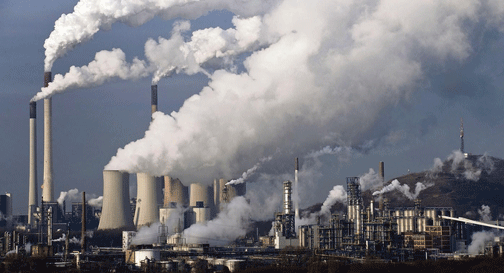
“But the problem is that the high costs of coal and nuclear are hidden from power clients and are being paid indirectly via taxes and other contributions.
The scientists behind the study emphasise that renewable energies aren’t driving up the cost of power supply as had been argued frequently in fierce discussions in Germany about power prices – but on the contrary replace more expensive energy sources that have higher costs to taxpayers and society.
“If utilities had to take into account those additional costs in their calculations, renewable energies already today to a great degree would be competitive,” said Swantje Küchler, who led the study for FÖS.
A kilowatt hour of wind power from newly-built machines now costs between €0.051 and €0.087, while nuclear power including the hidden costs would come at a price of €0.185-€0.498, lignite at a cost of €0.126-€0.141, and hard coal at a cost of €0.147-€0.167, the study says.
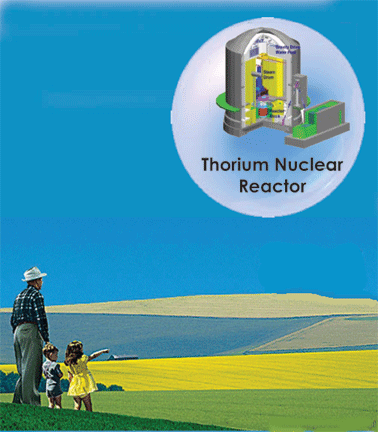
Why won’t thorium nuclear power work? It’s the economics, stupid!
 January 16, 2015, Jortiz3
Contrary to popular belief, the reason light-enriched-uranium reactors are used, and not thorium or breeder reactors, is due to simple economics. To run breeder reactors and thorium reactors, the neutron density and heat density must be so great that high-temperature coolants must be used throughout the core.
The systems used to manage these coolants are as exotic as the coolants are. This leads to increased costs, on the order of 20%. This 20% is enough that utilities simply choose light-enriched-uranium so that the reactor core can be cool enough that cooling with water is possible and savings can offset the cost of mining the ridiculous quantities of natural uranium required.
Commemoration of the Manhattan Project ignores those who lived downwind and paid the ultimate price
Thousands of Hanford Downwinders — people who lived downwind from or worked at Hanford — have become ill or have died of cancers as the result of radiation exposure.
The legacy of the Manhattan Project is not represented solely by the atomic science. It is also reflected in its destructive effects on the human body, a cautionary tale learned from the broken lives of Downwinders not just near Hanford but around the world. The human toll of this project remains a story that must not be silenced or ignored.
Don’t throw history out with the radioactive bathwater http://america.aljazeera.com/opinions/2015/1/manhattan-projectnationalhistoricalparkhanfordnuclearplant.html January 15, 2015 by Trisha Pritikin @TrishaPritikin On Dec. 12, Congress passed legislation to create the Manhattan Project National Historical Park at three nuclear plants in Washington state, New Mexico and Tennessee. President Barack Obama signed the bill into law on Dec. 19. The park will preserve historic buildings, structures and nuclear artifacts at the sites where the first atomic bombs were created. Public officials in Richland, Washington, near the Hanford B Reactor are rejoicing. Tourism promoters hope that the Hanford plant will become a major historical tourist attraction.
But not everyone is celebrating. As a victim of radiation discharged downwind from that plant, my feelings are mixed.
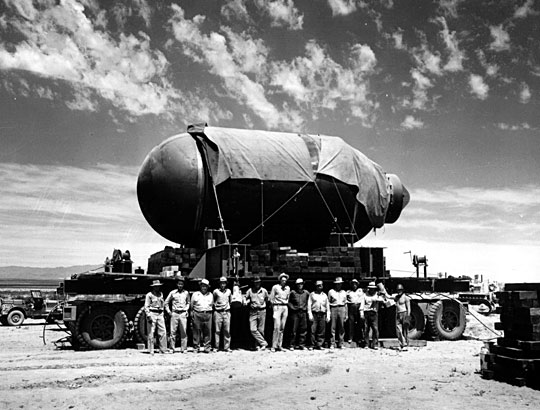
My father was an engineer at Hanford from the 1940s to ’60s. I spent my childhood playing in the poisoned Columbia River and drinking radioactive milk. Both my parents died of cancer related to Hanford radiation exposure. I’m alive today, I believe, because I had my thyroid gland removed at the first sign of cancer. I now live with tetany, pain and bone-numbing fatigue.
Constructed during World War II, the Hanford B Reactor was the first full-size weapons-grade plutonium production reactor in the world. It made plutonium for the first test of an atomic bomb, the Trinity test, in 1945, and for the atomic bomb detonated over Nagasaki, Japan. Continue reading
The nuclear bomb as the start of a new era – the Anthropocene Age
the beginning of the Anthropocene could be considered to be drawn at the moment of detonation of the world’s first nuclear test: on July 16th 1945. The beginning of the nuclear age, it marks the historic turning point when humans first accessed an enormous new energy source — and is also a time level that can be effectively tracked within geological strata, using a variety of geological clues
Did the Anthropocene begin with the nuclear age?, Science Daily January 15, 2015 Source:University of Leicester
….. the Anthropocene, a new epoch in Earth history proposed by the Nobel Prize-winning atmospheric chemist Paul Crutzen just 15 years ago. Since then the idea has spread widely through both the sciences and humanities.
But if the Anthropocene is to be a geological epoch — when should it begin?……..
Now, members of the international working group formally analysing the Anthropocene suggest that the key turning point happened in the mid-twentieth century. This was when humans did not just leave traces of their actions, but began to alter the whole Earth system…….
It included the start, too, of the nuclear age, when artificial radionuclides were scattered across the Earth, from the poles to the Equator, to be leave a detectable signal in modern strata virtually everywhere.
The proposal, signed up to by 26 members of the working group, including lead author Dr Jan Zalasiewicz, who also chairs the working group, and Professor Mark Williams, both of the University of Leicester’s Department of Geology, is that the beginning of the Anthropocene could be considered to be drawn at the moment of detonation of the world’s first nuclear test: on July 16th 1945. The beginning of the nuclear age, it marks the historic turning point when humans first accessed an enormous new energy source — and is also a time level that can be effectively tracked within geological strata, using a variety of geological clues……… http://www.sciencedaily.com/releases/2015/01/150115083044.htm
Ethics , religion and climate change
Climate Change and Intergenerational Ethics, St Louis post Dispatch January 14, 2015 • Kate Lovelady Humanism, despite its name, is concerned not only with humanity. People exist in and only because of a fantastically complex natural system, and therefore humanists believe that an essential part of living ethically is living in a way that is sustainable for future generations as well as for other species.
Traditional western thought, religious and secular, has tended to see the rest of nature as a tool for human happiness and progress, but more and more people of every worldview are coming to understand humanity as co-residents of the Earth, as one part of nature–the only (that we know of) self-conscious part, and therefore having a special opportunity and responsibility.
The economy is not alive. It is important; it is one of the ways humans organize ourselves to survive and to pursue happiness. But despite legal fiction, businesses are not people, and the economy is a being and cannot be killed. Humans and other creatures can be killed, and they will be by climate disruption, which will destroy cities and some entire low-lying island nations, create environmental refugees, and result in avoidable deaths.
Many who want to do nothing about climate change now, imagine future solutions of far-fetched plans to trap carbon in new ways or reflect sunlight from the upper atmosphere—meaning they are unwilling to face economic challenges, but they are willing to burden future generations with unknown and possibly enormous and long-lasting dangerous effects of major geo-engineering. This is immoral.
 The consequences of climate disruption will seriously affect the lives of today’s children, and continue to fall on people far into the future. In American political arguments, budget deficits are routinely called immoral because of the burden they might impose on our children; the burden of climate change and environmental degradation will be much greater.
We need a new morality of intergenerational ethics. Never before have humans been able to make decisions that have such drastic impacts on future generations. We’re not used to thinking that long-term. But we must learn to; our ethics must evolve to match our technological capabilities. Future generations are completely at our mercy, since they don’t even exist yet. We have to make choices as if they will exist, and we have an ethical obligation to act in their interest, because they are helpless.
Religious communities should be at the forefront of a new movement for intergenerational environmental justice, in several ways:……….
Religions teach interdependence, a value that opposes the mainstream culture of the radically independent consumer in which the “best” life is supposedly the one in which you never have to share anything with others………
If you’re interested in these issues and how your congregation or religious tradition can help, join Climate Reality on Tuesday January 27, at 7pm, at Ladue Chapel for a panel discussion on “Faith, Ethics, Social Justice and Climate Change.” http://www.stltoday.com/lifestyles/faith-and-values/civil-religion/kate-lovelady/climate-change-and-intergenerational-ethics/article_1736901c-9c1f-11e4-844d-8b26cdb28539.html
Pope Francis says we are primarily responsible for climate change
 ‘Man has gone too far’: Pope Francis says we are primarily responsible for climate change, SMH, January 16, 2015 Lindsay Murdoch “…..Wading into the climate change debate on board the papal plane, the Pope told journalists he hoped negotiators at the next round of climate change talks in Paris in November would take a courageous stand to protect the environment.
“I don’t know if it is all (man’s fault) but the majority is, for the most part, it is man who continuously slaps down nature,” he said.
“We have in a sense taken over nature. I think we have exploited nature too much.”
The comments were Pope Francis’ clearest on the environment since he pledged to make the issue a priority on the day of his installation as Pope in 2013.
“We have, in a sense, lorded it over nature, over Sister Earth, over Mother Earth,” said the leader of 1.2 billion Catholics, who has in the past spoken about the need to protect the environment. “I think man has gone too far,” he said……http://www.smh.com.au/world/man-has-gone-too-far-pope-francis-says-we-are-primarily-responsible-for-climate-change-20150115-12rcwm.html
A Charlie Hedron review of A Stage Play about France’s Nuclear History
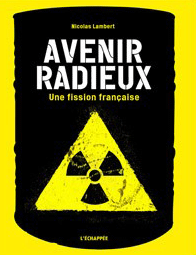 We must keep in mind that all the words chosen by Nicolas Lambert were actually spoken. This is an element of the play that gives the performance its considerable impact.
Nicolas Lambert prepared this play about nuclear for seven years, poring over heaps of articles and books, visiting nuclear power plants, attending public debates on the EPR reactor proposed for Penly, meeting union leaders, intermediaries, militants, corporate spokespersons for Areva and EDF—and then March 11, 2011: Fukushima.
A Radiant Future: A Stage Play about France’s Nuclear History Nuclear Free by 2045? By Dennis 15 Jan 15, (translation by Dennis) Two months before Charlie Hebdo became a famous name, I came across a youtube video of the French actor Nicolas Lambert performing his play Avenir Radieux (A Radiant Future). It was just a short clip, and it seems no other video recording was made of it, but I was intrigued. I ordered the book, read it, then contacted the publisher to ask if I could take it on as a translation project. The translation will be finished soon, so this is some advance publicity for the English edition. I’m not an agent for the publisher, but if someone out there in the publishing world is interested, they can contact me and I will put them in touch with the publisher (Editions L’Echappée, Paris) or the author. Part 1 is a review that appeared in Charlie Hebdo’s special nuclear edition in 2012, written by one of the persons injured in the January 7th shootings. Part 2 is the promotional blurb from the French edition.
Part 1
Review of A Radiant Future translated from French published in The Nuclear Swindle (L’Escroquerie Nucléaire), special edition of Charlie Hebdo, September 2012.
The Seditious Theater of Nicolas Lambert by Fabrice Nicolino
Nicolas Lambert invented a new genre that could be called investigative theater. In A Radiant Future: A French Fission he lights up the nuclear lobby while keeping the audience laughing……… Continue reading
22 Fukushima-style reactors still operating in USA
Japan closing 5 reactors but U.S. still running its Fukushimas, Beyond Nuclear 17 Jan 15 The Japanese nuclear industry has announced it will permanently close five more of its remaining 48 “operable” nuclear reactors by March 2015, leaving the country with 43 reactors “operable” but still not actually “operating.” Two of the plants to be decommissioned are the same GE Mark I boiling water reactors identical to Fukushima. Despite the political landscape in Japan still promoting nuclear power, the anti-nuclear movement there continues to campaign to keep all of Japan’s reactors closed indeifinitely.
Nuclear industry claims that it is not dead (just dying, perhaps)
 “Operable” is not quite the same as “operating”http://www.beyondnuclear.org/just-the-facts/2015/1/15/operable-is-not-quite-the-same-as-operating.html The international investment bank, UBS, has declaredold style centralized generation, like nuclear and fossil fuels “the dinosaur of the future energy system.” Yet the nuclear industry continues to claim, like the old man inMonty Python and the Holy Grail, that it is “not dead.”
UBS exorts its customers to “join the revolution.” The bank predicts that “By 2025, everybody will be able to produce and store power,” using a decentralized system that makes fissile and fossil fuel systems, “Too big, too inflexible, not even relevant for backup power in the long run.” Meanwhile, the World Nuclear News claims nuclear generating capacity rose in 2014, and trumpets that 2015 began “with 436 operable reactors.” (Since there were 435 in 2014 according to WNN, the boast is rather a hollow one.)
But as the 2014 World Nuclear Industry Status Report reveals, the key word here is “operable” rather than the more truthful “operating,” bringing the true number down to 388 for 2014, “50 fewer than the peak in 2002.” Nuclear may indeed not be dead, yet. But it is well on its way.
1 This Month
Chernobyl: The Lost Tapes – A good documentary on Chernobyl on SBS available On Demand for the next 3 weeks– https://www.sbs.com.au/ondemand/tv-program/chernobyl-the-lost-tapes/2352741955560

of the week–London Campaign for Nuclear Disarmament

Tell the Ukrainian Government to Drop Prosecution of Peace Activist Yurii Sheliazhenko
To see nuclear-related stories in greater depth and intensity – go to https://nuclearinformation.wordpress.com
-
Archives
- April 2026 (114)
- March 2026 (251)
- February 2026 (268)
- January 2026 (308)
- December 2025 (358)
- November 2025 (359)
- October 2025 (376)
- September 2025 (257)
- August 2025 (319)
- July 2025 (230)
- June 2025 (348)
- May 2025 (261)
-
Categories
- 1
- 1 NUCLEAR ISSUES
- business and costs
- climate change
- culture and arts
- ENERGY
- environment
- health
- history
- indigenous issues
- Legal
- marketing of nuclear
- media
- opposition to nuclear
- PERSONAL STORIES
- politics
- politics international
- Religion and ethics
- safety
- secrets,lies and civil liberties
- spinbuster
- technology
- Uranium
- wastes
- weapons and war
- Women
- 2 WORLD
- ACTION
- AFRICA
- Atrocities
- AUSTRALIA
- Christina's notes
- Christina's themes
- culture and arts
- Events
- Fuk 2022
- Fuk 2023
- Fukushima 2017
- Fukushima 2018
- fukushima 2019
- Fukushima 2020
- Fukushima 2021
- general
- global warming
- Humour (God we need it)
- Nuclear
- RARE EARTHS
- Reference
- resources – print
- Resources -audiovicual
- Weekly Newsletter
- World
- World Nuclear
- YouTube
-
RSS
Entries RSS
Comments RSS
 nuclear-news