Stopping global warming necessitates closing coal and gas energy resources
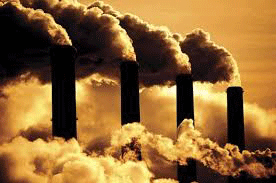 Massive fossil fuels cut is last chance to limit global warming, researchers say http://www.euractiv.com/sections/energy/massive-fossil-fuels-cut-last-chance-limit-global-warming-researchers-say-311133 9 Jan 15 While the world’s fossil fuel reserves are already limited, new research published in Naturemagazine argues that these energy sources should already be out of commission, in order to salvage a 50% chance of stopping global warming. EurActiv Germany reports.
According to the study, approximately 80% of current technically and economically recoverable coal, 50% of gas reserves, and 30% of oil reserves would have to remain untapped over the next 40 years to slow global warming.
When these are burned to generate energy, CO2 is created – a greenhouse gas that absorbs the earth’s heat radiation before it can escape into outer space.
There is at least a 50% chance that global warming could be reduced to pre-industrial levels, said researchers Paul Ekins and Christophe McGlade.
But keeping global temperatures at such tolerable levels, can only be achieved if exploitation of these fuels is given up, they indicated. Only one-third of fossil fuel reserves can be tapped
At the moment, 2,900 gigatonnes of fossil fuel reserves worldwide are technically and economically recoverable. But as earlier studies have already calculated, only around 1,100 gigatonnes of carbon-dioxide can be emitted while still upholding the 2° climate target.
This means leaving a large amount of reserves untouched, a painful move for countries that are economically dependent on their fossil fuel resources.
With the help of computer models, the researchers illustrate which regions must considerably reduce their output. To do this, they use a variety of data including from the German Federal Institute for Geosciences and Raw Materials, the International Energy Agency and the Global Energy Assessment.
Middle East must abandon half of its oil reserves
Taking into consideration the respective regional costs of extraction and assumed future technological development, the researchers then calculated which resources could be extracted the most cost-effectively.
The outcome showed the Middle East would have to leave about half of its recoverable oil reserves – around 260 billion barrels – in the ground. But the United States and Australia would have to give up 90% of their currently recoverable coal resources.
China, India, Africa and the Middle East, would also have to significantly limit their extraction of unconventional gas.
Meanwhile, extraction of fossil fuel reserves in the Arctic should be avoided completely, the researchers write.
“A question of compensation”
Although the study is not the first of its kind, its strength is in detailed division of regions, Michael Jakob and Jérôme Hilaire from the Potsdam Institute for Climate Impact Research wrote in a commentary on the Nature study.The formulated target for poor countries, whose poverty could grow due to a stricter climate policy, raises certain concerns, the researchers write.
“Given the crucial role of energy in economic development, how can countries be convinced to forgo the use of fossil fuels if this is perceived to imperil primary policy objectives such as poverty reduction?” asked Jakob.
For this reason, successful climate policy comes down to compensation, that affected countries could receive from an international fund, he said.
But to do this, industrialised countries would have to create large incentives, the two researchers argue.
A study by the German Federal Institute for Geosciences and Raw Materials shows that as it stands, a large part of worldwide non-renewable energy resources is still available.
Despite predicted increases in demand, particularly due to population and economic growth in developing countries, natural gas and coal could still be supplied for many decades.
No comments yet.
1 This Month
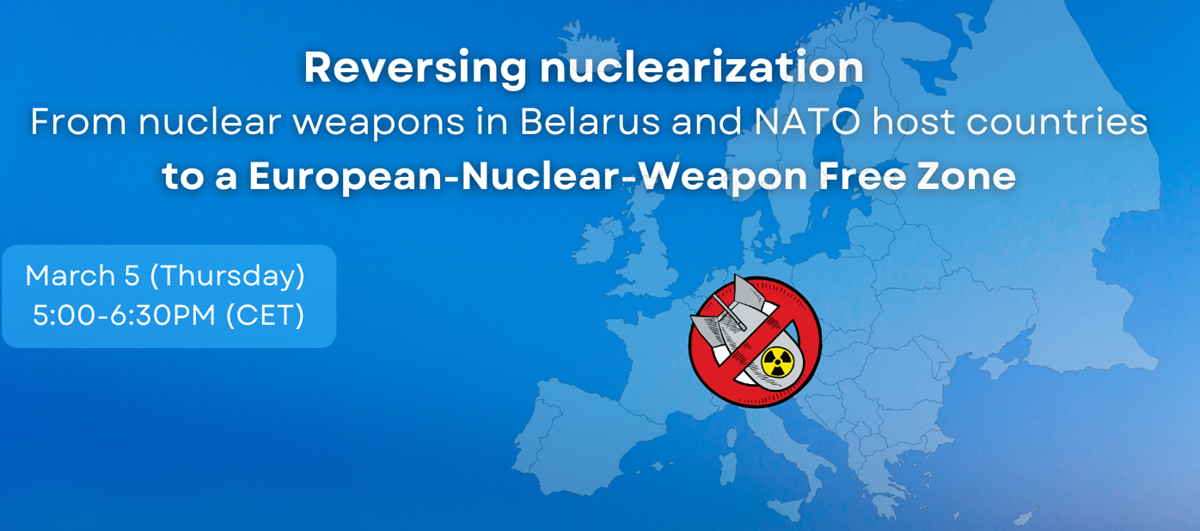
5 March -Online – Reversing nuclearization:
From nuclear weapons in Belarus and NATO host countries to a European-Nuclear-Weapon Free Zone
11am-12:30pm Eastern Time USA / 5pm-6:30pm CET

of the week – Advocating for a
nuclear free beach – https://www.samuellawrencefoundation.org/
The Samuel Lawrence Foundation advocates for a Nuclear Waste Free Beach at San Onofre, join us and take action!

10 March A LIVE WEBINAR THE REAL EFFECTS OF NUCLEAR POWER
What the Industry Isn’t Telling Us
1:00 PM Mountain, 2 pm Central, 3 pm Eastern. Live on the Keepers of the Water Facebook page

18 March Webinar @ 1 PM EST: An Assessment of SMR Projects: The Case of Canada
register for the zoom:
https://us02web.zoom.us/webinar/register/WN_o8BIIOUvQ2ONJR1nta65DQ#/registration

of the week – STOP SMALL MODULAR REACTORS IN CANADA
To see nuclear-related stories in greater depth and intensity – go to https://nuclearinformation.wordpress.com
-
Archives
- March 2026 (51)
- February 2026 (268)
- January 2026 (308)
- December 2025 (358)
- November 2025 (359)
- October 2025 (376)
- September 2025 (258)
- August 2025 (319)
- July 2025 (230)
- June 2025 (348)
- May 2025 (261)
- April 2025 (305)
-
Categories
- 1
- 1 NUCLEAR ISSUES
- business and costs
- climate change
- culture and arts
- ENERGY
- environment
- health
- history
- indigenous issues
- Legal
- marketing of nuclear
- media
- opposition to nuclear
- PERSONAL STORIES
- politics
- politics international
- Religion and ethics
- safety
- secrets,lies and civil liberties
- spinbuster
- technology
- Uranium
- wastes
- weapons and war
- Women
- 2 WORLD
- ACTION
- AFRICA
- Atrocities
- AUSTRALIA
- Christina's notes
- Christina's themes
- culture and arts
- Events
- Fuk 2022
- Fuk 2023
- Fukushima 2017
- Fukushima 2018
- fukushima 2019
- Fukushima 2020
- Fukushima 2021
- general
- global warming
- Humour (God we need it)
- Nuclear
- RARE EARTHS
- Reference
- resources – print
- Resources -audiovicual
- Weekly Newsletter
- World
- World Nuclear
- YouTube
-
RSS
Entries RSS
Comments RSS
 nuclear-news
Leave a comment