Alaska’s Renewable Energy project recognised as awinner
Project review: 2014 CESA installations, Part I, Renewable Energy Focus 09 January 2015 Reg Tucker
Biennial program recognizes outstanding state and municipal programs that have accelerated the adoption of clean energy technologies. Part I of this series provides a sampling of a few case studies behind the award-winning projects and initiatives.
The Clean Energy States Alliance (CESA), a national, nonprofit coalition of public agencies working together to advance clean energy, recently announced the recipients of the 2014 State Leadership in Clean Energy Awards. According to CESA, the winning programs exemplify the ground-breaking work being done by states and municipalities in the arena of clean energy development and deployment.The programs nominated for these awards were submitted by state and municipal clean energy agencies from across the country. The entries were reviewed by a team of distinguished, independent judges and were scored based on public benefits and results, cost effectiveness, leadership and innovation and the ability to replicate.
- The Alaska Energy Authority and the Kodiak Energy Association for Kodiak, Alaska: A 99% Renewable Energy Community………
-
Project #1: Alaska Energy Authority/KEAAlaska’s Renewable Energy Fund, managed by the Alaska Energy Authority, has catalyzed a movement towards renewable energy across Alaska by funding 277 renewable energy grants totaling $250 million over the past seven years. With support from the Fund, strong local leadership, and hard work, the Kodiak Electric Association (KEA) has achieved more than 99 per cent renewable energy electric generation. KEA has developed a renewable energy grid that includes hydro power, wind, and battery storage technologies.Alaska’s Renewable Energy Fund has made it possible for communities and villages across the state to study their renewable energy resources, conduct proper engineering designs for those projects that are economically and technically feasible, and construct their projects for the greatest public benefit possible. In the case of Kodiak Electric, which serves about 6,300 people on Kodiak Island, prior to the Renewable Energy Fund’s start in 2008, KEA generated approximately 60 per cent of its electricity from hydro power and 40 per cent from diesel.
Through multiple successful applications to the Renewable Energy Fund, KEA was able to conduct feasibility studies, design, permit, and construct two phases of wind development, adding six 1.5MW turbines on Pillar Mountain, just above the City of Kodiak. During phase two of the project, KEA added two 1.5MW (1MWhr) battery storage systems that provide 30 to90 seconds of bridging power to allow ramping up of output of a nearby hydroelectric system at times when the wind output decreases rapidly.
The addition of the battery systems has allowed the wind to be used without curtailment, and it allows more water to be stored at the hydro facility during times when the wind blows. Additionally, and with the financial support of the Renewable Energy Fund, a third hydroelectric turbine was added to the existing Terror Lake powerhouse to increase output by an additional 13.8 MW. Since the end of 2013, KEA has been able to shut off the diesel generators and allow the battery/hydro mix to fulfill their spinning reserve requirement. They also have enough hydro redundancy to allow for maintenance of hydro turbines without burning diesel fuel to generate power. For the first nine months of 2014, KEA generated 99.7 per cent of its power from renewable energy, resulting in significantly lower energy costs for the community by reducing its diesel fuel purchases to nearly zero.
KEA estimates that it saved its small community about $13 million in reduced fuel costs through the end of 2013. Over $4 million per year is now saved by the community, to the benefit of residents, seafood processors, the Coast Guard Base, and all other electrical customers. It has also cut diesel emissions to zero except for a few hours per year, resulting in cleaner local air and dramatically reduced greenhouse gas emissions…………http://www.renewableenergyfocus.com/view/41059/project-review-2014-cesa-installations-part-i/
No comments yet.
1 This Month
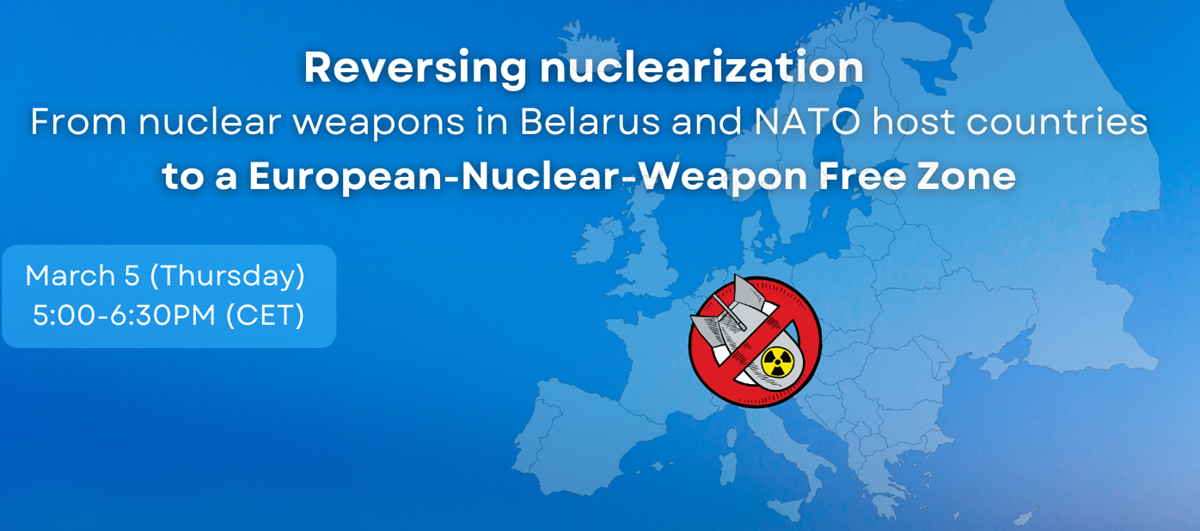
5 March -Online – Reversing nuclearization:
From nuclear weapons in Belarus and NATO host countries to a European-Nuclear-Weapon Free Zone
11am-12:30pm Eastern Time USA / 5pm-6:30pm CET

of the week – Advocating for a
nuclear free beach – https://www.samuellawrencefoundation.org/
The Samuel Lawrence Foundation advocates for a Nuclear Waste Free Beach at San Onofre, join us and take action!

10 March A LIVE WEBINAR THE REAL EFFECTS OF NUCLEAR POWER
What the Industry Isn’t Telling Us
1:00 PM Mountain, 2 pm Central, 3 pm Eastern. Live on the Keepers of the Water Facebook page

18 March Webinar @ 1 PM EST: An Assessment of SMR Projects: The Case of Canada
register for the zoom:
https://us02web.zoom.us/webinar/register/WN_o8BIIOUvQ2ONJR1nta65DQ#/registration

of the week – STOP SMALL MODULAR REACTORS IN CANADA
To see nuclear-related stories in greater depth and intensity – go to https://nuclearinformation.wordpress.com
-
Archives
- March 2026 (51)
- February 2026 (268)
- January 2026 (308)
- December 2025 (358)
- November 2025 (359)
- October 2025 (376)
- September 2025 (258)
- August 2025 (319)
- July 2025 (230)
- June 2025 (348)
- May 2025 (261)
- April 2025 (305)
-
Categories
- 1
- 1 NUCLEAR ISSUES
- business and costs
- climate change
- culture and arts
- ENERGY
- environment
- health
- history
- indigenous issues
- Legal
- marketing of nuclear
- media
- opposition to nuclear
- PERSONAL STORIES
- politics
- politics international
- Religion and ethics
- safety
- secrets,lies and civil liberties
- spinbuster
- technology
- Uranium
- wastes
- weapons and war
- Women
- 2 WORLD
- ACTION
- AFRICA
- Atrocities
- AUSTRALIA
- Christina's notes
- Christina's themes
- culture and arts
- Events
- Fuk 2022
- Fuk 2023
- Fukushima 2017
- Fukushima 2018
- fukushima 2019
- Fukushima 2020
- Fukushima 2021
- general
- global warming
- Humour (God we need it)
- Nuclear
- RARE EARTHS
- Reference
- resources – print
- Resources -audiovicual
- Weekly Newsletter
- World
- World Nuclear
- YouTube
-
RSS
Entries RSS
Comments RSS
 nuclear-news
Leave a comment