Continuing opposition to India’s Kudankulam nuclear facility
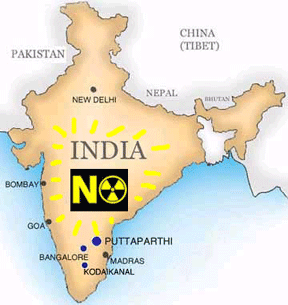 Activists, however, have been calling for Kudankulam’s shutdown. “We are really afraid,” said Anthony Rayappan Suresh, a fisherman working along the shoreline in Idintha Karai and wearing a skull-and-bones antinuclear T-shirt. “We’ve seen the earlier tsunami, and this plant is not that safe.”
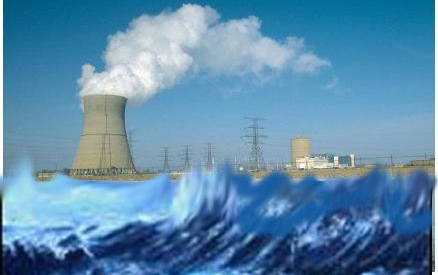 India’s Nuclear Ambitions Rattle Tsunami-Hit Coast Locals Fear Fukushima Scenario at Plant on Shores Ravaged in ‘04 By JESSE PESTA and R. JAI KRISHNA, WSJ Dec. 21, 2014 IDINTHA KARAI, India—Here along India’s southern coast—ravaged by tsunami waves 10 years ago—the country’s newest nuclear plant towers over the shoreline.
It is one of India’s biggest nuclear plants, and in the coming weeks it is expected to officially start selling power into the Indian grid. The Russian-designed, 2,000-megawatt Kudankulam Nuclear Power Project is part of an aggressive nuclear expansion as India struggles to solve severe power shortages.
It comes a decade after the Dec. 26, 2004, tsunami, in which 228,000 people were lost across countries on the Indian Ocean’s rim, and amid concern about nuclear plants on tsunami-prone shorelines since the 2011 meltdown in Fukushima, Japan.
Just this month, Russian President Vladimir Putin visited India and agreed to supply at least 10 more reactors over two decades. Indian Prime Minister Narendra Modi said the two leaders “outlined an ambitious vision for nuclear energy” during the visit and pledged the “highest standards of safety.”
Activists, however, have been calling for Kudankulam’s shutdown. “We are really afraid,” said Anthony Rayappan Suresh, a fisherman working along the shoreline in Idintha Karai and wearing a skull-and-bones antinuclear T-shirt. “We’ve seen the earlier tsunami, and this plant is not that safe.”
The protesters filed a lawsuit in 2012 to shut down the $2.74 billion plant. Last year, India’s Supreme Court said the plant could proceed but instructed the government to ensure public safety before it starts running.
The fight over the plant echoes wider debates over how authorities should treat low-lying areas after disasters. ……….
Locations near the ocean are seen as particularly desirable because of the need for cooling water.
Protests against Kudankulam continue, especially in Idintha Karai. Opponents to the project gather daily under a thatched-roof shelter in front of the Catholic church built by Dutch missionaries.
The protests gained momentum after the Fukushima disaster in 2011, said Sundari, one of the protesters, at the church on a recent Friday. Ms. Sundari, who uses only one name, said that until then, “we didn’t know what a nuclear plant is.”
Law-enforcement officials have responded by, among other things, charging 227,000 people—including entire villages—with a variety of crimes including sedition and war against the state, according to a lawyer for the protesters.
The Supreme Court ruling also details some of the charges, including laying “siege through sea.” Many, but not all, of the charges subsequently have been dropped.
‘The poor people also have to be included in the development scheme.’—Activist S.P. Udayakumar
S.P. Udayakumar of the People’s Movement Against Nuclear Energy, one of the main activist groups, calls that a “mockery” of the legal system, saying he personally faces 21 charges of sedition for opposing the plant. He called a practice of charging entire communities, rather than named individuals, harassment. “We are not saying that we don’t need electricity, we don’t need development,” he said. “All we say is, the poor people also have to be included in the development scheme.”……..http://www.wsj.com/articles/indias-nuclear-ambitions-rattle-tsunami-hit-coast-1419207062— Saurabh Chaturvedi in New Delhi contributed to this article.
Write to Jesse Pesta at jesse.pesta@wsj.com and R. Jai Krishna atkrishna.jai@wsj.com
No comments yet.
1 This Month
Chernobyl: The Lost Tapes – A good documentary on Chernobyl on SBS available On Demand for the next 3 weeks– https://www.sbs.com.au/ondemand/tv-program/chernobyl-the-lost-tapes/2352741955560

of the week–London Campaign for Nuclear Disarmament

Tell the Ukrainian Government to Drop Prosecution of Peace Activist Yurii Sheliazhenko
To see nuclear-related stories in greater depth and intensity – go to https://nuclearinformation.wordpress.com
-
Archives
- April 2026 (139)
- March 2026 (251)
- February 2026 (268)
- January 2026 (308)
- December 2025 (358)
- November 2025 (359)
- October 2025 (376)
- September 2025 (257)
- August 2025 (319)
- July 2025 (230)
- June 2025 (348)
- May 2025 (261)
-
Categories
- 1
- 1 NUCLEAR ISSUES
- business and costs
- climate change
- culture and arts
- ENERGY
- environment
- health
- history
- indigenous issues
- Legal
- marketing of nuclear
- media
- opposition to nuclear
- PERSONAL STORIES
- politics
- politics international
- Religion and ethics
- safety
- secrets,lies and civil liberties
- spinbuster
- technology
- Uranium
- wastes
- weapons and war
- Women
- 2 WORLD
- ACTION
- AFRICA
- Atrocities
- AUSTRALIA
- Christina's notes
- Christina's themes
- culture and arts
- Events
- Fuk 2022
- Fuk 2023
- Fukushima 2017
- Fukushima 2018
- fukushima 2019
- Fukushima 2020
- Fukushima 2021
- general
- global warming
- Humour (God we need it)
- Nuclear
- RARE EARTHS
- Reference
- resources – print
- Resources -audiovicual
- Weekly Newsletter
- World
- World Nuclear
- YouTube
-
RSS
Entries RSS
Comments RSS
 nuclear-news
Leave a comment