Vienna focus on the catastrophic risks of nuclear weapons, but UK and USA oppose moves for a disarmament timetable
 Nuclear arms risks — a reminder, Japan Times, DEC 14, 2014 International efforts toward eliminating nuclear weapons in recent years have come to focus on the devastating consequences their use can have on humanity. The third Conference on the Humanitarian Impact of Nuclear Weapons was held on Dec. 8 and 9 in Vienna, following the first conference in Oslo in March 2013 and the second gathering in Nayarit in Mexico in February 2014.
Although the Vienna conference was unable to come up with a concrete timetable to get rid of nuclear arms, discussions at the meeting helped deepen understanding among participants of “the consequences and the actual risks posed by nuclear weapons,” according to the statement issued by Sebastian Kurz, Austria’s minister for foreign affairs and integration, who chaired the confeƒrence.
The meeting underscored all the more the need for both nuclear powers and nonnuclear states to make serious efforts to make the world free of the devastating weapons whose effects will put victims in affliction for decades to come.
The chair’s summation of the discussions by delegates from 158 nations, the United Nations, the Red Cross movement, civic organizations and academia stressed that the “scope, scale and interrelationship of the humanitarian consequences caused by a nuclear weapon detonation are catastrophic and more complex than commonly understood. These consequences can be large-scale and potentially irreversible.”
More than five years have passed since U.S. President Barack Obama put forward his vision of creating a world without nuclear weapons in his April 2009 speech in Prague. But little progress for nuclear disarmament has since been made, despite the signing of a new nuclear arms reduction treaty between the United States and Russia.
Both countries are modernizing their nuclear weapons. ……..
The U.S. and the United Kingdom, both nuclear weapons states under the Nuclear Nonproliferation Treaty, attended the conference for the first time — itself a meaningful development.
But while the chair’s statement said the “only assurance against the risk of a nuclear weapon detonation is the total elimination of nuclear weapons,” the U.S. expressed opposition to a treaty banning nuclear arms, although it said its commitment to creating a nuclear weapons-free world is firm.
The U.K. also opposed prohibiting nuclear weapons at this moment or setting up a timetable for their elimination from security viewpoint………
Setsuko Thurlow, who was exposed to the atomic bombing of Hiroshima at the age of 13 and now lives in Canada, talked about her experience and suffering. She asked how long the world will continue to allow the nuclear powers to threaten lives on Earth and called for starting work immediately toward a nuclear arms ban treaty…….http://www.japantimes.co.jp/opinion/2014/12/14/editorials/nuclear-arms-risks-reminder/#.VI8q6NLF8nk
Naomi Klein on nuclear power
“It isn’t just nuclear, this is the same argument the fracking industry in now using – that it’s a bridge, that it’s lower carbon, etc. This is a line that was developed by the fossil fuel industry in the late 1980’s that was then adopted by some parts of the environmental movement. It’s an argument that is still around, even though the bridge is burning.”
“The thing to stress is that there is really good research out there that shows that we can switch to 100 per cent renewables by 2030 or 2050. There is a great team out of Stanford lead by Mark Jacobson I look at in my book. It is not technology that is holding us back any more. So if we can do it with renewables, why are we doubling down on gas, why are we talking about nuclear – which is way more expensive and obviously massively higher risk.”
“I think it is happening because this is a very profitable model for our elites, and it’s a lot easier for them to wrap their heads around switching from oil to gas, or switching from fossil fuels to nuclear. I mean these are often the same companies. It’s a highly centralized, corporatist industry that also consolidates wealth and power.”

“I think we should be viewing the climate crisis as a message that our economic system is deeply, deeply flawed. We are facing not just a climate crisis but a crisis on so many levels. And it comes back to that extractivist mindset that it’s always required that somebody else eat the risk. That’s one of the biggest issues I have with nuclear – who is going to eat the risk on this? I understand how people like George Monbiot, who I have a huge amount of respect for, are coming to this desperate conclusion. In the absence of the kind of social movement that I’m talking about, that is true. It is only a social movement on a huge scale that can achieve the just kind of transition that we want.”
“I think we can do this without nuclear, it’s just that it’s less challenging to our current political structures to do it that way. This is the society that we’ve created and we’ve got a lot of transformation work to get off that path.”
(From a Guardian webcast from October 2014 discussing her new book This Changes Everything with Owen Jones)
Hostilities escalate, but Russia rules out a pre emptive nuclear strike
 Russia Rules Out Pre-emptive Nuclear Attack But Will Strike When Provoked or Under Threat – Report International Business Times, By Erik Pineda | December 13, 2014 As reports came out that Russia under President Vladimir Putin is getting overly aggressive in Europe, per NATO claims, analysts begin to entertain fears of pre-emptive nuclear strike by the Kremlin.
The NATO leadership announced this week that Moscow is engaged in a high-level of military activities in the Baltic region, underscored by the 400 times that alliance jet fighters were scrambled this 2014 in response to incursions made byRussian military planes.
NATO declared that Russia’s recent actions “can be destabilising and potentially dangerous,” according to The Daily Mail.
Now the question begs: Will this bold display of power foreshadow the escalation of hostilities?
No pre-emptive strike
While the tense posturing between Russia and the West – the U.S. and NATO specifically, could potentially graduate into a shooting a war, the Kremlin, as dictated by its recently revised military doctrine, will not fire the first shot, according to a new report byRT.com.
“The renewed draft of the military doctrine would not have a reservation for preventive nuclear strikes on potential enemy,” the news site added, pointing to unnamed insiders from Russia’s Defence Ministry as sources.
It was indicated too in the same report that pre-emptive nuclear attack on specifically identified enemies was deliberated upon by the Russian military and political leaders but the option was not included in the doctrine that was finalised in 2010.
Russia, however, is not discounting the use of nuclear weapons, which they will be willing to rain down on deemed aggressors when provoked. “The Russian Federation reserves the right to use nuclear weapons in reply to strikes with nuclear weapons or other weapons of mass destruction on its territory or on the territory of its allies,” the doctrine reportedly states………
Perceived threats
Not surprisingly, Moscow pinpoints Washington and its NATO allies as threats. “Russian foreign policy appears to be based on a combination of fears of popular protest and opposition to U.S. world hegemony,” writes Jonathan Masters, deputy editor for the Council on Foreign Relations.
Putin is apparently convinced that the U.S. and NATO is undermining Russia’s influence in the former Soviet Union republics, according to Masters, likely making the two as prime targets of Russia’s nuclear attack blueprint in the event World War III erupts.
To report problems or to leave feedback about this article, e-mail:r.pineda@ibtimes..com.au
To contact the editor, e-mail: editor@ibtimes.com http://au.ibtimes.com/articles/575843/20141213/russia-nuclear-attack-world-war-3-nato.htm#.VI8opNLF8nk
Massive release of Fukushima radioactive water into Pacific Ocean
 NRA head signals massive release of tainted water to help decommission Fukushima site
 China getting control of UK’s wind industry, as well as its nuclear?

 Chinese nuclear group to buy UK wind farms, Ft.com Chris Adams, Energy Editor 14 Dec 14 China’s biggest nuclear power generator is preparing to enter Europe’s renewable energy market, snapping up three UK wind farms from French utility EDF in a signal of its intent to build a global generating business.
The move by state-owned China General Nuclear Corporation (CGN), set to be announced on Monday, would be its first big acquisition of onshore wind generating capacity in the west………
The agreement with EDF could help smooth talks on a bigger deal to build Britain’s first nuclear power plant in a generation, at Hinkley Point in Somerset………
The Chinese group will pay EDF more than £100m, analysts estimate, for an 80 per cent stake in the sites. Together, the sites generate more than 70 megawatts of electricity — enough to serve nearly 40,000 homes.
EDF will retain a 20 per cent stake in the three wind farms and continue to operate the turbines. It will also buy the electricity generated……….
The deal’s timing is significant: it comes as EDF, one of the Britain’s “big six” energy suppliers, looks to finalise agreement with possible investors, including CGN and China National Nuclear Corporation, on the financing of Hinkley Point C, the new nuclear power plant expected to cost £24.5bn.
The Chinese companies have been pushing for a bigger role in the plant’s construction and want a substantial share of the supply contracts, a demand that has complicated negotiations.
They also want ownership of another nuclear site, at Bradwell in Essex, with the aim of building their own reactor. Discussions over that have been a stumbling block. EDF is aiming to make a final investment decision early next year.http://www.ft.com/intl/cms/s/0/db8c9540-838f-11e4-9a9a-00144feabdc0.html#axzz3LzcYrpGa
Radioactive nano particles from Fukushima spread around the world
FUKUSHIMA’S “DUST OF DEATH” IS BLANKETING THE WORLD – PARTICLES FOUND IN EUROPEAN COUNTRIES Ondependence Day, DECEMBER 8, 2014 “………….March 11, 2011, the date that Fukushima blew and started to emit radioactive particles into the airstream and ocean currents surrounding Japan. We have all read the warnings and seen the pictures, but do you really know the extent of the damage and deadly radiation that was released and continues to be emitted to this day?
Those that do know and are trying to educate the public are a very small group of courageous and expert scientists and some advocates for transparency and truth who are trying to get the word out. That knowledge is the very real possibility that mass exterminations are facing the world’s populations no matter the place or distance from Fukushima’s ongoing fountain of death. The latest reports of the deadly plutonium nanoparticles or “Dust of Death,” include Lithuania bordered by Russia, Latvia, Belarus, Poland and the Baltic Sea.
What I am about to share with you is eerily possible yet too horrific to contemplate. We have read that the Japanese authorities, the government and the managers of the Fukushima plant (Tepco), have not been forthcoming with regard to the severity and extent of the damage. After all who wants to admit to have started the world’s largest fire?
There are two scientific and very real theories that describe what is currently happening. The first is Wigner’s Effect (named for its discoverer, E. P. Wigner), ……..http://www.independenceday.pro/?p=8169
Chinese government not happy with North Korea’s nuclear weapons program
 CHINA-NORTH KOREA NUCLEAR STANDOFF Eurasia Review By Debalina Ghoshal Even though North Korea and China have traditionally shared strong ties, their “key divergence” lies in Pyongyang’s nuclear program. China is an important ally for North Korea, but despite this, China has not reacted positively to North Korea’s nuclear ambitions. China is keen on the denuclearization of Northeast Asia, and hence views North Korea’s nuclear ambitions as an obstacle to achieving this goal. North Korea, on the other hand, views its nuclear program as a “treasure sword” with which it can counter threats from the United States and its ally of South Korea.
The United States and South Korea have realized the importance of Beijing in any matter pertaining to the denuclearization of North East Asia. This was also echoed by US Secretary of State John Kerry when he opined that given its extensive trade relations with North Korea, China has “greater potential” to influence North Korea’s behavior [its nuclear ambitions that is] more than any other power……….http://www.eurasiareview.com/12122014-china-north-korea-nuclear-standoff-oped/
Talk in Ukraine about reviving nuclear weapons

 Nuclear weapons revival talked about by Ukrainian President Petro Poroshenko Inquisitr.com Dec. 14, 2014,The possibility of Urkaine’s nuclear weapons programs being revived has been discussed ever since it was claimed that Russia’s tactical nuclear weapons may have been moved into the Crimean Peninsula. Recently, Ukrainian President Petro Poroshenko answered questions on whether Kiev is willing to bring back their nuclear status in order to survive the confrontation with Vladimir Putin.
Earlier this year, Minister of Defense of Ukraine Valerii Heletei claimed that Russia was threatening Ukraine with tactical nuclear weapons.
“I am drawing attention to Russia’s threatening Ukraine with the use of tactical nuclear weapons,” Heletei noted. “If we fail to defend Ukraine today, if the world does not help us, we will have to get back to the creation of such weapons, which will defend us from Russia.”
This alleged threat led to the discussion of restoring Ukraine’s nuclear weapons program by Heletei, but only if “the world does not help us.” Recently, both the House and the Senate in the U.S. Congress passed legislation that promised lethal aid to Ukraine. According to the Kiev Post, when Ukrainian President Petro Poroshenko spoke about Ukraine’s nuclear weapons programs, he declared that Kiev would not pursue that option………..http://www.inquisitr.com/1677316/ukraine-nuclear-weapons-revival-talked-about-by-ukrainian-president-petro-poroshenko/#2ZO69ZkEBcQho87h.99
Mixed success; differing agendas shown in Lima Climate Change agreement
 Lima climate change talks end in agreement – but who won? Guardian, Suzanne Goldberg, 14 Dec 14 This weekend’s deal on cutting greenhouse gas emissions gave everyone at the talks in Peru what they came for – sort of There was one thing above all others that wealthy countries wanted out of the Lima negotiations and that was a method of accounting for emissions cuts.
The issue that mattered above all to developing countries was deciding who should carry the burden of emissions cuts, and getting the money flowing for climate aid.
For small island states, acknowledgement of “loss and damage” due to climate change was critical. All three contingents got what they wanted – sort of. The deal reached on Saturday afternoon was critical in keeping the talks on track. The US and the European Union had pushed hard for a text that would require countries to offer upfront information about the nature of their pledges to cut emissions – “clarity, transparency and understanding”.
Wealthy countries also wanted a review process to ensure the pledges when they all come in would be enough to keep the world on course for two degrees of warming. But China especially had balked at providing detailed accounting of its emissions reductions plans, arguing that an outside review would amount to an affront to its sovereignty. The deal that emerged early on Sunday found a solution by changing a single word – “shall” to “may” – easing China’s concerns about outside interference……..http://www.theguardian.com/environment/2014/dec/14/lima-climate-change-talks-who-won
Marathon walk by Cree youth to stop uranium mining in Quebec
Cree Youth Walk 850 km To Protest Against Uranium Mining In Quebec, Huff Post. CBC 14 Dec 14 
 About 20 young Cree people have walked nearly 850 kilometres to Montreal’s South Shore from their village in northern Quebec, protesting against uranium exploration in the province.
The youth left Mistissini, Que., northeast of Chibougamau in the James Bay region three weeks ago. On the way, they stopped in Quebec City to share their message. They arrived in Longueuil, just across the bridge from Montreal, Saturday.
Their final destination is downtown Montreal, where they will deliver that message to the province’s environmental protection agency, known as the BAPE, when it holds the last of a series of public hearings on uranium exploration tomorrow.
The Cree young people have endured frigid temperatures and wintry conditions, walking an average of a marathon a day. “We’ve lost a couple of toenails on this journey,” said Joshua Iserhoff, chair of the Cree Nation Youth Council.
But according to Iserhoff, it’s been worth it.
He said uranium exploration near his community could cause irreparable damage to the watershed………
Now the province is holding public hearings on uranium mining. http://www.huffingtonpost.ca/2014/12/14/cree-uranium-mining-protest_n_6322934.html
Community solar projects poised to include large scale systems
 A community solar program, an alternative to rooftop solar panel systems, allows customers, investors and utilities — or a combination — to build large solar panel arrays on neutral sites to share power generation and cost savings. ………….
Energy Co. are expected to propose new community solar projects starting in 2015, although officials for the two largest utilities in Michigan say they can’t yet be precise on the amount of renewable energy they will generate.
 In a filing with the Michigan Public Service Commission in late November, Jackson-based Consumers Energy said it intends to submit an amended renewable-energy plan to the commission by Jan. 23. The filing proposes up to 10 megawatts over three years through unspecified community solar pilot projects.
Detroit-based DTE, which had its two-year renewable-energy plan approved last December, is also expected to submit a community solar plan in 2015, following a commission-ordered solar work group report.
This year, DTE has been studying how to add large-scale community solar to its blend of renewable-energy projects. Depending on customer demand, DTE could add more than 22 megawatts of energy in community solar projects over the next few years, said David Harwood, DTE’s director of renewable energy.
Earlier this year, the commission work group report said DTE and Consumers easily could double their collective 28-megawatt solar power customer programs by at least 50 megawatts over the next 18 months.
The work group suggested DTE and Consumers could do so by expanding their customer-owned solar projects and add community solar for customers unable to participate in rooftop solar.
A community solar program, an alternative to rooftop solar panel systems, allows customers, investors and utilities — or a combination — to build large solar panel arrays on neutral sites to share power generation and cost savings. ………….
Jay Greene: (313) 446-0325, jgreene@crain.com. Twitter: @jaybgreene
Recommended renewable energy stocks for investment in 2015
 3 Best Renewable Energy Stocks for 2015 Nasdaq By Motley Fool, December 14, 2014 We’re halfway through the 2010’s and renewable energy is no longer an uneconomical pipe dream conjured up by wishful thinkers. Wind energy, solar energy, and first-generation biofuels for blendstock applications are all competitive with incumbents in their respective markets — and the economics will only improve throughout the remainder of the decade. It may take
another several decades for each technology group to steal a substantial market share, but advances in wind turbines, rooftop solar, and efficient fuel production processes promise to add competition to fossil fuel projects. We’ve asked some of our top energy analysts which renewable energy stocks they’re eying for 2015. Here’s what they’re focusing on……..http://www.nasdaq.com/article/3-best-renewable-energy-stocks-for-2015-cm423026
Torness nuclear power station needs safety probe: too many faults in UK nuclear reactors
 Calls for nuclear safety probe over station faults http://www.edinburghnews.scotsman.com/news/calls-for-nuclear-safety-probe-over-station-faults-1-3634131 14 Dec 14, Torness is one of 15 nuclear power stations across the UK that have been forced to shut down due to faults over the last three years – with campaigners calling for an urgent review into the reliability of nuclear energy.
Analysis for local councils revealed that 15 reactors have had 62 unplanned shut-downs since 2011, with Torness near Dunbar forced to close twice last year due to the build-up of seaweed clogging the plant’s filters.
The research – which was carried out by Edinburgh-based nuclear consultant Pete Roche – found plants hit by a range of faults including cracks and electrical, boiler and valve defects.
And now the 50-strong group of local authorities who commissioned the report are raising fears over safety and the UK’s future energy supply.
Manchester councillor Mark Hackett, who chairs the group, said: “I call upon the UK Government, the National Grid and the nuclear regulators to urgently review the safety issues around such a large number of unplanned shutdowns.
“The Government also has to prioritise alternatives over the next 12 months to ensure the unreliability of nuclear power does not lead to the lights going off around the country.”
Dungeness nuclear power station in Kent had to be shut down 21 times between 2012 and 2014.
For the nuclear industry & India’s government, a US citizen’s life is 1030.5 times more valuable than an Indian’s
The history of nuclear mis-happenings can be traced back since the invention of nuclear technology. With the growing concern for environment and better life conditions, the public pressure has compelled the companies and government of the advance countries to spend huge amount of money, time and resources in inventing safer and environment friendly technologies to replace the obsolete one.
In order to get rid of the obsolete technologies with outdated equipment and apparatus, the developed countries are notorious to export it to the poor nations, just like the ‘stock clearance sale.’ The receiver countries mainly comprise of nations where human development index is low (as India). Due to apathy, ignorance, lack of awareness and absence of public participation in policy making these deals are hardly come into limelight, until media or any NGO cry foul. The outdated technology is one of the biggest causes of nuclear accidents.
The main reason for such export, as quoted by the rich nations, is that developing countries could not afford the price of the latest know-how. Whereas, the developed countries artificially keep the price of the specific technology so high, that it becomes commercially nonviable in the third world nations.
All inventions or innovations cost lot of time and money and involve great risk of failure, so the inventor should have a right to decide the price for his innovative end product as an incentive to encourage entrepreneurship. I deeply abide to this notion. My point is: You want to maximize the profits and assets, but want a cap on the liabilities? Can you practice such economics in advance countries like US or in Europe?
In US, with the population density of 32.08 person per square km., the liability is Rs. 46,000 crore ($10 billion); in India, with population density of 358.485 person per square km., NSG wants a cap of just Rs. 500 crore, (the rest is borne by Indian Government, through taxpayers’ money.) By this calculation the cost of India life or one square kilometer of land is Rs. 1.4; however, the cost of American’s life or one square kilometer of US land is Rs.1437.5. For Indian government, a US citizen is 1030.5 times more valuable than the life of an Indian citizen.
The biggest global threats – Climate Change and Nuclear War
Artificial intelligence, asteroids and zombies: how the world could end, news.com.au 14 Dec 14 “…… 1. Climate change
Scientists, including Dr Karl, say you would have to be pretty daft to not acknowledge the effect that humans and our carbon emissions are having on the planet. Recent reports suggest that average temperatures will likely rise 2-4 degrees from where they are today, which will create a dramatic environmental shift.
The author of an Australian climate change report from earlier this year, Professor Will Steffen, has warned that the economic damage will be just as bad as the physical damage.
“We’re talking about the loss of beaches, property, infrastructure and commercial assets worth billions to our economy,” he said.
This probably won’t end humanity, but we will need to learn to focus all our resources on getting through it. Millions of mostly people – most of whom are poor – will lose their homes, and weather shifts will greatly change the agriculture industry.
2. Nuclear war
Movies and video games would certainly like you to believe that a nuclear war is the most plausible way for humanity to end.
While Dr Karl pointed out that we have gone from around 50,000 nuclear weaponsacross the world to about 16,000, he says even one nuke going off in a major city would have a catastrophic effect for the rest of the world.
While a war between Russia and Western countries probably won’t end absolutely everything, it would send us into a nuclear winter. Not just from the immediate damage or radiation – the Earth would get cooler, the ozone layer would be damaged and rainfall would be significantly reduced, meaning the crops we use for food would struggle to grow.
The effect of this would be felt for up to 20 years…….http://www.news.com.au/technology/science/artificial-intelligence-asteroids-and-zombies-how-the-world-could-end/story-fnjwl2dr-1227155744514
1 This Month
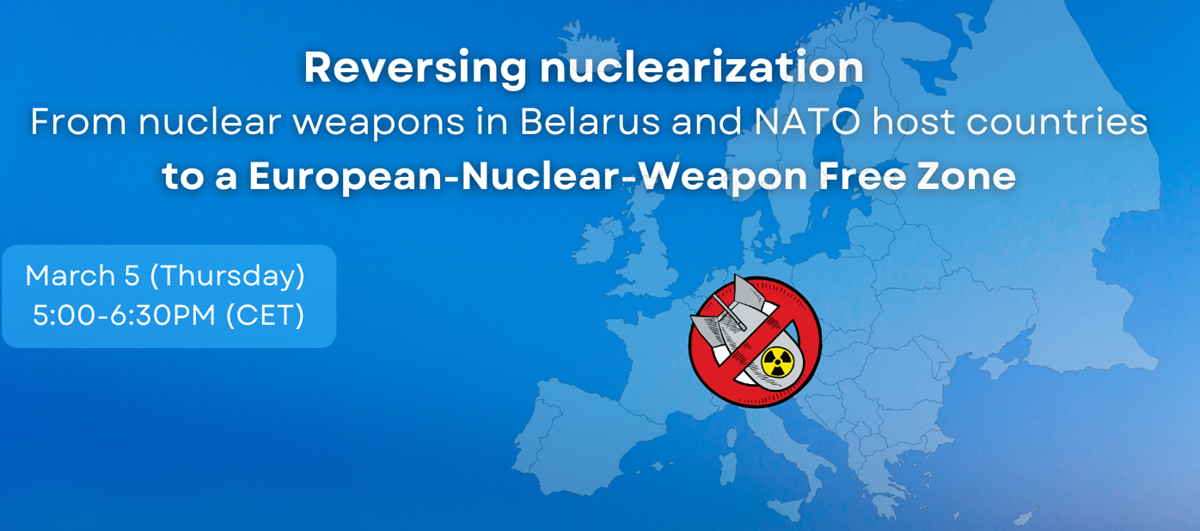
5 March -Online – Reversing nuclearization:
From nuclear weapons in Belarus and NATO host countries to a European-Nuclear-Weapon Free Zone
11am-12:30pm Eastern Time USA / 5pm-6:30pm CET

of the week – Advocating for a
nuclear free beach – https://www.samuellawrencefoundation.org/
The Samuel Lawrence Foundation advocates for a Nuclear Waste Free Beach at San Onofre, join us and take action!

10 March A LIVE WEBINAR THE REAL EFFECTS OF NUCLEAR POWER
What the Industry Isn’t Telling Us
1:00 PM Mountain, 2 pm Central, 3 pm Eastern. Live on the Keepers of the Water Facebook page


18 March Webinar @ 1 PM EST: An Assessment of SMR Projects: The Case of Canada
register for the zoom:
https://us02web.zoom.us/webinar/register/WN_o8BIIOUvQ2ONJR1nta65DQ#/registration

of the week – STOP SMALL MODULAR REACTORS IN CANADA
To see nuclear-related stories in greater depth and intensity – go to https://nuclearinformation.wordpress.com
-
Archives
- March 2026 (38)
- February 2026 (268)
- January 2026 (308)
- December 2025 (358)
- November 2025 (359)
- October 2025 (376)
- September 2025 (258)
- August 2025 (319)
- July 2025 (230)
- June 2025 (348)
- May 2025 (261)
- April 2025 (305)
-
Categories
- 1
- 1 NUCLEAR ISSUES
- business and costs
- climate change
- culture and arts
- ENERGY
- environment
- health
- history
- indigenous issues
- Legal
- marketing of nuclear
- media
- opposition to nuclear
- PERSONAL STORIES
- politics
- politics international
- Religion and ethics
- safety
- secrets,lies and civil liberties
- spinbuster
- technology
- Uranium
- wastes
- weapons and war
- Women
- 2 WORLD
- ACTION
- AFRICA
- Atrocities
- AUSTRALIA
- Christina's notes
- Christina's themes
- culture and arts
- Events
- Fuk 2022
- Fuk 2023
- Fukushima 2017
- Fukushima 2018
- fukushima 2019
- Fukushima 2020
- Fukushima 2021
- general
- global warming
- Humour (God we need it)
- Nuclear
- RARE EARTHS
- Reference
- resources – print
- Resources -audiovicual
- Weekly Newsletter
- World
- World Nuclear
- YouTube
-
RSS
Entries RSS
Comments RSS
 nuclear-news