The disastrous problem of Russia’s mounting spent nuclear fuel waste

 RUSSIAN NUCLEAR INDUSTRY OVERVIEW, Earth Life Johannesburg Vladimir Slivyak Russian environmental group, Ecodefense
National Research University Higher School of Economics Moscow December 2014
“……..Waste and spent nuclear fuel reprocessing
According to governmental sources, about 500 million tons of radioactive waste is accumulated
at various facilities across Russia. There is no clear plan as to how the waste problem should
be solved. Rosatom has pushed through the Russian Parliament the “Law on the Radioactive
Waste treatment,” a first of its kind in Russian history. The adoption of the law was protested
in a dozen of regions across Russia because it effectively excludes local population from the
decision-making process over establishing new sites to store and dump radioactive wastes.
Judging by the supplementary documents given to the parliamentarians in 2009 along with the
proposed draft of the law, the radioactive waste management plan outlined by Rosatom would
affect no more than 30% of all accumulated wastes until 2030. It is unclear when and how the
majority of the Russian radioactive waste will undergo proper management or treatment. Some
of the storage facilities across Russia are in poor condition and require urgent measures to avoid
radiation leaks.22
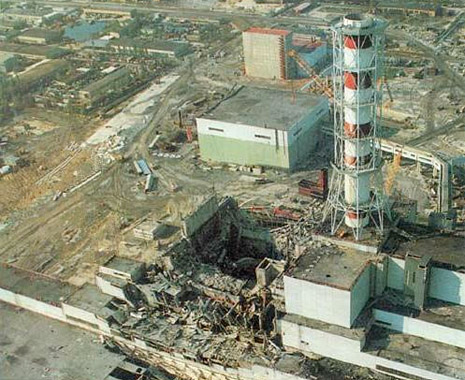 The overall amount of spent nuclear fuel accumulated at Russian nuclear sites is estimated
at over 22,000 tons. Fuel from seven commercial reactors (six VVER-440s and the BN-600) is
transported for reprocessing at the Mayak nuclear facility in Chelyabinsk Region – a place of a
devastating nuclear accident of 1957, which caused widespread radioactive contamination and
led to the resettlement of about 20,000 of local residents in the subsequent years.

Spent nuclear fuel reprocessing does not help to solve the problem of nuclear waste. Rather, it
makes the problem that much bigger. Between 100 to 200 tons of radioactive waste of various
compositions and activity levels is generated during reprocessing per just 1 ton of spent fuel
reprocessed. As a result of the reprocessing activities at Mayak, large amounts of radioactive
waste have been accumulated and, over the years, partly dumped into the local river, Techa,
causing ever wider radioactive contamination.
In 2005, Mayak’s former director, Vitaly Sadovnikov, was taken to court and charged with illegal dumping of radioactive waste into theTecha. Although he was found guilty by the court, Sadovnikov was immediately released under
an amnesty granted by the Russian government. Nevertheless, the court’s decision concluded
that radioactivity levels in the river water were so high in some parts of the Techa that the water
could well be qualified as liquid radioactive waste.23
Although environmental groups successfully pushed the nuclear industry to resettle Muslyumovo
– the most contaminated village in the region – several thousands of local residents still live in
the radioactively contaminated area on the banks of the Techa. The Russian government and the
nuclear industry refuse to provide resettlement funding for the local residents while many of
them continue to suffer from radiation-caused illnesses, including conditions related to genetic
damage.
In 2011, about twenty families of local villagers along with two environmental groups
(Ecodefense, Planet of Hope) filed a class action against the nuclear industry and several
government ministries over the lack of radiation protection in the contaminated area.
Spent fuel from the VVER-1000s and RBMKs is only stored in Russia, as the country does not
possess a facility for reprocessing such fuel. While reprocessing of spent RBMK fuel was never
seriously planned, a plan to build a facility to reprocess spent fuel from the VVER-1000 reactors,
to be sited in Krasnoyarsk, Siberia, has existed since the 1980s. After it was approved by the
Soviet government, the plan was stopped by mass protests around 1990. It is unclear if Rosatom
will ever bring it to implementation.
One of the issues under discussion in the nuclear industry is the future plans for the management
of spent nuclear fuel. Rosatom may either go for reprocessing and extraction of plutonium –
especially if the development program for breeder reactors and the concept of using plutonium
as fuel gets political approval – or for final disposal of spent fuel in a repository in a deep
geological formation near Krasnoyarsk. Presently, the option of long-term storage there is
approved with a new storage site partly completed in that area. It is projected that the storage
site will hold close to 40,000 tons of spent fuel in the future. As of today, spent fuel is mostly
stored at nuclear power plants around the country, and the old storage facilities are overfull or
nearing capacity; Rosatom is planning to move 22,000 tons of this fuel to Krasnoyarsk by 2025.
But any final solution for the highly radioactive spent fuel must include efficient barriers to
prevent the radiation from escaping into the surrounding environment during the next million
years. Such a solution obviously does not exist……….. http://earthlife.org.za/www/wp-content/uploads/2014/12/russian-nuc-ind-overview.pdf
No comments yet.
1 This Month


Tell the Ukrainian Government to Drop Prosecution of Peace Activist Yurii Sheliazhenko

Petition to revoke the licensing of the Near Surface Nuclear Disposal Facility (NSDF) at Chalk River. https://www.ourcommons.ca/petitions/en/Petition/Details?Petition=e-7247


of the week – STOP SMALL MODULAR REACTORS IN CANADA
To see nuclear-related stories in greater depth and intensity – go to https://nuclearinformation.wordpress.com
-
Archives
- March 2026 (212)
- February 2026 (268)
- January 2026 (308)
- December 2025 (358)
- November 2025 (359)
- October 2025 (376)
- September 2025 (258)
- August 2025 (319)
- July 2025 (230)
- June 2025 (348)
- May 2025 (261)
- April 2025 (305)
-
Categories
- 1
- 1 NUCLEAR ISSUES
- business and costs
- climate change
- culture and arts
- ENERGY
- environment
- health
- history
- indigenous issues
- Legal
- marketing of nuclear
- media
- opposition to nuclear
- PERSONAL STORIES
- politics
- politics international
- Religion and ethics
- safety
- secrets,lies and civil liberties
- spinbuster
- technology
- Uranium
- wastes
- weapons and war
- Women
- 2 WORLD
- ACTION
- AFRICA
- Atrocities
- AUSTRALIA
- Christina's notes
- Christina's themes
- culture and arts
- Events
- Fuk 2022
- Fuk 2023
- Fukushima 2017
- Fukushima 2018
- fukushima 2019
- Fukushima 2020
- Fukushima 2021
- general
- global warming
- Humour (God we need it)
- Nuclear
- RARE EARTHS
- Reference
- resources – print
- Resources -audiovicual
- Weekly Newsletter
- World
- World Nuclear
- YouTube
-
RSS
Entries RSS
Comments RSS
 nuclear-news
Leave a comment