International conference in Vienna gives evidence of the humanitarian impact of nuclear weapons
 Humanitarian impact of nuclear weapons in focus, Times of Oman, BY SEBASTIAN KURZ | DECEMBER 07, 2014
In 1983, three years before I was born, a chilling television docudrama about the consequences of a nuclear war was broadcast around the world. The Day After, now cited as the highest-rated film in TV history, left then-US President Ronald Reagan “greatly depressed” and caused him to rethink his nuclear strategy. At their summit in Reykjavik in October 1986, he and Soviet President Mikhail Gorbachev came tantalizingly close to eliminating all nuclear weapons.
My generation has conveniently consigned such fears to history. Indeed, with the Cold War tensions of 1983 far in the past and the international order dramatically changed, many people nowadays ask why these memories should concern us at all.
But the premise of that question is both wrong and dangerous.
This week, Austria is providing the world an opportunity to rethink its complacency. Representatives from the governments of more than 150 countries, international organisations, and civil-society groups will meet in Vienna this week, to consider the humanitarian impact of nuclear weapons.
These weapons, which terrified people 30 years ago, still remain in countries’ arsenals and continue to pose a grave risk to human security and safety. Austria’s concern is that as long as nuclear weapons exist, the risk of their use exists, either by accident or design. An overwhelming majority of states share this view.
Consider how many nuclear weapons there are: an estimated 16,300 around the world, with 1,800 on high alert and ready for use on short notice.
Nearly 25 years after the Cold War’s end, we remain stuck with its strategic legacy: Nuclear weapons continue to underpin the international security policy of the world’s most powerful states.
There are too many risks — human error, technical flaws, negligence, cyber-attacks, and more — to believe that these weapons will never be used. Nor is there good reason to believe that adequate fail-safe mechanisms are in place.
The history of nuclear weapons since 1945 is studded with near misses — both before and after the Cuban missile crisis……….
the goal of Vienna conference is to provide the public with new and updated evidence of the impact of using nuclear weapons and the threat they pose.
The picture is even grimmer and the consequences more dire than we believed in 1983.
As long as nuclear weapons exist, it is irresponsible not to confront the implications of their use — implications for which there is no antidote or insurance policy.
They are not some deadly virus or long-term environmental threat.
They are the poisonous fruit of a technology that we created — and that we can and must control.
— Project Syndicate http://www.timesofoman.com/Columns/2502/Humanitarian-impact-of-nuclear-weapons-in-focus
No comments yet.
1 This Month
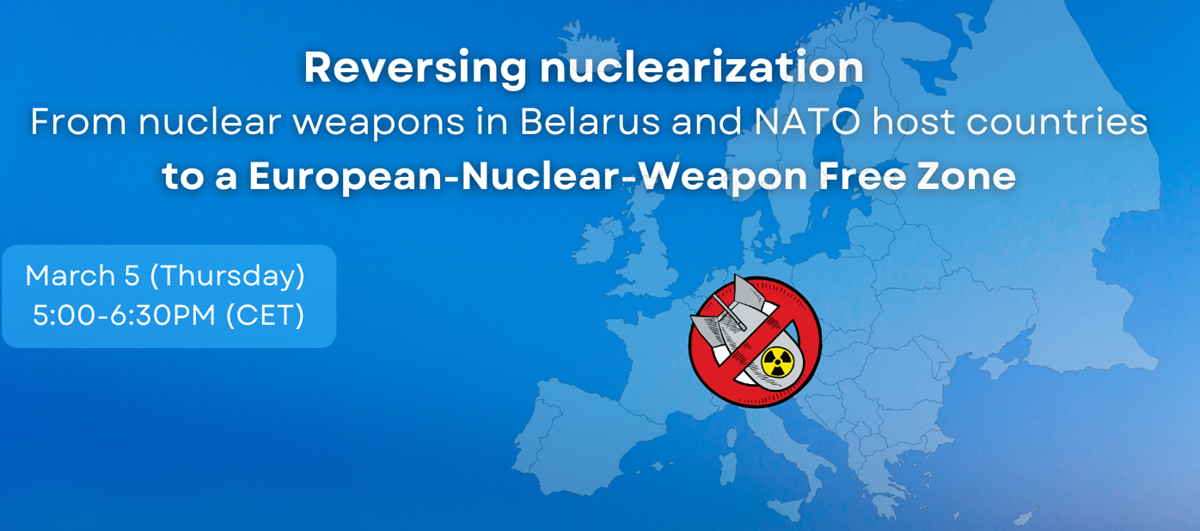
5 March -Online – Reversing nuclearization:
From nuclear weapons in Belarus and NATO host countries to a European-Nuclear-Weapon Free Zone
11am-12:30pm Eastern Time USA / 5pm-6:30pm CET

of the week – Advocating for a
nuclear free beach – https://www.samuellawrencefoundation.org/
The Samuel Lawrence Foundation advocates for a Nuclear Waste Free Beach at San Onofre, join us and take action!
10 March A LIVE WEBINAR THE REAL EFFECTS OF NUCLEAR POWER
What the Industry Isn’t Telling Us
1:00 PM Mountain, 2 pm Central, 3 pm Eastern. Live on the Keepers of the Water Facebook page

18 March Webinar @ 1 PM EST: An Assessment of SMR Projects: The Case of Canada
register for the zoom:
https://us02web.zoom.us/webinar/register/WN_o8BIIOUvQ2ONJR1nta65DQ#/registration

of the week – STOP SMALL MODULAR REACTORS IN CANADA
To see nuclear-related stories in greater depth and intensity – go to https://nuclearinformation.wordpress.com
-
Archives
- March 2026 (51)
- February 2026 (268)
- January 2026 (308)
- December 2025 (358)
- November 2025 (359)
- October 2025 (376)
- September 2025 (258)
- August 2025 (319)
- July 2025 (230)
- June 2025 (348)
- May 2025 (261)
- April 2025 (305)
-
Categories
- 1
- 1 NUCLEAR ISSUES
- business and costs
- climate change
- culture and arts
- ENERGY
- environment
- health
- history
- indigenous issues
- Legal
- marketing of nuclear
- media
- opposition to nuclear
- PERSONAL STORIES
- politics
- politics international
- Religion and ethics
- safety
- secrets,lies and civil liberties
- spinbuster
- technology
- Uranium
- wastes
- weapons and war
- Women
- 2 WORLD
- ACTION
- AFRICA
- Atrocities
- AUSTRALIA
- Christina's notes
- Christina's themes
- culture and arts
- Events
- Fuk 2022
- Fuk 2023
- Fukushima 2017
- Fukushima 2018
- fukushima 2019
- Fukushima 2020
- Fukushima 2021
- general
- global warming
- Humour (God we need it)
- Nuclear
- RARE EARTHS
- Reference
- resources – print
- Resources -audiovicual
- Weekly Newsletter
- World
- World Nuclear
- YouTube
-
RSS
Entries RSS
Comments RSS
 nuclear-news
Leave a comment