Japan’s community disputes over the planned nuclear restart
 Local Rifts on Display in Japan’s Nuclear Restart Which communities are allowed to decide on reactivation is likely to be a long-term issue.The Diplomat By Clint Richards November 05, 2014 “………there is still wide debate across Japan as to what combination of local and prefectural governments should be consulted before restarts are granted, which are currently being done on a case by case basis. The two reactors located in the city of Satsuma-Sendai in Kagoshima prefecture provide a case study for how future restarts may play out, as the governments there are seeking to limit the influence of nearby municipalities.
In the lead up to this week’s events, Yoichi Miyazawa, the industry and trade minister who replaced Yuko Obuchi, visited the stricken Fukushima Daiichi Nuclear Power Plant on Saturday. Interestingly, Obuchi said shortly before she was forced to resign over a political scandal that “obtaining consent from local communitiesis not a legal requisite for a restart.” During Miyazawa’s visit, he praised the work of the facility’s employees in the cleanup effort and said it was vital that decommissioning remain on schedule……….
while the governor’s acceptance is key, it is not the only hurdle remaining. The local Satsuma-Sendai municipal assembly approved the restart on October 28, yet the prefectural assembly’s assent is also necessary. However, according to the Asahi Shimbun the votes may already be in hand. There will be assembly deliberations from November 5 to 7, with a plenary session also on the 7th. The Asahi reports that “a majority of the 51-member assembly will approve a petition supporting the resumption of operations of the No. 1 and No. 2 reactors,” with the ruling LDP commanding 35 seats, and several independents and coalition Komeito members expected to also vote in favor.
So while the necessary governmental authorities seem to be in line with the Sendai restart, the debate over exactly how many municipalities and prefectures should be involved in the process is still going strong……..The national government will likely continue to struggle to convince these communities of the benefits of restarting the country’s nuclear reactors. As the majority of voters live outside the communities that are directly allowed to decide on the issue, this is likely to be a long, uphill battle for the government in Tokyo.http://thediplomat.com/2014/11/local-rifts-on-display-in-japans-nuclear-restart/
Fukushima radioactive contamination found in US food products
 Food products ‘heavily contaminated’ by Fukushima found in US; Over 30,000 pCi/kg of cesium, also had Cobalt-60 and Antimony-124 — FDA: We found no Fukushima contamination in US food supply during routine monitoringhttp://enenews.com/food-products-heavily-contaminated-fukushima-found-30000-pcikg-cesium-cobalt-60-antimony-124-seaweed-green-tea-10000-pcikg-fda-found-fukushima-contamination-food-supply-during-routine-monitoring?utm_source=feedburner&utm_medium=email&utm_campaign=Feed%3A+ENENews+%28Energy+News%29 5 Nov 14
Dr. Robert Metzger, Radiation Safety Engineering, Inc, American Chemical Society 2013 Meeting (emphasis added): Contamination of food imports to the United States in the early days after the Fukushima accident… Contaminated food imports into the US from Japan were first observed in our laboratory on March 30, 2011, withseveral products exceeding the FDA DerivedIntervention Level (DIL) for Cesium and Iodine…
Dr. Metzger’s presentation excerpts, Feb 8, 2014:
- First observed food… contamination was found on March 30… a Sushi import was found to be contaminated with 131I
- April 5, a shipment of Koji powder was… heavily contaminated with 60Co, 124Sb, 131I, 132Te, 134Cs and 137Cs… This, and subsequent samples, exceeded the FDA [DIL]
- By July, the 1-131 had largely decayed away and the primary concern was foods that were known concentrators of some of the isotopes. The sample of the dried green tea leaves below has Cesium concentrations at 1/3 of the FDA DIL [~400 Bq/kg]
- By July, the impact of the water releases were observed in harvests of seaweed… The sample [tested] is about 1/3 of the FDA DIL for Cesium [~400 Bq/kg]
- Published results indicate [FDA] found little to no observable contamination… There are several possible explanations… We were testing samples while the accident was still in progress and therefore saw problems before the FDA started testing seriously
- Imported food products contaminated with fission products… were detected starting in late March… Conscientious importers tested their imported foods and destroyed any food that was found to be contaminated, even at levels well below the FDA DIL
FDA, May 3, 2011: FDA has not detected any longer‐lived radionuclides, such as Cs‐137, in any fish imported from Japan… FDA is performing field examinations… on approximately 40% of the seafood products… shipped to [US]… March 21, 2011 to April 25, 2011, 3,496 examinations were performed. To date, no field examinations have shown levels above background. FDA is also randomly sampling selected entries and subjecting them to laboratory analysis. To date, no gamma‐ray emitting radionuclides of concern have been detected.
FDA, Mar. 2014: FDA has no evidence [of Fukushima] radionuclides… in the US food supply at levels that would pose a public health concern… FDA has tested 1,345 [samples]… two were found to contain detectable levels of Cesium, but… posed no public health concern… 1) Ginger Powder… collected April 2011; 2) Green Tea Bag… collected August 2013… During this time, routine monitoring of the domestic US food supply was also conducted and included roughly 1,500 samples… No contamination was detected during this routine monitoring.
According to an Oct. 30 CBS interview with a professor involved with UC Berkeley-affiliated Kelp Watch: “There’s never zero risk” to someone exposed to radioactive material no matter the level.
Listen to a food importer discuss FDA testing on Nuclear Hotseat (38:00 in)
Poor security of South Korea’s nuclear power system

 Making a mess of nuclear safety, Korea JoongAng Daily Nov 05,2014
The ministry conducted security checks on power stations across the nation following online media reports about the leak in September. It found that staff shared their log-in IDs and passwords for the internal computer system with subcontracted employees of radioactive waste management companies. Night shift staff should have escorted these people from outside during their work, but instead they gave their security codes away simply because they were lazy………
Russia will not attend 2016 nuclear security summit
Russia told U.S. it will not attend 2016 nuclear security summit WASHINGTON/MOSCOW Wed Nov 5, 2014 (Reuters) – Russia has told the United States that it will not attend a 2016 nuclear security summit, the State Department said on Wednesday, in the latest sign of frosty ties between Washington and Moscow.
Explaining why it would stay away, Moscow said it doubted the value of the summit, which is to be held in Chicago in 2016, and believed the views of states which disagreed with the event’s organizers would be ignored.
Instead, Russia would focus on a similar conference to be held also in 2016 by the United Nations nuclear body, the International Atomic Energy Agency (IAEA), the Russian Foreign Ministry said.
The bi-annual summit aims to improve nuclear security around the world and, in the past, has involved more than 50 countries including China, France, Germany and Britain……….http://www.reuters.com/article/2014/11/05/us-nuclear-security-usa-russia-idUSKBN0IP24K20141105
Long range Russian missile fired from submerged submarine

 Russia Test-Fires Intercontinental Missile From Nuclear Submarine IBT, By Kukil Bora @KukilBora on November 05 2014
 Russia successfully test-fired an intercontinental missile from a submerged Northern Fleet nuclear submarine on Wednesday, the country’s defense ministry announced in a statement.
The submerged vessel fired the missile from the Barents Sea to the Kura Range on the Kamchatka Peninsula in the country’s far east. The Sineva, which has a range of about 12,000 kilometers (7,500 miles), was deployed in 2007 as part of the country’s efforts to maintain its nuclear power status,according to Reuters. This is the second such test of a missile by Russia in a week after it had successfully test-fired a new intercontinental ballistic missile on Oct. 29…….
Last week, the Russian navy’s Yuri Dolgoruky nuclear submarine test-fired a Bulava missile from an underwater position in the Barents Sea. The missile successfully reached the selected targets at a testing range in the Kamchatka Peninsula, the Associated Press reported. According to media reports, the Bulava missiles can hit targets as far as 5,000 miles away and can cause a blast 100 times more powerful than the atomic bombs dropped by the U.S. on Hiroshima and Nagasaki in 1945. http://www.ibtimes.com/russia-test-fires-intercontinental-missile-nuclear-submarine-1719169
Britain’s Windscale nuclear disaster was bad, but could have been much worse
Windscale Piles: Cockcroft’s Follies avoided nuclear disaster By Duncan LeatherdaleBBC News 4 Nov 14 They were labelled a waste of time and money, but in 1957 the bulging tips of two exhaust shafts rising above Sellafield arguably saved much of northern England from becoming a nuclear wasteland. The towers of Windscale Piles have been a landmark for decades but soon the last of these Cold War relics will be gone.
Cumbria’s skyline will change with the removal of the towers – known as Cockcroft’s Follies – but had they not been in place 57 years ago, the entire landscape may have been drastically different.
Until Chernobyl exploded in 1986, the blaze that ravaged the uranium-fuelled reactor at Windscale Pile One in October 1957 was Europe’s most terrible nuclear disaster. It is still the UK’s worst atomic incident.
Without the filters – installed at the last minute by Nobel Prize-winning scientist Sir John Cockcroft – the effects of the radioactive dust blasted into the Cumbrian air would have been much more devastating……….
On October 10, 1957, a fire was discovered in reactor one. Uranium fuel cells had ignited with the blaze reaching 1,300 C (2,380 F) and workers battled to stop the whole facility exploding.
Men wearing radiation suits used scaffolding pipes to try and push the burning fuel rods out of the graphite reactor.
The high radiation levels meant they could only spend a few hours at the reactor, more volunteers were sought from a nearby cinema.
Water failed to put out the blaze and the fire was only extinguished when operators closed off the air in the reactor room.
The blaze burnt for three days and significant amounts of radioactive material, most notably iodine-131, were released and spread across the UK and Europe.
It is estimated about 240 cases of thyroid cancer were caused by the radioactive leak and all milk produced within 310 square miles (800 square km) of the site was destroyed for a month after the fire.
The level of radioactive material which did escape is estimated to be 1,000 times less than at Chernobyl……….
he decision of health chiefs to order the destruction of milk contaminated by radioactive iodine, which has been linked to thyroid cancer, also prevented these cancers.
“They did some quick calculations and ordered the milk produced in a certain area be destroyed,” he said.
“It would have been a courageous decision but, ultimately, proved to be right, as it stopped a lot of children consuming the radioactive iodine.”
After the fire the chimneys were sealed off. Indeed, 15 tonnes of uranium fuel remains inside still………
Cockcroft’s Follies prevented a catastrophe, but the 1957 fire was nevertheless a dark hour for nuclear in the UK……..http://www.bbc.com/news/uk-england-cumbria-29803990
Informal talks between Obama and Putin likely, at APEC and G20 Summits
 Obama and Putin Likely to Have Informal Talks as Russia Advances on Ukraine,reason.com. Zenon Evans|Nov. 5, 2014 President Barack Obama are likely to have informal talks with Russia’s Vladimir Putin as tensions continue to rise over the war in Ukraine.
Both the leaders are scheduled to be at the Asia-Pacific (APEC) summit in Beijing and the G20 summit in Brisbane next week. Although an “official bilateral meeting between Obama and Putin [is] not anticipated,” a senior U.S. officialtells Reuters, “there [is] a good chance they would find time to talk informally at the APEC gathering.” The two will also likely talk about Syria and the ISIS insurgency…….http://reason.com/blog/2014/11/05/obama-and-putin-likely-to-have-informal
Climate change is slowing the recovery of the hole in the ozone layer
Ozone-depleting chemical hydrogen chloride found to be on the rise http://www.smh.com.au/environment/ozonedepleting-chemical-hydrogen-chloride-found-to-be-on-the-rise-20141105-11h1hl.html November 6, 2014 Peter Hannam Environment Editor, The Sydney Morning Herald Atmospheric levels of a key ozone-depleting chemical are on the increase but the rise appears to be a symptom of climate change rather than additional sources of the destructive substance, according to international researchers including three from the University of Wollongong.
Investigations were prompted when scientists identified levels of hydrogen chloride had began rising in 2007 – but only in the northern hemisphere – when they should have been falling because of curbs agreed under the Montreal Protocol to protect the ozone layer.
Hydrogen chloride releases chlorine in the stratosphere, depleting ozone and allowing more ultraviolet radiation to reach the Earth, increasing skin cancer and damaging crops and other species.
Findings based on that satellite observations and model simulations and published in Nature on Thursday rule out any “rogue” source of emissions from undisclosed sources because the abundance of the chemical is falling at other layers of the atmosphere and in the southern hemisphere.
“The overall burden of chlorine is still decreasing,” said David Griffith, director of the University of Wollongong’s Centre for Atmospheric Chemistry, and a co-author of the report. “It’s a good news story about ozone.”
It’s not so positive news on the climate change front, however, since the increased abundance of chlorine in the northern hemisphere’s stratosphere is attributed to a slowdown in atmospheric circulation leading to slower mixing at some levels.
Climate change, through increased greenhouse gas emissions, “is changing the way radiation is absorbed in the atmosphere and distributed, which would drive things such as this circulation,” Professor Griffith said.
Although it was beyond the scope of the paper to examine how long the circulation slowdown will last, or other possible consequences, Professor Griffith said the study showed the recovery of the ozone layer wouldbe a slow process, taking decades.
“Our results show that atmospheric variability and perhaps climate change can significantly modify the path towards full recovery,” he said. “It will be a bumpy ride rather than a smooth evolution.”
Professor Griffith said the work also underscored the general success in tackling ozone depletion and a range of chemicals that were phased out in a matter of years in contract to dealing with global warming. For ozone, it was a “problem created by man, problem recognised, solution proposed, solution implemented,” he said. “For climate change, the culprits have been recognised but no-one’s prepared to stop producing [carbon dioxide].”
Australian organisations and church leaders want climate change on the G20 agenda
Australia: Alternative G20 ‘People’s Summit’ planned for Brisbane, Asian Correspondent, By Rowena Dela Rosa Yoon Nov 04, 2014 BrisCAN-G20 will stage Visioning Another World: The G20 Peoples Summit, a three-day festival packed with events. Programs include conversations, symposiums, creative activities, cultural performances, education, and peaceful demonstrations. It will take place in various locations in Brisbane, aiming to bring together local and international thinkers to collaborate on broad themes such as the economy, growth vs sustainability, environment, climate change, earth rights, dispossession decolonisation, and other issues of social justice. BrisCAN–G20 is concerned about social and economic disparities perpetuated by G20 and the systems it represents.
Various groups and NGOs will join the summit including the Friends of the Earth, OXFAM, National Congress of Australia’s First People, International Trade Union Confederation, Australian Greens and Palm Island Community.
Church Communities call for stewardship
Church groups have also been pressing for environment to be included in the G20 summit.Eleven Brisbane ministers from five churches have formed alliance to call for the Abbott government to pay attention to one of the most pressing issues of the time.
The dean of St John’s Anglican Cathedral, Reverend Peter Catt, who also serves as the group’s spokesperson, said the government did not understand how the economy and the environment are deeply linked, and how the economy operates and how it depends on the environment. Dr Catt views the environment as the foundation of economic growth, prosperity, and “human flourishing”. Noting Christianity’s principle of stewardship, he said, “the Earth is a precious gift and that humans are called to act as stewards.” He added:
Climate change is a deep concern. The G20 leaders should be showing leadership and discussing it at the top of their agenda when they meet in our city.“It would be wonderful if a meeting held in our city led the way to sustainable life and a healthy economy.
The ministers call on the Australian Government, which has control of the agenda, to deal with climate change as a priority. http://asiancorrespondent.com/127944/australia-alternative-g20-peoples-summit-set-in-brisbane/
Swedish energy company to dump brown coal, move to renewable energy
Europe energy giant to dump brown coal, focus on renewables, REneweconomy, By Petra Hannen on 4 November 2014 As Australia’s conservative governments and fossil fuel industry hail the future of coal, one of the biggest generators of brown coal in Europe, Vattenfall, is looking to exit from its huge brown coal generation portfolio in Germany, and focus instead on renewable energy.
State-owned Swedish energy giant Vattenfall will in the future concentrate on renewable energy. President and CEO Magnus Hall has announced that the company is considering a “new ownership structure” for its lignite division.
Vattenfall’s lignite operations in Germany’s Lusatian region have created more than 15,000 direct and indirect jobs in the area.
Sweden’s new left-of-center governing coalition, headed by Social Democratic Prime Minister Stefan Löfven and including the country’s Green Party, has made its plans for the state-owned energy company Vattenfall clear: The group’s future must lie in the development of renewable energy and not in coal and gas, the Social Democrats announced earlier this month in Stockholm.
The company’s board has now confirmed that it is fundamentally changing its corporate energy policy. “We have a clear strategy to improve our CO2 footprint and refocus our portfolio on renewable energy,” said Vattenfall CEO Magnus Hall on Thursday. To that end, the board has decided to review a new and lasting ownership structure for the group’s lignite division.
“We recognize the current and future significance of lignite for the local economy and the German energy policy,” Hall said. The German states of Brandenburg and Saxony are significant stakeholders in Vattenfall’s activities in the region of Lusatia (Lausitz), which stretches across both states. The company said it would remain in close dialogue with state leaders. Hall added that Vattenfall would hold on to its other business units in Germany………..http://reneweconomy.com.au/2014/vattenfall-focus-renewable-energy-preps-exit-lignite-business-17001
G20 Agenda carefully avoids the subject of Climate Change
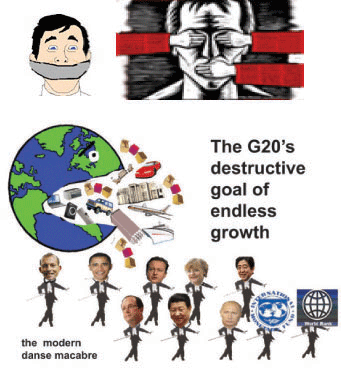 Climate change hopes for G20 diminished, SMH, November 4, 2014 Peter Hannam Environment Editor, The Sydney Morning Herald Climate change will remain all but absent from the G20 summit, with a related energy efficiency plan omitting mention of global warming as a motivation for curbing energy use, according to a draft.
Hopes had been raised when a paragraph on dealing with climate change was added to the draft communique being circulated among the world’s leading economies, who will all attend this month’s G20 summit in Brisbane.
However, the latest details – a draft of the “energy efficiency” section of the talks in which climate change is to be relegated – have dashed hopes the issue will get much, if any, focus.
The Energy Efficiency Action Plan does not make any mention of climate change, and instead stresses the role of efficiency in boosting energy security and improving “environmental outcomes”.
That’s despite this weekend’s release of the latest report of the United Nations Intergovernmental Panel on Climate Change warning of irreversible damages from a warming planet with temperatures on track to rise as much as 4-5 degrees by century’s end on current greenhouse gas emissions trajectories……….
Dermot O’Gorman, chief executive of WWF-Australia, said there is still time for the Abbott government to modify the agenda of the meeting. “While we welcome any focus on energy efficiency, climate change is still not a stand-alone agenda item at the G20 and it needs to be,” Mr O’Gorman said. “In its current form, this so-called Energy Efficiency Action Plan is little more than a commitment to keep talking.”…….http://www.smh.com.au/business/g20/climate-change-hopes-for-g20-diminished-20141104-11grej.html
Why UK politicians covered up the causes of Windscale nuclear disaster
Windscale: A nuclear disaster |
||
|
||
“………..Now tapes of the inquiry into the accident, heard for the first time in a BBC film, reveal the reasons why the politicians covered up the causes of the accident.
 |
Scientists had been warning about the dangers of an accident for some time.
The safety margins of the radioactive materials inside the reactor were being further and further eroded.
“They were running much too close to the precipice,” says Dr Dunworth, a senior manager in the Nuclear Research Laboratory in Harwell, Oxfordshire, who was one of those highlighting the potential dangers.
But the politicians and the military ignored the warnings; instead they increased demands on Windscale to produce material for an H-bomb.
|
A succession of prime ministers since the war had been determined to persuade the Americans to share the secret of their nuclear weapons with Britain.
Prime Minister Harold Macmillan believed that, if Britain could develop an H-bomb on the scale of the Americans’, they would treat it as a nuclear equal and form an alliance.
Even as Tuohy and the Windscale men faced their nuclear nightmare, Macmillan was arranging a summit in Washington where they would announce the Declaration of Common Purpose……..http://news.bbc.co.uk/2/hi/science/nature/7030281.stm
Malfunctions cause closure of 2 Czech nuclear reactors
2 Czech Nuclear Reactors Closed Due to Malfunctions http://www.theepochtimes.com/n3/1063410-2-czech-nuclear-reactors-closed-due-to-malfunctions/ By Associated Press | November 5, 2014 PRAGUE—An official says a damaged water pipe has forced the closure of two of the four nuclear reactors at a Czech power plant.
Petr Spilka, a spokesman for the Dukovany plant, says the decision poses no safety threat.
He said the problem arose Monday on one of the three pipes used for cooling the plant’s technical and security systems.
He said Wednesday that authorities decided to shut down two nuclear reactors because it was not able to fix the problem in three days, a requirement of safety regulations. The two remaining reactors at the plant have not been affected. It is not immediately clear how much time it will take to fix the problem.
US Secretary of State says Iran has right to peaceful nuclear program
“They have a right to a peaceful program, but not a track to a bomb,” Mr. Kerry said, flanked by French Foreign Minister Laurent Fabius.
The U.S. and other world powers are in a race to persuade Iran to dismantle nuclear activities that Western countries say are aimed at constructing nuclear weapons. Iran insists it has a right to develop its nuclear program, which it says is designed for civil purposes only.
Mr. Kerry is due to travel to Oman in the coming days before the nuclear talks move to Vienna ahead of a Nov. 24 deadline.
British Nuclear Test Veterans Association call for official recognition and compensation for radiation-caused illnesses
THE son of a veteran who died because of exposure to nuclear test blasts has backed plans for a benevolent fund to be established.
British Nuclear Test Veterans Association chairman Nigel Heaps, from Castle Donington, made the comments after it emerged nine political parties were backing moves for the fund.
In 2012, an inquest ruled Mr Heaps’s father, Derek, died partly due to radiation exposure while working as an engineer in the RAF on Christmas Island.
Derek witnessed a blast from a plane and visited Malden Island, where a bomb had been set off.
The inquest concluded his death at the age of 78 from myelofibrosis – a type of leukaemia – could have been caused by radiation exposure.
The association fronted by Nigel is calling for veterans to be officially recognised by the Government, awarded compensation and given a medal in honour of their service……….http://www.derbytelegraph.co.uk/NUCLEAR-VICTIMS-Son-backs-fund-veteran-radiation/story-24170460-detail/story.html
1 This Month
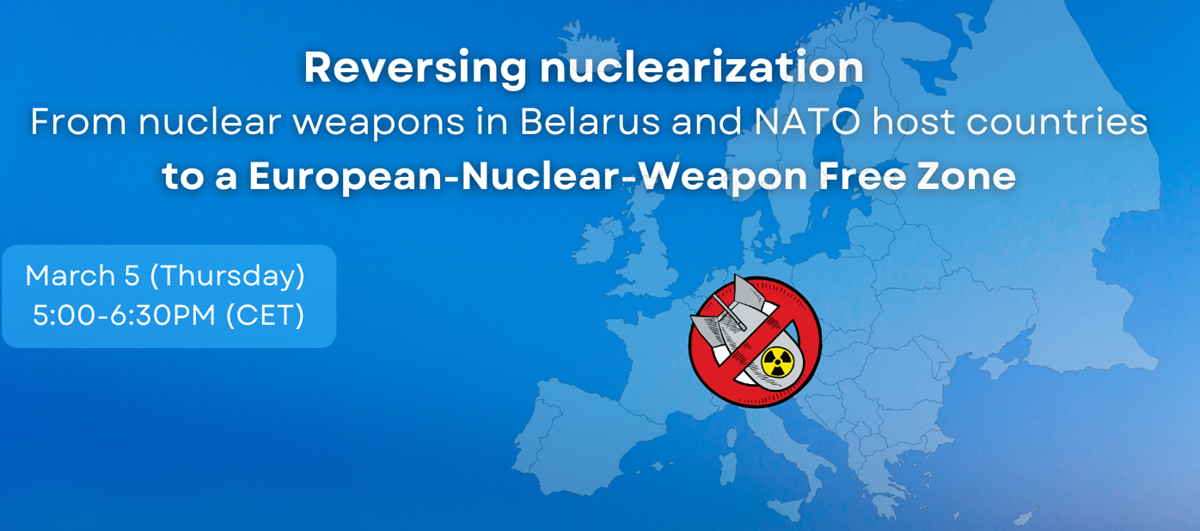
5 March -Online – Reversing nuclearization:
From nuclear weapons in Belarus and NATO host countries to a European-Nuclear-Weapon Free Zone
11am-12:30pm Eastern Time USA / 5pm-6:30pm CET

of the week – Advocating for a
nuclear free beach – https://www.samuellawrencefoundation.org/
The Samuel Lawrence Foundation advocates for a Nuclear Waste Free Beach at San Onofre, join us and take action!

10 March A LIVE WEBINAR THE REAL EFFECTS OF NUCLEAR POWER
What the Industry Isn’t Telling Us
1:00 PM Mountain, 2 pm Central, 3 pm Eastern. Live on the Keepers of the Water Facebook page

18 March Webinar @ 1 PM EST: An Assessment of SMR Projects: The Case of Canada
register for the zoom:
https://us02web.zoom.us/webinar/register/WN_o8BIIOUvQ2ONJR1nta65DQ#/registration

of the week – STOP SMALL MODULAR REACTORS IN CANADA
To see nuclear-related stories in greater depth and intensity – go to https://nuclearinformation.wordpress.com
-
Archives
- March 2026 (51)
- February 2026 (268)
- January 2026 (308)
- December 2025 (358)
- November 2025 (359)
- October 2025 (376)
- September 2025 (258)
- August 2025 (319)
- July 2025 (230)
- June 2025 (348)
- May 2025 (261)
- April 2025 (305)
-
Categories
- 1
- 1 NUCLEAR ISSUES
- business and costs
- climate change
- culture and arts
- ENERGY
- environment
- health
- history
- indigenous issues
- Legal
- marketing of nuclear
- media
- opposition to nuclear
- PERSONAL STORIES
- politics
- politics international
- Religion and ethics
- safety
- secrets,lies and civil liberties
- spinbuster
- technology
- Uranium
- wastes
- weapons and war
- Women
- 2 WORLD
- ACTION
- AFRICA
- Atrocities
- AUSTRALIA
- Christina's notes
- Christina's themes
- culture and arts
- Events
- Fuk 2022
- Fuk 2023
- Fukushima 2017
- Fukushima 2018
- fukushima 2019
- Fukushima 2020
- Fukushima 2021
- general
- global warming
- Humour (God we need it)
- Nuclear
- RARE EARTHS
- Reference
- resources – print
- Resources -audiovicual
- Weekly Newsletter
- World
- World Nuclear
- YouTube
-
RSS
Entries RSS
Comments RSS
 nuclear-news