Australian government sets up a disastrous course for nuclear weapons proliferation
 Australia–India nuclear treaty: a non-proliferation disaster, The Strategist, the Australian Strategic Policy Institute Blog 14Oct 2014 By Crispin Rovere “…….Nuclear suppliers do have a responsibility, however, for ensuring their nuclear material isn’t used to build nuclear weapons, and must maintain strict mechanisms for that purpose. If countries can access nuclear supply without the attendant responsibilities, then support for longstanding non-proliferation regimes will be undermined, countries will see less value in treaties such as the NPT, and a key pillar of the nuclear arms control regime as a whole will be weakened.
The text of the proposed Australian export deal fails that basic test. In addition to a range of other flaws, for the first time in 40 years Australia won’t be able to guarantee how the nuclear material it supplies is being used. Specifically, the agreement allows India to reprocess uranium supplied by Australia to create plutonium, potentially at weapons grade, with no direct accounting by India to Australia for that material, and unusually, no provision for the return of the material in the event of it being misused. As former Director-General of ASNO, John Carlson, explains, Australia currently allows reprocessing only by two export partners, the EU and Japan, each with direct reporting requirements and specific permission being given by Australia as to how the reprocessed material is to be used.
Accordingly, the deal with India isn’t comparable to Australia’s other nuclear export agreements. Australia is privileging India by excluding key provisions normally included to ensure a recipient of nuclear material is accountable to the supplier. Australia’s other nuclear export partners might demand similar concessions, undermining the integrity of the non-proliferation regime as a whole.
Moreover, the concessions made by Australia are unnecessary. ………Not only does this agreement undermine long established non-proliferation regimes and Australia’s credibility as a nuclear supplier, it represents a missed opportunity to strengthen it. Given that what matters most to India is being treated on a par with China and the United States, India should be expected to ratify the Comprehensive Nuclear-Test-Ban Treaty (CTBT) after the US Senate does, just as China has already agreed to do……..
The agreement marks a significant departure from Australia’s longstanding practice. By excluding the normal provisions that ensure a nuclear recipient is directly accountable to the supplier, Australia is abrogating the principle that nuclear suppliers are accountable for how their exported nuclear material is used……..Crispin Rovere is a former PhD student at the Strategic and Defence Studies Centre, ANU and co-author of Non-strategic nuclear weapons: the next step in multilateral arms control. Image courtesy of Flickr user Indiawaterportal.org. http://www.aspistrategist.org.au/australia-india-nuclear-treaty-a-non-proliferation-disaster/
Research on risks pf depleted uranium weapons lags behind the military enthusiasm to use them
 and research 14 October 2014 – ICBUW
Understanding the civilian and environmental risks from weapons before using them is a key part of the legal review process for new weapons – even if the bar is not set particularly high. However, when it comes to the toxic constituents of weapons, this process can take far longer to complete, as scientific research struggles to catch up with military enthusiasm.
So it has proved with DU, where research was left behind in the rush to develop and deploy the weapons. Often factors relating to how the weapons are used in conflict and what, if anything, is done to reduce harm after they are used are not taken into account. Even decades on, significant uncertainties may still remain, for example the extent to which civilians have been, and continue to be, exposed to DU…..http://www.bandepleteduranium.org/en/shoot-first-ask-questions-later
Thorium bred Uranium-233 can be used to make atomic bombs, despite what proponents may claim.
 http://kevinmeyerson.wordpress.com/2012/05/07/thorium-nuclear-bombs-short-version/ May 7, 2012
Thorium bred Uranium-233 can be used to make atomic bombs, despite what proponents may claim.
You don’t have to trust me on this, see what the experts at various institutions have to say below:
MIT Energy Initiative, The Future of the Nuclear Fuel Cycle
Appendix A starts on page 181 of the Appendices PDF file. The relevant statement from MIT is:
- Proliferation And Security Groundrules:
Irradiating thorium produces weapons-useable material. Policy decisions on appropriate ground rules are required before devoting significant resources toward such fuel cycles. U-233 can be treated two ways.
- Analogous to U-235. If the U-235 content of uranium is less than 20% U-235 or less than 13% U-233 with the remainder being U-238, the uranium mixture is non-weapons material. However, isotopic dilution in U-238 can significantly compromise many of the benefits.
- Analogous to plutonium. Plutonium can not be degraded thus enhanced safeguards are used. The same strategy can be used with U-233. A complicating factor (see below) is that U-233 is always contaminated with U-232 that has decay products that give off high energy gamma radiation which requires additional measures to protect worker health and safety. There has been no consensus on the safeguards / nonproliferation benefits of this radiation field.
The point being made here is that thorium can be used to make Uranium-233, which in turn can be used to make bombs. The complicating U-232 contamination mentioned above is what many of the thorium proponents refer to as making thorium resistant to proliferation. MIT has more to say about this proliferation protection in their summary:
On one hand, high radiation dose [from U-232 decay] provides self protection to separated fissile material against diversion and misuse. On the other hand, it makes the U-233 recycling more complex and costly.
The point here is that the U-233 is in fact subject to ‘diversion and misuse’ (like atomic bombs) if it can be separated out from the highly radioactive U-232 contaminants. If the U-232 is not somehow processed out, however, there is no way to operate the reactor for peaceful purposes, or otherwise.
Filtering contaminants out of thorium bred U-233 to make weapons grade fissile material is not rocket science. Oak Ridge National Laboratory (ORNL) created a process to do this. They kindly wrote about it in a history included in the ORNL Review publication (search the long page for the words “THOREX” or “Uranium-233″):………..
South Korea desperately buying time, as another 750 tonnes add yearly to its nuclear waste stack

it’s really stupid to just keep on making the stuff
As Nuclear Waste Piles Up, South Korea Faces Storage Crisis, Scientific American, 14 Oct 14“……….The 23 nuclear reactors in Asia’s fourth-biggest economy add a total of 750 tonnes of spent fuel every year to the 13,300 tonnes that filled 71 percent of its wet and dry storage capacity as of last year, according to reactor operator Korea Hydro and Nuclear Power Co Ltd, owned by state-run Korea Electric Power Corp.
That means storage could fill by 2021, with some pools in danger of reaching capacity by the end of 2016.
Seoul hopes to win time by stacking spent fuel more densely in those concrete-covered pools next to reactor buildings, and by moving waste to pools at 11 new power plants that are set to be built by 2024.
But experts warn that leaving spent fuel in water could be fraught with danger, even in a country that is not anywhere near as seismically active as Japan. They note that the buildings that house pools are typically not as strong as those that hold reactors, which have steel vessels inside concrete domes.
“Spent fuel in a concrete building next to reactor buildings is vulnerable to missile or other attacks from the outside,” said one expert, who declined to be identified due to the sensitivity of the matter.
He said that stacking fuel more densely would compound any risk as it would reduce air circulation.
“Air circulation helps lower chances of spent fuel meltdown if water drains or water-cooling pumps are broken when hit by natural disaster or terror attack.”http://www.scientificamerican.com/article/as-nuclear-waste-piles-up-south-korea-faces-storage-crisis/
World’s cheapest energy source is wind – new EU Report

 Wind is the World’s Cheapest Source of Energy According to EU Report, Inhabitat, by Beverley Mitchell, 10/14/14 A report prepared for the European Commission has found that onshore wind power provides the cheapest source of energy once external factors such as air quality, health impacts and expenditure, and the costs of climate change are taken into consideration. The report’s authors found that onshore wind costs around $133 per MW/h to produce, whereas gas and coal cost up to $208 and $295 per MW/h each. However, continuing a controversy that shadowed the Commission last year, extracts from the report have already been published that fail to include the external costs, which is where many of the subsidies to coal, gas and nuclear are made.
France’s nuclear giant AREVA gets agreement to supply reactors to South Africa

France and South Africa sign nuclear energy agreement By Martine Pauwels, Cécile Feuillatre Paris (AFP) 14 Oct 14, – Paris and Pretoria signed Tuesday an agreement which could open the way for French nuclear giant Areva to bid to build eight nuclear reactors in South Africa worth up to $50 billion (39.5 billion euros).
French Foreign Minister Laurent Fabius and South African Tina Joematt Pettersson signed an intergovernmental agreement on cooperation in nuclear energy development which is necessary for any commercial deal……..http://news.yahoo.com/france-south-africa-sign-nuclear-energy-agreement-133802965.html
Birth defects – the effects of depleted uranium on the city of Basra, Iraq
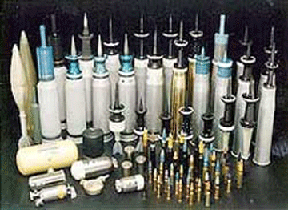 Iraqi Doctors Call Depleted Uranium Use “Genocide” TruthOut 14 October 2014 By Dahr Jamail,
“………..Basra Iraq’s southern city of Basra was heavily bombarded with DU munitions by US warplanes during the 1991 war.
Al-Ali, an expert oncologist at the Basra Cancer Treatment Center, was heavily involved in working on two birth defect studies carried out in the wake of that war.
“The types of birth defects were hydrocephaly [an abnormal buildup of cerebrospinal fluid (CSF) in the ventricles of the brain], anencephaly [the absence of a large part of the brain and the skull], cleft lip and phacomelia [loss of limbs],” al-Ali told Truthout. “Other consequences are the cancers which increased three-fold during the last two decades.”
He said that clusters of cancers occurring at higher incidence within the same family were another new phenomenon seen in Iraq only after the 1991 and 2003 wars.
“Other diseases related to effects of DU were the kidney failure of unknown cause and stone formation,” he added. “Respiratory problems like asthma and also myopathy and neuropathy are now very common as well.”
In Babil Province in southern Iraq, cancer rates have been escalating at alarming rates since 2003. Dr. Sharif al-Alwachi, the head of the Babil Cancer Center, blames the use of depleted uranium weapons by US forces during and following the 2003 invasion.
“The environment could be contaminated by chemical weapons and depleted uranium from the aftermath of the war on Iraq,” Alwachi told Truthout. “The air, soil and water are all polluted by these weapons, and as they come into contact with human beings they become poisonous. This is new to our region, and people are suffering here.”
According to a study published in the Bulletin of Environmental Contamination and Toxicology, there was a sevenfold increase in the number of birth defects in Basra between 1994 and 2003.
In addition, never before has such a high rate of neural tube defects (“open back”) been recorded in babies as in Basra, and the rate continues to rise. According to the study, the number of hydrocephalus (“water on the brain”) cases among newborns is six times as high in Basra as it is in the United States.
Childhood cancer also appears to be unusually prevalent in Basra.
“We have noticed bouts of malignant tumors affecting children’s limbs,” an Iraqi doctor who has worked in various parts of the country for 20 years told Truthout. He requested anonymity for security reasons. “These malignancies are usually of very aggressive types and in the view of the shortage of facilities we are running in our hospitals they usually have a fatal outcome.”
His prognosis was grim.
“The only help we can provide to those children is amputation, which sometimes does nothing but prolonging their suffering, in addition to the great psychological impact on both the child and the parents,” he said. “We know that it is possible to save most of these children in specialized oncology centers by advanced salvage surgery, with the attendant chemotherapy and radiotherapy. Unfortunately, this seems to be a kind fantasy for our government and health administrations, which are currently busy with the large amount of trauma overwhelming our hospitals’ resources.”…….http://www.truth-out.org/news/item/26703-iraqi-doctors-call-depleted-uranium-use-genocide
Radiation samples falsified to make Hunters Point look clean
 Contractor Submitted False Radiation Data at Hunters Point, NBC Bay Area In an internal report uncovered by the Investigative Unit, Tetra Tech says it provided the Navy false soil samples while working on the radiological cleanup of the Hunters Point shipyard By Vicky Nguyen, Liz Wagner and Felipe Escamilla Monday, Oct 13, 2014
A Navy contractor tasked with cleaning radioactive soil at the Hunters Point Naval Shipyard in San Francisco admitted in an internal report obtained exclusively by the NBC Bay Area Investigative Unit that it mishandled soil samples and submitted false data.
Tetra Tech, a multinational engineering, construction and environmental corporation details in an April 2014 report how it was caught submitting false soil samples to the Navy in an apparent effort to declare the soil free of radiological contamination when it may not have been. The Pasadena-based company is a $2.7 billion per year business that has won more than $300 million worth of contracts for cleanup work at Hunters Point………
“If the Navy had not caught this,” Bowers said, “there would be very, very high levels of contaminated soil, radioactive soil in the ground, where the plans are in place to build homes for the general public to live in, with yards for children to play in.”
Bowers is one of four radiation specialists who blew the whistle on Tetra Tech’s practices and are now suing the company for retaliation, claiming they were fired after questioning the company’s actions. Bowers first spoke with the Investigative Unit earlier this year saying the cleanup of Hunters Point had been compromised and that Tetra Tech cut corners on safety to save money……..http://www.nbcbayarea.com/investigations/Contractor-Submitted-False-Radiation-Data-at-Hunters-Point-279025911.html
The nuclear lobby astroturf group “Nuclear Matters” doesn’t matter
 Why Nuclear Matters doesn’t matter, Greenworld, by Michael Mariotte, 14 Oct 14 Regular readers of GreenWorld know that we have dropped a lot of digital ink writing about Nuclear Matters, the astroturf group launched by Exelon early this year to try to make the case to save the utility’s aging and uneconomic nuclear fleet.
Exelon and the PR firm Sloane and Company that runs the public end of Nuclear Matters have assembled a seemingly potent team of paid-for spokespeople to make the utility’s case: former Senators like Evan Bayh and Judd Gregg; former DOE secretary James Abraham; and the big catch, former EPA Administrator, Obama climate czar, and current League of Conservation Voters board chair Carol Browner.
These and others in Nuclear Matters’ assembled-team of backers have been writing (or, more likely, allowing their names to be used as having written) op-eds in publications across the country, appearing at Nuclear Matters-organized (ie Sloane and Company) events such as one in New York City the week of the People’s Climate March, and otherwise spreading the news that nuclear power is so important that it shouldn’t matter how costly to ratepayers or how old and unsafe a reactor is, it should keep operating for, apparently, perpetuity.
Maybe it’s just that the message isn’t exactly compelling. Or perhaps former politicians don’t carry the kind of clout Exelon needs. After all, making the case that millions of people should pay higher electricity rates than they otherwise would need to because, well, nuclear!, can’t be an easy sell to current politicians who have to answer to voters.
But the cat is out of the bag. In a remarkable column in which he tries to argue that Nuclear Matters should matter, Forbes’ incessant nuclear industry apologist James Conca inadvertently makes the case that it doesn’t matter. Continue reading
America’s EPA plans for renewable energy are too modest
 EPA Clean Power Plan Underestimates Power of Renewable Energy to Reduce Carbon Emissions, Union of Concerned Scientists,October 14, 2014 Steve Clemmer, director of energy research, Clean Energy UCS released a new analysis today showing that strengthening the contribution from renewable energy can significantly increase the emissions reductions from the EPA’s 2014 Clean Power Plan. We found that increasing non-hydro renewable energy sources from about 6 percent of U.S. electricity sales today to 23 percent by 2030—or nearly twice as much renewable energy as the EPA proposed—could raise the reductions in U.S. power plant carbon emissions from the EPA’s estimated 30 percent below 2005 levels by 2030 to 40 percent. We also found that increasing renewables to these levels is affordable, resulting in little impact on electricity prices and lowering natural gas prices for both utilities and consumers.
The EPA’s renewable energy targets are modest
This post is part of a series on th eEPA Clean Power Plan.
To establish emission rate reduction targets for each state, the EPA proposed four “building blocks” to identify cost-effective ways to reduce emissions from existing power plants. In addition to increasing renewable energy, these building blocks included improving efficiency at existing coal plants, fuel switching from coal to natural gas, increasing energy efficiency in homes and business, and including the generation from new and “at-risk” nuclear power plants. Importantly, the EPA gives the states flexibility in deciding how much of each building block to include, with some limitations.
Unfortunately, the EPA’s proposed approach for renewables — based on averaging the 2020 targets of existing state renewable electricity standards (RES) within each of six regions nationwide — resulted in very modest targets. Our analysis shows that the EPA’s targets include less renewable energy than what the Energy Information Administration (EIA) projects will occur by 2020 under a business as usual scenario (i.e. without the carbon rule), and only slightly more by 2030 (Figure 1).
The EPA’s proposed approach also produced several counter-intuitive results at the state level. For example,seven states had less renewable generation in 2030 under EPA’s targets than they have today. And 17 of the 29 states with RESs have lower targets under the EPA’s approach than what is required to meet their existing laws. The EPA’s approach also does not capture any of the recent or projected growth in renewables between 2012 and 2017…….http://blog.ucsusa.org/epa-clean-power-plan-underestimates-power-of-renewable-energy-to-reduce-carbon-emissions-682
CIA chief and Defense Secretary Leon Panetta opens debate on nuclear strike plans
Panetta Sparks Debate Over U.S. Nuclear Strike on North Korea NewsWeek, By Lauren Walker and Jeff Stein 14 Oct 14, The specter of nuclear mushroom clouds rising over northeast Asia has long been a staple of nightmare scenarios in the event of another war between North and South Korea. It’s a prospect so apocalyptic that American officials have rarely articulated exactly what would trigger their use of weapons that could instantly kill millions and make the entire peninsula uninhabitable for decades.
In a memoir published last week, however, former CIA chief and Defense Secretary Leon Panetta reopened the prickly issue, recalling a chilling, 2010 briefing in Seoul by General Walter L. “Skip” Sharp, the commander of U.S. forces in South Korea, who told him just such a nightmare could come true should communist forces pour across the DMZ as they did in 1950.
“If North Korea moved across the border, our war plans called for the senior American general on the peninsula to take command of all U.S. and South Korea forces and defend South Korea— including by the use of nuclear weapons, if necessary,” Panetta writes in “Worthy Fights: A Memoir of Leadership in War and Peace.”………
Richard Fisher, a senior fellow at the non-partisan International Assessment and Strategy Center in Washington, D.C., said American officials have “likely” discussed the first use of nuclear weapons privately with South Korea and Japan through the years. But he was surprised to see Panetta’s remarks, telling Newsweek, “it is rare to have this recounted publicly by such a recently serving former senior official.”
Washington’s policy on using nuclear weapons to deter a North Korean invasion could be likened to Israel’s position of “studied ambiguity” on its atomic stockpiles – or just official confusion, judging from the reaction to Panetta’s remarks. Although the U.S. first deployed tactical nukes to the peninsula in 1958, American officials shied from affirming their presence until the mid-1970s, when U.S. forces were routed in Vietnam and Seoul threatened to develop its own deterrent should U.S. troops depart. Even though President George H.W. Bush began withdrawing nuclear weapons from South Korean soil and U.S. ships off the peninsula in 1991 – a process continued in 2010 when President Barack Obama retired them from submarines as well – U.S.-South Korean communiques over the years have cited “extended [nuclear] deterrence” from afar as policy.
But arms control specialist Jeffrey Lewis dismissed the prospect of the U.S. ever resorting to nuclear weapons to obliterate North Korea. “We [are] simply telling the South Koreans what they want to hear,” said Lewis, director of the East Asia Nonproliferation Program at the Monterey Institute of International Studies, of Panetta’s tale. “But the reality is that the United States wouldn’t use nuclear weapons against North Korea any more than it did against Iraq.”
South Korea knows this, Lewis maintains. ”The problem with placing a misleading emphasis on nuclear weapons [that] we never plan to use is the rhetoric comes back to haunt us when South Korean politicians argue that Seoul should build a bomb,” he told Newsweek.
Constantly framing the issue in terms of a potential North Korean invasion is also misleading, says Roehrig, director of the Naval War College’s Asia-Pacific Studies Group…….. http://www.newsweek.com/panetta-sparks-debate-over-us-nuclear-strike-north-korea-277432
The week in nuclear news

Christina Macpherson’s websites & blogs
Japan. Authorities exercise tight control over public meetings held to persuade communities to back nuclear power.
Following typhoon, record levels of ‘highly toxic’ nuclear material near Fukushima reactor
 Officials: Typhoon caused significant increase in radioactive releases from Fukushima — Record levels of ‘highly toxic’ nuclear material found in ground outside reactor — Among the most poisonous substances at plant http://enenews.com/officials-typhoon-caused-significant-increase-radioactive-releases-fukushima-record-levels-highly-toxic-nuclear-material-found-ground-reactor-among-poisonous-substances-plant?utm_source=feedburner&utm_medium=email&utm_campaign=Feed%3A+ENENews+%28Energy+News%29 10 Oct 14
Radiological Fact Sheet; [It’s] possible to dissolve Co-60… making it a potential inhalation or ingestion hazard… Inhaled Co-60 contamination can give high radiation dose to lungs…Ingested insoluble Co-60 can give high radiation dose to the intestinal tract, while soluble Co-60 distributes fairly evenly through the body… “hot” particles can give very high dose locally, in area of particle… 45% of Co-60 that enters the blood is evenly distributed through the body…
Michael Maqua, nuclear expert and head of plant engineering at GRS, Oct. 10, 2014: Over the past days, the concentration of radioactive substances in the groundwater has increased significantly at some of the plant’s measuring points and, according to TEPCO, this was caused by the recent heavy rains… Contaminated water… is in fact constantly reaching sea water… caused, for example, by leakages in building structures
From Oct. 6: Typhoon triggers alarm at Fukushima — Warning of leakage at Units 1, 3
USA’s new Generic Environmental Impact Statement (GEIS) not a basis for new nuclear power development
expect to see the issue end up back in federal court, where judges will have to determine whether the NRC’s unwillingness to adopt an actual waste “confidence” policy, instead relying on an assertion that current waste practice is good enough, meets the requirements of the Atomic Energy Act.
 Still no confidence in NRC radwaste policy http://safeenergy.org/2014/09/29/still-no-confidence-in-nrc-radwaste-policy/On June 8, 2012, a federal court threw out the Nuclear Regulatory Commission’s “waste confidence” policy, setting into motion a chain of events that still hasn’t stopped rattling the commission and the entire nuclear power industry.
The court ruled that with the shutdown of the proposed Yucca Mountain, Nevada, radioactive waste repository and no new repository on the horizon, the NRC had no basis to say that it had confidence that radioactive waste would always be managed safely.
Since the Atomic Energy Act requires that the NRC have such confidence in order to issue reactor licenses (and license renewals), the NRC was forced to institute a moratorium on issuance of all reactor licenses.
At the time, the NRC staff said a thorough job on a new policy to replace the “waste confidence” policy would take seven years of work. But the NRC Commissioners decided to rush the job and this summer issued a Generic Environmental Impact Statement (GEIS) that it said functions as a substitute for the policy.
There are a couple (well, at least a couple) problems with this approach. Continue reading
Julian Assange’s new book ‘When Google Met WikiLeaks’
In his latest book, Julian Assange brings some much-needed transparency to one of the most nebulous global corporations.
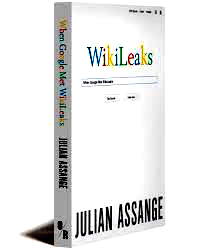 Wikileaks meets Surveillance Valley: An interview with Julian Assange Czech News Agency BY JOSEPH FLATLEY ON OCTOBER 12, 2014 “The problem,” says Julian Assange, is that “a lot of groups that would normally criticize Google, the nonprofits that are involved in the tech sector, are funded directly or indirectly by Google. Or by USAID. Or by Freedom House. Google and its extended network have significant patronage in the very groups that would normally be criticizing it.”…….
1 This Month
26 April – Chernobyl: Inside the Meltdown airs on National Geographic on Sunday 26th April from 4pm
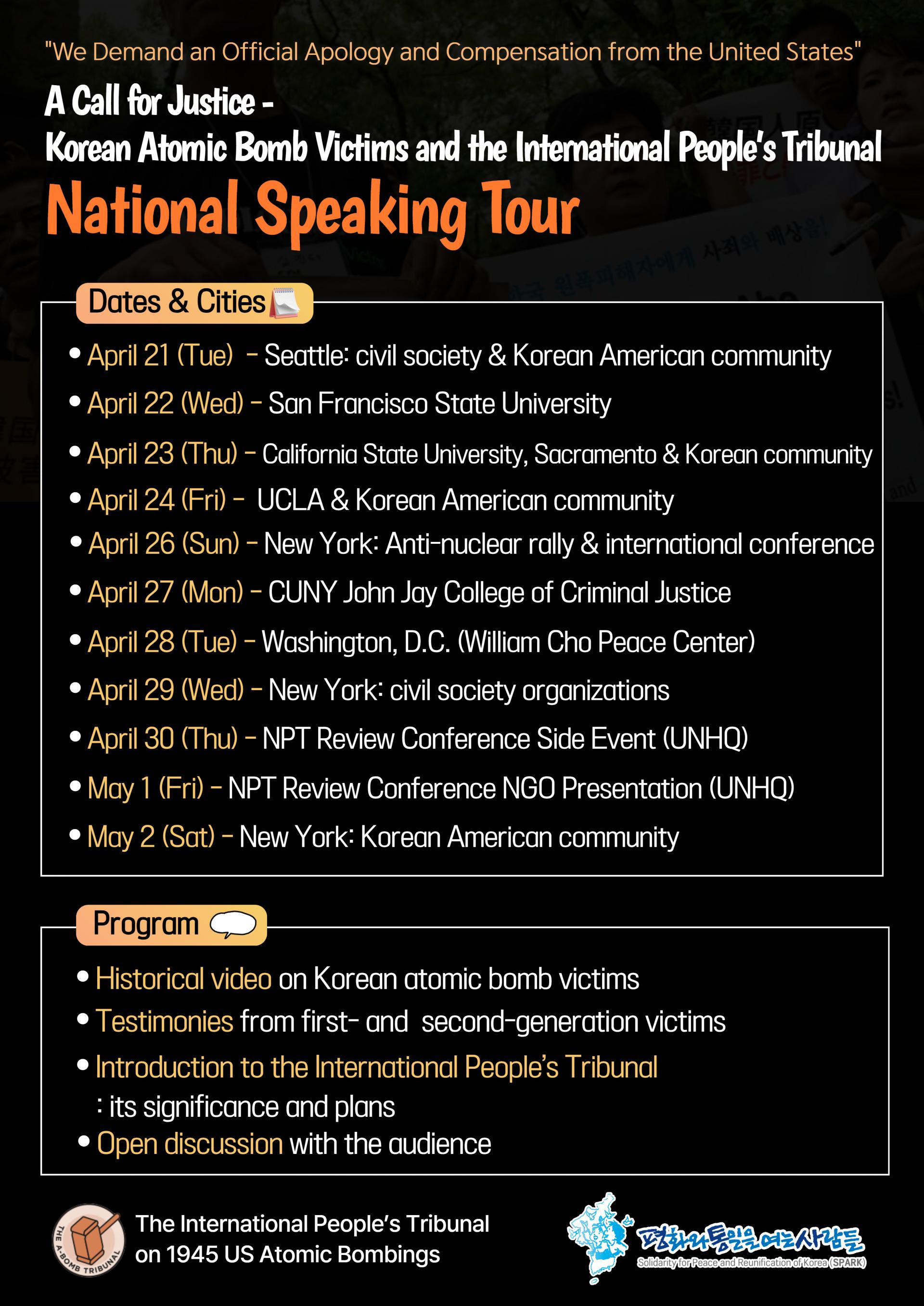
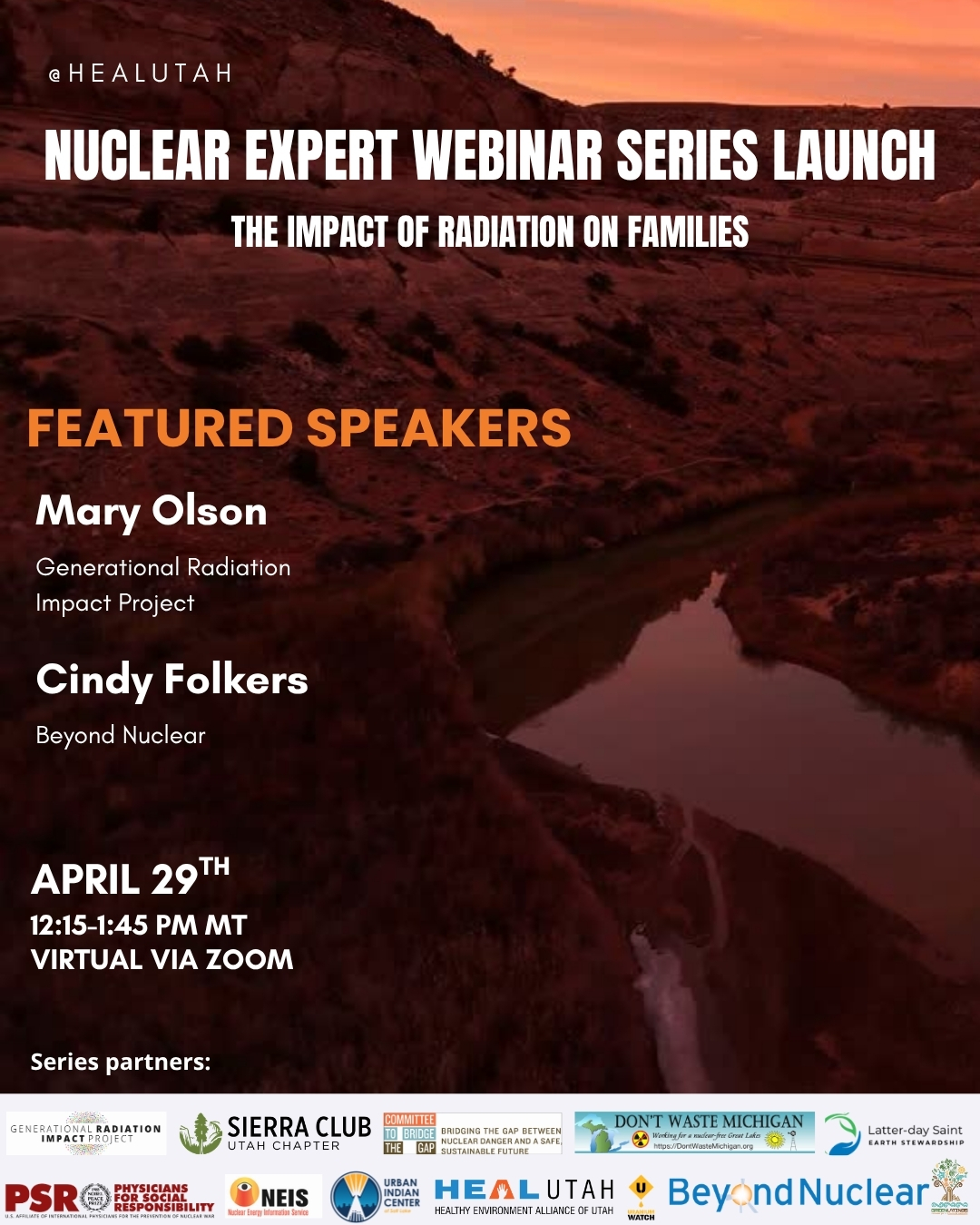
29 April – Nuclear Expert Webinar #1 – Radiation Impacts on Families with Mary Olson and Cindy Folkers
- 12:15 PM MT – 1:45 PM MT
- Location: Virtual – REGISTER TODAY

4 May -West Suburban Peace Coalition to discuss Iran war at May Educational Forum
Monday, May 4, 7:00 – 8:00 PM Central Standard Time
Title: : How Trump’s Narrative Tries to Shape the Reality of the War on Iran.
Contact Walt Zlotow, zlotow@hotmail.com 630 442 3045 for further information
14 May – online event From Bombs to Data Centres: the Face of Nuclear Colonialism

Pine Ridge Uranium is the real threat, not Tehran- Tell Burgum: Stop the Extraction.
Chernobyl: The Lost Tapes – A good documentary on Chernobyl on SBS available On Demand for the next 3 weeks– https://www.sbs.com.au/ondemand/tv-program/chernobyl-the-lost-tapes/2352741955560
To see nuclear-related stories in greater depth and intensity – go to https://nuclearinformation.wordpress.com
-
Archives
- April 2026 (288)
- March 2026 (251)
- February 2026 (268)
- January 2026 (308)
- December 2025 (358)
- November 2025 (359)
- October 2025 (376)
- September 2025 (257)
- August 2025 (319)
- July 2025 (230)
- June 2025 (348)
- May 2025 (261)
-
Categories
- 1
- 1 NUCLEAR ISSUES
- business and costs
- climate change
- culture and arts
- ENERGY
- environment
- health
- history
- indigenous issues
- Legal
- marketing of nuclear
- media
- opposition to nuclear
- PERSONAL STORIES
- politics
- politics international
- Religion and ethics
- safety
- secrets,lies and civil liberties
- spinbuster
- technology
- Uranium
- wastes
- weapons and war
- Women
- 2 WORLD
- ACTION
- AFRICA
- Atrocities
- AUSTRALIA
- Christina's notes
- Christina's themes
- culture and arts
- Events
- Fuk 2022
- Fuk 2023
- Fukushima 2017
- Fukushima 2018
- fukushima 2019
- Fukushima 2020
- Fukushima 2021
- general
- global warming
- Humour (God we need it)
- Nuclear
- RARE EARTHS
- Reference
- resources – print
- Resources -audiovicual
- Weekly Newsletter
- World
- World Nuclear
- YouTube
-
RSS
Entries RSS
Comments RSS
 nuclear-news