Hinkley nuclear project is a really bad deal for the British consumer
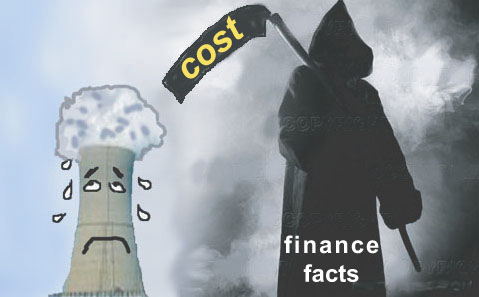
 Comment: Why is Hinkley a bad deal for the UK consumer? Energy desk 8 Oct 14 The world of energy is changing. The world’s largest private bank, UBS, has recently advised its clients that large centralised power stations (like Hinkley) are not the future – solar power, electric cars and cheaper storage batteries are. Meanwhile, tech leaders Google have invested $3.2bn in Nest, a smart home energy company.
Yet our energy policy in the UK seems stuck in the past, with government’s Electricity Market Reform seemed largely to be based on getting nuclear stations built – with a generous price for 35 years of supply for the proposed new 3.2GW EDF reactor at Hinkley which will cost £24.5bn to build and open at the earliest in 2023.
Today the European Commission has decided to approve state aid subsidies for two reactors at Hinkley Point, Somerset – despite the Commission estimating the deal between UK government and NNBGeneco (a subsidiary of EDF) willcost up to £17.6bn in subsidies from the British energy billpayer.
However, according to my calculations the total (undiscounted) subsidy to Hinkley over its lifetime would be much higher at £37bn, with a £14 increase per household per year.
This is based a 35-year index-linked price guarantee (‘strike price’) of £92.50 per MWh, which is is almost twice that of the UK wholesale electricity market price of around £50/MWh. This means that the British public funds the difference between the amount EDF will be paid and the market price – which at present seems unlikely to go up much.
Nuclear has been delivering power at the same real cost for over 50 years and it would require a huge level of optimism based on little evidence to suppose that historic flat-lining would be changed now.
Already, the cost benefits of learning from building a number of EPRs (the proposed reactor model for Hinkley) across Europe seems to have disappearedbecause the price for Hinkley seems to be as big or bigger than the first plants in Finland and France.
In contrast renewable energy is on a downward price curve, in the case of solar very rapidly indeed, and subsidy may be justified in bringing a technology to its technological potential.
So, so many subsidies
Also part of the deal is a whole host of protections – implicit subsidies by any other name – that are specific to Hinkley, including:
-
Loan guarantees – If costs overrun or the plant defaults the government (read billpayers) will cover the repayment of the first £10bn to investors.
-
There will be two re-negotiations of the strike price, 15 and 25 years after the plant starts to generate. At these two re-openers, the strike price might be increased following raises of operating costs, including increases in fuel costs and maintenance.
-
And, another interesting detail is that the deal includes protection against curtailment (the plant stops running) in case of “the evolution of power systems”, according to the CEO of EDF. What this means is that if the energy mix changes to include more renewables, storage, and demand-side management, the plant will be given preferential grid access or payment for power (presumably at the strike price) that would otherwise have been produced. This curtailment risk cover is also understood to extend to changes in political decision making or changes in law based on environmental and safety reasons.
-
As a large generating unit, having 3.2GW on the Grid potentially going off at short notice requires the rest of the Grid to accommodate it andthese costs – £160m a year – are being shared by everyone including renewable generators, not paid for by the Hinkley development.
In addition to all this – on top of of the Commission’s estimate and outside of state aid considerations – Hinkley will also receive other long-standing protections that are given to all nuclear plants. Firstly, limitations on liability in case of an accident up to £1.06bn – after which bill payers foot the bill (liability costs from Fukushima are around $100bn and rising). And secondly, planned subsidies of as much as £15.72bn for radioactive waste management from new reactors.
All of this adds up to the fact supporting Hinkley is not a cost-effective option for the UK power supply. As Professor Mitchell of Exeter University puts it in relation to the grid arrangements: “There is no justification for nuclear being exempted from paying the additional costs to the system other than to make nuclear look cheaper than it is relative to other sources of electricity.”
Renewables at a disadvantage
The Chief Technology Officer at Siemens has said that renewables developers would ‘give an arm and a leg, at least’ for the kind of terms being offered to nuclear in UK – yet even so, some renewables will be cheaper at a headline level than nuclear by the time Hinkley opens in 2023 at the earliest.
But most of the support for Hinkley is not available to low carbon generators like renewables, or not available at the same rate……….http://www.greenpeace.org.uk/newsdesk/energy/analysis/comment-why-hinkley-bad-deal-uk-consumer
No comments yet.
1 This Month
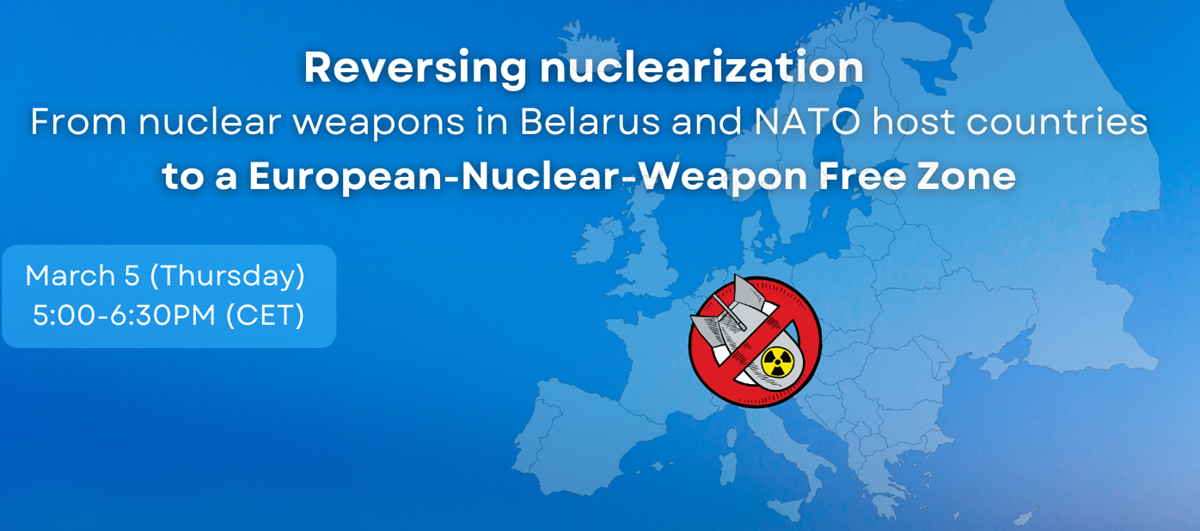
5 March -Online – Reversing nuclearization:
From nuclear weapons in Belarus and NATO host countries to a European-Nuclear-Weapon Free Zone
11am-12:30pm Eastern Time USA / 5pm-6:30pm CET

of the week – Advocating for a
nuclear free beach – https://www.samuellawrencefoundation.org/
The Samuel Lawrence Foundation advocates for a Nuclear Waste Free Beach at San Onofre, join us and take action!

10 March A LIVE WEBINAR THE REAL EFFECTS OF NUCLEAR POWER
What the Industry Isn’t Telling Us
1:00 PM Mountain, 2 pm Central, 3 pm Eastern. Live on the Keepers of the Water Facebook page

18 March Webinar @ 1 PM EST: An Assessment of SMR Projects: The Case of Canada
register for the zoom:
https://us02web.zoom.us/webinar/register/WN_o8BIIOUvQ2ONJR1nta65DQ#/registration

of the week – STOP SMALL MODULAR REACTORS IN CANADA
To see nuclear-related stories in greater depth and intensity – go to https://nuclearinformation.wordpress.com
-
Archives
- March 2026 (51)
- February 2026 (268)
- January 2026 (308)
- December 2025 (358)
- November 2025 (359)
- October 2025 (376)
- September 2025 (258)
- August 2025 (319)
- July 2025 (230)
- June 2025 (348)
- May 2025 (261)
- April 2025 (305)
-
Categories
- 1
- 1 NUCLEAR ISSUES
- business and costs
- climate change
- culture and arts
- ENERGY
- environment
- health
- history
- indigenous issues
- Legal
- marketing of nuclear
- media
- opposition to nuclear
- PERSONAL STORIES
- politics
- politics international
- Religion and ethics
- safety
- secrets,lies and civil liberties
- spinbuster
- technology
- Uranium
- wastes
- weapons and war
- Women
- 2 WORLD
- ACTION
- AFRICA
- Atrocities
- AUSTRALIA
- Christina's notes
- Christina's themes
- culture and arts
- Events
- Fuk 2022
- Fuk 2023
- Fukushima 2017
- Fukushima 2018
- fukushima 2019
- Fukushima 2020
- Fukushima 2021
- general
- global warming
- Humour (God we need it)
- Nuclear
- RARE EARTHS
- Reference
- resources – print
- Resources -audiovicual
- Weekly Newsletter
- World
- World Nuclear
- YouTube
-
RSS
Entries RSS
Comments RSS
 nuclear-news
Leave a comment