The week in nuclear news

Christina Macpherson’s websites & blogs
Japan. Authorities exercise tight control over public meetings held to persuade communities to back nuclear power.
Following typhoon, record levels of ‘highly toxic’ nuclear material near Fukushima reactor
 Officials: Typhoon caused significant increase in radioactive releases from Fukushima — Record levels of ‘highly toxic’ nuclear material found in ground outside reactor — Among the most poisonous substances at plant http://enenews.com/officials-typhoon-caused-significant-increase-radioactive-releases-fukushima-record-levels-highly-toxic-nuclear-material-found-ground-reactor-among-poisonous-substances-plant?utm_source=feedburner&utm_medium=email&utm_campaign=Feed%3A+ENENews+%28Energy+News%29 10 Oct 14
Radiological Fact Sheet; [It’s] possible to dissolve Co-60… making it a potential inhalation or ingestion hazard… Inhaled Co-60 contamination can give high radiation dose to lungs…Ingested insoluble Co-60 can give high radiation dose to the intestinal tract, while soluble Co-60 distributes fairly evenly through the body… “hot” particles can give very high dose locally, in area of particle… 45% of Co-60 that enters the blood is evenly distributed through the body…
Michael Maqua, nuclear expert and head of plant engineering at GRS, Oct. 10, 2014: Over the past days, the concentration of radioactive substances in the groundwater has increased significantly at some of the plant’s measuring points and, according to TEPCO, this was caused by the recent heavy rains… Contaminated water… is in fact constantly reaching sea water… caused, for example, by leakages in building structures
From Oct. 6: Typhoon triggers alarm at Fukushima — Warning of leakage at Units 1, 3
USA’s new Generic Environmental Impact Statement (GEIS) not a basis for new nuclear power development
expect to see the issue end up back in federal court, where judges will have to determine whether the NRC’s unwillingness to adopt an actual waste “confidence” policy, instead relying on an assertion that current waste practice is good enough, meets the requirements of the Atomic Energy Act.
 Still no confidence in NRC radwaste policy http://safeenergy.org/2014/09/29/still-no-confidence-in-nrc-radwaste-policy/On June 8, 2012, a federal court threw out the Nuclear Regulatory Commission’s “waste confidence” policy, setting into motion a chain of events that still hasn’t stopped rattling the commission and the entire nuclear power industry.
The court ruled that with the shutdown of the proposed Yucca Mountain, Nevada, radioactive waste repository and no new repository on the horizon, the NRC had no basis to say that it had confidence that radioactive waste would always be managed safely.
Since the Atomic Energy Act requires that the NRC have such confidence in order to issue reactor licenses (and license renewals), the NRC was forced to institute a moratorium on issuance of all reactor licenses.
At the time, the NRC staff said a thorough job on a new policy to replace the “waste confidence” policy would take seven years of work. But the NRC Commissioners decided to rush the job and this summer issued a Generic Environmental Impact Statement (GEIS) that it said functions as a substitute for the policy.
There are a couple (well, at least a couple) problems with this approach. Continue reading
Julian Assange’s new book ‘When Google Met WikiLeaks’
In his latest book, Julian Assange brings some much-needed transparency to one of the most nebulous global corporations.
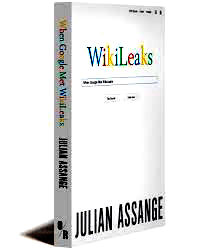 Wikileaks meets Surveillance Valley: An interview with Julian Assange Czech News Agency BY JOSEPH FLATLEY ON OCTOBER 12, 2014 “The problem,” says Julian Assange, is that “a lot of groups that would normally criticize Google, the nonprofits that are involved in the tech sector, are funded directly or indirectly by Google. Or by USAID. Or by Freedom House. Google and its extended network have significant patronage in the very groups that would normally be criticizing it.”…….
Media panic on Ebola threat – media silence of Fukushima radiation threat
 Fukushima Radiation vs Ebola Outbreak http://warr-blog.blogspot.com.au/ , BY WARR LORD OCTOBER 12, 2014 The contrast between news coming out on the Fukushima nuclear meltdown and the ebola outbreak could not be more stark. The mainstream media is completely saturated with news of the ebola virus outbreak. The Obama Administration’s refusal to restrict air travel from Africa is already becoming an election issue in America. This is as it should be, because ebola is a very scary disease. It isoverwhelming west-central Africa and kills about 70% of its victims in short order. Now Europe and America are experiencing their first cases of ebola.
Hinkley nuclear project is a really bad deal for the British consumer
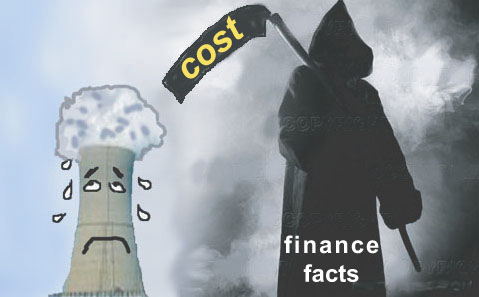
 Comment: Why is Hinkley a bad deal for the UK consumer? Energy desk 8 Oct 14 The world of energy is changing. The world’s largest private bank, UBS, has recently advised its clients that large centralised power stations (like Hinkley) are not the future – solar power, electric cars and cheaper storage batteries are. Meanwhile, tech leaders Google have invested $3.2bn in Nest, a smart home energy company.
Yet our energy policy in the UK seems stuck in the past, with government’s Electricity Market Reform seemed largely to be based on getting nuclear stations built – with a generous price for 35 years of supply for the proposed new 3.2GW EDF reactor at Hinkley which will cost £24.5bn to build and open at the earliest in 2023.
Today the European Commission has decided to approve state aid subsidies for two reactors at Hinkley Point, Somerset – despite the Commission estimating the deal between UK government and NNBGeneco (a subsidiary of EDF) willcost up to £17.6bn in subsidies from the British energy billpayer.
However, according to my calculations the total (undiscounted) subsidy to Hinkley over its lifetime would be much higher at £37bn, with a £14 increase per household per year.
This is based a 35-year index-linked price guarantee (‘strike price’) of £92.50 per MWh, which is is almost twice that of the UK wholesale electricity market price of around £50/MWh. This means that the British public funds the difference between the amount EDF will be paid and the market price – which at present seems unlikely to go up much.
Nuclear has been delivering power at the same real cost for over 50 years and it would require a huge level of optimism based on little evidence to suppose that historic flat-lining would be changed now.
Already, the cost benefits of learning from building a number of EPRs (the proposed reactor model for Hinkley) across Europe seems to have disappearedbecause the price for Hinkley seems to be as big or bigger than the first plants in Finland and France.
In contrast renewable energy is on a downward price curve, in the case of solar very rapidly indeed, and subsidy may be justified in bringing a technology to its technological potential.
So, so many subsidies
Also part of the deal is a whole host of protections – implicit subsidies by any other name – that are specific to Hinkley, including:
-
Loan guarantees – If costs overrun or the plant defaults the government (read billpayers) will cover the repayment of the first £10bn to investors.
-
There will be two re-negotiations of the strike price, 15 and 25 years after the plant starts to generate. At these two re-openers, the strike price might be increased following raises of operating costs, including increases in fuel costs and maintenance.
-
And, another interesting detail is that the deal includes protection against curtailment (the plant stops running) in case of “the evolution of power systems”, according to the CEO of EDF. What this means is that if the energy mix changes to include more renewables, storage, and demand-side management, the plant will be given preferential grid access or payment for power (presumably at the strike price) that would otherwise have been produced. This curtailment risk cover is also understood to extend to changes in political decision making or changes in law based on environmental and safety reasons.
-
As a large generating unit, having 3.2GW on the Grid potentially going off at short notice requires the rest of the Grid to accommodate it andthese costs – £160m a year – are being shared by everyone including renewable generators, not paid for by the Hinkley development.
In addition to all this – on top of of the Commission’s estimate and outside of state aid considerations – Hinkley will also receive other long-standing protections that are given to all nuclear plants. Firstly, limitations on liability in case of an accident up to £1.06bn – after which bill payers foot the bill (liability costs from Fukushima are around $100bn and rising). And secondly, planned subsidies of as much as £15.72bn for radioactive waste management from new reactors.
All of this adds up to the fact supporting Hinkley is not a cost-effective option for the UK power supply. As Professor Mitchell of Exeter University puts it in relation to the grid arrangements: “There is no justification for nuclear being exempted from paying the additional costs to the system other than to make nuclear look cheaper than it is relative to other sources of electricity.”
Renewables at a disadvantage
The Chief Technology Officer at Siemens has said that renewables developers would ‘give an arm and a leg, at least’ for the kind of terms being offered to nuclear in UK – yet even so, some renewables will be cheaper at a headline level than nuclear by the time Hinkley opens in 2023 at the earliest.
But most of the support for Hinkley is not available to low carbon generators like renewables, or not available at the same rate……….http://www.greenpeace.org.uk/newsdesk/energy/analysis/comment-why-hinkley-bad-deal-uk-consumer
Cut back nuclear power, champion renewable energy – France’s parliament votes
 French MPs back cut to nuclear energy reliance http://www.reuters.com/article/2014/10/10/us-france-energy-idUSKCN0HZ1LB20141010 (Reuters) – A law which fixes a target of reducing French nuclear power production from 75 percent of the country’s energy supplies to 50 percent by 2025 won approval from the lower house of parliament on Friday.
France, the world’s most nuclear-reliant country, has faced increasing costs because of the price of maintaining aging plants and tighter regulations after the Fukushima disaster inJapan.
It also wants to develop its own industrial champions in the renewable energy industry, which is still tiny compared to other European countries such as neighbors Germany or Spain.
Its much-delayed energy transition law, steered by energy minister Segolene Royal, is being reviewed by the national assembly under a fast-track procedure, to counter the thousands of amendments proposed by opposition MPs. Although the bill skirts the question of how the reduction in theshare of nuclear energy is supposed to happen — it does not single out any reactor for closure, for instance – it caps nuclear electricity capacity at the current 63.2 gigawatts.
That would force EDF, which operates all of France’s nuclear reactors, to close an equivalent capacity when it launches the 1.6 gigawatt next-generation Flamanville reactor, due in 2016.
Royal said earlier this week the utility could choose to close another plant than Fessenheim, France’s oldest and the one Hollande had promised to shut down.
The whole bill is expected to be approved next Tuesday before being sent to the country’s upper house early next year, with the view to final adoption in the spring, in time for a high-profile climate conference hosted in Paris in 2015.
The bill also introduced a goal to halve the country’s energy consumption between 2012 and 2050, with a midway target of a 20 percent cut by 2030, thanks to tax rebates on insulation work and bonuses for electric car buyers.
France’s energy deficit — the difference between the money it spends on energy imports such as oil and gas and the money it earns on exports such as electricity — amounted to 66 billion euros ($83 billion) in 2013.
That compares with a wider trade deficit of 62.2 billion euros.
(Reporting by Emile Picy; Writing by Michel Rose; editing by Keith Weir)
US nuclear regulation expert says Japan needs a national debate on nuclear dangers
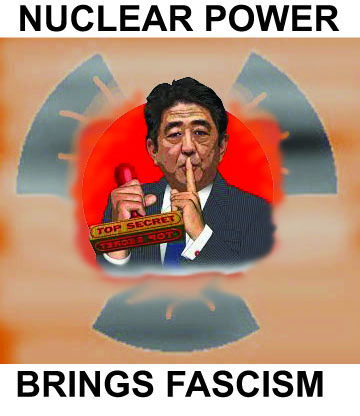 Japan needs a national debate on nuclear risks, ex-U.S. regulator says, Japan Times, KYODO OCT 9, 2014 Japan needs to hold a national debate on what nuclear power-related risks are acceptable before it restarts reactors idled after the 2011 Fukushima meltdowns, a former top official with the U.S. Nuclear Regulatory Commission said.
“There has to be a national dialogue on the level of risk acceptable for people, because in the end, the people of any country determine” what risks they are willing to accept, said Charles Casto, who advised Japan on behalf of the U.S. government in the wake of the March 2011 Fukushima No. 1 meltdown crisis.
“The elected officials may believe they have control of that, but . . . the people will stand up if they don’t accept the level of risk,” he told a press conference in Tokyo on Wednesday.
All of Japan’s 48 commercial reactors are offline, but the government of Prime Minister Shinzo Abe is eager to restart them…….http://www.japantimes.co.jp/news/2014/10/09/national/japan-needs-national-debate-nuclear-risks-ex-u-s-regulator-says/#.VDw_wWddUnl
What a mess South Africa’s new ‘nuclear deal’ is in !
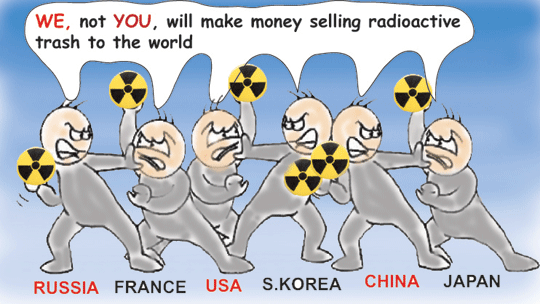
 Bid to stem fallout from nuclear ‘deal’ IOL. October 12 2014 By Wiseman Khuzwayo The apparent deficiencies in how the nuclear deal with Russia was handled have sent President Jacob Zuma’s office into overdrive in trying to contain the fallout from indications proper procedures had not been followed.
The nuclear build from this agreement reportedly will cost South Africa a record R3 trillion.
To stem the tide of criticism, Zuma’s spokesman, Mac Maharaj, said on Friday that the president had granted Energy Minister Tina Joemat-Pettersson authority to sign a similar agreement with the French government.
This is obviously the administration’s attempt to mitigate the fallout. Maharaj said Zuma had granted the same authority to the energy minister to sign the earlier controversial agreement with Russia.
On Wednesday, Beeld newspaper reported that Joemat-Pettersson had been alone when she signed the “mysterious” agreement with Russia.
According to the report, the rest of the South African delegation attending the general conference of the International Atomic Agency in Vienna was told to go and wait somewhere else because the meeting with Russia was “private”.
The announcement on September 22 followed a secretive trip to Moscow by Zuma and prompted allegations that the government was dodging procurement policies.
This then prompted officials from the Department of Energy to call a press conference to placate the critics………
Lance Greyling, DA spokesman on energy, said on Friday that Joemat-Pettersson and officials of Rosatom must, with urgency, appear before the energy portfolio committee.
He said they must account for what appeared to be a deal riddled with irregularities.
Greyling said in a bizzare attempt to deflect criticism regarding the secret agreement, Rosatom had blamed a poor translation of its statement as the cause of misunderstanding behind the agreement, disavowing its earlier claim of having been awarded the contract.
“The desperate move comes as South Africans express clear dissatisfaction with the lack of transparency surrounding the ‘agreement’, which is set to cost the fiscus nearly R3 trillion.”
The National Union of Mineworkers does not support the agreement. Its national executive committee said it believed there had to be transparency and a tendering process. http://www.iol.co.za/business/news/bid-to-stem-fallout-from-nuclear-deal-1.1763840#.VDyy_GddUnk
Nuclear lobby strategy of sucking in buyers: Westinghouse financing new reactor sales
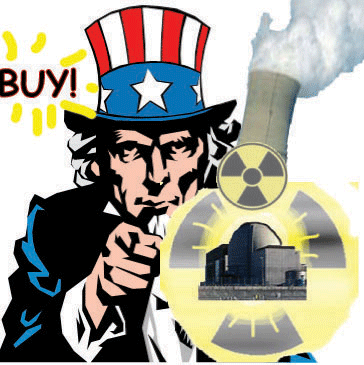 Westinghouse offers to co-finance new nuclear reactors 12 October 2014 Czech News Agency
No decision on a new tender has been made but expansion remains possible Prague, Oct 12 (ČTK) — US-Japanese company Westinghouse Electric Company, which earlier took part in the tender to extend Czech nuclear power plant Temelin, has offered to co-finance the construction of new nuclear sources in the Czech Republic, Westinghouse CR head Pavel Janík has told the Czech News Agency.
Westinghouse’s offer has also been confirmed to ČTK by the ministries of finance and industry.
“I can confirm that the management of our company has sent such an offer. We are ready to hold talks with the Czech government about the models of nuclear plant construction financing which are used in the development of AP1000 plant projects in the USA and Bulgaria,” said Janík.
Westinghouse already uses similar models in Bulgaria and Britain.
Czech power utility ČEZ, the operator of Temelín, canceled the tender for the plant’s extension in April this year. The main reason was the government’s decision not to provide financial guarantees for purchasing prices of electricity from the extended plant.
The costs of Temelín’s completion were estimated at between 200 billion Kč and 300 billion Kč………
“The Industry and Trade Ministry welcomes this information (Westinghouse’s offer),” Miroslav Kyncl of the ministry’s press department said.
The other bidders in the canceled Temelín tender were Czech-Russian consortium MIR.1200 and France’s Areva. Areva was later excluded…….http://www.praguepost.com/technology/42037-westinghouse-offers-to-co-finance-new-nuclear-reactors
13 USA election candidates who want to seize public lands for uranium mining etc
there are currently 13 candidates up for election in November who want to sell or seize public lands for drilling, mining, or logging and seven senators not up for reelection, including four Arizonans: Sen. McCain, Sen. Jeff Flake, U.S. Rep. Trent Franks, and State Rep. Andy Tobin.

 Federal Court: One Million Acres Near Grand Canyon Protected From Mining, Think Progress, BY ARI PHILLIPS OCTOBER 10, 2014 In early October, an Arizona federal judge upheld the Obama Administration’s 2012 withdrawal of over one million acres of federal lands surrounding Grand Canyon National Park from uranium mining. Originally imposed by then-Secretary of the Interior Ken Salazar, the mining industry challenged the ban arguing that the 700-page Environmental Impact Statement was inadequate, failed to address “scientific controversies”, and was unconstitutional.
and several sacred Native American sites. According to the government’s study, removing the ban would mean that 26 new uranium mines and 700 uranium exploration projects could be developed.
According Roger Clark, air quality and clean energy director at the Grand Canyon Trust, the ruling affirms conclusions by five federal agencies, including scientists from the U.S. Geological Survey — that uranium mining poses unacceptable risks to Grand Canyon’s water, wildlife, and people.
“Uranium mines threaten hundreds of the Grand Canyon seeps and springs that provide precious water to thousands of desert-dwelling species,” wroteClark. “Every new mine sacrifices cultural sites and fragments wildlife habitat, polluting the park with dirt roads, dust, heavy machinery, noise, off-road drilling rigs, power lines, and relentless truck traffic.”………
When Salazar first banned this block of 633,547 acres of public lands and 360,002 acres of National Forest land from mining in 2012, a number of politicians objected, including U.S. Senators Orrin Hatch (R-UT), John McCain (R-AZ), John Barrasso (R-WY), and Mike Lee (R-UT). Sen. Hatch said mining the land “poses no environmental threat” and that the announcement was another sign that the Obama Administration “is one of the most anti-American energy presidencies in history.”
Fast-forward two years later and there are currently 13 candidates up for election in November who want to sell or seize public lands for drilling, mining, or logging and seven senators not up for reelection, including four Arizonans: Sen. McCain, Sen. Jeff Flake, U.S. Rep. Trent Franks, and State Rep. Andy Tobin.
The uranium mining companies have 60 days to appeal Judge Campbell’s decision to the Ninth Circuit Court of Appeals and are likely to do so, according to the Center For Biological Diversity. http://thinkprogress.org/climate/2014/10/10/3577414/arizona-grand-canyon-uranium-mining-withdrawal/
2015 Paris climate deal must be a real one – or no deal!
 No Paris climate deal better than bad one – former French climate minister, Guardian, 10 Oct 14
Serge Lepeltier saysglobal warming deal at Paris in 2015 must be binding, as capital hosts pre-summit meeting AFrench diplomatic effort to seal a deal on cutting carbon emissions at next year’s Paris climate change summit has opened with a warning from the country’s former climate change ambassador that it would be better to have no deal at all, than a bad one.
The World Summit for the Regions on Climate in the French capital on Friday and Saturday is a showcase for efforts to mobilise business sectors in a ‘bottom-up’ initiative to enable commitments on carbon cuts ahead of the 2015 UN climate conference.
The approach is in line with the ‘pledge and review’ idea proposed by the US in which countries would put the emissions reduction measures they are prepared to offer on the table for review at a later date. EU negotiators hope a climate deal next year will include a mechanism that could trigger moves to binding cuts if countries’ emissions go too high.
But Serge Lepeltier said that without agreed minimum ambitions to curb man-made global warming in 2015, the bottom-up approach could be “an excuse” for the lack of a comprehensive effort, with scattered results.
“There has to be a global agreement with binding constraints,” he told the audience of policy-makers, businesses and environmentalists on Friday. “Without those commitments, what is done by local authorities and companies will remain marginal.”
“Can we risk non-agreement in Paris? We can’t have a minimal agreement that won’t truly combat climate change,” he said. “We should take the risk of no agreement rather than accept a weak agreement.”……Because of the wide differences between states with some commitment to cutting emissions and those such as Russia, Canada, Australia and Japanwhich have withdrawn from international treaties, UN officials have played down the chances of material emissions cuts emerging from next year’s Paris summit.
Bernard Spitz, the president of the French Insurance companies association, AFA, told the conference that if global warming continued on present trends, an estimated 20% of world GDP could be lost by the end of the century.
“In 2007, the cost of natural disasters represented €34bn, or 16% of the [French] insurance budget. In the next 20 years, that could double to more than €60bn,” he said. http://www.theguardian.com/environment/2014/oct/10/no-paris-climate-deal-better-than-bad-one-former-french-climate-minister
Germany dealing with the challenge of exiting from both nuclear power and fossil fuels
 Germany: Exiting coal-fired energy at same time as nuclear impossible http://www.gmanetwork.com/news/story/383277/economy/business/germany-exiting-coal-fired-energy-at-same-time-as-nuclear-impossible October 12, 2014 BERLIN – Germany dismissed on Sunday a report suggesting it planned to exit coal-fired power generation in order to protect the climate, saying this would impose too great a burden on industry as the country is also phasing out nuclear energy.
Der Spiegel weekly said Economy and Energy Minister Sigmar Gabriel was planning a medium-term exit from coal due to environmental concerns. Its report cited no sources.
“For a country like Germany with a strong industrial base, exiting nuclear and coal-fired power generation at the same time would not be possible,” a spokeswoman for his ministry said in an emailed statement.
Germany, Europe’s largest economy, is currently going through an “Energiewende”, an energy shift which moves the country towards renewable sources following a decision to phase out nuclear power by 2022.
Chancellor Angela Merkel’s coalition government wants renewable energies to make up 40-45 percent of German energy consumption by 2025 and 55-60 percent by 2035. The Spiegel report said the government wanted to remove 10 gigawatts of coal-fired power generation, equivalent to around two dozen small power plants, from the network.
The ministry spokeswoman said it was first and foremost for the operators to decide which plants to shut down and they must then apply for approval to the federal network agency.
“It’s clear, though, that the conventional generation system must adapt to the needs of the Energiewende,” she added.
Coal-fired power accounted for around 45 percent of German power generation in 2013. — Reuters
1 This Month
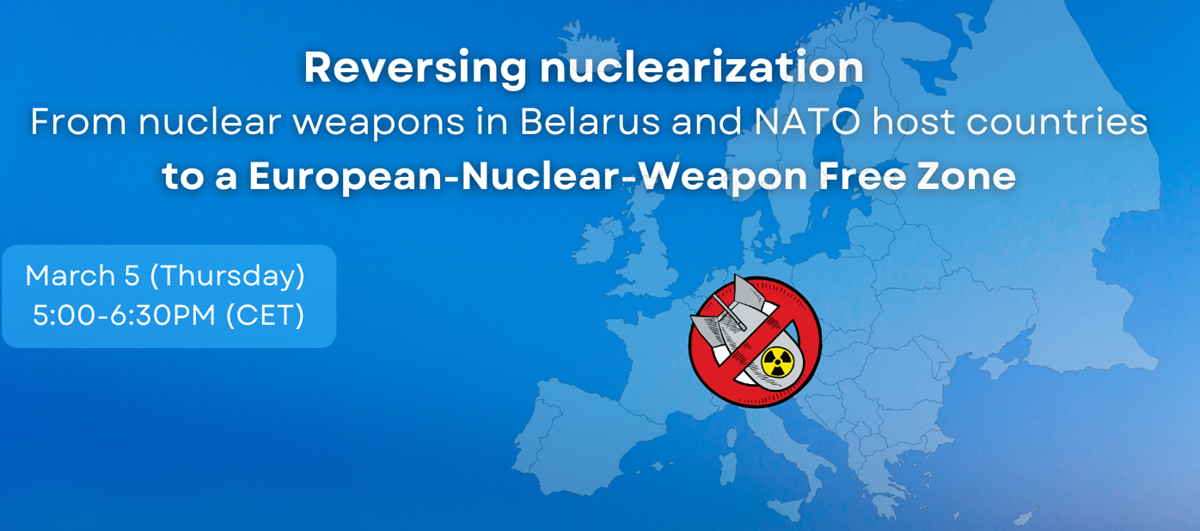
5 March -Online – Reversing nuclearization:
From nuclear weapons in Belarus and NATO host countries to a European-Nuclear-Weapon Free Zone
11am-12:30pm Eastern Time USA / 5pm-6:30pm CET

of the week – Advocating for a
nuclear free beach – https://www.samuellawrencefoundation.org/
The Samuel Lawrence Foundation advocates for a Nuclear Waste Free Beach at San Onofre, join us and take action!

10 March A LIVE WEBINAR THE REAL EFFECTS OF NUCLEAR POWER
What the Industry Isn’t Telling Us
1:00 PM Mountain, 2 pm Central, 3 pm Eastern. Live on the Keepers of the Water Facebook page

18 March Webinar @ 1 PM EST: An Assessment of SMR Projects: The Case of Canada
register for the zoom:
https://us02web.zoom.us/webinar/register/WN_o8BIIOUvQ2ONJR1nta65DQ#/registration

of the week – STOP SMALL MODULAR REACTORS IN CANADA
To see nuclear-related stories in greater depth and intensity – go to https://nuclearinformation.wordpress.com
-
Archives
- March 2026 (51)
- February 2026 (268)
- January 2026 (308)
- December 2025 (358)
- November 2025 (359)
- October 2025 (376)
- September 2025 (258)
- August 2025 (319)
- July 2025 (230)
- June 2025 (348)
- May 2025 (261)
- April 2025 (305)
-
Categories
- 1
- 1 NUCLEAR ISSUES
- business and costs
- climate change
- culture and arts
- ENERGY
- environment
- health
- history
- indigenous issues
- Legal
- marketing of nuclear
- media
- opposition to nuclear
- PERSONAL STORIES
- politics
- politics international
- Religion and ethics
- safety
- secrets,lies and civil liberties
- spinbuster
- technology
- Uranium
- wastes
- weapons and war
- Women
- 2 WORLD
- ACTION
- AFRICA
- Atrocities
- AUSTRALIA
- Christina's notes
- Christina's themes
- culture and arts
- Events
- Fuk 2022
- Fuk 2023
- Fukushima 2017
- Fukushima 2018
- fukushima 2019
- Fukushima 2020
- Fukushima 2021
- general
- global warming
- Humour (God we need it)
- Nuclear
- RARE EARTHS
- Reference
- resources – print
- Resources -audiovicual
- Weekly Newsletter
- World
- World Nuclear
- YouTube
-
RSS
Entries RSS
Comments RSS
 nuclear-news