How to Achieve 100 Percent Renewable Energy – new handbook
 New Handbook: 100 Percent Renewable Energy Both Practicable and Affordable, Triple Pundit, Andrew Burger | Friday October 10th, 2014 Advances in renewable energy technology, in concert with new triple bottom line-based approaches to government and business, are key enablers of a transition from polluting fossil fuels to locally-appropriate mixes of distributed, renewable energy systems. The renewable energy transition will not only benefit ecosystems and the environment; well designed and executed policies, regulations, public-private partnerships and inclusive, collaborative business models can address societies’ most pressing social and economic challenges as well.
Powering societies wholly on renewable energy technologies widely available today is not only possible, it’s affordable, according to a policy handbook produced by the World Future Council and E3 Analytics.
Appropriately titled, How to Achieve 100 Percent Renewable Energy, the WFC-E3 policy handbook uses eight case studies organized according to four themes – cities and communities; regions and states; national governments; and island governments – to illustrate how innovative policies are promoting and paving the way to “fully fossil- and nuclear-free” societies.
A policy framework for achieving 100 percent renewable energy
When WFC and E3 write about societies achieving 100 percent renewable energy, they mean “that all energy needed within the electricity, heat and transport sector in the particular region is coming from renewable sources.”
No doubt, many will take issue with the WFC-E3 report’s contention that societies can rely entirely on today’s renewable solar, wind, ocean, geothermal and bio-derived resources and technologies to meet all their energy needs. In their How to Achieve 100 Percent Renewable Energy handbook, WFC and E3 lay out a framework of policies that organizations at successively larger degrees of geopolitical scope and scale are using today to achieve that goal……….
In Achieving 100 Percent Renewable Energy, WFC and E3’s research team highlight five key findings that resulted from their analysis of the eight case studies included in the policy handbook:
- 100 percent renewable energy is both financially and economically advantageous, generating a wide range of benefits for both citizens and governments. The benefits range from savings on fossil fuel imports, improved energy and economic security, as well as reduced energy and electricity costs for governments, local residents and businesses.
- The goal of achieving 100 percent renewable energy is not only for wealthy or industrialized countries – it is taking root in countries and jurisdictions in all four corners of the globe, including in Africa, the Asia-Pacific region, as well as Latin America. 100% RE provide a plethora of development benefits that have a high priority among governments across the world. Since almost 3 billion people suffer from both, erratic or no access to electricity and reliance on inefficient and polluting solid biomass fuels for cooking, 100% reliable, affordable and efficiently used renewables are the only realistic, long-term options for ensuring a more decent livelihood for all.
- The report finds that transitioning to 100 percent renewable energy can also make economies more resilient, reducing their exposure to external factors such as rising fossil fuel prices. In times of geopolitical tensions and climate change, this is one of the key drivers for governments to take action.
- In addition to cost savings, going 100 percent renewable generates new economic activity and improves quality of life. Case studies suggest that demonstrating a clear commitment to transitioning 100% to renewable energy can help stimulating job creation, create new business models and opportunities as well as generate new sources of domestic revenue for both citizens and businesses.
- The case study analyses suggest that a significant expansion of RE in both the transport and heating/cooling sectors will need to become a strategic priority for governments to achieve the 100 percent goal. In line with this, the analyses show that achieving 100 percent renewable energy on a sustainable basis will likely require storing excess energy in the form of either heat or electricity in individual homes and businesses and that this will require a higher level of integration between these different sectors than in the past. The total generation supplied by electricity systems should be greater than 100 percent the majority of the time to allow the transport and heating sector to be integrated.http://www.triplepundit.com/2014/10/wfc-e3-100-percent-renewable-energy-practicable-affordable/
No comments yet.
1 This Month
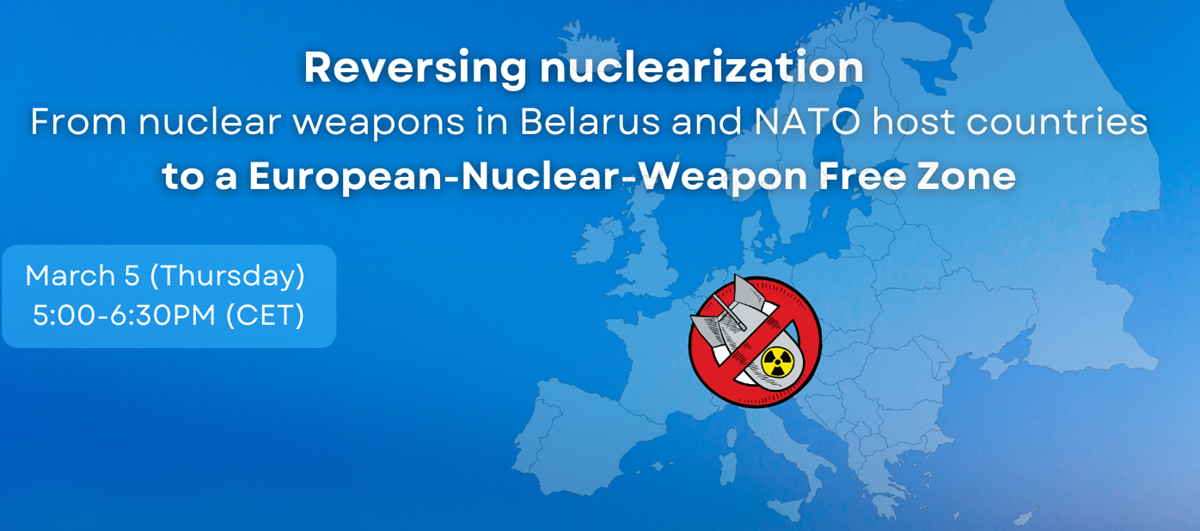
5 March -Online – Reversing nuclearization:
From nuclear weapons in Belarus and NATO host countries to a European-Nuclear-Weapon Free Zone
11am-12:30pm Eastern Time USA / 5pm-6:30pm CET

of the week – Advocating for a
nuclear free beach – https://www.samuellawrencefoundation.org/
The Samuel Lawrence Foundation advocates for a Nuclear Waste Free Beach at San Onofre, join us and take action!

10 March A LIVE WEBINAR THE REAL EFFECTS OF NUCLEAR POWER
What the Industry Isn’t Telling Us
1:00 PM Mountain, 2 pm Central, 3 pm Eastern. Live on the Keepers of the Water Facebook page

18 March Webinar @ 1 PM EST: An Assessment of SMR Projects: The Case of Canada
register for the zoom:
https://us02web.zoom.us/webinar/register/WN_o8BIIOUvQ2ONJR1nta65DQ#/registration

of the week – STOP SMALL MODULAR REACTORS IN CANADA
To see nuclear-related stories in greater depth and intensity – go to https://nuclearinformation.wordpress.com
-
Archives
- March 2026 (51)
- February 2026 (268)
- January 2026 (308)
- December 2025 (358)
- November 2025 (359)
- October 2025 (376)
- September 2025 (258)
- August 2025 (319)
- July 2025 (230)
- June 2025 (348)
- May 2025 (261)
- April 2025 (305)
-
Categories
- 1
- 1 NUCLEAR ISSUES
- business and costs
- climate change
- culture and arts
- ENERGY
- environment
- health
- history
- indigenous issues
- Legal
- marketing of nuclear
- media
- opposition to nuclear
- PERSONAL STORIES
- politics
- politics international
- Religion and ethics
- safety
- secrets,lies and civil liberties
- spinbuster
- technology
- Uranium
- wastes
- weapons and war
- Women
- 2 WORLD
- ACTION
- AFRICA
- Atrocities
- AUSTRALIA
- Christina's notes
- Christina's themes
- culture and arts
- Events
- Fuk 2022
- Fuk 2023
- Fukushima 2017
- Fukushima 2018
- fukushima 2019
- Fukushima 2020
- Fukushima 2021
- general
- global warming
- Humour (God we need it)
- Nuclear
- RARE EARTHS
- Reference
- resources – print
- Resources -audiovicual
- Weekly Newsletter
- World
- World Nuclear
- YouTube
-
RSS
Entries RSS
Comments RSS
 nuclear-news
Leave a comment