Nuclear industry versus Scotland Independence – boycott pro nuke celebrities!
 comment from Peggy 10 Oct 14 This is why the “YES for Scotland Independence” was not ALLOWED to happen.
The “YES for Scotland’s Indepence” voters want Scotland to be nuclear-free.
The nuclear industry would never ALLOW Scotland to separate from the pro-nuclear UK.
—> Look into all the claims of rigged voting in Scotland.
–> Look into how the counties in Scotland that were surely “YES for Scotland’s independence” counties mysteriously had a NO majority vote.
Lastly,
BOYCOTT all of the celebrities, writers, actors, businesses who came out AGAINST Scotland’s independence such as J.K. Rowling, Paul McCartney, Mick Jagger, etc.
BOYCOTT them forever.
Here is a list of those who were FOR and those who were AGAINST Scotland’s independence:
https://en.wikipedia.org/wiki/List_of_endorsements_in_the_Scottish_independence_referendum,_2014
Boycotting is one of the last freedoms you have. Use it.
Don’t enrich those who help affect policies that you do not agree with.
EU approval for Hinkley plant a complete sellout to the nuclear industry

 EU backing for plant ‘a total sell-out to nuclear industry’Paul Melia Irish Independent 09/10/2014 |THE European Commission has given the green light to a controversial plan by the British Government to underwrite the €21bn cost of building a nuclear power plant just 240km from Ireland. And it has emerged that Ireland’s outgoing EU Commissioner, Maire Geoghegan Quinn, was not present for the crucial vote on the matter.
A spokesman said she had committed to attending a conference in Turin, Italy yesterday, and did “feed into” the decision – but was not present for the vote……..
The move provoked fury among environmental groups, while the Austrian Government has warned it may take legal action against the commission.
This was because the decision set a “bad precedent”, as guaranteed payments had previously been reserved for renewable forms of energy.
The Department of the Environment here has also raised concerns, saying it had written twice since 2009 to the UK Secretary of State for Energy and Climate Change outlining concerns about potential environmental impacts in Ireland and in the Irish Sea.
“The key issues of concern include the assessments by the UK of effects on the environment, management of radioactive waste, and the rationale underpinning the proposed justification decision for new nuclear facilities,” it said.
A spokesman added it was awaiting the full, written decision of the commission before deciding if any further action would be taken…….
Greenpeace said the Commission had “cleared a path for taxpayers” to heavily subsidise the construction of nuclear power plants, adding it was a “total world record sell-out” to the nuclear industry.
“It’s such a distortion of competition rules that the Commission has left itself exposed to legal challenges,” legal adviser Andrea Carta said.
“There is absolutely no legal, moral or environmental justification in turning taxes into guaranteed profits for a nuclear power company whose only legacy will be a pile of radioactive waste.
“This is a bad plan for everyone except EDF.”
The Green Party also expressed concern, with leader Eamon Ryan saying that competition rules had been broken by allowing “massive state subsidies” for nuclear power.
“There is no accounting for the security risks that come with the building of such a plant, and no apportioning of the massive clean up costs that will come when the plant has to be decommissioned,” he said. http://www.independent.ie/irish-news/news/eu-backing-for-plant-a-total-sellout-to-nuclear-industry-30650482.html
Security officer shoots dead three colleagues guarding Kalpakkam nuclear power plant

 3 CISF personnel shot dead by colleague at Kalpakkam atomic plant in Tamil Nadu A Selvaraj, TNN | Oct 8, 2014, CHENNAI: Three Central Industrial Security Force (CISF) personnel guarding the atomic power plant at Kalpakkam near Chennai were killed and two others were injured when one of their colleagues opened fire on them on Wednesday morning.
Police said the incident happened inside the barracks where the security personnel were taking rest early in the morning. The reason for the attack was not known, police said.
The accused, head constable Vijay Pratap Singh, was nabbed and handed over to police……..The CISF head constable used a 9mm carbon rifle to attack his colleagues.
CISF senior officers have rushed to the scene. Further investigations are on. http://timesofindia.indiatimes.com/india/3-CISF-personnel-shot-dead-by-colleague-at-Kalpakkam-atomic-plant-in-Tamil-Nadu/articleshow/44679818.cms
Fire on ship carrying radioactive wastes leads to drift, and evacuation of oil rig
 “It is a serious incident and I think we need to review how we regulate the transportation of nuclear waste in our waters”
WWF Scotland, Comhairle nan Eilean Siar and SNP MSP Rob Gibson have raised concerns about radioactive waste being transported by sea.
Oil rig evacuated after ship carrying radioactive waste drifts BBC News Highlands and Islands 8 Oct 14 An oil platform has been evacuated after a ship carrying radioactive material caught fire and began drifting in the Moray Firth. Continue reading
Nuclear power defeats democracy – Book on UK “The Prostitute State “

 Nuclear power trumps democracy http://www.theecologist.org/blogs_and_comments/commentators/2587477/nuclear_power_trumps_democracy.html Donnachadh McCarthy 9th October 2014
The UK’s political mainstream has performed a complete U-Turn in policy on nuclear power, culminating yesterday in the European Commission’s approval of a £15-20 billion subsidy package for the Hinckley C project. Donnachadh McCarthy delves into the nuclear industry’s deep and far-reaching political links.
Why is our democracy failing to tackle the horrific urgency of the climate crisis and the decimation of our eco-systems?
And why are all the main political parties betting the farm on nuclear power in spite of its madhouse economics – and against all their promises to either oppose nuclear power altogether, or to refuse subsidies for it?
 In my new book, The Prostitute State – How Britain’s Democracy Has Been Bought, I set out my view that there is a single problem at the root of our nation’s difficulties.
A corporate elite have hijacked the pillars of Britain’s democracy. The production of thought, the dissemination of thought, the implementation of thought and the wealth arising from those thoughts, are now controlled by a tiny, staggeringly rich elite.
As a result the UK is no longer a functioning democracy but has become a ‘Prostitute State’ built on four pillars: a corrupted political system, a prostituted media, a perverted academia and a thieving tax-haven system.
This has disastrously resulted in a flood of wealth from the poor and middle classes to the top 1%. This stolen wealth is built on the destruction of the planet’s ecosystems, which are essential for humanity’s survival.
Nuclear power defeats democracy
The reversal of government policy on nuclear power is a classic example of how the Prostitute State trumps democracy. Betrayed environmental activists must understand that – notwithstanding the noble form of democratic structures – what they are really up against is a corrupt corporate state.
The concept of lobbying is reasonably well known, but few of us understand how far lobbying has penetrated and hijacked the political parties themselves.
For example, most people are perplexed at how the nuclear industry managed to persuade the UK’s previous Labour government to build a fleet of hugely expensive experimental nuclear power stations on land prone to flooding from rising sea levels.
They also struggle to comprehend and why Labour’s shadow energy and climate change minister, Caroline Flint MP, having stated that she would only support nuclear power if built without public subsidies, now supports the £15-20 billion subsidy package for Hinkley C nuclear power station
Labour managed managed this policy U-Turn despite the Three Mile Island, Chernobyl and Fukushima nuclear catastrophes; the failure to find safe waste-disposal sites capable of protecting radioactive waste for over 100,000 years; and insurance companies’ point blank refusal to provide nuclear accident insurance.
It’s the money, stupid
My simple answer is that the nuclear industry has poured millions of pounds year after year into a massive political lobbying campaign.
They bought a whole swathe of senior ex-politicians to work as nuclear lobbyists, spent a fortune on trying to manipulate public opinion through media and advertising, and even funded school trips to their nuclear plants.
As they managed to persuade a Labour government to abandon their 1997 election manifesto commitment to oppose new nuclear power stations, it is crucial to understand how deeply the nuclear lobby is embedded in the Labour party.
My personal belief is that a complex web of financial interests ensured that the Labour government served the nuclear industry – no matter what Labour party members or the British public wanted.
Just consider for example the following list of Labour Party politicians: Continue reading
City of Samcheok, South Korea, votes NO to nuclear power

 South Korean town votes no to nuclear plant WP, By Associated Press October 9 SEOUL, South Korea — Voters in a South Korean city have rejected plans to build a nuclear power plant in a referendum the government says has no legal effect.
Thursday’s vote in Samcheok, on South Korea’s east coast, went as expected following this year’s election of a mayor who wants the government to scrap nuclear plant……..“I will persuade the national government based on this result,” the Samcheok mayor, Kim Yang-ho, told Yonhap News Agency. “I hope the government’s policy will reflect Samcheok citizens’ real opinion.”……..
Some 85 percent of the 28,867 residents who cast ballots said no, according to a volunteer committee set up to administer the referendum after election authorities refused. Out of 42,488 who registered to take part, turnout was 68 percent……http://www.washingtonpost.com/world/asia_pacific/south-korean-town-votes-no-to-nuclear-plant/2014/10/09/1d3d23ce-5023-11e4-877c-335b53ffe736_story.html
Hinkley Point C nuclear power station – all too close to Irish coast
Nuclear plant 240km from Irish coast approved RTE News, 8 Oct 14, The European Union has approved Britain’s ambitious €20 billion plan to build its first nuclear plant for a generation.
The Hinkley Point C power station, which will be built with French and Chinese help, is 240km from the Irish coast…….
Critics have complained that there are insufficient plans for the removal of the nuclear waste that the plant will produce.Concerns about the project have also been raised by An Taisce and the Department of the Environment. An Taisce today said: “The state aid investigation by the European Commission raises totally different issues to those raised by An Taisce’s ongoing legal action.
“An Taisce’s case is against the UK Government on the grounds that we believe they did not apply international law, EU law and English law correctly … in that they failed to consult with their neighbours, the people of Ireland, prior to granting permission for Hinkley Point C.”
The department said it had concerns about the effect on the environment, the management of radioactive waste, and the “rationale underpinning the proposed justification decision for new nuclear facilities”.
It said it had discussions at ministerial and official level over several years about Hinkley Point C……….
Greenpeace has criticised the commission’s decision and said it could well face legal challenges. It claimed the decision was a sellout to nuclear interests and that European taxpayers would have to pay the cost.
Meanwhile, the Austrian government has said it would bring legal action against the commission’s decision to the European Court of Justice.Chancellor Werner Faymann and Vice Chancellor Reinhold Mitterlehner said Hinkley Point set a “bad precedent” because guaranteed payments had previously been reserved for renewable forms of energy.
They said they were opposing the commission’s decision on economic and environmental grounds, claiming nuclear power was not a sustainable form of energy, was a mature technology and was not an option for combating climate change.
Other member states have voiced concerns that the project makes a mockery of the union’s stated policy to promote solar and wind power.
The European Commission, the EU’s executive arm, launched the inquiry in late 2013, delving closely into the project’s elaborate price guarantee system that critics claim will prove hugely expensive to British consumers for decades to come…….. http://www.rte.ie/news/2014/1008/650789-edf-somerset/
Dounreay’s toxic nuclear wastes – for storage and return to Australia, Germany & Belgium
 Toxic conundrum: Dealing with Dounreay’s leftovers By Steven McKenzieBBC Scotland Highlands and Islands reporter 7 Oct 14 Built in the 1950s to push forward the UK’s nuclear energy ambitions, Dounreay is now at the centre of complex £1.6bn demolition job.
The incident which saw cargo ship Parida drifting in the Moray Firthhas, and not for the first time, cast a spotlight on the issue of dealing with part of Dounreay’s legacy – its tonnes of radioactive waste, nuclear fuel and other contaminated material.
So how are these toxic leftovers being handled, and what kinds of material are involved?
During the 1990s, nuclear material was sent from abroad to Dounreay for reprocessing.The customers included power plants and research centres in Australia, Germany and Belgium……..
Because Dounreay is being decommissioned, the foreign material is now being sent back to the countries from which it originated.
In 2011, it was announced that more than 150 tonnes of intermediate level waste would be transported back to Belgium in 21 shipments over four years.The waste was the result of reprocessing 240 spent fuel elements from Belgium’s BR2 research reactor, which produces isotopes for use in medicine and industry.
The reprocessing created about 22,680 litres of liquid waste. This has been mixed with cement and poured into 123 drums each weighing 1.25 tonnes.
Danish company Poulsens has been contracted by the Belgian authorities to take the drums to Belgium. The first shipment left Scotland in September 2012……..http://www.bbc.com/news/uk-scotland-highlands-islands-29535032
Will the 6000 Fukushima radioactive clean-up workers ever get the promised danger pay?
 Nuclear workers kept in dark on Fukushima hazard pay 25 CNBC Reuters 7 Oct 2014 Almost a year after Japan pledged to double hazard pay at the stricken Fukushima nuclear plant, workers are still in the dark about how much extra they are getting paid, if anything, for cleaning up the worst nuclear disaster since Chernobyl.
Under pressure to improve working conditions at Fukushima after a series of radioactive water leaks last year, Tokyo Electric Power Co President Naomi Hirose promised in November to double the hazard pay the utility allocates to its subcontractors for plant workers. That would have increased the amount each worker at the nuclear facility is supposed to earn to about $180 a day in hazard pay.
Only one of the more than three dozen workers interviewed by Reuters from July through September said he received the full hazard pay increase promised by Tepco. Some workers said they got nothing. In cases where payslips detailed a hazard allowance, the amounts ranged from $36 to about $90 a day – at best half of what Hirose promised.
In some instances, workers said they were told they would be paid a hazard bonus based on how much radiation they absorb – an incentive to take additional risks at a dangerous work site…….
Tepco still relies on some 800 mostly small contractors to provide workers for the cleanup after the tsunami that swamped the plant on March 11, 2011 sparked meltdowns at three reactors. Subcontractors provide almost all of the 6,000 workers now employed at the plant. Tokyo Electric employs only about 250 on its own payroll at the facility.
The workforce at Fukushima has almost doubled over the past year, mostly as part of an effort to protect groundwater from being contaminated and to store water that comes in contact with melted fuel in the reactor buildings.
Some of the workers who arrived recently at the plant have been building bunkers to store highly radioactive sludge, which is a by-product of the process whereby contaminated water is treated. Others are installing equipment to freeze a ring of earth around four reactors at Fukushima to keep water from reaching the melted cores, an unprecedented effort directed by Kajima and expected to cost nearly $300 million.
Kazumitsu Nawata, a professor in the University of Tokyo’s department of technology who has researched conditions inside Fukushima, said that if workers do not receive pay that is commensurate with the risks they are taking, they will ultimately look elsewhere for employment. If more experienced workers leave for safer jobs in Tokyo where constructionprojects are accelerating ahead of the 2020 Olympic Games, it will also increase the likelihood of accidents at the plant, Nawata said in an interview.
“Until now, we have relied heavily on the goodwill of workers. But it’s already been three years since the accident. This is no longer sustainable,” he said. http://www.cnbc.com/id/102068504#.
UK ‘s Hinkley nuclear plant plan – by no means a done deal
This is by no means a done deal
not just this government, other governments, lobbied by the nuclear industry.
It’s a long way from being settled and this test case is sure to fire up many more passions before it’s over.
EU clears the way for UK nuclear plant Australian Broadcasting Corporation ABC Lateline Broadcast: 09/10/2014 Reporter: Mary Gearin A controversial ruling by the EU has paved the way for a 30 billion dollar nuclear power station to be built in Britain, the first in the UK since the 1990’s
Transcript
EMMA ALBERICI, PRESENTER: “……..The project, by French company EDF, would create 25,000 jobs and replace a fifth of Britain’s aging nuclear infrastructure. But it’s conditional on getting a fixed, guaranteed price for the electricity it would generate. It wants more than £92, or about $170, per megawatt hour for 35 years. That’ll need government subsidies because the current market rate is less than half that – £41.50, or about $75.
European regulators have ruled the subsidies are compatible with EU trade rules; but now comes the fallout. Continue reading
Nuclear scientists raise problems with proposed Liquid Fluoride Thorium Reactors (LFTRs)
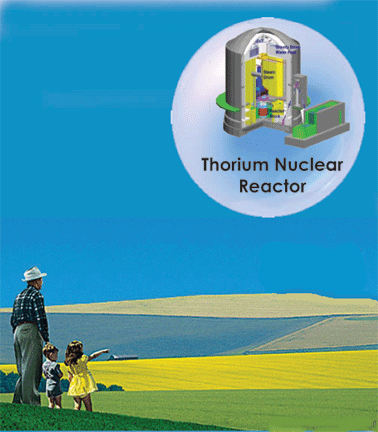 Thorium Cycle questions and problems http://daryanenergyblog.wordpress.com/ca/part-8-msr-lftr/8-3-thorium-lftr/Questions have also been raised by some nuclear scientists about the Thorium cycle, in particular the proposed one that the LFTR would use. I’m not a nuclear physicist so I’ll merely forward you on to the relevant paper here, and a rebuttal here. The crux of the argument seems to be the proliferation risk (I’ll come back to that one later), the fact that a number of its spend fuel outputs (such as Technetium-99) are “nasty stuff” with a long half life and the fact we’ll still need supplies of Uranium to get Thorium reactors going again whenever we have to turn it off (which will happen at least once a year or so during its annual maintenance shutdown). They also highlight a number of technical issues, which I discussed in the chapter on HTGR’s.
Certainly the fission products from a Thorium reactor are a worry, Technetium-99 has a half life of 220,000 years, uranium-232 produces thallium-208 (a nasty wee gamma emitter), Selenium-79 (another gamma emitter with a 327,000 year half-life), evenThorium-232 is a problem with its half life of 14 Billion years (and while the T-232 isn’t a major worry, all the time during this 14 Billion years it will be decaying and producing stuff that is!).
The UK based NNL (National Nuclear Laboratories) also pour cold water on the idea of Thorium fuelled reactors (see here). While the report is low on detail (they seem to be saying “trust us we’re scientists who work with nuke stuff… and we smoke pipes!”) they do highlight the major time delays it would take to establish and get working a Thorium fuel cycle (10-15 years with existing reactors, 30 with more advanced options), point out that under present market conditions its unlikely to be economically viable and will (as the points above raise) offer only a modest reduction in nuclear wastes.
MIT recently undertook a study of future nuclear fuel supplies. The Thorium cycle barely gets a mention, and even then its usually in relation to Fast Reactor programs (of which the US currently has none) and modifed LWR systems, rather than the MSR.
Obviously, once we exhaust the world’s U-235 stockpiles, LFTR’s and any other Thorium fuelled reactors will cease to function. Indeed long before then the spike in Uranium prices will have rendered MSR’s (and all other nuclear plants) uneconomically viable (of course there’s plenty who’d say that’s already the case!). The LFTR fans usually groan at this point and state that “all we need is a little plutonium”. Now while I’m quite sure that in the fantasy world which the LFTR fans inhabit Plutonium is available in any good hardware store but back in the real world, it’s a little harder to come by! As with the HTGR’s using Thorium (if its possible) would certainly help stretch things out….a bit! But not by nearly as much as the supporters of Thorium reactors would have you believe.
Russia’s Rosatom now denying that there is a contract with South Africa


 Nuclear deal was ‘lost in translation’, Business Day BY SIKONATHI MANTSHANTSHA, OCTOBER 10 2014 ROSATOM, THE STATE-OWNED RUSSIAN NUCLEAR COMPANY, SPENT ON THURSDAY AFTERNOON TRYING TO DISOWN ITS EARLIER CLAIM OF HAVING BEEN AWARDED A CONTRACT TO BUILD SA’S PROPOSED FLEET OF POWER STATIONS.
The company blamed a poor translation for its late September statement in which, quoting South African government officials, it said it had been granted the right to build a fleet of nuclear power stations for SA.
The news that Russia would build nuclear power stations came as a surprise as no announcement had been made by the government that it had begun any tender process to procure the 9.6GW it said it would be actively seeking.
“The wording (in the statement) from Rosatom wasn’t well chosen,” said Viktor Polikarpov, regional vice-president for sub-Saharan Africa. “We have to admit that we worded the statement wrongly. It was lost in translation (from the original Russian).”
In this statement Rosatom quoted Energy Minister Tina Joemat-Pettersson. After going to ground and for days being unavailable to confirm the Rosatom claim, the Department of Energy eventually released a statement on its website, which was almost identical to Rosatom’s “translated” statement.
Following this, the department said the statement in no way confirmed SA had reached a deal with Russia. The agreement only envisioned possible future co-operation on nuclear energy issue……….
When Business Day asked for a copy of the co-operation agreement, Mr Polikarpov said the document “is classified … it is not available for public consumption”.
Mr Polikarpov was asked how Rosatom arrived at the $50bn price estimate for the project. After much discussion in Russian with Alex Kirillov, head of marketing in SA, he said this was the estimated cost of Rosatom’s plants……..
Rosatom will apply for a $50bn loan from the Russian government if SA chooses a build, own and operate model, he said……..http://www.bdlive.co.za/business/energy/2014/10/09/nuclear-deal-was-lost-in-translation
Confusion over South Africa’s secret nuclear deal with Russia
 Nuclear Deal With Russia Brings Political Storm Clouds in South Africa VOA October 09, 2014 JOHANNESBERG, SOUTH AFRICA— Opposition lawmakers are crying foul about a multibillion-dollar nuclear power deal with Russia, saying the agreement could give Moscow the power to veto South African trade with other nuclear providers.The Sept. 22 strategic partnership, signed on the sidelines of the International Atomic Energy Agency conference in Vienna, comes as Moscow has sought to boost lucrative exports of nuclear equipment, technology and expertise in recent years…….
Lance Greyling, a top lawmaker with the opposition party Democratic Alliance, said there was confusion about the Sept. 22 deal. A draft agreement signed last year gave Russia the power to veto South African trade with other nuclear providers, party officials have said.
- “What the government is saying at the moment is that they’ve just signed a framework agreement with Russia and that there will still be a procurement process that is followed,” he told VOA on Oct. 3. “But what we are unclear about is what exactly is in this framework agreement, and the fact that they’re not willing to show it to us makes us highly suspicious.”…..
- If the government has nothing to hide in the deal then it needs to share details of the arrangement with lawmakers, Greyling said…….
http://www.voanews.com/content/south-africa-russia-nuclear-power/2478224.html
The mysterious mess of the Parks radioactive trash

 Casey wants nuclear cleanup details released Trib Live, By Mary Ann Thomas Oct. 10, 2014
U.S. Sen. Bob Casey is pressing the Army to publicly release an agreement on how it and three other federal agencies will clean up a waste dump with mysterious nuclear materials in Parks.
The Army Corps of Engineers shut down the cleanup three years ago, only about a month into a 10-year project that could cost up to $500 million.
A Corps contractor dug up nuclear materials that it was not prepared to deal with, according to an investigation by the federal Nuclear Regulatory Commission. Although the site received two types of uranium — U-235 and U-233 — and other radioactive materials, the initial cleanup process was developed to handle smaller amounts of nuclear contamination.
The federal investigation found that there isn’t enough documentation to know the level of nuclear contamination at the site. Other federal agencies were called in to help, including the National Nuclear Security Administration (NNSA), which deals with nuclear weapons materials.
According to the federal investigation, the original agreement didn’t account for finding more complex nuclear materials, which resulted in disagreements among the agencies on responsibilities.
So now, four agencies have reached an agreement on cleanup responsibilities: the Army Corps of Engineers, the Department of Energy, the Nuclear Regulatory Commission and NNSA.
However, they have not released the details to the public, not the least of which are the people who live in Kiskimere, the rural village that sits within feet of the waste dump.
Casey and the Corps of Engineers are calling for the agreement to be made public. Casey and residents were instrumental in bringing in the NRC Inspector General’s Office to investigate problems with the cleanup.
“Sen. Casey believes it’s critical that his constituents are appropriately informed about the proposed cleanup of the (Parks Township nuclear waste dump) site,” said John Rizzo, Casey’s press secretar
The Soviet-Cuba nuclear reactor that could have been USA’s nightmare
 http://gizmodo.com/the-abandoned-communist-reactor-that-could-have-killed-1644415889The Abandoned Communist Nuclear Reactor That Could Have Killed Us All (Great pictures) Gizmodo 10 Oct 14
Ashley Feinberg Just 90 miles off the tip of Florida lies a half-baked, abandoned relic of the Cold War-era arms race—what was once going to be a joint Cuban-Soviet nuclear reactor. And thank god it never panned out. Because not only do we now have these incredible shots from photographer Darmon Richter, but every last aspect of this thing would have been a total and utter disaster………the whole project spent nearly a decade in limbo, until finally, in 2000, Fidel Castro told Vladamir Putin that he was done with the two countries’ former joint-dream. Now, the power plant at Juragua was officially little more than a testament to what could have been—which is a very good thing. Because as it turns out, “what could have been” basically entailed wildly dangerous conditions and potentially a whole mess of destruction.
1 This Month
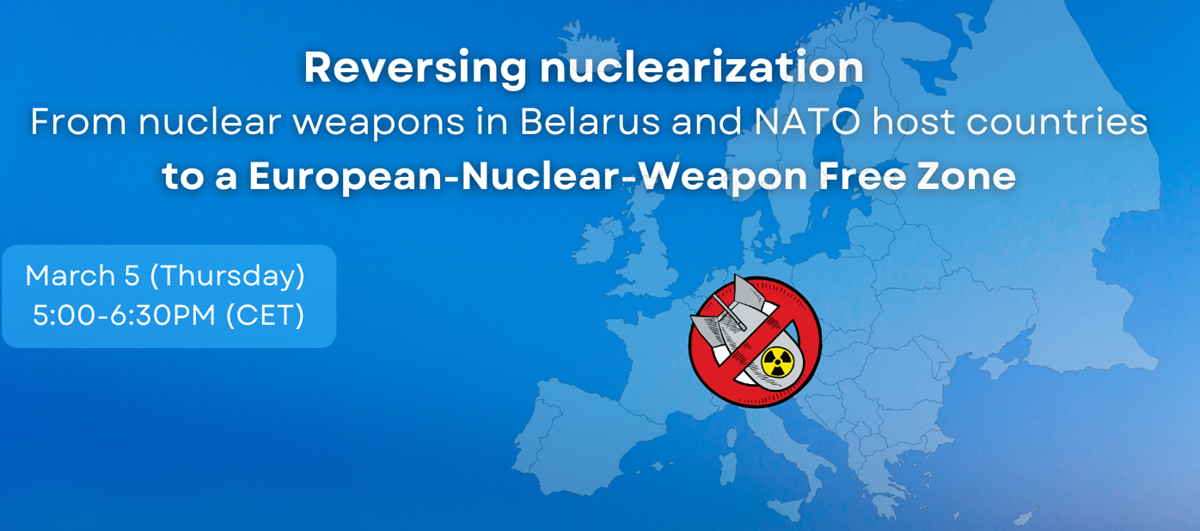
5 March -Online – Reversing nuclearization:
From nuclear weapons in Belarus and NATO host countries to a European-Nuclear-Weapon Free Zone
11am-12:30pm Eastern Time USA / 5pm-6:30pm CET

of the week – Advocating for a
nuclear free beach – https://www.samuellawrencefoundation.org/
The Samuel Lawrence Foundation advocates for a Nuclear Waste Free Beach at San Onofre, join us and take action!

10 March A LIVE WEBINAR THE REAL EFFECTS OF NUCLEAR POWER
What the Industry Isn’t Telling Us
1:00 PM Mountain, 2 pm Central, 3 pm Eastern. Live on the Keepers of the Water Facebook page

18 March Webinar @ 1 PM EST: An Assessment of SMR Projects: The Case of Canada
register for the zoom:
https://us02web.zoom.us/webinar/register/WN_o8BIIOUvQ2ONJR1nta65DQ#/registration

of the week – STOP SMALL MODULAR REACTORS IN CANADA
To see nuclear-related stories in greater depth and intensity – go to https://nuclearinformation.wordpress.com
-
Archives
- March 2026 (51)
- February 2026 (268)
- January 2026 (308)
- December 2025 (358)
- November 2025 (359)
- October 2025 (376)
- September 2025 (258)
- August 2025 (319)
- July 2025 (230)
- June 2025 (348)
- May 2025 (261)
- April 2025 (305)
-
Categories
- 1
- 1 NUCLEAR ISSUES
- business and costs
- climate change
- culture and arts
- ENERGY
- environment
- health
- history
- indigenous issues
- Legal
- marketing of nuclear
- media
- opposition to nuclear
- PERSONAL STORIES
- politics
- politics international
- Religion and ethics
- safety
- secrets,lies and civil liberties
- spinbuster
- technology
- Uranium
- wastes
- weapons and war
- Women
- 2 WORLD
- ACTION
- AFRICA
- Atrocities
- AUSTRALIA
- Christina's notes
- Christina's themes
- culture and arts
- Events
- Fuk 2022
- Fuk 2023
- Fukushima 2017
- Fukushima 2018
- fukushima 2019
- Fukushima 2020
- Fukushima 2021
- general
- global warming
- Humour (God we need it)
- Nuclear
- RARE EARTHS
- Reference
- resources – print
- Resources -audiovicual
- Weekly Newsletter
- World
- World Nuclear
- YouTube
-
RSS
Entries RSS
Comments RSS
 nuclear-news