It would be helpful if Chris made this point – but I can see why he doesn’t, because he advocates more investment in nuclear power. This is the biggest problem as far as Chris Goodall’s commentary is concerned. He should clearly re-think his support for building more nuclear power before he starts to implicitly criticise wind power for its variability.
Hollywood stars shine in films on behalf of our polluted planet
Julia Roberts plays Mother Earth and Harrison Ford stars as the Ocean as Hollywood A-list ‘speaks out for nature’ http://www.theguardian.com/environment/damian-carrington-blog/2014/oct/06/julia-roberts-plays-mother-earth-and-harrison-ford-stars-as-the-ocean-as-hollywood-a-list-speaks-out-for-nature 7 Oct 14
Kevin Spacey, Edward Norton and Penélope Cruz star in films that warn people need nature, but nature doesn’t need people. Ecosystem services. You’ve nodded off already, haven’t you? But wake up! Here are some Hollywood A-listers making a decent attempt to move beyond the obscure jargon and reveal the existential nature of what the Earth provides for humanity.
The Nature is Speaking initiative is organised by Conservation International with the tag-line: “Nature doesn’t need people. People need nature.” In the series of short films, a part of the world’s abused ecosystem is voiced by a star. Harrison Ford is the angry ocean and Julia Roberts an imperious Mother Nature.
“I have been here 22,500 times longer than you. I don’t really need people, But people need me,” says Roberts, imbuing her Mother Nature with a steely, take-it-or-leave-it edge. Continue reading
European Greens urge principled opposition to EU nuclear deal that will damage renewabl eenergy
 EU nuclear deal will hit renewables http://www.theguardian.com/world/2014/oct/07/eu-nuclear-deal-will-hit-renewables The Guardian, Wednesday 8 October 2014 Today (8 October) the 28-strong outgoing European commission will make a decision on the Hinkley C financial deal, with far-reaching consequences both for the integrity of decision-making in Europe and for the future of European energy policy (Conflict of interest concerns over EDF’s Hinkley nuclear project approval, 1 October).
 In December 2013, the commission raised doubts on almost all aspects of the project, finding the state credit guarantee of £10bn for EDF “incompatible under EU state aid rules”. So why is competition commissioner Joaquín Almunia, backed by former EU president José Manuel Barroso, recommending the commission give the deal the green light? Could it be that the German federal government has been involved in a backroom deal?
The German chancellor, Angela Merkel, has previously achieved exemptions from EU subsidy rules for Germany’s ambitious renewable energy plans. The legislation behind this, which provides feed-in incentives for renewable energy technologies, is helping transform energy generation away from fossil fuels and nuclear; renewables now account for around 30% of Germany’s electricity.
However, in return for these subsidy exemptions, Merkel is rumoured to have agreed to support British nuclear subsidies. So, while the Berlin government is decommissioning its own nuclear power plants and turning to renewables, it is at the same time undermining nuclear phase-out across the rest of Europe. Greens in the European parliament urge departing commissioners to hold fast to their principled opposition to this extremely dodgy deal and set all of Europe, not just Germany, on course for an energy policy for the common good.
Molly Scott Cato Green MEP
Rebecca Harms Green MEP
Claude Turmes Green MEP
Benedek Jávor Green MEP
Michèle Rivasi Green MEP
An under-rated film that warns on nuclear weapons – “Fail Safe”
 Doomsday Machines Fail-Safe was a flop, but it’s much smarter about nuclear war than Dr. Strangelove.
Slate, By Ari N. Schulman, 7 Oct 14 Poor Fail-Safe. Released 50 years ago this week, it remains the redheaded stepchild, destined forever to be known as that movie that’s just like Dr. Strangelove, only not funny and nobody’s seen it.……..This is too bad, because as brilliant and grotesquely funny as Dr. Strangelove is, the neglected Fail-Safe is the more mature and damning take on the nuclear enterprise. It feels like it could have really happened, and it’s terrifying as a result.
Directed by the prolific Sidney Lumet (of 12 Angry Men and Network), the film depicts a nuclear attack launched accidentally by the United States against the Soviet Union. The strike order comes not, as in Strangelove, from a rather overeager general, but from a malfunctioning machine. Otherwise, the broad outlines of the movies are the same……..
In many ways, Fail-Safe’s warning about the likelihood of a nuclear mishap is vindicated by Eric Schlosser’s stunning 2013 book Command and Control, which details the U.S. nuclear weapons program’s decades of jarringly lax safety standards, with scores of accidents that nearly resulted in detonation. The movie was met with criticism from military analysts on technical grounds, but whatever the particulars, Schlosser’s book pretty well bears out the broader message. One U.S. general attributes the lack of any inadvertent detonation so far to “skill, luck, and divine intervention, and I suspect the latter in greatest proportion.”…………….
Where Dr. Strangelove’s subversiveness comes from its suggestion that the military leadership gets off on the prospect of nuclear war, Fail-Safe makes clear that none of its characters wanted the attack. The closest thing to an antagonist is professor Groeteschele. Like the titular Dr. Strangelove, he is philosophically drawn fromHerman Kahn, the man who created the theory of nuclear strategy, of acceptable losses in millions of deaths………
Fail-Safe does not offer the catharsis of total destruction. And it doesn’t let us off the hook by showing that the folly belongs to the men in power, rather than to something we’re all complicit in creating. I won’t spoil the ending except to say that it involves a decision that, once revealed, is obviously the only rational one under the circumstances but causes you to draw back in horror and think that there must be some better way. And once there was—but the other choices were foreclosed before the film begins.
This article is part of Future Tense, a collaboration among Arizona State University, New America, and Slate. Future Tense explores the ways emerging technologies affect society, policy, and culture. To read more, visit the Future Tense blog and the Future Tense home page. You can also follow us on Twitter. http://www.slate.com/articles/technology/future_tense/2014/10/fail_safe_50th_anniversary_sidney_lumet_s_nuclear_war_movie_is_better_than.html
Building more nuclear power stations will simply waste more wind power

 How more nuclear will waste wind power http://realfeed-intariffs.blogspot.co.uk Dr David Toke 7 Oct 14 As noticed by Chris Goodall, in his column in the Guardian environment network, wind power production has for the first time exceeded nuclear. See http://www.theguardian.com/environment/2014/oct/06/uk-wind-power-bests-nuclear-power-for-a-few-symbolic-minutes
But what Goodall misses, it seems completely, is that building more nuclear power stations will simply waste more wind power. He seems to claim that ‘all’ the investment in wind power will be ‘wasted’ unless we build a lot more interconnectors etc to accommodate fluctuating wind power supplies. Well, we do need more balancing of a variety of types, including demand response, interconnectors and as it gets cheaper, various types of storage, but it is an exaggeration to say that ‘all’ wind investment will be wasted.The big waste comes with the nuclear investment. The problem with the ability of the electricity system to absorb more variable wind power supplies lies with the inability, and unwillingness, of nuclear operators to turn down their production when there is more wind power. So obviously building more nuclear power stations (which are more expensive, MWh for MWh anyway than onshore wind for example) will only make the situation worse – more wind power will be wasted than will otherwise be the case without the nuclear power.
The need for reconciliation with Iran is now urgent
 A deal that offers Iran a nuclear power industry not exceeding its needs and ambitions, and the rest of the world reassurance through intrusive inspections, would do more than bring Iran in from the cold. It would inaugurate a new relationship between the Islamic Republic and the west that could keep together a region that is, in every other particular, coming apart.
Iran nuclear talks: why Tehran must be brought in from the cold
 A deal with Iran is vital for the stability of the wider Middle East. The opportunity must be grasped Christopher de Bellaigue The Guardian, Friday 3 October 2014 In Iran a few weeks ago I travelled with my 11-year-old son from Tehran to the ancient fire temple at Takht-e Soleymān, not far from the Iraqi border. At no time during our journey – part of which was made in a clean, comfortable, Chinese-made train – did we feel anything but safe. Our only exposure to violence was in the provincial town of Zanjan, famous for its knife production, where a salesman dry-shaved his own forearm in demonstration of his wares.
No one in their right mind would undertake a comparable journey nowadays inside the borders of any of Iran’s war-torn neighbours: Iraq, Afghanistan, or, a bit further afield, Syria. Iran is the exception along the Middle East’s strategic, resource-rich central belt, a functioning nation state where the central authorities enjoy a monopoly of force, the infrastructure works and the people are overwhelmingly literate and unarmed. Perhaps most significant of all, as capo di tutti capi of the Shia world – wielding clout over its co-religionists in Iraq and Lebanon as well as propping up Bashar al-Assad with military assistance and subsidised oil – Iran could have a vital role in restoring stability throughout Mesopotamia and the Levant.
I say “could” because there is no guarantee that the Iranians will be invited to assume the role that common sense assigns them. It’s one of the perversities of modern politics that the west does not have a decent working relationship with the most important country in the Middle East…….. Continue reading
South Africa’s murky and uneconomic nuclear deal

 A nuclear deal as clear as mud October 7 2014 Cape Argus, By Jasson Urbach The decision to “go nuclear” in SA has more to do with politics than economics, writes Jasson Urbach.
South Africa is “going the nuclear route”, according to the Department of Energy’s acting director-general, Dr Wolsey Barnard. But given Eskom’s dire financial predicament, the government is opting for a “vendor-financed” option.
We should applaud the fact that Eskom, probably, will not be building South Africa’s next power station.
The delays and cost overruns associated with Medupi and Kusile demonstrate it’s not competent as a project manager for the building of such large plants.
However, the decision to “go nuclear” has more to do with politics than economics. Nuclear is costly – given the dramatic fall in gas prices, a private enterprise would not build a nuclear plant in the current operating environment. And nuclear will take too long to deliver – South Africa needs power sooner rather than later. Continue reading
Military complex in Iran rocked by explosion – two killed
NYTimes: “Enormous orange flash” seen around suspected nuclear site as mysterious explosion rocks one of world’s largest cities — US Gov’t: We are “monitoring the situation closely” — Reports: Windows broken 9 miles away, all trees burned over large area (PHOTO) http://enenews.com/nytimes-enormous-orange-flash-reported-suspected-nuclear-site-mysterious-explosion-rocks-one-worlds-largest-cities-govt-monitoring-situation-closely-photo?utm_source=feedburner&utm_medium=email&utm_campaign=Feed%3A+ENENews+%28Energy+News%29
Islamic Republic News Agency (Iran’s official news agency) Oct 6, 2014: Fire at explosives factory in eastern Tehran — Defense Industries Organization reported on Monday that fire broke out in an explosives producing factory in eastern Tehran [23rd most populatedurban area in world]… Two workers were killed… Continue reading
India’s unwise gamble with nuclear safety
India is caught in an escalating cycle of increased nuclear and conventional military expenditures with no net gain in defense capability against the most likely threat contingencies. Internationally India has shifted from being a disarmament champion to a nuclear-armed state. While the former was informed by a strategic vision, the latter has been ad hoc and episodic.
India’s nuclear risks and costs BY RAMESH THAKUR OCT 7, 2014 This is the second of a two-part series on India’s nuclear weaponization.
A nuclear catastrophe was averted during the Cold War as much owing to good luck as wise management. The number of times that we have come frighteningly close to nuclear holocaust is simply staggering.
According to one study by a U.S. nuclear weapon laboratory in 1970, more than 1,200 nuclear weapons were involved in accidents from 1950 to 1968 because of security breaches, lost weapons, failed safety mechanisms or accidents resulting from weapons being dropped or crushed in lifts, etc………. Continue reading
High radiation levels in Norway’s grazing animals, especially reindeer
 Radioactivity in Norway’s reindeers hits high The Local 06 Oct 2014 Much higher levels of radioactivity than normal have been found among Norway’s grazing animals, especially its reindeer population, a study revealed on Monday. Almost 30 years after the nuclear plant explosion in Chernobyl, this autumn, more radioactivity has been measured in Norwegian grazing animals than has been noted in many years.
Lavrans Skuterud, a scientist at the Norwegian Radiation Protection Authority (Statens strålevern), said: “This year is extreme.”
In September, 8200 becquerel per kilo of the radioactive substance Caesium-137 was measured in reindeer from Våga reinlag AS, in Jotunheimen, central Norway. In comparison, the highest amount at the same place was 1500 becquerel among the reindeer in September 2012.
The research also measured radioactivity in Norwegian sheep this year. Both in Valdres in southwest Norway and Gudbrandsdalen in southeast Norway, 4500 becquerel per kilo meat from sheep was measured at most.
600 becquerel per kilo is the safe limit allowed for sheep meat to be sold for human consumption.
The Radiation Protection scientist is quite certain about the cause.
Lavrans Skuterud said: “This year, there has been extreme amounts of mushroom. In addition, the mushroom season has lasted for a long time. And the mushroom has grown very high up on the mountains.”
Especially the gypsy mushroom (Cortinarius Caperatus) has been a problem. This is a good food mushroom, both for people and animals. But it has one bad trait: It can absorb a lot of radioactivity……..http://www.thelocal.no/20141006/radioactive-reindeer-found-in-norway
Dental plan to reduce radiation doses to children
 Dentists urged to ‘child-size’ radiation doses for young patients Wave News Oct 06, 2014 LOUISVILLE, KY (WAVE) – The saying goes “The world always looks brighter from behind a smile.” But keeping that smile bright at the wrong hands could hurt your child’s long-term health. That’s the idea behind a new campaign being pushed out to dentists and other dental professionals around the country.
The University of Louisville Dental School’s Director of Radiology and Imaging Science is joining a team of doctors across the country to get that word out to dentists who treat your children………
“They’re up to three to five times as sensitive as myself to radiation,” said dr. William Scarfe, director of Radiology and Imaging Science at UofL’s School of Dentistry.
Scarfe is helping lead an awareness campaign called Image Gently. It asks dentists to consider just how much radiation their young patients are getting.
“Is it necessary is always the first question,” said Scarfe. He says switching from film to digital radiology reduces the dose, as does focusing on a specific region instead of the whole head. “We should reduce the dose to what their size is,” Scarfe said “That’s called child-sizing exposure.”
Parents, Scarfe says, should look for a dentist to use a thyroid collar, a preferred, but not mandated method in Kentucky.”That significantly reduces the dose to children whose thyroids are very sensitive by about 50%,” said Scarfe……….
Scarfe says parents can and should ask questions about the reasons and the way their children are having images taken at the dentist.
The six-step Image Gently plan includes:
- Select x-rays for a patient’s individual needs, not as routine.
- Use the fastest image receptor possible, E- or F-speed film or digital sensors
- Aim the x-ray beam to expose only the area of interest.
- Use thyroid collars
- Child-size the exposure
- Use cone beam computed tomography (CBCT) only when necessary http://www.wave3.com/story/26716108/dentist-urged-to-child-size-radiation-doses-for-young-patients
No uranium mining for Grand Canyon
 The Grand Canyon Will Not Be Mined for Uranium http://www.smithsonianmag.com/smart-news/grand-canyon-will-not-be-mined-uranium-180952950/?no-ist Uranium mining will be banned for the next 20 years on nearly 1 million acres of land near the Grand Canyon By Rachel Nuwer smithsonian.com October 6, 2014 For the next two decades, at least, lands near the Grand Canyon will not be dug up in search of uranium. U.S. District Judge David Campbell just upheld a 20 year ban on uranium mining for an area of nearly 1 million acres near the Grand Canyon, the Arizona Daily Sun reports.
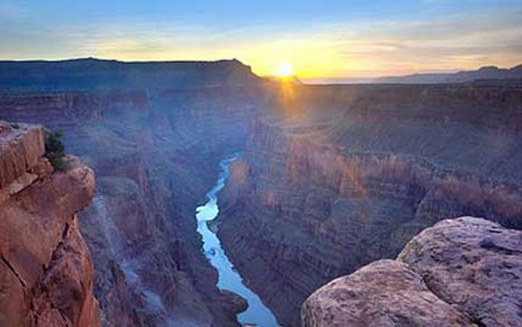
The mining ban was originally set by the Department of the Interior in 2012 but was recently challenged by a group of mining companies led by Gregory Yount, manager of the Northern Arizona Uranium Project. Yount claimed that the 2012 decision was based on faulty science and “improperly favored Native American claims that the land was sacred,” the Daily Sun writes. “It is pretty clear that the decision was not based on the specific sites but on Native Americans’ feelings about the sacred land,” Yount said. He also added that the predicted environmental degradation of water, land and wildlife around the Grand Canyon had been “significantly exaggerated” in 2012.
Judge Campbell, however, didn’t buy into those arguments. The decision not to mine around the Grand Canyon is important for “protecting a national treasure,” he told the Daily Sun. Moreover, he agreed with evidence that mining would disrupt the lives of members of the Havasupai tribe, who live in the region and consider the land there of cultural and religious importance.
Yount—who will be 74 when the ban is lifted—says he does not plan to appeal the decision this time around. http://www.smithsonianmag.com/smart-news/grand-canyon-will-not-be-mined-uranium-180952950/#xI8meVsDAueyseTC.99
Alert at Wolf Creek Nuclear Plant due to fire

 Fire Puts Wolf Creek Nuclear Plant On Alert http://www.wibw.com/home/headlines/Fire-Puts-Wolf-Creek-Nuclear-Plant-On-Alert-278301841.html BURLINGTON, Kan. (KVOE) 6 Oct 14 –– Wolf Creek was under alert earlier Monday due to a fire. The fire was reported around 1:30 p.m., in one of two emergency diesel generator rooms. The plant’s on-site fire brigade successfully extinguished the fire before Coffey County firefighters arrived. Wolf Creek returned to normal operations around 3:45pm.
Non-essential plant personnel were evacuated, but have since been allowed back on-site. The alert issued is their second-to-lowest emergency classification.
The plant is stable at 100 percent, and there was no release of radiation due to this event. No injuries were reported.
The extent of the damage to the emergency diesel generator is unknown. It’s one of two backup generators that provide power in the case of a loss of both on-site and off-site power. As per regulation, the plant is now required to restore the emergency generator to operable status within 72 hours, or bring the plant offline.
Cracks in Hunterston B nuclear power station indicate aging of UK reactor fleet
Cracks found at reactor at Hunterston B nuclear power station By David Miller BBC 7 Oct 14 Scotland environment correspondent New cracks have been found in one of the reactors at Hunterston B nuclear power station in North Ayrshire. Two of about 3,000 graphite bricks in the core of reactor four are affected.
Plant operator, EDF Energy, said the cracking was predicted to occur as the station aged and it would not affect the safe operation of the reactor. Deputy First Minister Nicola Sturgeon said the issue was “hugely concerning” to the public and that the Scottish government was seeking reassurances.
“The Scottish government is seeking the information we need to assure the public about safety, because safety is absolutely paramount and cannot be compromised,” she said……..Anti-nuclear groups said the issue called in to question the future of nuclear power.
WWF Scotland director Lang Banks said: “These cracks are a sign that we can expect these nuclear facilities to become increasingly unreliable in the future.
“As Scotland continues to grow its renewables capacity we can look forward to a day when we can switch off nuclear power for good.”
Peter Roach, editor of the No to Nuclear Power website, told Radio Scotland that it was time the gas-cooled reactors were retired.
“These reactors are getting too old to keep going for much longer,” he said.
“They’re about 40 years old and there’s definitely a problem with the cracking in the graphite blocks that one nuclear engineer has described as gambling with public safety.” http://www.bbc.com/news/uk-scotland-glasgow-west-29502329
Australia’s Tony Abbott government out of step on climate change
Government drops ball on climate change http://www.theage.com.au/comment/the-age-editorial/government-drops-ball-on-climate-change-20141007-3hhgq.html 8 oct 14 Two weeks ago, when Prime Minister Tony Abbott spoke before the General Assembly of the United Nations, he named four dire problems facing the world: the dangers posed by the Islamic State in Iraq and the Levant (ISIL), Russia’s destabilising influence in eastern Ukraine, the outbreak and spread of the Ebola virus in western Africa and the economic malaise that continues to afflict many countries.
But Mr Abbott did not mention climate change at all. That failure was conspicuous because just two days earlier, at the same podium, US President Barack Obama had outlined the same four threats to the world (”terrorism, instability, inequality and disease”) but added one more. Mr Obama told more than 120 leaders attending the UN Climate Summit that ”there’s one issue that will define the contours of this century more dramatically than any other, and that is the urgent and growing threat of a changing climate”. Mr Obama said the US had a duty to lead on emissions reduction strategies, and he urged other nations to do their part, saying no nation could afford to pretend climate change was not real.
Mr Abbott, though, did not even bother to attend the Climate Summit. He sent Foreign Minister Julie Bishop instead, and she chose to promote the government’s Direct Action strategy, under which businesses would be paid to cut their emissions. Sure, there are several other nations – India, for one – that obstinately shuck off any responsibility for initiating emissions-abatement strategies and which do so because they perceive their economies would be significantly disadvantaged. But Australia under the Abbott government has become an international joke on matters related to climate change. Only last year, for example, Mr Abbott suggested the UN’s climate chief, Christiana Figueres, was ”talking out of her hat” when she said bushfires in Australia were linked to climate change. Soon after, Environment Minister Greg Hunt sought to defend the PM in an interview with the BBC. During that interview, Mr Hunt said he had ”looked up what Wikipedia says”, and then sought to downplay the notion that climate change could influence the likelihood of bushfires.

But as Fairfax Media reported this week, Mr Hunt was thoroughly briefed just weeks before the interview by officials of the Bureau of Meteorology who explained the effects of climate change on weather patterns. They told the minister that a pattern of recent episodes of extreme heat was ”consistent with the general pattern of warming”. Last week, five separate studies published by Australian universities all concluded that record temperatures in Australia in 2013 were almost certainly caused by man-made climate change.
The governments of the world’s biggest economies and biggest emitters – the United States and China – are focused on emissions reduction strategies. In Australia, while the Abbott government says it supports the science indicating man’s influence on climate change, there is a distinctly grudging aspect to its attitude, a deliberate effort to minimise the scale or urgency of the problem and a clear intention to focus instead on the economic impact of emissions abatement strategies. The government has scrapped the carbon tax and it wants to wind back the renewable energy target, which is intended to ensure that one-fifth of Australia’s energy supply in 2020 will come from renewable sources.
This is a highly educated nation, whose scientists have made valuable contributions to the growing body of knowledge on climate change, and it is a wealthy nation with great economic opportunity. But it is being governed by a party that refuses to acknowledge the vital role it must play at this point in history.
Russia’s nuclear company Rosatom sends third expedition to monitor Fukushima radiation
Russia sends third expedition to Kuril Islands to monitor radiation levels October 7, 2014 Gleb Fedorov, RBTH Radiation from the Fukushima Nuclear Power Plant does not threaten Russian territory. However, the consequences of the 2011 accident will be felt for decades to come. RBTH spoke to the scientists involved with the third expedition to be sent to the Kuril Islands in the Russian Far East in order to monitor the radiation.
The scientific expedition vessel Professor Khlyustin, carrying Russian scientists, experts and military personnel, left the port of Vladivostok in Russia’s Far East on September 25 and headed east toward the Kuril Islands of Urup and Simushir, where they were due to take samples of soil, freshwater and silt.
……..In the space of a month, the expedition plans on crossing the Sea of Japan and sailing along the eastern shores of the Kuril Islands, a narrow chain of isles stretching 800 miles from Russia’s Kamchatka Peninsula to the Japanese island of Hokkaido. The scientists’ principal aim is to monitor radiation levels in the area affected by the accident at Japan’s Fukushima Nuclear Power Plant on March 11, 2011. This is the third expedition since the disaster. The first one took place right after the catastrophe, the second – a year later. The new expedition is being carried out under the aegis of the Russian Geographical Society and has been organized by the State Oceanographic Institute. Aboard the vessel are collaborators from state nuclear corporation Rosatom, the Ministry of Defense, the Russian Hydro-Meteorological Institute, the Rospotrebnadzor Monitoring Agency and the  Nevelsky Naval University. Results from past expeditions showed that pollution was almost zero and the biggest threat to Russia was the accumulation of radiation in fish.
………The only thing threatening Russia after Fukushima, according to Panchenko, is the accumulation of radiation in various types of commercial fish: “Fukushima’s radioactive discharges polluted the sand in the shallows where we find the little sand eels. Sand eels are caught by fishermen and are eaten by bigger commercial fish, which thus accumulate radiation.”
Source: Russia Beyond the Headlines – http://rbth.com/science_and_tech/2014/10/07/russia_sends_third_expedition_to_kuril_islands_to_monitor_ra_40417.html)
1 This Month

of the week – Shut Down Drone Warfare!


Tell the Ukrainian Government to Drop Prosecution of Peace Activist Yurii Sheliazhenko

Petition to revoke the licensing of the Near Surface Nuclear Disposal Facility (NSDF) at Chalk River. https://www.ourcommons.ca/petitions/en/Petition/Details?Petition=e-7247
To see nuclear-related stories in greater depth and intensity – go to https://nuclearinformation.wordpress.com
-
Archives
- April 2026 (79)
- March 2026 (251)
- February 2026 (268)
- January 2026 (308)
- December 2025 (358)
- November 2025 (359)
- October 2025 (376)
- September 2025 (257)
- August 2025 (319)
- July 2025 (230)
- June 2025 (348)
- May 2025 (261)
-
Categories
- 1
- 1 NUCLEAR ISSUES
- business and costs
- climate change
- culture and arts
- ENERGY
- environment
- health
- history
- indigenous issues
- Legal
- marketing of nuclear
- media
- opposition to nuclear
- PERSONAL STORIES
- politics
- politics international
- Religion and ethics
- safety
- secrets,lies and civil liberties
- spinbuster
- technology
- Uranium
- wastes
- weapons and war
- Women
- 2 WORLD
- ACTION
- AFRICA
- Atrocities
- AUSTRALIA
- Christina's notes
- Christina's themes
- culture and arts
- Events
- Fuk 2022
- Fuk 2023
- Fukushima 2017
- Fukushima 2018
- fukushima 2019
- Fukushima 2020
- Fukushima 2021
- general
- global warming
- Humour (God we need it)
- Nuclear
- RARE EARTHS
- Reference
- resources – print
- Resources -audiovicual
- Weekly Newsletter
- World
- World Nuclear
- YouTube
-
RSS
Entries RSS
Comments RSS
 nuclear-news
