Climate movement broadening and building – new hope for the world
In a few short centuries, the carbon-based fuels of the industrial breakthrough have come to threaten the entirety of a civilization they made possible. In the People’s Climate March is the suggestion that civilization might rise to the challenge, perhaps in time to avert total catastrophe. After the march, the four-letter word I heard most was: hope.
 Why you should be hopeful about the climate movement Grist, By Todd Gitlin Cross-posted from Tom Dispatch 3 Oct 14, Less than two weeks have passed and yet it isn’t too early to say it: The People’s Climate March changed the social map — many maps, in fact, since hundreds of smaller marches took place in 162 countries. That march in New York City, spectacular as it may have been with its 400,000 participants, joyous as it was, moving as it was (slow-moving, actually, since it filled more than a mile’s worth of wide avenues and countless side streets), was no simple spectacle for a day. It represented the upwelling of something that matters so much more: a genuine global climate movement………
There is today a climate movement as there was a civil rights movement and an anti-war movement and a women’s liberation movement and a gay rights movement — each of them much more than its component actions, moments, slogans, proposals, names, projects, issues, demands (or, as we say today, having grown more polite, “asks”); each of them a culture, or an intertwined set of cultures; each of them a political force in the broadest as well as the narrowest sense; each generating the wildest hopes and deepest disappointments. Climate change is now one of them: a burgeoning social fact. Continue reading
Nuclear power – always to expensive – now more costly than ever
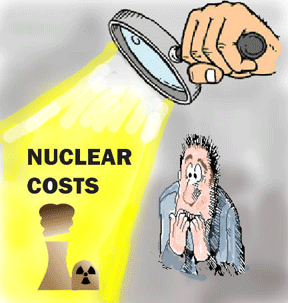 Cheap dreams, expensive realities http://www.ucsusa.org/our-work/nuclear-power/cost-nuclear-power#.VC9M0WddUnl 3 Oct 14
In the dawn of the nuclear era, cost was expected to be one of the technology’s advantages, not one of its drawbacks. The first chairman of the Atomic Energy Commission, Lewis Strauss, predicted in a 1954 speech that nuclear power would someday make electricity “too cheap to meter.”
A half century later, we have learned that nuclear power is, instead, too expensive to finance.
The first generation of nuclear power plants proved so costly to build that half of them were abandoned during construction. Those that were completed saw huge cost overruns, which were passed on to utility customers in the form of rate increases. By 1985, Forbes had labeled U.S. nuclear power “the largest managerial disaster in business history.”
The industry has failed to prove that things will be different this time around: soaring, uncertain costs continue to plague nuclear power in the 21st century. Between 2002 and 2008, for example, cost estimates for new nuclear plant construction rose from between $2 billion and $4 billion per unit to $9 billion per unit, according to a 2009 UCS report, while experience with new construction in Europe has seen costs continue to soar.
Financing and public risk
With this track record, it’s not surprising that nuclear power has failed to attract private-sector financing—so the industry has looked to government for subsidies, including loan guarantees, tax credits, and other forms of public support. And these subsidies have not been small: according to a 2011 UCS report, by some estimates they have cost taxpayers more than the market value of the power they helped generate.
When nuclear energy was an emerging technology, public support made some sense. But more than 50 years (and two public bailouts) after the opening of the first U.S. commercial nuclear plant, nuclear power is a mature industry that should be expected to stand on its own.
Instead, the industry has responded to escalating costs with escalating demands for government support. A 2009 UCS report estimated that taxpayers could be on the hook for anywhere from $360 billion to $1.6 trillion if then-current proposals for nuclear expansion were realized.
Cost vs benefit
If we want to reduce the climate impact of electric power generation in the United States, there are less costly and risky ways to do it than expanding nuclear power. A 2011 UCS analysis of new nuclear projects in Florida and Georgia shows that the power provided by the new plants would be more expensive per kilowatt than several alternatives, including energy efficiency measures, renewable energy sources such as biomass and wind, and new natural gas plants.
Public financing for energy alternatives should be focused on fostering innovation and achieving the largest possible reduction in heat-trapping emissions per dollar invested—not on promoting the growth of an industry that has repeatedly shown itself to be a highly risky investment.
The mirage of much hyped, (but non-existent) new nuclear reactors
New’ reactor types are all nuclear pie in the sky Ecologist Dr Jim Green 2nd October 2014 There’s an Alice in Wonderland flavour to the nuclear power debate, writes Jim Green. Lobbyists are promoting all sorts of new reactor types – an implicit admission that existing reactors aren’t up to the job. But the designs they are promoting have two severe problems. They don’t exist. And they have no customers. Some nuclear enthusiasts and lobbyists favour non-existent Integral Fast Reactors, others favour non-existent Liquid Fluoride Thorium Reactors, others favour non-existent Pebble Bed Modular Reactors, others favour non-existent fusion reactors. And on it goes.

Two to three decades ago, the nuclear industry promised a new generation of gee-whiz ‘Generation IV’ reactors in two to three decades. That’s what they’re still saying now, and that’s what they’ll be saying two to three decades from now. The Generation IV International Forum website states:
“It will take at least two or three decades before the deployment of commercial Gen IV systems. In the meantime, a number of prototypes will need to be built and operated. The Gen IV concepts currently under investigation are not all on the same timeline and some might not even reach the stage of commercial exploitation.”
The World Nuclear Association notes that“progress is seen as slow, and several potential designs have been undergoing evaluation on paper for many years.”……..
 So work continues on Small Modular Nuclear Reactors (SMRs) but the writing’s on the wall and it’s time for the nuclear lobby to come up with another gee-whiz next-gen fail-safe reactor type to promote … perhaps a giant fusion reactor located out of harm’s way, 150 million kilometres from Earth.
And while the ‘small is beautiful’ approach is faltering, so too is the ‘bigger is better’ mantra. The 1,600 MW Olkiluoto-3 European Pressurized Reactor (EPR) under construction in Finland is nine years behind schedule (and counting) and US$6.9 billion over-budget (and counting).
The UK is embarking on a hotly-contested plan to build two 1,600 MW EPRs at Hinkley Point with a capital cost of US$26 billion and mind-boggling public subsidies.
Economic consulting firm Liberum Capital said Hinkley Point will be “both the most expensive power station in the world and also the plant with the longest construction period.”http://www.theecologist.org/News/news_analysis/2577637/new_reactor_types_are_all_nuclear_pie_in_the_sky.html
UK’s Atomic Weapons Establishment found unsafe, by regulator

 UK nuclear bomb factories rapped by watchdogs over radioactive waste
Atomic Weapons Establishment issued with non-compliance notice by Environment Agency over handling of hazardous waste Rob Edwards heguardian.com, Thursday 2 October 2014 Britain’s nuclear bomb factories have been reprimanded by two government watchdogs for breaking safety rules on radioactive waste.
AWE, the private consortium that operates Trident nuclear weapons facilities at Aldermaston and Burghfield in Berkshire for the Ministry of Defence, has come under fire from the Environment Agency (EA) and theOffice for Nuclear Regulation (ONR) for failures in managing its hazardous waste.
The EA has issued AWE with a non-compliance notice because key posts meant to ensure the safe handling of wastes have been vacant for months. These include waste officers, radioactive specialists and the head of environment…….
“ONR is continuing to investigate AWE’s failure to meet the requirements of the licence instrument, in accordance with our normal processes,” said an ONR spokesman. “ONR will consider enforcement action in accordance with our enforcement policy when all investigations are completed.”…….
“Since 2010 safety and environmental regulators have increasingly had to take action at the Atomic Weapons Establishment, and it is time to start asking whether AWE are fit to run this complex and hazardous site if they are unable to improve standards.” http://www.theguardian.com/environment/2014/oct/02/uk-nuclear-bomb-factories-rapped-by-watchdogs-over-radioactive-waste
Japan now closing super-costly Tokai nuclear fuel processor
 Tokai nuclear fuel processor to close due to cost of meeting new standards http://mainichi.jp/english/english/newsselect/news/20140930p2a00m0na009000c.html
The Japan Atomic Energy Agency has announced that it will shut down a spent nuclear fuel processor in Tokai, Ibaraki Prefecture, as the cost to prepare the facility for new regulation standards established after the Fukushima nuclear plant crisis is predicted to top 100 billion yen.
The agency reported the decommission plan of the existing nuclear fuel processor at a meeting of its reform committee held on Sept. 29.
According to the agency, the nuclear fuel processing technology that has been under development at the Tokai facility has almost been completely moved to another processing station in Aomori Prefecture operated by Japan Nuclear Fuel Ltd.
The new regulation standards for running a nuclear fuel reprocessing facility require operators to take the same level of safety and anti-disaster measures against earthquakes and tsunami as nuclear power stations. The agency’s executive director Shigeo Nomura told the meeting that continuing the spent fuel recycling project will not be approved by the public in terms of economic rationality.
The agency will include the decommission plan in its medium-term operational policy, which comes into effect in the next fiscal year, and file a decommission plan with the Nuclear Regulation Authority as early as fiscal 2017.
The Tokai plant came into full operation in 1981. Since 2006, it had reprocessed spent nuclear fuel from the now-decommissioned converter-type nuclear reactor Fugen in Fukui Prefecture.
There are some 110 metric tons of spent nuclear fuel left in the Tokai plant, and the agency plans to commission France to treat the remaining fuel.
$1 billion increase in price for new South Carolina nuclear power plant
 Price tag for SC nuclear plant could grow by $1B http://www.postbulletin.com/news/nation/price-tag-for-sc-nuclear-plant-could-grow-by-b/article_ac849e2f-4c85-59e7-8144-9b7408674671.html 2 oct 14,
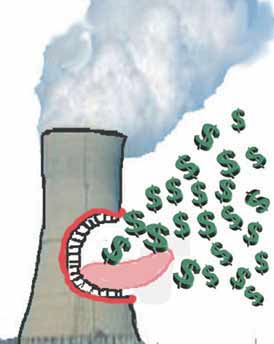
ATLANTA (AP) — The firms building a new nuclear plant in South Carolina say their construction costs could grow by more than $1 billion.
That development is troubling for a nuclear industry trying to prove it can build new power plants without the cost overruns that plagued its projects decades ago. SCANA Corp. announced Thursday that the firms building and designing two new reactors at its V.C. Summer plant say the utility’s costs could grow by about $660 million dollars in 2007. Co-owner Santee Cooper would face a roughly $540 million charge.
Officials for SCANA Corp. and Santee Cooper say they have not accepted any financial responsibility for those costs, and the charges could change.
The plant being built in South Carolina is a sister project to another facility under construction in Georgia.
No market for Small Modular Nuclear Reactors (SMRs)
‘New’ reactor types are all nuclear pie in the sky Ecologist Dr Jim Green 2nd October 2014 “………. In any case, Integral Fast Nuclear Reactors (IFRs) are yesterday’s news. Now it’s all about Small Modular Reactors (SMRs). The Energy Green Paper recently released by the Australian government is typical of the small-is-beautiful rhetoric:
“The main development in technology since 2006 has been further work on Small Modular Reactors (SMRs). SMRs have the potential to be flexibly deployed, as they are a simpler ‘plug-in’ technology that does not require the same level of operating skills and access to water as traditional, large reactors.”
The rhetoric doesn’t match reality. Interest in SMRs is on the wane. Thus Thomas W. Overton, associate editor of POWER magazine, wrote in a recent article:
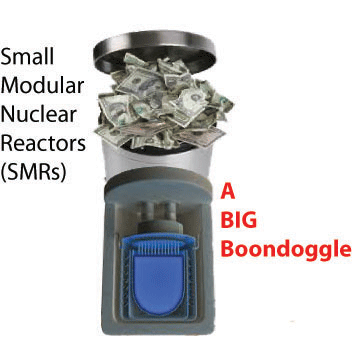 “At the graveyard wherein resides the “nuclear renaissance” of the 2000s, a new occupant appears to be moving in: the small modular reactor (SMR). … Over the past year, the SMR industry has been bumping up against an uncomfortable and not-entirely-unpredictable problem: It appears that no one actually wants to buy one.”
Overton notes that in 2013, MidAmerican Energy scuttled plans to build an SMR-based plant in Iowa. This year, Babcock & Wilcox scaled back much of its SMR program and sacked 100 workers in its SMR division. Westinghouse has abandoned its SMR program. As he explains:
“The problem has really been lurking in the idea behind SMRs all along. The reason conventional nuclear plants are built so large is the economies of scale: Big plants can produce power less expensively per kilowatt-hour than smaller ones.
“The SMR concept disdains those economies of scale in favor of others: large-scale standardized manufacturing that will churn out dozens, if not hundreds, of identical plants, each of which would ultimately produce cheaper kilowatt-hours than large one-off designs.
“It’s an attractive idea. But it’s also one that depends on someone building that massive supply chain, since none of it currently exists. … That money would presumably come from customer orders – if there were any. Unfortunately, the SMR “market” doesn’t exist in a vacuum.
“SMRs must compete with cheap natural gas, renewables that continue to decline in cost, and storage options that are rapidly becoming competitive. Worse, those options are available for delivery now, not at the end of a long, uncertain process that still lacks [US Nuclear Regulatory Commission] approval.”
Can’t find customers, can’t find investors
Dr Mark Cooper, Senior Fellow for Economic Analysis at the Institute for Energy and the Environment, Vermont Law School, notes that two US corporations are pulling out of SMR development because they cannot find customers (Westinghouse) or major investors (Babcock and Wilcox). Cooper points to some economic constraints:
“SMR technology will suffer disproportionately from material cost increases because they use more material per MW of capacity. Higher costs will result from: lost economies of scale; higher operating costs; and higher decommissioning costs. Cost estimates that assume quick design approval and deployment are certain to prove to be wildly optimistic.”
Academics M.V. Ramana and Zia Mian state in their detailed analysis of SMRs:“Proponents of the development and large scale deployment of small modular reactors suggest that this approach to nuclear power technology and fuel cycles can resolve the four key problems facing nuclear power today: costs, safety, waste, and proliferation.
“Nuclear developers and vendors seek to encode as many if not all of these priorities into the designs of their specific nuclear reactor. The technical reality, however, is that each of these priorities can drive the requirements on the reactor design in different, sometimes opposing, directions.
“Of the different major SMR designs under development, it seems none meets all four of these challenges simultaneously. In most, if not all designs, it is likely that addressing one of the four problems will involve choices that make one or more of the other problems worse.”
The future is in … decommissioning
Likewise, Kennette Benedict, Executive Director of the Bulletin of the Atomic Scientists,states: “Without a clear-cut case for their advantages, it seems that small nuclear modular reactors are a solution looking for a problem.
“Of course in the world of digital innovation, this kind of upside-down relationship between solution and problem is pretty normal. Smart phones, Twitter, and high-definition television all began as solutions looking for problems.
“In the realm of nuclear technology, however, the enormous expense required to launch a new model as well as the built-in dangers of nuclear fission require a more straightforward relationship between problem and solution.
“Small modular nuclear reactors may be attractive, but they will not, in themselves, offer satisfactory solutions to the most pressing problems of nuclear energy: high cost, safety, and weapons proliferation.”
And as Westinghouse CEO Danny Roderick said in January: “The problem I have with SMRs is not the technology, it’s not the deployment – it’s that there’s no customers.”
Instead of going for SMRs, IFRs, Pebble Bed Reactors or thorium technologies, Westinghouse is looking to triple the one area where it really does have customers: its decommissioning business. “We see this as a $1 billion-per-year business for us”, Roderick said.
With the world’s fleet of mostly middle-aged reactors inexorably becoming a fleet of mostly ageing, decrepit reactors, Westinghouse is getting ahead of the game.
The writing is on the wall
Some SMR R&D work continues but it all seems to be leading to the conclusions mentioned above. Argentina is ahead of the rest, with construction underway on a 27 MWe reactor – but the cost equates to an astronomical US$15.2 billion per 1,000 MWe. Argentina’s expertise with reactor technology stems from its covert weapons program from the 1960s to the early 1980s…………. http://www.theecologist.org/News/news_analysis/2577637/new_reactor_types_are_all_nuclear_pie_in_the_sky.html
Regulators order Duke Energy to repay customers $54 million for nuclear equipment never produced
 PSC orders Duke to refund to customers $54 million for nuclear plant equipment that was never produced
Ivan Penn, Tampa Bay Times Staff Writer Thursday, October 2, 2014 TALLAHASSEE — In the face of growing public outcry, state regulators today ordered Duke Energy Florida to credit $54 million to customers for nuclear equipment that was never produced for the now canceled Levy County nuclear project……..
state Attorney General Pam Bondi joined a growing chorus of state leaders urging the PSC to refund to ratepayers money they paid for equipment for a nuclear plant. Neither the plant nor the equipment was ever built.
In a letter to commission Chairman Art Graham, Bondi said, “I am writing to express my deep concerns over the Public Service Commission . . . staff’s recent recommendation to side with Duke Energy to withhold $54 million in credits rightfully due to its customers.”
Today’s “meeting of the Commission presents an opportunity to do what is in the best interest of those customers who have been shouldering the burden of the $54 million for a nuclear plant project that will never come to fruition,” Bondi wrote.
Duke, the state’s second largest investor owned utility, had expected to have more than 3,000 megawatts of power from the upgrades to the Crystal River nuclear power plant in Citrus County and construction of a pair of new reactors in Levy County.
But a botched upgrade of the Crystal River facility led Duke to permanently close the plant and soaring costs of the Levy nuclear plant led the utility to cancel that project.
The two nuclear projects’ costs to Duke ratepayers reached $3.2 billion, though customers will never receive a kilowatt of power from the plants for that money.
The PSC vote to order the $54 million refund means customers will stop paying for expenses related to the Levy project by mid 2015. Without that order, payments of $3.45 a month for the average residential customer would have run through early 2016.
An eight-year-old state law enabled Duke to collect the money in advance for the Levy project. The law, the Nuclear Cost Recovery Clause, or so-called “nuclear advance fee,” allows Florida utilities to collect money from their customers for nuclear projects before they begin producing power.
Duke is suing its former contractor, Westinghouse Electric Co., in federal court in North Carolina to reclaim the $54 million because the company never produced the equipment after receiving the money. Westinghouse is counter-suing Duke for $512 million for canceling the contract for the Levy project. http://www.tampabay.com/news/business/energy/bondi-urges-psc-to-order-duke-to-refund-54-million-for-nuclear-equipment/2200407
Japan’s electricity utilities blocking renewable energy

 4 more utilities stop signing contracts for purchasing renewable energy, Manichi, 3 Oct 14TOKYO (Kyodo) — Four more regional utilities said Tuesday they will stop signing contracts to buy renewable energy from mega solar power plants and other suppliers, citing transmission network capacity limitations.
The move by the regional utilities serving Shikoku, Hokkaido, Tohoku and Okinawa follows Kyushu Electric Power Co.’s announcement last week that it was suspending acceptance of applications from renewable energy suppliers.
The suspension by Kyushu Electric has already prompted the government to review the incentive scheme introduced in July 2012 for renewable energy, which it has been encouraging since the 2011 Fukushima Daiichi disaster heightened safety concerns about nuclear power.
Under the so-called feed-in tariff scheme, power utilities are obliged to purchase electricity generated from renewable sources at fixed prices. The costs are passed on to consumers in their electricity bills.
But the five utilities have said they can no longer sign power-purchasing contracts as blackouts could occur if all output from renewable energy suppliers is transmitted to the utilities’ grids, causing overcapacity…….http://mainichi.jp/english/english/newsselect/news/20141001p2g00m0bu040000c.html
20% of Japanese worried about radiation in Fukushima food
 One in Five Japanese Cautious About Fukushima Food WSJ, 2 Oct 14, The proportion of consumers saying they hesitate to buy food products from Fukushima prefecture because of radiation fears reached 20%, up from 15% in February, according to a twice-yearly survey by the Consumer Affairs Agency released this week.
The percentage was the highest since February 2013, when the agency began issuing reports on how misinformation and harmful rumors were affecting consumer views of food and radioactive contamination.
The latest study was conducted online in August, and surveyed 5,176 adults in 11 prefectures including Tokyo and Osaka as well as the Tohoku region where the 2011 earthquake and tsunami hit hardest.
Of those surveyed, 22.5% said the government should impose stricter regulations concerning radiation and food, and 47% said that they would like to avoid intake of food with radioactive substances even if the radiation level is below government-set safety limits…….http://blogs.wsj.com/japanrealtime/2014/10/02/one-in-five-japanese-cautious-about-fukushima-food/
Judge rules against uanium miners and for the Grand canyon environment
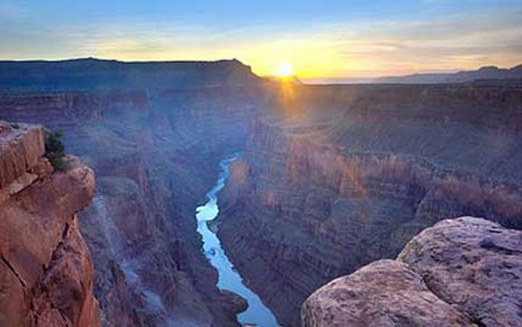
 Ban on uranium mining at Grand Canyon upheld by Arizona court . http://www.theguardian.com/environment/2014/oct/02/ban-uranium-mining-grand-canyon-arizona-court Ruling protects national treasure against the possibility of opening it to 26 new mines and 700 exploration projects Leslie Macmillan theguardian.com, Friday 3 October 2014
 In January 2012, then-US interior secretary Ken Salazar issued the ban that prohibits new mining claims and mine development on existing claims without valid permits. A subsequent mining industry lawsuit asserted that the interior department’s 700-page study of environmental impacts was inadequate and the ban was unconstitutional.
A coalition of groups including native American tribes and the Sierra Club intervened in that lawsuit, and on Tuesday the court ruled in their favour.
Judge David G Campbell of the US district court for Arizona summarised his ruling dismissing all uranium mining industry claims by stating that the secretary of the interior had the authority to “err on the side of caution in protecting a national treasure – Grand Canyon national park.”
Critics of uranium mining say that it would threaten the aquifers and streams that feed the Colorado river and Grand Canyon by releasing toxic waste.
Martha Hahn, chief of science and resource management for the Grand Canyon, says that mines would leach contaminants into watersheds, seeps and springs in the canyon, mar the landscape and impact wildlife. The seeps that make rocks slick might not look life-sustaining, but one might “feed a critter that feeds another critter, so you see the effect pretty exponentially,” said Hahn.
- According to the government’s study, removing the ban would mean that 26 new uranium mines and 700 uranium exploration projects could be developed.The Grand Canyon attracts about 4m tourists a year. Uranium mining companies have 60 days to appeal the decision
OECD and IAEA warn of uranium industry’s uncertain future
OECD/IAEA Red Book The latest edition of the ‘Red Book’ − ‘Uranium 2014: Resources, Production and Demand’ − has been released by the OECD Nuclear Energy Agency and the International Atomic Energy Agency.8………
“Uranium miners have been hit harder by the Fukushima Daiichi accident than any other segment of the nuclear fuel cycle,” the Red Book states, and Fukushima “has eroded public confidence in nuclear power in some countries and prospects for growth in nuclear generating capacity are in turn being reduced and subject to even greater uncertainty than usual.”
 Uranium’s dead cat bounce as miners play chicken Dr Jim Green − Nuclear Monitor 2 Oct 2014 “…..the price increase has been driven by supply-side concerns and speculation instead of increased demand or even speculation regarding increased demand. UBS commodities analyst Daniel Morgan said in early September: “There’s been a few supply-side issues which has been enough for a very modest price rise. What the market really needs is a demand-side driver to get the price going and in my view we don’t have one at the moment.”2
Macquarie Group’s Stefan Ljubisavljevic predicts a uranium supply surplus for the next five years unless some unprofitable mines close.1 Raymond James analyst David Sadowski said in May that many utilities around the world “are sitting on near-record piles” of uranium.11 For example China has stockpiled about eight years’ supply (at its current rate of consumption) while it may take Japanese utilities a decade or more before they exhaust existing stockpiles.12
The long term price, where most uranium business is conducted, was still languishing at US$44 / lb in late August, a six-year low.3
A number of mines have been put into care-and-maintenance over the past year, including Paladin Energy’s Kayelekera mine in Malawi, and the Honeymoon mine in South Australia, owned by a Rosatom subsidiary. Many other planned mining projects have been cancelled or deferred or scaled down, and some uranium mining companies are being downgraded. Recent examples include:
Investors advised to steer clear of uranium stocks

Buy fertilizer stocks, don’t buy uranium and precious metals: RBC FINANCIAL POST, Peter Koven | October 1, 2014 |It has been a turbulent fall season for mining equities and commodity prices. As investors try to predict what will happen next, analysts at RBC Capital Markets are advising clients to go overweight on fertilizer equities and underweight on uranium and precious metals equities in the fourth quarter…….
The negative call on uranium is no surprise, as investors have been down on this sector ever since Japan’s Fukushima disaster in 2011. The analysts expect weak uranium demand and soft pricing will continue…….http://business.financialpost.com/2014/10/01/buy-fertilizers-dont-buy-uranium-and-precious-metals-rbc/
Integral Fast Nuclear Reactors (IFRs) – a dud before they even exist!
 ‘New’ reactor types are all nuclear pie in the sky Ecologist Dr Jim Green 2nd October 2014
“………Integral Fast Reactors (IFRs) are a case in point. According to the lobbyists they are ready to roll, will be cheap to build and operate, couldn’t be used to feed WMD proliferation, etc. The US and UK governments have been analysing the potential of IFRs.
The UK government found that:
- the facilities have not been industrially demonstrated;
- waste disposal issues remain unresolved and could be further complicated if it is deemed necessary to remove sodium from spent fuel to facilitate disposal; and
- little could be ascertained about cost since General Electric Hitachi refuses to release estimates of capital and operating costs, saying they are “commercially sensitive”.
The US government has also considered the use of IFRs (which it calls Advanced Disposition Reactors – ADR) to manage US plutonium stockpiles and concluded that:
- the ADR approach would be more than twice as expensive as all the other options under consideration;
- it would take 18 years to construct an ADR and associated facilities; and
- the ADR option is associated with “significant technical risk”.
Unsurprisingly, the IFR rhetoric doesn’t match the sober assessments of the UK and US governments. As nuclear engineer Dave Lochbaum from the Union of Concerned
Scientists puts it:
“The IFR looks good on paper. So good, in fact, that we should leave it on paper. For it only gets ugly in moving from blueprint to backyard.”……….http://www.theecologist.org/News/news_analysis/2577637/new_reactor_types_are_all_nuclear_pie_in_the_sky.html
IN 2014 Germany gets 27% of electricity from renewable energy
 Germany kicks our butts, again, at clean energy Grist, By Liz Core 2 Oct 2014 Germany has hit a new clean energy milestone: So far this year, the country has gotten more electricity from renewables than from any other single source, 27.7 percent. That (just barely) beats the 26.3 percent of power generated by lignite coal, according to Agora research organization.
“This is a real success and watershed moment,” said Famke Krumbmuller, an analyst at Eurasia Group.
Wind accounted for 9.5 percent of the power fed into the country’s grid in the first nine months of 2014, biomass for 8.1, solar for 6.8 percent, and hydropower for less than 4 percent.
Last year, Germany got 24.1 percent of its electricity from renewables, so it’s up more than 3 percent. German Chancellor Angela Merkel’s government is aiming to get as much as 60 percent of the nation’s electricity from clean sources by 2035, even while phasing out nuclear power by 2022. (If you’re still looking for a star quarterback for your climate hawk fantasy league, Merkel is looking like she might be ace at pummeling her way to a climate goal.)
The U.S., by contrast, got just 6 percent of its electricity from wind, solar, biomass, and geothermal last year, and other 7 percent from hydro……http://grist.org/list/germany-kicks-our-butts-again-at-clean-energy/
1 This Month

of the week – Shut Down Drone Warfare!


Tell the Ukrainian Government to Drop Prosecution of Peace Activist Yurii Sheliazhenko

Petition to revoke the licensing of the Near Surface Nuclear Disposal Facility (NSDF) at Chalk River. https://www.ourcommons.ca/petitions/en/Petition/Details?Petition=e-7247
To see nuclear-related stories in greater depth and intensity – go to https://nuclearinformation.wordpress.com
-
Archives
- April 2026 (57)
- March 2026 (251)
- February 2026 (268)
- January 2026 (308)
- December 2025 (358)
- November 2025 (359)
- October 2025 (376)
- September 2025 (257)
- August 2025 (319)
- July 2025 (230)
- June 2025 (348)
- May 2025 (261)
-
Categories
- 1
- 1 NUCLEAR ISSUES
- business and costs
- climate change
- culture and arts
- ENERGY
- environment
- health
- history
- indigenous issues
- Legal
- marketing of nuclear
- media
- opposition to nuclear
- PERSONAL STORIES
- politics
- politics international
- Religion and ethics
- safety
- secrets,lies and civil liberties
- spinbuster
- technology
- Uranium
- wastes
- weapons and war
- Women
- 2 WORLD
- ACTION
- AFRICA
- Atrocities
- AUSTRALIA
- Christina's notes
- Christina's themes
- culture and arts
- Events
- Fuk 2022
- Fuk 2023
- Fukushima 2017
- Fukushima 2018
- fukushima 2019
- Fukushima 2020
- Fukushima 2021
- general
- global warming
- Humour (God we need it)
- Nuclear
- RARE EARTHS
- Reference
- resources – print
- Resources -audiovicual
- Weekly Newsletter
- World
- World Nuclear
- YouTube
-
RSS
Entries RSS
Comments RSS
 nuclear-news