Critical situation at Fukushima nuclear reactor No 2 on March 11 2011
Fukushima No. 2 scrambled to avoid same fate as sister site Fukushima No. 1 Fukushima Emergency – what can we do? by dunrenard Sep 10, 2014
FUKUSHIMA – This is the fifth in a series on the Fukushima nuclear catastrophe based on the accounts of people who struggled to contain the crisis in its early stages. Job titles and ages are as of March 2011.
Fukushima No. 1 wasn’t the only nuclear complex facing a critical situation after the magnitude-9.0 earthquake of March 11, 2011, unleashed a monster tsunami on the coast of Tohoku.
Tokyo Electric Power Co.’s Fukushima No. 2 plant, located about 12 km south of the No. 1 plant, also saw seawater pumps and electrical equipment flooded by the tsunami, which led three of its four reactors to lose key cooling functions.
Still, the extent of the damage was less devastating than that at its sister plant and one off-site power source that remained operable provided more leeway for workers to deal with the emergency.
For No. 2 plant chief Naohiro Masuda, 53, the worst situation imaginable was to lose control of both plants at the same time.
So when he watched on television as an explosion rocked the No. 1 reactor building at the other complex on March 12, Masuda issued an order that could be seen by some as coldhearted.
“Don’t allow anyone (from Fukushima No. 1) to enter our emergency response office building,” the plant chief said.
The building houses the emergency first-aid station.
Masuda’s decision reflected his determination to keep the developments at the other site from hampering stabilization efforts at his plant.
Workers exposed to radiation or injured by the explosion were certain to be transported to Fukushima No. 2.
Masuda believed that he had to limit the radiation contamination inside his complex so as not to affect the workers’ efforts.
He told his subordinates to prepare a place away from the office building for the No. 1 workers. His decision was later criticized by some No. 1 workers, who said they felt they were treated “like garbage.”
An area to scrub away radiation contamination and an aid center were set up inside a facility next to the main gate. The plant’s gymnasium was also readied as a shelter for workers from No. 1.
By the night of March 12, everything was ready to receive the No. 1 workers. But Masuda noticed many of his own workers appeared anxious. To reassure them, he gathered them together and told them he would “make sure that you won’t end up with any health problems. Don’t worry……….
When that happened, Masuda told his subordinates: “Don’t rely on others. Let’s do things by ourselves.”
A single misstep could have altered the fate of Fukushima No. 2. But the plant managed to keep the severity of the incident at level 3 on the international scale of nuclear accidents.
The crisis at Fukushima No. 1 was eventually rated at the maximum, level 7.
Source: Japan Times
http://www.japantimes.co.jp/news/2014/09/10/national/fukushima-2-scrambled-avoid-fate-sister-site-fukushima-1/ http://fukushimaemergencywhatcanwedo.blogspot.com.au/2014/09/fukushima-no-2-scrambled-to-avoid-same.html
120,000 Fukushima nuclear evacuees still displaced, 3 years after
Japan’s nuclear watchdog on Wednesday gave the green light for two nuclear reactors at Kyushu Electric Power’s Sendai plant in south-west Japan to restart, but communities are anxious over the safety aspects. The nuclear industry in Japan has been mothballed since the meltdown.
At a temporary housing complex in Fukushima prefecture one resident, Iiko Kanno, said she now spends her days reading, growing vegetables and counting the days until she is reunited with her grandchildren. As with many of her neighbours, Kanno’s family has been torn apart by the nuclear meltdown, which happened in March 2011…….
A survey conducted this year by the prefectural government found that almost half of the households forced to evacuate were living apart, while almost 70% had relatives suffering from physical and mental health problems.
- Of the total, 48.9% of households said family members were living in two or more locations. Of that number, 58.6% said relatives who had once lived together had been scattered across three or more sites.
In the same survey, 67.5% of households said they had relatives who were showing signs of physical or psychological distress. More than half of those afflicted said they had lost interest in activities they once enjoyed or that they had trouble sleeping.
Kanno’s plight is typical of many Fukushima families who lived together in large rural homes before the disaster………
- So far only a few hundred people from two districts on the eastern edge of the evacuation zone have been given permission to return permanently……
- “The nuclear accident turned everything upside down,” she said. “Even if the evacuation order is lifted, no young people or children will go back. We have asked everyone – the village office, decontamination workers, environment ministry bureaucrats – when it will be safe to return. But no one can give us an answer.” http://www.theguardian.com/world/2014/sep/10/fukushima-nuclear-disaster-japan-three-years-families-uprooted
USA Dept of Energy’s estimate of Fukushima radiation release “Not for Distribution, Internal Use Only
“Not for Distribution, Internal Use Only”: US Energy Dept. estimated Fukushima release up to 10,000 times larger than nuclear regulators predicted — ‘Supercore’ scenario an underestimate? http://enenews.com/us-energy-dept-estimated-fukushima-release-up-to-10000-times-larger-than-nuclear-regulators-predicted-supercore-scenario-an-underestimate?utm_source=feedburner&utm_medium=email&utm_campaign=Feed%3A+ENENews+%28Energy+News%29
Ocean Plume Modeling for the Fukushima Daiichi Event (pdf) — US Dept. of Commerce, NOAA, National Weather Service, Sept. 2013:
> Estimates of contamination
- “Coastal releases ignored. According to TEPCO estimates, coastal releases are 1% of atmospheric… Not important for far-field estimates (i.e., exposure for US territories)”
- “Scenarios used [are] NRC source scenario [and] DOE Supercore source scenario”
- Regarding Cs-137 release estimates, “NRC and DOE differ by three orders of magnitude” [i.e. DOE estimate is 1,000 to 9,999 times more than NRC]
- “Enormous uncertainty in total amount of contamination released at FDNPP”
- “Differences between NRC & DOE sources are crippling from a scientific perspective”
- “DOE much too high at… JAMSTEC observation line 30km offshore [and] overestimates Cs-137 by order of magnitude [predicting a] maxima of around 100 Bq/L for Cs-137… JAMSTEC realistic contamination levels would be factor 10 smaller (10 Bq/L).”
Is DOE’s 100 Bq/L an ‘Overestimate’?
- The above report by the federal government claims to use ‘realistic’ data from the JAMSTEC line (Japan Agency for Marine-Earth Science and Technology) of 10 Bq/L for Cs-137. However, JAMSTEC measured a maxima of 186 Bq/L for Cs137 at 30km off the Fukushima coast — nearly double the DOE ‘overestimate’.
- The Science Council of Japan: “Oceanic monitoring… identified that 100 Bq/L or more of 137Cs had been diffused to the north and south.”
DOE’s estimate based on the ‘supercore’ scenario came rather close to predicting actual Cs-137 levels observed in samples from the Pacific Ocean — if anything, it appears to be an underestimate.
The reactor conditions assumed in DOE’s ‘supercore’ scenario have been redacted from FOIA documents. However it’s likely that the ‘supercore’ was among the worst-case scenarios discussed by the US government. As reported by Echo News, around 5 different worst-cases were in play — “I still won’t let anybody use the word ‘worst case’ in the room here because there’s about five worst cases.” –NRC’s Director of Nuclear Security & Incident Response
Did Japan’s government use the dengue fever scare to stop anti-nuclear protest in park?
 Nuclear Conspiracies And Pacific Radiation Activist Post, Richard Wilcox, PhD September 10, 2014
“……….While speculation about controversial topics in the SNS sphere should be taken with a large grain of salt, there is a theory  that the government has used the dengue scare to shut down Yoyogi Park in order to block what was supposed to be a “huge” September 27, anti-nuclear protest. Before you laugh and shout “conspiracy theory” (although you might be right in this case) read on.
Given that practically everything many Western (including Japan) governments say these days are lies, dutifully parroted by the Media, it does make one wonder. Just because you’re paranoid doesn’t mean they’re not out to get you. ……….
this year is Japan Prime Minister Shinzo “I Love Nukes & Military Spending” Abe’s big push to restart the country’s idling and costly nuclear reactors. The timing is interesting. Not only did Abe recently appoint a pro-nuclear woman to his cabinet (to soft peddle the cute and cuddly image of nuclear power) but it was recently announced that the first nuclear restart has been approved in Kagoshima prefecture in the far south of the country (2). This is despite the fact that “more than 60 percent of local governments that host or surround a nuclear power plant are cautious about restarting idled reactors even if they meet new safety guidelines” (3).
According to the dengue conspiracy theory, this year the government manipulated the data to make it look like the dengue cases were specifically emanating from the park. There is also a theory that the fevers are caused by the spraying of chemicals and pesticides in the area, that mimic the symptoms of dengue. The motive: Where a huge anti-nuclear demonstration was to occur on Sept. 27, in order to combat the push for reactor restarts — now the park has been CLOSED! The canceled anti-nuke event will muzzle the opposition and pave the way for nuclear restarts.
In the summer of 2012, tens of thousands, upwards of 100,000 demonstrators or more, gathered in just that park, Yoyogi Park, in order to protest the government’s nuclear policy (4).
Considering the anti-constitutional and dictatorial leanings of the Abe administration, it is not a ridiculous hypothesis to consider that The-Powers-That-Be took advantage of the dengue scare to manipulate data for furthering administration goals.
Of course the lapdog media is always on hand to play its role in furthering such myths, as happened in the granddaddy conspiracy of all time, the 911 “terror attacks” (5). Incredibly, the man who wrote his college thesis about the creation and maintenance of state myths is also the one man who was in charge of the 911 investigative committee (6; 7). That’s what we simple folks call putting the fox in charge of the henhouse.
Invitation a signer la declaration dénonçant la main-mise des multinationales sur le sommet sur le climat de l’ONU
 September 10, 2014 by globalforest http://focusweb.org/content/sign-statement-denounce-corporate-takeover-climate-summit
Nous appelons toutes les organisations, tous les mouvements sociaux, tous les groupes et mouvements pour la justice climatique à se joindre à nous pour cet appel à l’action et à signer la déclaration jointe.
Le 23 Septembre, le Secrétaire général des Nations Unies Ban Ki-moon organise un sommet sur le climat à New York, en présence des chefs d’Etat, des multinationales et de quelques représentants de la société civile triés sur le volet. Ce Sommet, organisé en grande pompe, ne propose que des engagements volontaires en termes de réduction d’émissions et des initiatives basés sur des mécanismes de marché ou de partenariats public-privé destructifs, telles que REDD +, les projets d’agriculture intelligente face au climat (climate smart agriculture) ou encore l’initiative Énergie durable pour tous (SE4All – Sustainable energy for all). Ce sont toutes des fausses solutions de ce qui est présenté comme une « économie verte », des propositions qui visent à marchandiser davantage la vie et la nature, pour en tirer plus de profits. Nous, les mouvements sociaux signataires de cette déclaration, qui représentons, tous ensemble, plus de 200 millions de personnes à travers le monde, nous dénonçons la main-mise du secteur privé sur l’ONU et sur le processus de négociations sur le climat : nous appelons à un profond changement de système. Le changement climatique est le résultat d’un système économique injuste. Pour faire face à la crise, il faut s’attaquer aux causes structurelles et changer le système qui les génère. Pour éviter le chaos climatique, proposons de véritables solutions et attaquons-nous à l’inaction des gouvernements qui sont subordonnés aux intérêts des multinationales polluantes. Il est essentiel d’unifier et renforcer nos luttes économiques, sociales et écologistes, et de concentrer nos énergies sur la transformation du système capitaliste.
Pour signer la déclaration, envoyer le nom de votre organisation à espaceclimat@gmail.com
Si vous souhaitez que le nom de votre organisation soit inclus dans la déclaration qui sera communiquée aux médias, merci de répondre avant le 14 Septembre 2014.
Hanford Nuclear Reservation’s dangerous”atomic man” room entered after 38 years
Workers enter dangerous ‘Atomic Man’ room at Hanford Nuclear Reservation http://www.oregonlive.com/pacific-northwest-news/index.ssf/2014/09/workers_enter_dangerous_atomic.html?utm_source=feedburner&utm_medium=twitter&utm_campaign=Feed%3A+oregonlive%2FkRom+%28Oregon+Local+News%29&utm_content=IceRocket+Blog+SearchSPOKANE, Wash. — Workers have entered one of the most dangerous rooms at the Hanford Nuclear Reservation.
The so-called McCluskey Room in the Plutonium Finishing Plant is named after worker Harold McCluskey. He was covered with radioactive material in 1976 when a glove box exploded. McCluskey, who was 64 at the time, lived for 11 more years and died from causes not related to the accident. He became known as the Atomic Man.
Hanford, located near Richland, Washington, for decades made plutonium for nuclear weapons. The site is now engaged in cleaning up the resulting radioactive mess.
Cleaning up the McCluskey Room is expected to take a year. A crew with contractor CH2M HILL Plateau Remediation Co. donned specially designed radiation suits before entering the McCluskey Room earlier this week. One of their first tasks was improving ventilation to better protect workers from airborne contamination as they clean out its equipment.
“This was the first of multiple entries workers will make to clean out processing equipment and get the McCluskey Room ready for demolition along with the rest of the plant,” said Bryan Foley, project director for the Department of Energy. “It has taken a year to prepare for this first entry.”
The room was used to recover americium — a plutonium byproduct — during the Cold War.
McCluskey was working in the room when a chemical reaction caused a glass glove box to explode. He was exposed to the highest dose of radiation from americium ever recorded — 500 times the occupational standard.
Covered with blood, McCluskey was dragged from the room and put into an ambulance headed for the decontamination center. Because he was too hot to handle, he was removed by remote control and transported to a steel-and-concrete isolation tank.
During the next five months, doctors extracted tiny bits of glass and razor-sharp pieces of metal embedded in his skin.
Nurses scrubbed him down three times a day and shaved every inch of his body every day. The radioactive bathwater and thousands of towels became nuclear waste.
McCluskey also received about 600 shots of zinc DTPA, an experimental drug that helped him excrete the radioactive material.
He was placed in isolation in a decontamination facility for five months. Within a year, his body’s radiation count had fallen by about 80 percent and he was allowed to return home.
On 11 March 2011 Fukushima nuclear workers were sure that they would die
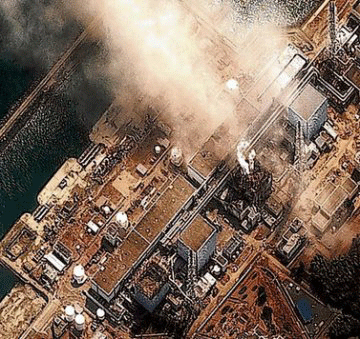 Hydrogen explosion left Fukushima No. 1 workers sure they would die Fukushima Emergency what can we do ? Sep 10, 2014 FUKUSHIMA – This is the fourth in a series on the Fukushima nuclear catastrophe based on the accounts of people who struggled to contain the crisis in its early stages. Job titles and ages are as of March 2011.
Ground Self-Defense Force member Yuichi Sato was on a firetruck heading for the Fukushima No. 1 nuclear plant the day after it had been decimated by the March 11, 2011, tsunami — without being notified what his mission was.
That morning, the truck was in the town of Okuma, Fukushima Prefecture, where the 22-year-old was born.
He was several kilometers from his destination, but the familiar sights were gone — the walls of houses had collapsed, road surfaces were buckled and the town looked deserted.
“It was like a ghost town,” said Sato, who was part of the GSDF’s artillery regiment based in the prefecture. “I thought everyone must have rushed to escape.”
The regiment’s firefighting unit had received orders the night before to go to the nuclear plant. His squad members thought their task was to prepare for the possibility of a fire, but Sato, even though he had been told since childhood that nuclear power is safe, felt something out of the ordinary was happening.
When they arrived at the plant gates at around 7 a.m. on March 12, he was greeted by an acquaintance who works for Tokyo Electric Power Co.
Sato wondered why the Tepco employee was wearing a mask. He didn’t know at the time that the radiation level at the site was rising because a meltdown was occurring in the No. 1 reactor due to the loss of its key cooling functions.
After entering the emergency response office building, the firefighting squad was finally told what to do.
At the time, Tepco was using a single fire engine to inject water into reactor 1, but every time the truck had to return to a storage tank to be refilled, it meant halting the flow of water being sprayed into the unit.
The SDF’s firetrucks were supposed to assist in the operation.
Inside the main control room for reactors 1 and 2, workers were demoralized and exhausted after an attempt to open valves to reduce the pressure in reactor 1 ended in failure because of high radiation levels inside the reactor building.
It was imperative to open the valves to prevent a rupture of the containment vessel……….
“I later found it was a hydrogen explosion at the building, but at the time, I thought the reactor containment vessel itself had exploded,” said Mitsuyuki Ono, 51, who was also in the room. “I thought it was all over.”
There were some 40 reactor operators in the room, but everyone was exhausted after trying to do all they could to prevent the worst.
Izawa decided to stay along with the more experienced workers, and let the others evacuate.
The roughly 10 workers who remained included Izawa, Ono and 48-year-old Kazuhiro Yoshida, whom Ono had once worked with in operating the No. 1 reactor.
Ono was wondering how he could communicate to his family what he thought might be his final moments. If he wrote anything down on paper, it would probably be incinerated if there was an explosion.
“Why don’t we take a photo at the end,” Yoshida proposed cheerfully, as if he had read Ono’s mind. Everyone seemed to liven up.
The room, which was dark due to the loss of power, was lit up with flashing cameras.
Ono, having a picture taken with Yoshida by his side, a junior operator whom he trusted and liked the most, thought: “If the radiation level rises or hot steam comes into the control room, I will probably die. But someone will find the camera some day. Then this picture will be the witness to my life.”
Source: Japan Times
http://www.japantimes.co.jp/news/2014/09/10/national/hydrogen-explosion-left-fukushima-no-1-workers-sure-they-would-die/
Summary of Masao Yoshida’s testimony about the Fukushima nuclear calamity
Yoshida Interviews / Strong words on Fukushima N-crisis from TEPCO’s manager on the ground Fukushima Emergency what can we do?September 10, 2014 The Yomiuri Shimbun learned on Aug. 29 the full details of remarks made by the late Masao Yoshida, former plant manager for Tokyo Electric Power Co.’s Fukushima No. 1 nuclear power plant, to the government’s investigation committee on the nuclear accident at the plant. The following is a summary of Yoshida’s account of what happened at the plant for the five days immediately after the March 11, 2011, disaster.
After the tsunami struck, Yoshida was shocked to face the unprecedented situation of a total power outage. The personal handy-phone system (PHS) at the plant had stopped working, and reports he received from within the plant were too confusing to grasp exactly what was happening. Yoshida regretted immensely not realizing that the isolation condenser (IC) at the No. 1 reactor had stopped working.
Total power outage
Investigation committee : What did you think to do after receiving a report that the plant had lost all AC power sources?
Masao Yoshida : “To be honest, I was stunned. I thought the situation was grave. There was a strong possibility of this escalating into a severe accident, so we would have to start making preparations, I thought. My first thought was, “It’s a calamity…….
http://the-japan-news.com/news/article/0001553303 http://fukushimaemergencywhatcanwedo.blogspot.com.au/2014/09/yoshida-interviews-strong-words-on.html
World governments out of step with public opinion as they back fossil fuels and nuclear
 While governments back fossil fuels and nuclear, popular renewables boom, Ecologist Paul Brown 6th September 2014 Consumers around the world want their electricity to come from renewable sources, writes Paul Brown. Yet governments from the UK to Australia are defying the popular will as they push for fossil fuels and nuclear power. The good news? Renewable energy is surging ahead regardless Public support for renewable energies across the world continues to grow, particularly in more advanced economies – with solar power being especially popular.
At the same time, the policies of the governments in most of these richer countries do not mirror public opinion as many continue to develop fossil fuels, which do not command such popular support.
An example is the UK, where the government wants to exploit gas reserves by the controversial method of fracking – fracturing rock to allow the gas to reach the ground surface. The Conservative government is also promising to cut down on subsidies for onshore wind farms and to build nuclear power stations.
According to the public attitudes report published this month by the British government’s Department of Energy and Climate Change, 36% of the population supports the plan to build new nuclear stations, and only 24% support shale gas extraction by fracking.
Huge popular support for renewable energy
In contrast, 79% of the public is in favour of renewable energies to provide electricity. The UK has plentiful renewable energy and is exploiting several different types.
Solar panels are the most popular form, with 82% of the public supporting their widespread use on the roofs of private houses and, more recently, solar farms in fields in the countryside.
Other high scores for renewables were offshore wind (72% in favour), onshore wind (67%), wave and tidal (73%), and biomass (60%) – even though all need public subsidy to compete with fossil fuels.
Despite the government’s public support for nuclear, there has been no start on a new station because a subsidy offered by the government is being investigated as potentially illegal under European Union competition legislation.
Fracking is still at the exploratory stage and requires years of investment before any power could be produced.
Renewables’ massive growth
Meanwhile, renewables keep on growing……..http://www.theecologist.org/News/news_analysis/2534207/while_governments_back_fossil_fuels_and_nuclear_popular_renewables_boom.html
How the entry of Ukraine to NATO will lead to war
Ukraine joining NATO will lead to nuclear war: US expert http://www.presstv.ir/detail/2014/09/08/378045/ukraine-joining-nato-means-nuclear-war/American scholar of Russian studies Stephen Cohen has said that if Ukraine joins NATO, it will lead to a “nuclear war.”
“First of all, by NATO’s own rules, Ukraine cannot join NATO, a country that does not control its own territory. In this case, Kiev controls less and less by the day. It’s lost Crimea. It’s losing the Donbas—I just described why—to the war,” he said.
“Secondly, you have to meet certain economic, political and military criteria to join NATO. Ukraine meets none of them.”
“Thirdly, and most importantly, Ukraine is linked to Russia not only in terms of being Russia’s essential security zone, but it’s linked conjugally, so to speak, intermarriage. There are millions, if not tens of millions, of Russian and Ukrainians married together. Put it in NATO, and you’re going to put a barricade through millions of families. Russia will react militarily,” the scholar explained.
Cohen also noted that the West is mainly to blame for the crisis in Ukraine, Washington’s Blog reported.
“This is a horrific, tragic, completely unnecessary war in eastern Ukraine,” one of America’s top experts on Russia said.
“In my own judgment, we have contributed mightily to this tragedy. I would say that historians one day will look back and say that America has blood on its hands. Three thousand people have died, most of them civilians who couldn’t move quickly. That’s women with small children, older women. A million refugees,” Cohen added.
“If they go ahead with this NATO decision, right plunk on Russia’s borders. Russia will then leave the historic nuclear agreement that Reagan and Gorbachev signed in 1987 to abolish short-range nuclear missiles.”
Tensions between Washington and Moscow have escalated over the crisis in Ukraine.
President Barack Obama on Friday warned his Russian counterpart Vladimir Putin that the United States will not tolerate an attack on any NATO member state, although Ukraine is not a NATO state.
Meeting between USA and Russia over Nuclear Arms Treaty
 US and Russia to Meet Over Nuclear Arms Treaty The treaty for the Elimination of Their Intermediate-Range and Shorter-Range Missiles signed by Gorbachev and Reagan is under threat. http://www.telesurtv.net/english/news/US-and-Russia-to-Meet-Over-Nuclear-Arms-Treaty-20140908-0023.html
Top ranking United States and Russian officials are due to meet on Thursday to discuss a 1987 arms control treaty.
The treaty, which put a block on Intermediate-Range Nuclear Forces has been questioned in recent months with the Ukraine crisis, and NATO threats on Russia.
“We believe that this is an important agreement and that it should be properly executed,” Interfax new agency quoted Mikhail Ulyanov, head of the Russian Foreign Ministry’s non-proliferation and arms control department, as saying of the treaty.
He said talks on compliance with the treaty would take place this week involving Rose Gottemoeller, U.S. Undersecretary of State for Arms Control and International Security.
The original treaty has put a ban on nuclear and conventional ground-launched ballistic and cruise missiles with a range of 500-5,500 km.
Last month, Russian Deputy Defence Minister Anatoly Antonov had said his nation was committed to the treaty, but President Putin had previously questioned if it is in Russia’s best interests.
Moscow has also said that U.S. use of armed drones amounted to a violation of the treaty.
Massive Climate Action March on September 21st
 Activists promise biggest climate march in history People’s Climate March in New York and cities worldwide hopes to put pressure on heads of state at Ban Ki-moon summit Adam Vaughan theguardian.com, Monday 8 September 2014 Hundreds of thousands of people are expected to take to the streets of New York, London and eight other cities worldwide in a fortnight to pressure world leaders to take action on global warming, in what organisers claim will be the biggest climate march in history.
On 23 September, heads of state will join a New York summit on climate change organised by Ban Ki-moon, the first time world leaders have come together on the issue since the landmark Copenhagen summit in 2009, which was seen as a failure.
The UN secretary general hopes the meeting will inject momentum into efforts to reach a global deal on cutting greenhouse gas emissions by the end of 2015, at a conference in Paris.
Ricken Patel, executive director of digital campaign group Avaaz, one of the organisers of the People’s Climate March on 21 September, said the demonstration was intended to send a signal to those world leaders, who are expected to include David Cameron and Barack Obama, though not heads of state from China and India…….
California leads in its commitment to renewable energy
California Successfully Emphasizes Renewable Energy Commitment The Desert Sun, Morris Beschloss, September 8, 2014 Over the years, California has justifiably claimed the exalted position of originator of new ideas in fashion, entertainment, social media, and even electric cars. The state’s Silicon Valley is the shining symbol of the world’s breakthrough communications technology.
But now it seems that a significant escalation of solar energy and, to a lesser extent, “wind” is lending credibility to the once improbable California campaign to generate one-third of its power from renewable resources by 2020. This now realizable objective is personified by “NextEra Resources’ Blythe Solar Project” by the U.S. Department of the Interior.
Although originally eclipsed by the 1,000 megawatt photovoltaic farm originally proposed, conceivably the largest solar project in the world, the implementation of “Blythe” will generate enough power to service 485,000 homes, and reduce gas emissions by 400,000 metric tons per year.
California now leads the nation in cumulative solar electricity capacity, and was number one in solar capacity added last year. The windmills in Southern California’s San Gorgonio Pass are also setting new records as are the geothermal plants along the southern edge of California’s Salton Sea……..it is encouraging to see that America’s most populous state (California, with 12.5% of the nation’s population), is regaining its rightful place as the visionary of the United States’ bright future…….http://www.desertsun.com/story/money/industries/morrisbeschlosseconomics/2014/09/08/california-successfully-emphasizes-renewable-energy-commitment/15281441/
Australia’s blatant violation of Non Proliferation Treaty, in selling uranium to India
Australia blatantly violates the NPT, Iran held to different standard http://www.iranaffairs.com/iran_affairs/2014/09/australia-blatantly-violates-the-npt-iran-held-to-different-standard.html
As if we needed any more proof that the “Iranian nuclear threat” is just a cooked-up pretextwhich is unrelated to any actual nuclear threat, Australia (which holds about 1/3rd of the world’s uranium reserves) has decided to sell uranium to India. That such a deal violates the terms of the Nuclear Nonproliferation Treaty, doesn’t seem to be an issue to anyone. Note the absence of handwringing editorials at the Washington Post and NY Times about the sanctity of international arms treaties etc.
And why should it be a problem, considering that a few years ago the US agreed to violate the same NPT by sharing nuclear technology with India in exchange for buying India’s vote against Iran at the IAEA Board (which sent Iran’s file to the UN Security Council even though Iran had not breached the NPT?)
On the eve of his visit to New Delhi, US Under Secretary of State Nicholas Burns has said that with India voting in favour of the IAEA [International Atomic Energy Agency] resolution on Iran’s nuclear programme, Congressional opposition to the Indo-US nuclear agreement has disappeared and both sides would meet their commitments before President George W. Bush visits India next year.
Of course the US and Australia claim that this stuff is going to non-military use in India but all that means is that the deal would free-up India’s other resources to be used for non-civilian use. There’s nothing in the NPT which allows signatories to make such exceptions anyway.
Now in the meantime, while the US (and Australia) are blatantly violating their own obligations under the NPT, they’re demanding that Iran apply even greater restrictions on its nuclear program than the NPT requires, by for example giving up uranium enrichment. These excessive demands that violate Iran’s legal rights are clearly intended to scuttle the talks, and to keep the “crisis” alive. The US has no intention of peacefully resolving the nuclear dispute with Iran, no matter what.
New law promotes solar energy in South Carolina
With New Law, South Carolina Sets a Foundation for More Solar Energy The Energy Collective Jim Pierobon 8 Sept 14 Another state in the Southeast U.S. is recognizing the economic and environmental benefits of solar energy as commissioners, utilities and stakeholders in South Carolina are ironing out details of a new solar law that enables third-party leasing and contemplates the state’s two investor owned-utilities utilities, collectively, installing an estimated 300 megawatts (MW) of renewable energy by 2021, up from about 8 megawatts currently.
South Carolina joins North Carolina and Georgia in showing it can begin to turn a new leaf to toward cleaner energy development. The new law is the South Carolina Distributed Energy Resource Program Act (S.B. 1189), which lawmakers in both the House and Senate passed unanimously and Gov. Nikki Hale (R), signed into law in June. Curiously, she waited until August to start promoting it.
The state’s two large investor-owned utilities – South Carolina Electric & Gas and Duke Power (including the former Progress Energy) – have the option to opt in, or out, of the program. If they opt in, they’ll get full rate recovery for meeting at least 2% of their five-year average peak power demand from renewable sources, most of which will likely be solar. If they opt out, no rate recovery for whatever path they pursue.
At this writing there appeared to be a significant and growing amount of public and lawmaker pressure to opt in. It was that public pressure that had been building for years which kicked off serious deliberations leading to the new law, according to Kenneth Sercy, Utility Regulation Specialist, and Hamilton Davis, Climate and Energy Director, at the South Carolina Coastal Conservation League, one of the bill’s biggest backers.
“What you’ve seen here is growing public interest in policies that boost investments in clean energy options,” Davis said. “The tide of public opinion is garnering more media coverage and that’s getting the attention of lawmakers.”……http://theenergycollective.com/jimpierobon/484721/new-law-south-carolina-sets-foundation-more-solar-energy
1 This Month
26 April – Chernobyl: Inside the Meltdown airs on National Geographic on Sunday 26th April from 4pm
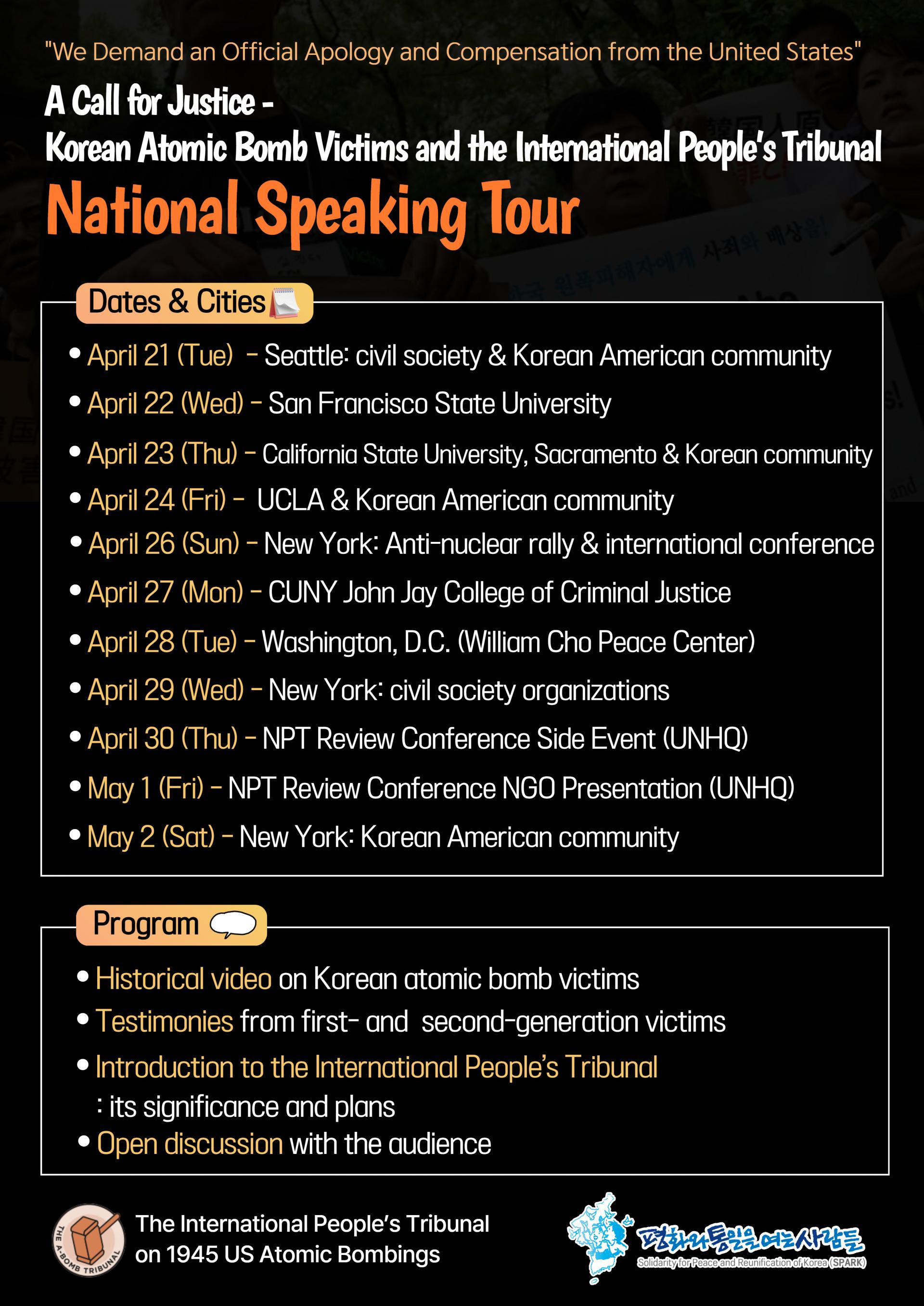
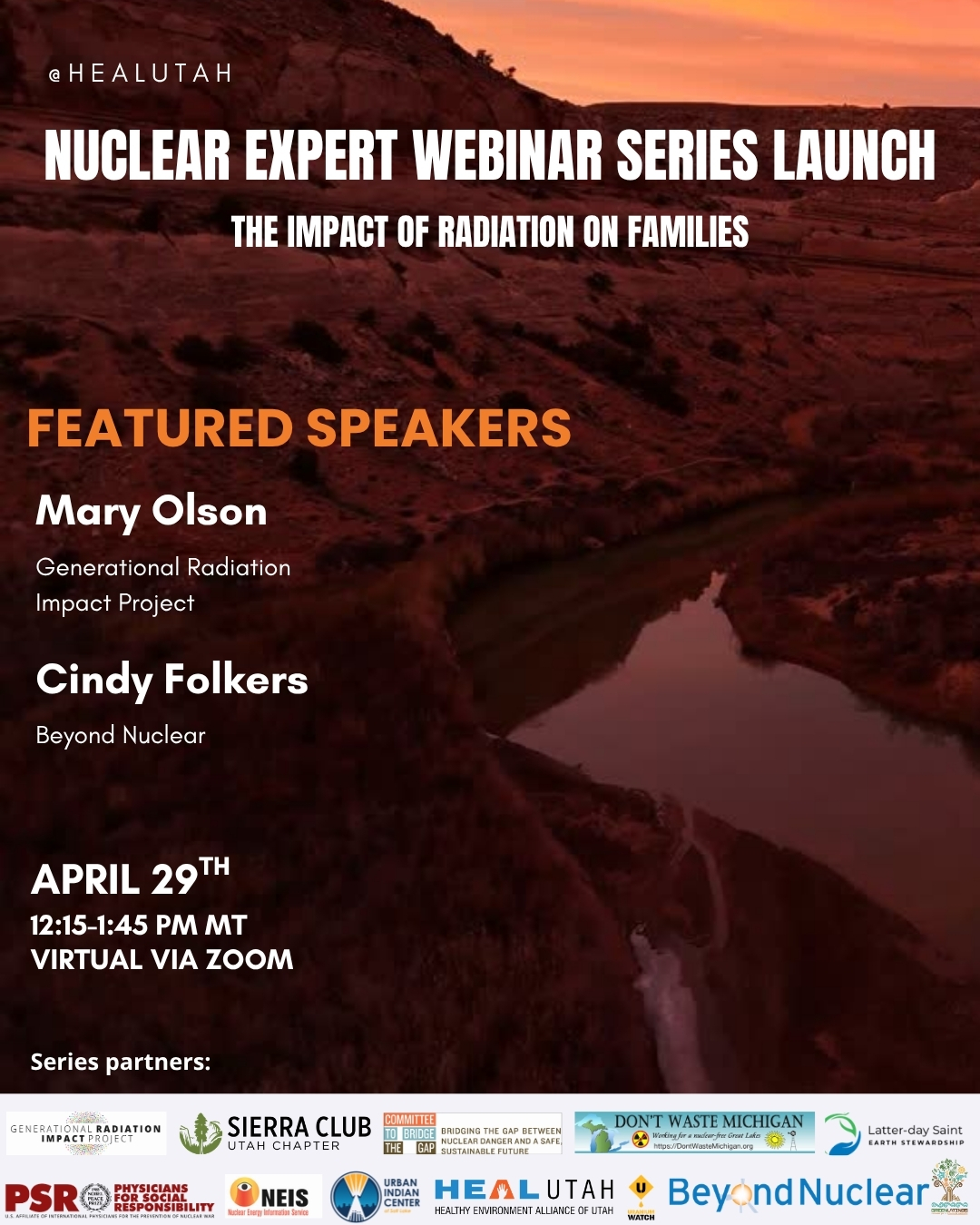
29 April – Nuclear Expert Webinar #1 – Radiation Impacts on Families with Mary Olson and Cindy Folkers
- 12:15 PM MT – 1:45 PM MT
- Location: Virtual – REGISTER TODAY

4 May -West Suburban Peace Coalition to discuss Iran war at May Educational Forum
Monday, May 4, 7:00 – 8:00 PM Central Standard Time
Title: : How Trump’s Narrative Tries to Shape the Reality of the War on Iran.
Contact Walt Zlotow, zlotow@hotmail.com 630 442 3045 for further information
14 May – online event From Bombs to Data Centres: the Face of Nuclear Colonialism

Pine Ridge Uranium is the real threat, not Tehran- Tell Burgum: Stop the Extraction.
Chernobyl: The Lost Tapes – A good documentary on Chernobyl on SBS available On Demand for the next 3 weeks– https://www.sbs.com.au/ondemand/tv-program/chernobyl-the-lost-tapes/2352741955560
To see nuclear-related stories in greater depth and intensity – go to https://nuclearinformation.wordpress.com
-
Archives
- April 2026 (288)
- March 2026 (251)
- February 2026 (268)
- January 2026 (308)
- December 2025 (358)
- November 2025 (359)
- October 2025 (376)
- September 2025 (257)
- August 2025 (319)
- July 2025 (230)
- June 2025 (348)
- May 2025 (261)
-
Categories
- 1
- 1 NUCLEAR ISSUES
- business and costs
- climate change
- culture and arts
- ENERGY
- environment
- health
- history
- indigenous issues
- Legal
- marketing of nuclear
- media
- opposition to nuclear
- PERSONAL STORIES
- politics
- politics international
- Religion and ethics
- safety
- secrets,lies and civil liberties
- spinbuster
- technology
- Uranium
- wastes
- weapons and war
- Women
- 2 WORLD
- ACTION
- AFRICA
- Atrocities
- AUSTRALIA
- Christina's notes
- Christina's themes
- culture and arts
- Events
- Fuk 2022
- Fuk 2023
- Fukushima 2017
- Fukushima 2018
- fukushima 2019
- Fukushima 2020
- Fukushima 2021
- general
- global warming
- Humour (God we need it)
- Nuclear
- RARE EARTHS
- Reference
- resources – print
- Resources -audiovicual
- Weekly Newsletter
- World
- World Nuclear
- YouTube
-
RSS
Entries RSS
Comments RSS
 nuclear-news