India-Australia nuclear trade will destabilise the Asia Pacific region
 Australia and uranium: the pusher of the Pacifichttps://overland.org.au/2014/09/australian-and-uranium-the-pusher-of-the-pacific/ ByAdam Broinowski 19.Sep.14 “……… The new demand from India will include uranium mined from Ben Lomond near Mt Isa which is likely to be shipped from Townsville Port, and coal mined from the gargantuan Galilee Basin and shipped from Abbott Point, passing through the dredged Great Barrier Reef, or freighted by road to Darwin or Adelaide ports (which hold uranium licenses). The Australia-India uranium agreement supports this concerted and accelerated push.
In cementing a nuclear deal with India, the Abbott government has committed to selling uranium to a nation-state that barely conceals its intentions to expand its nuclear weapons arsenal and that rejects the NPT and Comprehensive Test Ban Treaty (CTBT)………..
First, the Australia-India uranium trade agreement is unsafe. If Japan’s nuclear industry and government have proven unable to properly contain the potential for serious nuclear accidents at its domestic nuclear power plants, then India’s nuclear industry, which is much less reliable and possibly even more corrupt, poses even higher risks of mismanagement.
Internally, India is also unstable, as the government fights an embedded insurgency. It maintains a violently repressive approach to imposing nuclear installations and uranium operations (such as Gorakhpur, Koodankulam, Jaitapur, Jagudoga) upon vulnerable communities, and against the wishes of civil protesters, five of whom have been killed since 2010. While guaranteed only intermittent electricity supply, such communities are experiencing higher rates of disease, congenital malformations and early deaths. In Jagudoga, Jharkhand (19,500 people), those living near the central uranium mine operated by Uranium Corp. of India Ltd. (UCIL), have suffered disproportionately high health problems……….
Second, while Tony Abbott reiterated that ‘suitable safeguards’ were in place to ensure that Australian uranium would be used for ‘peaceful purposes’ and for ‘civilian use only’, such ambiguous terms create false impressions. Nuclear technologies are inherently dual-use (both for civil energy production and military use), and it is disingenuous to claim that a water-tight separation can be ensured. In fact, ten of India’s twenty nuclear facilities do not fall under International Atomic Energy Agency (IAEA) supervisional authority, and India only selectively recognises IAEA safeguards for specific foreign supplied reactors and facilities. With no mechanism to inspect this nuclear technology to ensure that the fuel is not diverted into nuclear weapons production, safety cannot be guaranteed.
Even if the diverted fuel was discovered, neither Australia nor the IAEA could force compliance. An influx of imported foreign uranium will simply make it easier for India to reserve some of its indigenous uranium for enrichment and/or reprocessing weapons-grade plutonium, or for some of Australia’s uranium to be ‘misallocated’ toward military facilities.
In effect, Tony Abbott’s policy to treat India as the exception undermines the IAEA standards within the disarmament regime, and breaches Australia’s obligations to the Rarotonga Treaty for the South Pacific Nuclear Free Zone.
Third, and perhaps most significant, the deal will upset the ‘balance’ between India-Pakistan and in the South Asian region so as to aggravate rivalries and intensify tensions between the two nations, as well as others such as China and Bangladesh………
While leaders such as Abe, Abbott and Modi downplay the reality confronting people affected by radiation exposures from the Fukushima Daiichi nuclear power plant, we should remember that this contamination came, in part, from Australian uranium.
The refusal of executive leaders to acknowledge the dangers of the uranium trade reflects the centrality of nuclear power to the US-led security regime that seeks to dominate non-compliant nations such as China or Russia………
Dr Adam Broinowski is an ARC postdoctoral research fellow at the College of Asia and the Pacific, the Australian National University.
No comments yet.
1 This Month
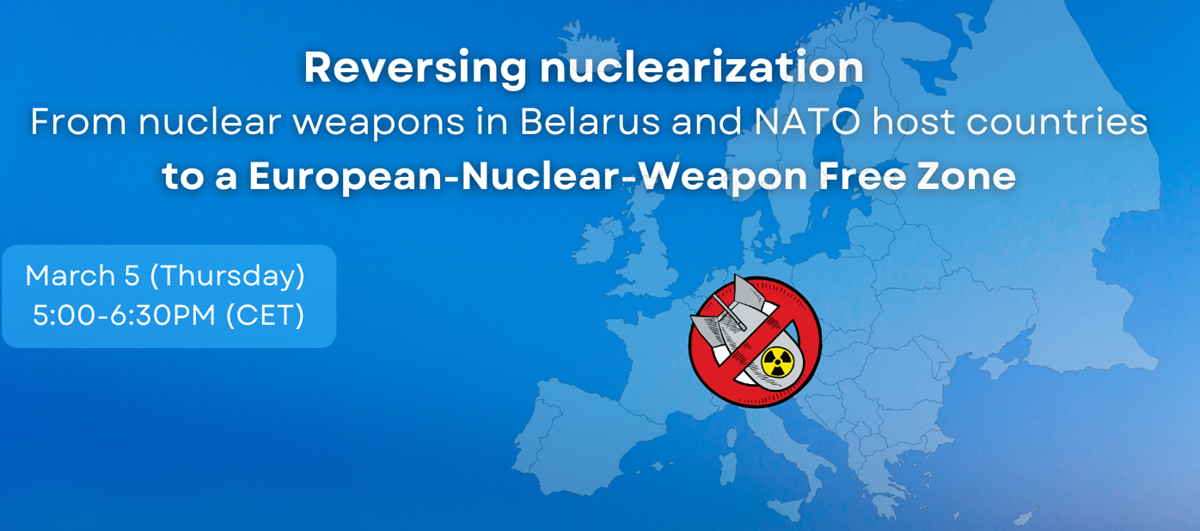
5 March -Online – Reversing nuclearization:
From nuclear weapons in Belarus and NATO host countries to a European-Nuclear-Weapon Free Zone
11am-12:30pm Eastern Time USA / 5pm-6:30pm CET

of the week – Advocating for a
nuclear free beach – https://www.samuellawrencefoundation.org/
The Samuel Lawrence Foundation advocates for a Nuclear Waste Free Beach at San Onofre, join us and take action!
10 March A LIVE WEBINAR THE REAL EFFECTS OF NUCLEAR POWER
What the Industry Isn’t Telling Us
1:00 PM Mountain, 2 pm Central, 3 pm Eastern. Live on the Keepers of the Water Facebook page

18 March Webinar @ 1 PM EST: An Assessment of SMR Projects: The Case of Canada
register for the zoom:
https://us02web.zoom.us/webinar/register/WN_o8BIIOUvQ2ONJR1nta65DQ#/registration

of the week – STOP SMALL MODULAR REACTORS IN CANADA
To see nuclear-related stories in greater depth and intensity – go to https://nuclearinformation.wordpress.com
-
Archives
- March 2026 (51)
- February 2026 (268)
- January 2026 (308)
- December 2025 (358)
- November 2025 (359)
- October 2025 (376)
- September 2025 (258)
- August 2025 (319)
- July 2025 (230)
- June 2025 (348)
- May 2025 (261)
- April 2025 (305)
-
Categories
- 1
- 1 NUCLEAR ISSUES
- business and costs
- climate change
- culture and arts
- ENERGY
- environment
- health
- history
- indigenous issues
- Legal
- marketing of nuclear
- media
- opposition to nuclear
- PERSONAL STORIES
- politics
- politics international
- Religion and ethics
- safety
- secrets,lies and civil liberties
- spinbuster
- technology
- Uranium
- wastes
- weapons and war
- Women
- 2 WORLD
- ACTION
- AFRICA
- Atrocities
- AUSTRALIA
- Christina's notes
- Christina's themes
- culture and arts
- Events
- Fuk 2022
- Fuk 2023
- Fukushima 2017
- Fukushima 2018
- fukushima 2019
- Fukushima 2020
- Fukushima 2021
- general
- global warming
- Humour (God we need it)
- Nuclear
- RARE EARTHS
- Reference
- resources – print
- Resources -audiovicual
- Weekly Newsletter
- World
- World Nuclear
- YouTube
-
RSS
Entries RSS
Comments RSS
 nuclear-news
Leave a comment