The delusion that nuclear power is economically viable
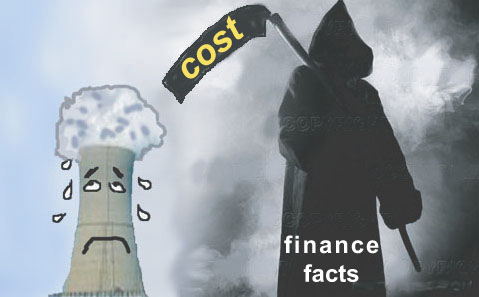 Rio Tinto’s great big nuclear delusion Business Spectator MATTHEW WRIGHT 22 Sept 14, Rio Tinto’s energy chief, quoted in The Australian Financial Review article this month believes “there will be a return to nuclear” and that China will lead it, stating that a joint venture has “quietly developed” between China’s state nuclear technology company and the Toshiba Westinghouse Corporation”.
The problem is that that consortium hasn’t produced a third-generation nuclear reactor. In fact, nobody has and all the so-called Gen III-plus reactors under construction globally are behind schedule and over budget – including those in China.
Kenyon-Slaney is living in hope as Rio is invested so heavily in uranium – a mineral which peaked in 2005, well before Germany decided to exit nuclear and Japan idled their entire reactor fleet.
It would be comical if it wasn’t so serious, but Kenyon-Slaney’s nuclear industry just can’t put a foot right. Delays are mounting up in the west, and OECD countries and huge resources are being spent keeping old ageing reactors online. The expenditure that could be better directed is immense.
As a well-known supporter of serious action on climate change, including decarbonisation of all sectors, I have on numerous occasions written about nuclear energy. Following those articles, supporters of nuclear energy have often asked, if I’m serious about climate change, why would I oppose nuclear (a low emissions source of electricity)? In this column I’ll answer that question. But, first I’ll give an update on a few of the latest nuclear industry disaster stories from around the globe.
 Japan
Japan
The Fukushima disaster clean-up bill will now exceed $112 billion*……….
Europe
 Europe’s nuclear industry is struggling. Many reactors are currently off-line for much longer periods than scheduled, Germany and Switzerland are phasing out their reactors and most countries –including Spain, Austria, Sweden and Italy – won’t be building any reactors.
Areva, the world’s biggest builder of nuclear along with French utility EDF, can’t deliver on a new reactor project. Reactors under construction at Flamanville, France and Olkiluoto in Finland are years behind schedule and billions over budget. In the last couple of weeks, Areva has admitted that the Finnish project, originally planned to be online and delivering electricity in 2008, will now be delayed until late 2018. This is another way of saying 2019, 2020 or … never.
 United States
All four nuclear reactors being constructed in the US are suffering costly delays. The reactors rated at 990MWe (2100MWe gross) under construction in Georgia and South Carolina were supposed to begin power generation in 2016. These four reactors are reported to cost $28 billion………
 China
China
The central government had ambitious plans to build a significant amount of nuclear power plants, but since Fukushima their local Gen II designs being used on every project have been scrapped for future projects, and Gen III designs. These Gen IIIs have never been built anywhere, and are the only acceptable options for future projects. And here’s the problem: just like in France, Finland, Georgia and South Carolina, China’s projects aresignificantly over budget and behind schedule, adding millions of dollars of cost for every additional day without power generation. Back in 2010, China claimed that it would build 80GW of new nuclear by 2020, but the reality is it is likely to add just 20GW, around 75 per cent short of their target……. (*All figure are in Australian dollars. ) http://www.businessspectator.com.au/article/2014/9/22/energy-markets/rio-tintos-great-big-nuclear-delusion?utm_source=exact&utm_medium=email&utm_content=919754&utm_campaign=cs_daily&modapt=
No comments yet.
1 This Month

of the week – Shut Down Drone Warfare!


Tell the Ukrainian Government to Drop Prosecution of Peace Activist Yurii Sheliazhenko

Petition to revoke the licensing of the Near Surface Nuclear Disposal Facility (NSDF) at Chalk River. https://www.ourcommons.ca/petitions/en/Petition/Details?Petition=e-7247
To see nuclear-related stories in greater depth and intensity – go to https://nuclearinformation.wordpress.com
-
Archives
- March 2026 (230)
- February 2026 (268)
- January 2026 (308)
- December 2025 (358)
- November 2025 (359)
- October 2025 (376)
- September 2025 (257)
- August 2025 (319)
- July 2025 (230)
- June 2025 (348)
- May 2025 (261)
- April 2025 (305)
-
Categories
- 1
- 1 NUCLEAR ISSUES
- business and costs
- climate change
- culture and arts
- ENERGY
- environment
- health
- history
- indigenous issues
- Legal
- marketing of nuclear
- media
- opposition to nuclear
- PERSONAL STORIES
- politics
- politics international
- Religion and ethics
- safety
- secrets,lies and civil liberties
- spinbuster
- technology
- Uranium
- wastes
- weapons and war
- Women
- 2 WORLD
- ACTION
- AFRICA
- Atrocities
- AUSTRALIA
- Christina's notes
- Christina's themes
- culture and arts
- Events
- Fuk 2022
- Fuk 2023
- Fukushima 2017
- Fukushima 2018
- fukushima 2019
- Fukushima 2020
- Fukushima 2021
- general
- global warming
- Humour (God we need it)
- Nuclear
- RARE EARTHS
- Reference
- resources – print
- Resources -audiovicual
- Weekly Newsletter
- World
- World Nuclear
- YouTube
-
RSS
Entries RSS
Comments RSS
 nuclear-news
Leave a comment