Nuclear facilities: dangerous “assets” in volatile countries
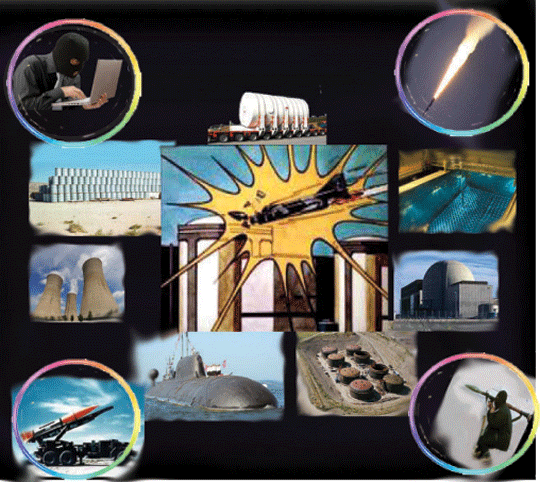 What can be done to reduce nuclear risks in volatile countries? Bennett Ramberg The Daily Star 24 Aug 14 Nobody would dispute the danger inherent in possessing nuclear assets. But that danger becomes far more acute in a combat zone, where nuclear materials and weapons are at risk of theft, and reactors can become bombing targets. These risks – which are most apparent in today’s chaos-ridden Middle East – raise troubling questions about the security of nuclear assets in volatile countries everywhere.
Two recent events demonstrate what is at stake. On July 9, the militant group now known as the Islamic State, formerly the Islamic State of Iraq and Greater Syria, captured 40 kilograms of uranium compounds at Mosul University in Iraq. The captured uranium was not weapons-grade; international inspectors removed all sensitive material from Iraq following the Gulf war of 1991 (which is why it was absent when the United States invaded in 2003). But what international response, if any, would have been initiated if the cache had been highly enriched?
On the same day, Hamas launched three powerful Iranian-designed rockets from Gaza at Israel’s Dimona reactor. Luckily, two missed the target, and Israel managed to intercept the third. But the episode represented a serious escalation of hostilities and served as an important reminder of the vulnerability of nuclear reactors in warzones.
In fact, Hamas made similar attempts to attack the Dimona complex in 2012, as did Iraq in 1991, with the aim of releasing the site’s contents to inflict radiological damage on Israel’s population. (The perpetrators appeared clueless to the fact that certain weather conditions would have concentrated the radioactive debris in the Palestinian-majority West Bank.)……..
Pakistan has a large nuclear weapons program and faces an expansive jihadist insurgency, which previously attacked military bases that were suspected of housing nuclear assets. Though Pakistan has not experienced a nuclear breach, and the government insists that safeguards remain robust, the country’s increasingly frequent and severe bouts of instability raise serious questions about the future.
While North Korea’s nuclear arsenal is much smaller, persistent doubts about the regime’s sustainability make it a matter of grave concern. In the event of the regime’s collapse – which remains a distinct possibility – it would be difficult to prevent the diversion of its assets, or even the use of its weapons………
Bennett Ramberg, a policy analyst in the U.S. State Department’s Bureau of
Politico-Military Affairs under President George H. W. Bush, is the author of “Destruction of Nuclear Energy Facilities in War” and “Nuclear Power Plants as Weapons for the Enemy.” THE DAILY STAR publishes this commentary in collaboration with Project Syndicate © (www.project-syndicate.org). http://www.dailystar.com.lb/Opinion/Commentary/2014/Aug-25/268338-what-can-be-done-to-reduce-nuclear-risks-in-volatile-countries.ashx#axzz3BRnATjln
No comments yet.
1 This Month
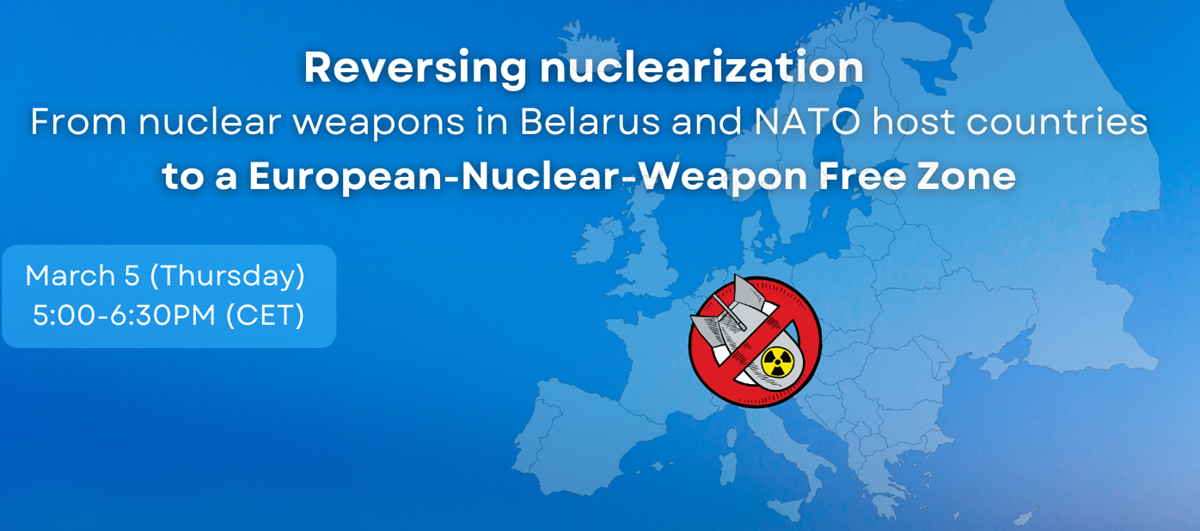
5 March -Online – Reversing nuclearization:
From nuclear weapons in Belarus and NATO host countries to a European-Nuclear-Weapon Free Zone
11am-12:30pm Eastern Time USA / 5pm-6:30pm CET

of the week – Advocating for a
nuclear free beach – https://www.samuellawrencefoundation.org/
The Samuel Lawrence Foundation advocates for a Nuclear Waste Free Beach at San Onofre, join us and take action!
10 March A LIVE WEBINAR THE REAL EFFECTS OF NUCLEAR POWER
What the Industry Isn’t Telling Us
1:00 PM Mountain, 2 pm Central, 3 pm Eastern. Live on the Keepers of the Water Facebook page

18 March Webinar @ 1 PM EST: An Assessment of SMR Projects: The Case of Canada
register for the zoom:
https://us02web.zoom.us/webinar/register/WN_o8BIIOUvQ2ONJR1nta65DQ#/registration

of the week – STOP SMALL MODULAR REACTORS IN CANADA
To see nuclear-related stories in greater depth and intensity – go to https://nuclearinformation.wordpress.com
-
Archives
- March 2026 (37)
- February 2026 (268)
- January 2026 (308)
- December 2025 (358)
- November 2025 (359)
- October 2025 (376)
- September 2025 (258)
- August 2025 (319)
- July 2025 (230)
- June 2025 (348)
- May 2025 (261)
- April 2025 (305)
-
Categories
- 1
- 1 NUCLEAR ISSUES
- business and costs
- climate change
- culture and arts
- ENERGY
- environment
- health
- history
- indigenous issues
- Legal
- marketing of nuclear
- media
- opposition to nuclear
- PERSONAL STORIES
- politics
- politics international
- Religion and ethics
- safety
- secrets,lies and civil liberties
- spinbuster
- technology
- Uranium
- wastes
- weapons and war
- Women
- 2 WORLD
- ACTION
- AFRICA
- Atrocities
- AUSTRALIA
- Christina's notes
- Christina's themes
- culture and arts
- Events
- Fuk 2022
- Fuk 2023
- Fukushima 2017
- Fukushima 2018
- fukushima 2019
- Fukushima 2020
- Fukushima 2021
- general
- global warming
- Humour (God we need it)
- Nuclear
- RARE EARTHS
- Reference
- resources – print
- Resources -audiovicual
- Weekly Newsletter
- World
- World Nuclear
- YouTube
-
RSS
Entries RSS
Comments RSS
 nuclear-news
Leave a comment