Europe’s aging reactors: increasing safety and cost problems
 With exposure to radiation, high temperatures and pressure, the components of nuclear plants take a battering over time. “They can, for example, become more brittle, susceptible to cracking or less able to cope with temperature extremes,” said Anthony Froggatt, senior research fellow at London-based thinktank Chatham House.
Insight: The cost of caring for Europe’s elderly nuclear plants LONDON (Reuters)
 18 Aug 14, – Europe’s ageing nuclear fleet will undergo more prolonged outages over the next few years, reducing the reliability of power supply and costing plant operators many millions of dollars.
Nuclear power provides about a third of the European Union’s electricity generation, but the 28-nation bloc’s 131 reactors are well past their prime, with an average age of 30 years.
And the energy companies, already feeling the pinch from falling energy prices and weak demand, want to extend the life of their plants into the 2020s, to put off the drain of funding new builds…….
as nuclear plants age, performance can suffer, and outages – both scheduled and unplanned – rise.
With nuclear safety in the spotlight since the 2011 reactor meltdown at Japan’s Fukushima plant – which in turn prompted Germany to call time on its entire nuclear fleet – operators can take no chances with their elderly plants, but the outages get longer and more difficult.
“These reactors were designed over 30 years ago. The people involved are either retired or dead, and most of the companies involved no longer exist,” said John Large, an independent nuclear engineer and analyst who has carried out work for Britain’s Atomic Energy Authority.
Jean Tandonnet, EDF Group’s nuclear safety inspector, said in January that its French fleet last year had a series of “problematic unit outages”, and scheduled outages were extended by an average of more than 26 days. Regular maintenance and major equipment replacement jobs had increased by 60 percent in the last six years, he said. France is the EU’s nuclear leader, its 58 reactors producing nearly three quarters of the country’s electricity. France’s nuclear watchdog will make a final decision on whether to extend the life of the French fleet to 50 years in 2018 or 2019. EDF has estimated the extension would cost 55 billion euros.
“The average age of the (French) reactors is now about 30 years, which raises questions about the investment needed to enable them to continue operating, as ageing reactors increasingly need parts to be replaced,” according to the World Nuclear Industry Status report 2014.
SAFETY FIRST
Though the EU has conducted risk and safety tests on the bloc’s nuclear plants, environmental campaigners say the tests failed to address risks associated with ageing technology, among other things.
With exposure to radiation, high temperatures and pressure, the components of nuclear plants take a battering over time. “They can, for example, become more brittle, susceptible to cracking or less able to cope with temperature extremes,” said Anthony Froggatt, senior research fellow at London-based thinktank Chatham House.
“While this can be monitored, it can be problematic if ageing occurs at a greater rate than anticipated or it occurs in areas which are difficult to access or monitor,” he added.
As reactors age, there is also a risk of finding a generic design flaw that could affect all the reactors in a country if they are of the same design. ………..Additional reporting by Barbara Lewis in Brussels and Geert de Clercq in Paris; Editing by Will Waterman) http://www.firstpost.com/world/insight-the-cost-of-caring-for-europes-elderly-nuclear-plants-1668443.html
Hong Kong still restricting foodstuffs imported from Japan’s irradiated areas
 The government of Hong Kong rejected Japanese request to lift restriction on Japanese imports http://fukushima-diary.com/2014/08/government-hong-kong-rejected-japanese-request-lift-restriction-japanese-imports/ Iori Mochizuki On 8/13/2014, Hayashi, the Minister of Agriculture, Forestry and Fisheries visited Hong Kong to request the government of Hong Kong to lift the restriction on Japanese imports however Ko Wing Man, the chief of the department of food and hygiene rejected the offer.
Since Fukushima accident, the government of Hong Kong stop importing vegetables, fruits, milk, milk based drinks and powdered milk from 5 prefectures to consist of Fukushima, Ibaraki, Tochigi, Gunma and Chiba.
Ko Wing Man commented “Lifting the restriction is difficult at this moment.”.
Positive progress in U.N.s nuclear diplomacy with Iran

 U.N. Nuclear Chief Positive After ‘Useful’ Iran Visit: Reuters http://www.nbcnews.com/news/world/u-n-nuclear-chief-positive-after-useful-iran-visit-reuters-n182671 18 Aug 14,
Iran has given a firm commitment to cooperate with a U.N. nuclear watchdog investigation into suspected atomic bomb research, the head of the agency said after what he described as a “useful” visit to Tehran on Sunday. Yukiya Amano made the trip ahead of an Aug. 25 deadline for Iran to provide information relevant to the International Atomic Energy Agency’s long-running inquiry into what it calls the possible military dimensions of the country’s nuclear program.
The issue is close ly tied to Iran’s negotiations with six world powers aimed at ending a decade-old standoff over its atomic activities and dispelling fears of a new Middle East war. Iran denies its program has any military objectives.
Since Rouhani was elected in mid-2013, Tehran has promised to work with the U.N. agency to clear up the suspicions about its nuclear aspirations. After meeting Amano, Rouhani said on his English-language Twitter account that Iran was “determined to forge accord with the IAEA in the shortest possible time span. God willing, it can be done in less than a year.”
Small Modular Nuclear Reactors do not measure up to the hype of their proponents
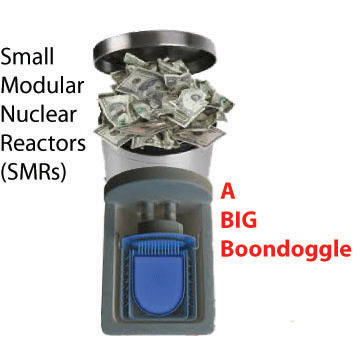 One size doesn’t fit all: Social priorities and technical conflicts for small modular reactors Science Direct, M.V. Ramana, Zia Mian 2014.04.15
Abstract
Small modular reactors (SMRs) have been proposed as a possible way to address the social problems confronting nuclear power, including poor economics, the possibility of catastrophic accidents, radioactive waste production, and linkage to nuclear weapon proliferation. Several SMR designs, with diverse technical characteristics, are being developed around the world and are promoted as addressing one or more of these problems. This paper examines the basic features of different kinds of SMRs and shows why the technical characteristics of SMRs do not allow them to solve simultaneously all four of the problems identified with nuclear power today. It shows that the leading SMR designs under development involve choices and trade-offs between desired features. Focusing on a single challenge, for example cost reduction, might make other challenges more acute. The paper then briefly discusses other cultural and political factors that contribute to the widespread enthusiasm for these reactors, despite technical and historical reasons to doubt that the promises offered by SMR technology advocates will be actually realized.
1. Introduction
Australia now seen by China as a military threat – due to pact with USA
China Declares Australia a Military Threat Over US Pact http://www.therealnewsmatters.com/2014/08/china-declares-australia-military.html By Joshua Philipp, Epoch Times , 17 Aug 14 China’s state-run media have declared Australia a threat to its national security, after Australia finalized a 25-year military pact with the United States.
The United States currently has 1,200 troops from the Marine Corps and Air Force training with Australian troops for humanitarian and disaster relief. The defense agreement will increase the number of U.S. troops at Darwin in northern Australia to 2,500.
The Chinese regime is none too pleased about the agreement, however.
Li Jie, rear admiral of China’s People’s Liberation Army Navy, told Want China Times that Australia could pressure China’s supply lines in the Strait of Malacca in a conflict over the South China Sea.
“Australia is therefore likely to become a threat to China’s national security,” it states.
Global Times reported that if a war broke out between China and Vietnam or the Philippines, the United States could deploy submarines and aircraft from Australia….
http://www.theepochtimes.com/n3/877760-china-declares-australia-a-military-threat-over-u-s-pact/
Wind energy takes over, as 4 nuclear power plants shut down
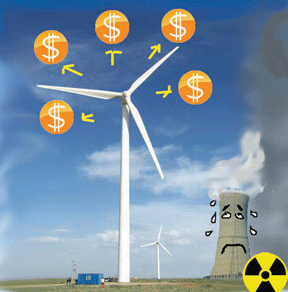 4 Nuclear Power Plants Shut Down; Wind Power Steps In Clean Technica August 16th, 2014 by Jake Richardson Wind power in the UK is helping to fill the void left by the shuttering of four nuclear reactors. One reactor was found with a defect on its boiler spine, so EDF Energy decided to shut it down, along with three others. It is expected they will be offline for about two months. (EDF is a French utility responsible for managing many nuclear reactors. It stands for Electricity de France.) The reactor with the potential boiler spine issue is at Heysham-1 plant in Lancashire. Another was shut down at Heysham as well. The remaining two that were taken offline are at Hartlepool. The UK energy supply should not suffer from the nuclear shut downs.
“Demand is low at this time of year, and a lot of wind power is being generated right now,” explained National Grid. In fact, the UK just set a new summer record for wind powergeneration, “According to figures from trade association RenewableUK, wind reached its maximum output at 10pm on Sunday night, delivering an average of 5.0GW of power over the hour and meeting 17 per cent of national demand.”…….
One of the small ironies about wind power filling in somewhat for nuclear reactors is that wind is criticized for being intermittent.
This is a very minor point, but there seems to be some slight discrepancies in the reporting about the reactor shut downs. The UK-based Financial Times reported that all four were shut down. The UK-based Guardian say they were to be shut down. The New York Timesreported that one was shut down in June, and that it had recently been decided by EDF to shut down three more. http://cleantechnica.com/2014/08/16/4-nuclear-power-plants-shut-wind-power-steps/
Expensive delays pile up for USA’s new nuclear plants in Georgia andSouth Carolina
 Delays for SC nuclear plant further pressure industry; questions over potential delays in Ga. ATLANTA -Nanaimo daily news, 17 Aug 14, Expensive delays are piling up for the companies building new nuclear power plants, raising fresh questions about whether they can control the construction costs that crippled the industry years ago.
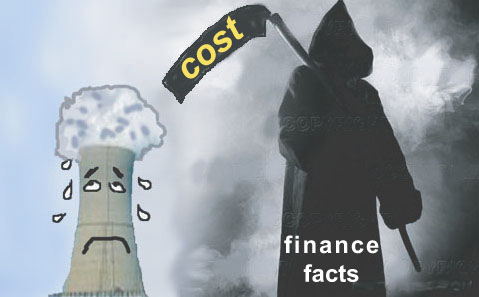

The latest announcement came this week from executives at SCANA Corp., which has been warned by its builders the startup of the first of two new reactors in South Carolina could be delayed two years or more. SCANA Corp. and plant co-owner Santee Cooper have not accepted that timeline from the companies designing and building the reactors, nor have they accepted responsibility for additional costs.
That announcement may well foreshadow more delays for a sister project in eastern Georgia, and they have caught the attention of regulators and Wall Street.
“Delays generally cause cost increases, and the question becomes who’s going to bear the costs?” said C. Dukes Scott, executive director of the South Carolina Office of Regulatory Staff, a watchdog agency that monitors SCANA Corp.’s spending.
None of this is helpful for the nuclear power industry, which had hoped its newest generation of plants in Georgia and South Carolina would prove it could build without the delays and cost overruns so endemic years ago. When construction slows down, it costs more money to employ the thousands of workers needed to build a nuclear plant. Meanwhile, interest charges add up on the money borrowed to finance construction.
A single day of delay in Georgia could cost $2 million, according to an analysis by utility regulators. Utility consumers often end up paying for these extra charges in the form of pricier electricity bills, unless the government intervenes and forces shareholders to absorb all or some of the losses………
Additional delays could prove unwelcome news for two pro-nuclear Republicans seeking re-election in November to Georgia’s Public Service Commission, H. Doug Everett and Lauren “Bubba” McDonald. -……….http://www.nanaimodailynews.com/business/delays-for-sc-nuclear-plant-further-pressure-industry-questions-over-potential-delays-in-ga-1.1316089#sthash.Yp8aLYvT.dpuf
Israel’s military big-wigs want increased nuclear weaponry – nuclear stealth submarines
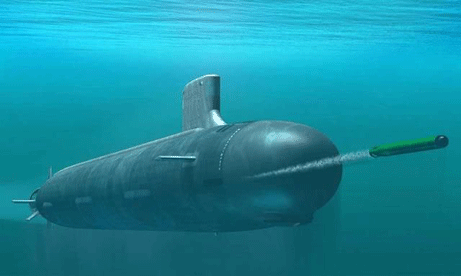
 Israel’s nuclear strategy – a larger role for submarine-basing, Jerusalem Post, 08/17/2014 By PROFESSOR LOUIS RENÉ BERES,ADMIRAL LEON “BUD” EDNEY“……….From the early days of the country’s first prime minister, David Ben-Gurion, Israel has understood the need to rely upon a “great equalizer,” that is, on nuclear weapons and (implicit) strategy. Of course, there are a great many circumstances in which a nuclear option would be unsuited – most obviously, in any forms of regional counter-terrorism – but, in the end, there can be no substitute for such a residual option. Doctrinally, Israel has already rejected any notions of theater nuclear deterrence, and/or nuclear war-fighting; nonetheless, there are still some identifiable circumstances wherein a nuclear exchange might not be prevented.
Japan developing a university-military-industrial nuclear complex
Japan plans fund to develop military technology with universities, Japan Times 17 Aug 14 Ministry plans fund to aid schools engaged in military research The Defense Ministry plans to set up a fund to develop military technology by aiding research projects at universities and other civilian institutions, government sources have revealed.
In a move aimed at keeping down development costs and bolstering civilian-military cooperation, the ministry plans to seek roughly ¥2 billion for the fund in its budget request for fiscal 2015 beginning next April, raising it to ¥6 billion in three years, the sources said Saturday.
The fund, which will be modeled after the U.S. Defense Advanced Research Projects Agency, is part of Prime Minister Shinzo Abe’s drive to expand the nation’s military capabilities……..
A group of university researchers has recently organized a petition opposed to civil-military cooperation, citing the bitter history of academia contributing to the nation’s militarization during World War II……… http://www.japantimes.co.jp/news/2014/08/17/national/japan-plans-fund-develop-military-technology-universities/#.U_KmJsVdUnk
Geriatric disorders in old nuclear reactors – Britain, France and Belgium
Insight: The cost of caring for Europe’s elderly nuclear plants LONDON (Reuters) 18 Aug 14
“…………...GERIATRIC DISORDERS Britain has 16 reactors in operation that came online from the 1970s to 1990s, and all but one will be retired by 2023 unless they get extensions.
At the Wylfa plant in Wales – Britain’s oldest, at 43 years – the one remaining operational reactor was out of service for seven months this year. It was first taken down for maintenance, but the restart was delayed as new problems were discovered.
The reactor is scheduled to be taken out of service for good in September, but operator Magnox is seeking an extension to December 2015.
This week, EDF Energy took offline three of its nuclear reactors at its Heysham 1 and Hartlepool plants in Britain for inspection which are both 31 years old, after a crack was discovered on a boiler spine of another Heysham 1 reactor with a similar boiler design, which had already been taken offline in June. [POWER/GB]
The boilers will be checked for defects with thermal imagery done using robotics, and the firm will know more about what caused the fault after the inspections, which should take around eight weeks, the EDF Energy spokeswoman said. EDF Energy has been incorporating extra checks into its strategy for its ageing nuclear plants since it inherited them from previous operator British Energy, she said.
British Energy was delisted in 2009 following financial collapse. Several unplanned outages had reduced its power output, and its load factor – the ratio of actual output to its maximum capacity – fell to its lowest level of 56 percent in 2009, Britain’s National Archives show.
This compares with EDF’s average load factor for its French nuclear fleet of 73 percent in 2013, which is also down from its highest level of 77.6 percent in 2005, the company’s 2013 results show.
The fleet’s net output of electricity has declined from 429 terawatt hours in 2005 to 404 TWh last year, though this could be for a range of reasons, including weak energy demand.
Apart from reducing the reliability of Europe’s electricity supply, operators stand to lose many millions of euros from a single outage from lost electricity sales alone. Reuters calculations, based on industry estimates of lost daily electricity sales, show the outages at two EDF Energy plants could cost the firm some 155 million pounds during the outages from when they began in June or August to October, not including the costs of inspection and maintenance work.
Industry sources say the lost revenue from the loss of output at a 1 gigawatt plant could reach 1 million pounds a day.
British utility Centrica, which owns 20 percent of EDF Energy’s nuclear fleet, said on Monday the reduction in output would reduce its earnings per share by around 0.3 pence this year.
More than half of Belgium’s nuclear capacity is offline for maintenance. The three closed reactors are 29, 31 and 32 years old.
Though it doesn’t break out the nuclear data separately, statistics from Europe’s electricity industry association Eurelectric show both planned and unplanned outages mostly increased at thermal power plants in eight European countries examined, and periods of energy unavailability increased from around 12.8 percent in 2002 to 18.3 percent in 2011.
As the plants age, that can only increase. Additional reporting by Barbara Lewis in Brussels and Geert de Clercq in Paris; Editing by Will Waterman) http://www.firstpost.com/world/insight-the-cost-of-caring-for-europes-elderly-nuclear-plants-1668443.html
Storage for renewable energy is not a big problem, as pro-nukes claim it is
Is Storage Necessary for Renewable Energy? (includes videos) Engineering .com Tom Lombardo August 17, 2014 Physicist and energy expert Amory Lovins, chief scientist at The Rocky Mountain Institute, recently released a video in which he claims that renewable energy can meet all of our energy needs without the need for a fossil fuel or nuclear baseload generation. There’s nothing unusual about that – many people have made that claim – but he also suggests that this can be done without a lot of grid-level storage. Instead, Lovins describes a “choreography” between supply and demand, using predictive computer models models to anticipate production and consumption, and intelligent routing to deliver power where it’s needed. This “energy dance,” combined with advances in energy efficiency, will allow us to meet all of our energy needs without sacrificing reliability.
1 This Month
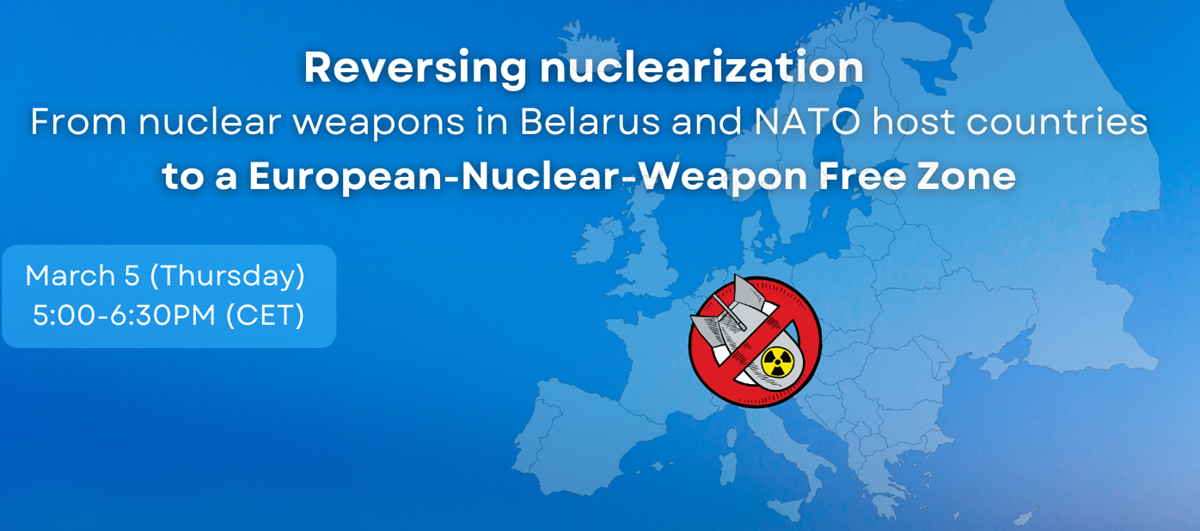
5 March -Online – Reversing nuclearization:
From nuclear weapons in Belarus and NATO host countries to a European-Nuclear-Weapon Free Zone
11am-12:30pm Eastern Time USA / 5pm-6:30pm CET

of the week – Advocating for a
nuclear free beach – https://www.samuellawrencefoundation.org/
The Samuel Lawrence Foundation advocates for a Nuclear Waste Free Beach at San Onofre, join us and take action!

10 March A LIVE WEBINAR THE REAL EFFECTS OF NUCLEAR POWER
What the Industry Isn’t Telling Us
1:00 PM Mountain, 2 pm Central, 3 pm Eastern. Live on the Keepers of the Water Facebook page

18 March Webinar @ 1 PM EST: An Assessment of SMR Projects: The Case of Canada
register for the zoom:
https://us02web.zoom.us/webinar/register/WN_o8BIIOUvQ2ONJR1nta65DQ#/registration

of the week – STOP SMALL MODULAR REACTORS IN CANADA
To see nuclear-related stories in greater depth and intensity – go to https://nuclearinformation.wordpress.com
-
Archives
- March 2026 (38)
- February 2026 (268)
- January 2026 (308)
- December 2025 (358)
- November 2025 (359)
- October 2025 (376)
- September 2025 (258)
- August 2025 (319)
- July 2025 (230)
- June 2025 (348)
- May 2025 (261)
- April 2025 (305)
-
Categories
- 1
- 1 NUCLEAR ISSUES
- business and costs
- climate change
- culture and arts
- ENERGY
- environment
- health
- history
- indigenous issues
- Legal
- marketing of nuclear
- media
- opposition to nuclear
- PERSONAL STORIES
- politics
- politics international
- Religion and ethics
- safety
- secrets,lies and civil liberties
- spinbuster
- technology
- Uranium
- wastes
- weapons and war
- Women
- 2 WORLD
- ACTION
- AFRICA
- Atrocities
- AUSTRALIA
- Christina's notes
- Christina's themes
- culture and arts
- Events
- Fuk 2022
- Fuk 2023
- Fukushima 2017
- Fukushima 2018
- fukushima 2019
- Fukushima 2020
- Fukushima 2021
- general
- global warming
- Humour (God we need it)
- Nuclear
- RARE EARTHS
- Reference
- resources – print
- Resources -audiovicual
- Weekly Newsletter
- World
- World Nuclear
- YouTube
-
RSS
Entries RSS
Comments RSS
 nuclear-news