6 issues for America’s EPA on radiation safety limits

 EPA Wants My Opinion? Well, Here It Is, Enformable Joieau Website Joy Thompson 18 July 14,
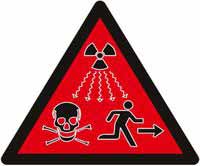 The Environmental Protection Agency – the overseers of the suspiciously on-again/off-again RadNet monitoring system in the wake of the 2011 mass meltdown/blow-outs at Japan’s Fukushima Daiichi power station – has helpfully extended the public comment period on its proposed “update” to 40CFR.190, “Environmental Radiation Protection Standards for Nuclear Power Operations.”
Citizens now have until August 4th to submit their comments on exposure limits, dose calculations, new fuel cycle technologies and related topics.
Advance Notice of Proposed Rulemaking (ANPR).
The EPA is seeking public comment and information that they may or may not use for planned updates to the old rules for Environmental Radiation Protection issued in 1977, ostensibly to make them easier to understand and implement. Given how often the public is treated to professions of ignorance from the nuclear industry (such as, “we don’t know how to measure beta radiation levels!” when caught disseminating blatantly false data), this could be a good thing. The Nuclear Regulatory Commission [NRC] is responsible for implementing and enforcing the standards established by the EPA, and we have watched with some jaded dismay as NRC has steadily abdicated its responsibilities, entrusting them to the utilities it’s supposed to be regulating. Utilities now enjoy little to no oversight or auditing of their monitoring or records, and requirements for public notification and protection (like evacuation of nearby residents if releases reach certain levels) have been demonstrated pointless because they are routinely ignoredPerhaps if EPA can tweak its rules so that even the NRC can understand them, we could expect much better compliance all around……..
To help interested people who may be confused by the technical gobbledygook that frames the issues in the EPA’s documents, I am listing the issues here, offering an abbreviated look at EPA reasoning in presenting these issues for comment, and supplying my own responses to the questions EPA is posing to the public………
Issue 1: Consideration of a Risk Limit to protect individuals. Should the Agency express its limits for the purpose of this regulation in terms of radiation risk or radiation dose?
My Response to Issue 1:
Because both national and international radiation protection guidelines developed by non-governmental radiation experts such as the ICRP and the National Council on Radiation Protection and Measurements recommend that radiation exposure standards be established in terms of dose to members of the public, the EPA should continue to base its limits on effective dose to members of the public.
Issue 2: Updated Dose Methodology (dosimetry). How should the Agency update the radiation dosimetry methodology incorporated in the standard?
Current limits on exposures to the public during normal operation are 25mr [millirems] whole body, 75mr to the thyroid, and 25mr to any other organ, over a year’s time. There are no effective limits on accident releases, and anyone who followed the disaster at Fukushima in 2011 will understand why. If releases during an accident/event are calculated to deliver a set level of exposure [dose] to any member of the public over the duration of the event, the requirement for evacuation kicks in.
In the end, and given the past record of deception by the industry and its regulators concerning public exposures to radiation, it probably doesn’t matter which methodology is used to calculate and/or estimate doses to the public during a serious accident, so long as requirements for evacuation of the public when a certain set dose level is reached remain in place. That dose level should remain equivalent to the one(s) now in place.
My Response to Issue 2:
If using a more sophisticated method of calculating and estimating doses/harm to the public will make the task of radiation protection easier, there is no reason not to do so. If EPA decides to go to ICRP’s more recent methodology it should use the ICRP methodology that exists at present [60] and not the one ICRP might eventually quantify. Utilities should not be exempted from requirements for evacuation plans and notifications, nor should the allowable doses to the public be raised.
Issue 3: Radionuclide Release Limits. The Agency has established individual limits for release of specific radionuclides of concern. Based on a concept known as collective dose, these standards limit the total discharge of these radionuclides to the environment. The Agency is seeking input on: Should the Agency retain the radionuclide release limits in an updated rule and, if so, what should the Agency use as the basis for any release limits?
The original EPA release limits (Final Environmental Statement, 1976) were based on the assumption that spent fuel reprocessing would be the one area of the total fuel cycle that would release the most radionuclides to the environment. In 2014 we know from long experience with serious accidents, meltdowns and exploding reactor plants that the generation facilities themselves have proven to be the worst offenders. We do not reprocess commercial spent fuel in this country, and haven’t done so since the 1970s. The government reprocessing facilities that do exist are notoriously filthy, as are fabrication facilities working with plutonium to make MOX fuels. Still, in overall environmental contamination, power plants suffering nasty oopses are right up there for consideration. And power plants suffering nasty oopses are not subject to radionuclide release limits because there is no way to stop those releases.
Now, however, we are looking at decommissioning aged and aging nuclear facilities, doing something with the accumulated tonnage of spent fuel waste, and applying release limitations to any/all new technologies that will come with future nuclear energy development (if that happens). Nuclear pollution from these activities must also be considered.
My Response to Issue 3:
EPA should continue to use the existing standards of limiting environmental burden as a guide, calculate and apply equivalent radionuclide standards for individual facilities at any stage of the nuclear fuel cycle. This need not be based on estimated doses to the wider public or to individual members of the public. It does need to be recalculated as necessary whenever weapon/accident releases occur to release very large amounts of radionuclides to the biosphere, with an eye to maintaining a biosphere-wide environmental burden limit for all dangerous long-lived isotopes.
If such an effort ends up reducing the allowable radionuclide releases from any type of nuclear facility at any point along the fuel cycle to a level that cannot be reasonably applied, then those facilities should be closed and decommissioned. Humanity should not be asked to tolerate the nuclear pollution of our planet to the point where everyone’s health and longevity are materially compromised. If that means the end of the nuclear industry itself, then that’s what it means.
Issue 4: Water Resource Protection. How should a revised rule protect water resources?
Ground and surface water are necessary resources for organic life forms and entire ecosystems. EPA says it wishes to prevent water contamination rather than have to clean it up after it’s polluted. This is great. Existing standards don’t impose water-specific standards because nuclear plants do not release what they consider to be significant radionuclides to water sources during normal operation, and any such releases have had far less impact on public health than airborne releases. There are some fluid effluent limits for specific radionuclides.
As the industry’s facilities have aged, however, water pollution issues have come to the fore. Tritium contamination of groundwater, aquifers, rivers and lakes has become more problematic. Unfortunately, there are no technologies in existence that can effectively remove tritium from water. EPA wishes to establish off-site water standards commensurate with the Clean Water Act, which has specific limitations on concentration of carcinogens.
My Response to Issue 4:
The basis of any new EPA ground and/or surface water standards should be the limits specified in the Clean Water Act, diminished by the concentration of pollutants that may already be present in the water source. The dirtier the ground/surface water already is, the less any nuclear facility will be allowed to release. If the allowance goes to zero, the facility must be closed and decommissioned.
Issue 5: Spent Nuclear Fuel and High-Level Radioactive Waste Storage. How, if at all, should a revised rule explicitly address storage of spent nuclear fuel and high-level radioactive waste?……..
. The failure over the past 40 years to develop medium and long term spent fuel storage has turned operating nuclear plants into de facto storage facilities they were never designed to be. Government/industry agencies, commissions, industry think tanks and international bodies can recommend the development of medium and long term storage facilities all they like. Fact is if nobody’s building them, they flat don’t exist and recommendations accomplish exactly zip.
If it ever looks like such facilities may at long last come to be, then the EPA may have a regulatory role in limiting the amount of radioactive substances those facilities can be allowed to release in any form to the environment. …….
My Response to Issue 5:
The same limitations on releases to air and water from nuclear operations should be applied to on-site storage of spent fuel. There should also be a limitation on how much spent fuel can be stored in a single pool, as well as a time limit on how long it can stay there before being dry-casked. The industry should be forced to dry-cask all spent fuel in their pools that has been stored for 2 years or more. Any dry cask storage facilities on-site should have an area radiation limit to protect workers, and should not contribute at all to off-site radiation levels.
Issue 6: New Nuclear Technologies – What new technologies and practices have developed since 40CFR.190 was issued, and how should any revised rule address these advances and changes?……
My Response to Issue 6:
Reality is that there is no pressing need for the EPA to develop separate or differing limits for possible future nuclear technologies that are entirely unlikely to be deployed. If any of them ever are deployed, the existing (or revised) standards should be applicable to any new nuclear technologies. All applications involving nuclear fission should have to abide by the EPA protective regulations throughout the fuel cycle to limit harm to the general public, nuclear workers and the environment.
EPA should definitely develop and apply specific rules for MOX fuels as those are fabricated and used in power reactors. Plutonium is a dangerous radionuclide, as are other high energy alpha and beta emitters that occur during production, enrichment and fuel fabrication. Limits on levels and releases of these elements should be strict, and dutifully enforced.
Comments should be identified by Docket ID No. EPA-HQ-OAR-2013-0689. Comments may be submitted in the following ways:
• www.regulations.gov: follow the on-line instructions.
• Email: a-and-r-docket@epa.gov
• Fax: (202) 566-9744
• Mail: EPA Docket Center, Environmental Radiation Protection Standards for Nuclear Power Operations – Advance Notice of Proposed Rulemaking Docket, Docket ID No. EPA-HQ-OAR-2013-0689, 1200 Pennsylvania Ave. NW., Washington, DC 20460. Please include two copies.
• Hand Delivery: In person or by courier, deliver to: EPA Docket Center, EPA West, Room 3334, 1301 Constitution Ave. NW., Washington, DC 20004. During Docket’s normal hours of operation. Please include two copies. http://enformable.com/2014/07/epa-wants-opinion-well/
No comments yet.
1 This Month

of the week – Shut Down Drone Warfare!


Tell the Ukrainian Government to Drop Prosecution of Peace Activist Yurii Sheliazhenko

Petition to revoke the licensing of the Near Surface Nuclear Disposal Facility (NSDF) at Chalk River. https://www.ourcommons.ca/petitions/en/Petition/Details?Petition=e-7247
To see nuclear-related stories in greater depth and intensity – go to https://nuclearinformation.wordpress.com
-
Archives
- April 2026 (114)
- March 2026 (251)
- February 2026 (268)
- January 2026 (308)
- December 2025 (358)
- November 2025 (359)
- October 2025 (376)
- September 2025 (257)
- August 2025 (319)
- July 2025 (230)
- June 2025 (348)
- May 2025 (261)
-
Categories
- 1
- 1 NUCLEAR ISSUES
- business and costs
- climate change
- culture and arts
- ENERGY
- environment
- health
- history
- indigenous issues
- Legal
- marketing of nuclear
- media
- opposition to nuclear
- PERSONAL STORIES
- politics
- politics international
- Religion and ethics
- safety
- secrets,lies and civil liberties
- spinbuster
- technology
- Uranium
- wastes
- weapons and war
- Women
- 2 WORLD
- ACTION
- AFRICA
- Atrocities
- AUSTRALIA
- Christina's notes
- Christina's themes
- culture and arts
- Events
- Fuk 2022
- Fuk 2023
- Fukushima 2017
- Fukushima 2018
- fukushima 2019
- Fukushima 2020
- Fukushima 2021
- general
- global warming
- Humour (God we need it)
- Nuclear
- RARE EARTHS
- Reference
- resources – print
- Resources -audiovicual
- Weekly Newsletter
- World
- World Nuclear
- YouTube
-
RSS
Entries RSS
Comments RSS
 nuclear-news
Leave a comment