To revitalise its economy, Japan needs to turn to renewable energy
To revitalize its economy and politics, Japan needs an efficiency-and-renewables leapfrog that enables the new energy economy, not protects the old one. Japanese frogs jump too, says Bashō’s famous haiku “The old pond / frog jumps in / plop.” But we’re still waiting for the plop
How Opposite Energy Policies Turned The Fukushima Disaster Into A Loss For Japan And A Win For Germany Forbes, Amory B Lovins 28 June 14 “……..More than the sacred sun on Japan’s flag, its leaders appear to worship old policies that retard wide use of the energy sources now taking over the global market. Since 2008, half the world’s added electric generating capacity has been renewable. Non-hydroelectric renewables, chiefly wind and solar, got a quarter-trillion dollars of private investment and added over 80 billion watts in each of the past three years. Three of the world’s top four economies—China, Japan, and Germany, as well as India—now produce more electricity from non-hydro renewables than from nuclear power. Japan is on that list only because its nuclear production is roughly zero; it remains the rich nations’ renewable laggard. Perhaps the unexpected May 2014 court decision that prohibited restart of the Oi reactors as unsafe, and for the first time prioritized public safety over utility profits, may signal an emergent change beyond the cosmetic reforms offered by the executive and legislative branches—2016 “deregulation” in name only.
In 2012 and 2013, China made more electricity from wind than from the world’s most aggressive nuclear power program. In 2013, China added more solar power than its first developer, the United States, has installed in its whole history. But Japan is heading in the opposite direction: of the 8 GW of renewables brought into operation in the first 20 months after it introduced renewable FITs in July 2012, 97.5% was solar and only 1% windpower. Windpower (especially onshore where it’s cheapest) is stymied, first by uniquely slow and onerous approval processes and then by outright rejection by utility monopsonists who get to bar competitors from their regional grids. Japan’s windpower association projects the same market share in 2050 that Spain achieved three years ago.
It’s not hard to figure out why. Solar power displaces daytime peak that’s costly to generate, but the way the solar feed-in tariff works, it’s profitable for utilities. In contrast, they lose money on cheap windpower that also runs at night, displacing coal and nuclear. Japan’s latest rules reiterate utilities’ right to refuse renewable power that would displace such legacy “baseload” plants. Japanese business leaders may be upset to learn that their electricity, among the world’s costliest, is even costlier because their utilities run their own costlier thermal plants while rejecting windpower with nearly zero operating cost.
The electricity reforms passed in late 2013 by the lower house of the Diet (23 years after Germany’s reforms began) still let Japan’s utilities reject cheaper renewable power for any reason or no reason. Many claim renewables could harm grid stability. So why do Germany, with 25% renewable electricity in 2013, and Denmark, with at least 47%, have Europe’s most reliable electricity, about ten times more reliable than America’s? These countries, like three others in Europe (none very rich in hydropower) that used roughly half-renewable electricity in 2013—Spain 45%, Scotland 46%, Portugal 58%—simply require fair grid access and competition. Of all major industrial nations, only Japan doesn’t.
Germany also uses energy more efficiently. In each of the past three years, German electricity consumption fell while GDP grew. During 1991–2013, i.e.since reunification, German real GDP grew 33% using 4% less primary energy and 2% less electricity, and emitting 21% less carbon. Even more ambitious savings are available and planned.
In contrast, Japan’s world-leading energy efficiency gains in the 1970s later stagnated. Japanese industry has continued to improve, and remains among the most efficient of 11 major industrial nations, but Japan ranks tenth in industrial cogeneration and commercial building efficiency, eighth in truck efficiency, and next-to-last (tied with the U.S.) in car efficiency. Yet Japan’s sky-high energy prices make energy efficiency very profitable, most of all in buildings. Semiconductor company Rohm’s office opposite Kyōto Station, for example, cut its energy use 46% and repaid its cost in two years. With a few exceptions, like the Tōkyō Metropolitan Government’s efficiency efforts, few Japanese buildings have received the kind of kaizen (continuous improvement) that has long distinguished Japanese industry.
To revitalize its economy and politics, Japan needs an efficiency-and-renewables leapfrog that enables the new energy economy, not protects the old one. Japanese frogs jump too, says Bashō’s famous haiku “The old pond / frog jumps in / plop.” But we’re still waiting for the plop.http://www.forbes.com/sites/amorylovins/2014/06/28/how-opposite-energy-policies-turned-the-fukushima-disaster-into-a-loss-for-japan-and-a-win-for-germany/
No comments yet.
1 This Month
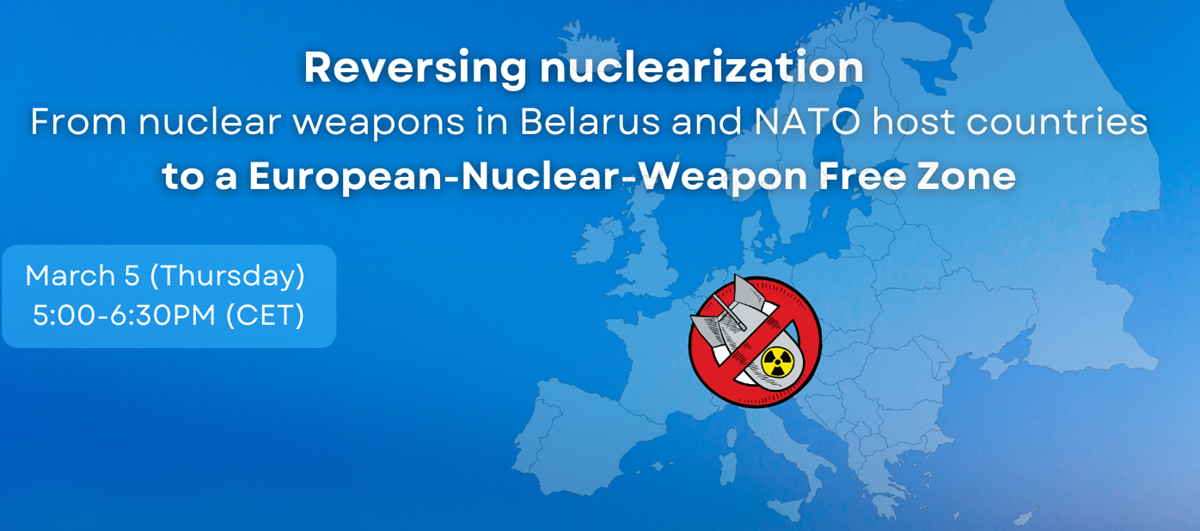
5 March -Online – Reversing nuclearization:
From nuclear weapons in Belarus and NATO host countries to a European-Nuclear-Weapon Free Zone
11am-12:30pm Eastern Time USA / 5pm-6:30pm CET

of the week – Advocating for a
nuclear free beach – https://www.samuellawrencefoundation.org/
The Samuel Lawrence Foundation advocates for a Nuclear Waste Free Beach at San Onofre, join us and take action!

10 March A LIVE WEBINAR THE REAL EFFECTS OF NUCLEAR POWER
What the Industry Isn’t Telling Us
1:00 PM Mountain, 2 pm Central, 3 pm Eastern. Live on the Keepers of the Water Facebook page


18 March Webinar @ 1 PM EST: An Assessment of SMR Projects: The Case of Canada
register for the zoom:
https://us02web.zoom.us/webinar/register/WN_o8BIIOUvQ2ONJR1nta65DQ#/registration

of the week – STOP SMALL MODULAR REACTORS IN CANADA
To see nuclear-related stories in greater depth and intensity – go to https://nuclearinformation.wordpress.com
-
Archives
- March 2026 (37)
- February 2026 (268)
- January 2026 (308)
- December 2025 (358)
- November 2025 (359)
- October 2025 (376)
- September 2025 (258)
- August 2025 (319)
- July 2025 (230)
- June 2025 (348)
- May 2025 (261)
- April 2025 (305)
-
Categories
- 1
- 1 NUCLEAR ISSUES
- business and costs
- climate change
- culture and arts
- ENERGY
- environment
- health
- history
- indigenous issues
- Legal
- marketing of nuclear
- media
- opposition to nuclear
- PERSONAL STORIES
- politics
- politics international
- Religion and ethics
- safety
- secrets,lies and civil liberties
- spinbuster
- technology
- Uranium
- wastes
- weapons and war
- Women
- 2 WORLD
- ACTION
- AFRICA
- Atrocities
- AUSTRALIA
- Christina's notes
- Christina's themes
- culture and arts
- Events
- Fuk 2022
- Fuk 2023
- Fukushima 2017
- Fukushima 2018
- fukushima 2019
- Fukushima 2020
- Fukushima 2021
- general
- global warming
- Humour (God we need it)
- Nuclear
- RARE EARTHS
- Reference
- resources – print
- Resources -audiovicual
- Weekly Newsletter
- World
- World Nuclear
- YouTube
-
RSS
Entries RSS
Comments RSS
 nuclear-news
Leave a comment