Plutonium in the playground – Fukushima

 Study: Fukushima plutonium in playground 60 km from nuclear plant — “Proves that indeed Plutonium has been emitted by the accident” — Some “in the form of fuel fragments”? — Up to 14 Billion Bq of Pu-239 and-240 released (MAP) http://enenews.com/study-fukushima-plutonium-in-playground-60-km-from-nuclear-plant-proves-that-indeed-plutonium-has-been-emitted-by-the-accident-some-may-be-in-
P. Bossew, German Federal Office for Radiation Protection, PLUTONIUM EMISSION FROM THE FUKUSHIMA ACCIDENT (pdf), 2013 (emphasis added): […] Apparently no explosive fuel fragmentation occurred, so that little, if any of the release happened in the form of fuel fragments. […] Only scattered data are available from the farther surroundings. It can be assumed that continuous and frequent monitoring of environmental media for Pu from locations more distant than a few km was deemed unnecessary […] Given two different sources (global and Fukushima fallout) with different, but known 238Pu : 239+240Pu ratios, the contributions of the both in a sample which is a mixture of both can be calculated […] we estimated a median 2.28 (95% conf. interval 1.98 –2.58), [15] and 2.19 ± 0.48 (1 ), [14], for Fukushima emissions. […] The background Pu ratio in global fallout has been reported 0.035 ± 0.008 […] a map of the 238Pu : 239+240Pu ratio in the region around the NPP […] The “trace” towards NW from the NPP, in which the Pu ratio deviates strongly from the background […] This proves that indeed Pu has been emitted by the accident […] For 238Pu, the Fukushima contribution is much higher than the global one in many places (as detectable at all) because the Pu ratio is much higher in Fukushima (~2.19) than in global fallout (~0.035). […] Keeping with [the total 137Cs release of] 15 PBq given by NISA […] we find an atmospheric emission of 239+240Pu equal 4.2 GBq. Using the upper estimate of released 137Cs, 50 PBq, a release of 14 GBq is found. [NISA 239+240Pu estimate = 6.4 GBq; Zheng et al. 239+240Pu estimate = 1.0 to 2.4 GBq] […] It should be stressed that the evidence of Pu from Fukushima does not pose any radiological concern […]
P. Bossew, German Federal Office for Radiation Protection, Hirosaki University, Anthropogenic Radionuclides in Environmental Samples from Fukushima Prefecture (pdf), 2013: Three samples [all taken approx. 60 km from FDNPP, 1 from a parking area in Koriyama city and 2 from a playground in Fukushima city] were measured twice […] Sample 4 was too small for a meaningful analysis. […] The result found in this study is consistent with a Pu/ Cs ratio reported by Imanaka et al. (2012) for a highly contaminated place in the Fukushima zone as below 1 E-6 […] Zheng et al. 2011 found 239+240 Pu/137Cs in soil, close to the NPP, as (3.6 ± 1.1) E-7 (only samples with 241Pu>0 considered, and Fukushima contribution 87% to the sample J-village, surface soil , as suggested by the authors), which is in good agreement with the results of this study.
Japan’s very shaky nuclear ‘renaissance’
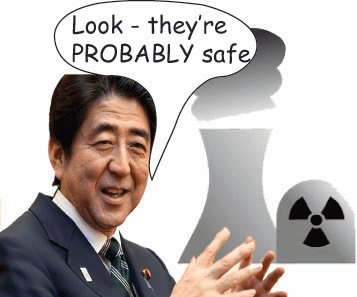 Abe’s nuclear renaissance ignores stiff opposition BY JEFF KINGSTON SPECIAL TO THE JAPAN TIMES 28 June 14 “……On April 11, 2014, Abe’s Cabinet approved a new national energy strategy that embraces nuclear power. This is not surprising given that Abe has vigorously promoted bringing idled reactors back online and is pitchman-in-chief for exports of nuclear technology and equipment. The new plan also opens the door to new reactor construction.
Abe’s nuclear renaissance has become complicated, however, following the revelation in May 2014 that the government and the Tokyo Electric Power Co. had been hiding the fact that almost all workers and managers at the Fukushima No. 1 nuclear plant bolted the scene and abandoned their posts on the morning of March 15, 2011, as the crisis seemed to be spiraling out of control. Instead of remaining on the plant site as ordered, most workers fled to the Fukushima No. 2 nuclear plant 10 km to the south. While such actions are understandable, the mass exodus raises the question of whether nuclear reactors can be operated safely if those responsible for conducting emergency operations cannot be relied on to carry out their duties.
Doubts about the Nuclear Regulatory Authority’s safety reviews are also gathering as the shambolic decommissioning operations at Fukushima undermine its credibility. Why did the NRA allow Tepco to cut corners and compromise safety, leading to extensive radioactive contamination of groundwater now seeping into the ocean? Reports of problems with malfunctioning decontamination equipment, leaky storage tanks for contaminated water and worker error are emblematic of the endless bungling. Why is Tepco, an exceptionally incompetent institution, being entrusted with such a crucial task?
The NRA’s failure to adequately monitor the cleanup raises questions about whether it has the capacity to oversee strict enforcement of new safety guidelines and institutionalize a culture of safety.
“We are not assuming that an accident the operator cannot control will take place,” NRA Chairman Tanaka explains, justifying reliance on the nuclear plant operator to manage a nuclear accident. In light of revelations, however, that is not a reassuring assumption………
The evacuation preparedness problem won’t go away and an improvised exodus means mayhem. It is therefore alarming that none of the clusters of towns in any of the designated evacuation zones around the nation’s nuclear plants has conducted a live evacuation drill.
The NRA is reviewing applications to restart 19 nuclear reactors.
The safety screenings involve confirming that they meet new stricter safety standards, but Niigata Gov. Hirohiko Izumida warns that this doesn’t mean they are safe to operate. He points out that local authorities are not able to cope with cascading simultaneous disasters as occurred in 2011, a risk the new guidelines do not address.
Perhaps this explains why a recent Asahi poll finds continued high public opposition to nuclear energy: 77 percent of respondents favor phasing out nuclear energy, while only 14 percent oppose such a policy.http://www.japantimes.co.jp/opinion/2014/06/28/commentary/abes-nuclear-renaissance-ignores-stiff-opposition/#.U7HUBpRdUnk
Germany an energy policy winner, Japan a loser
 In short, German policy gave renewables fair access to the grid, promoted competition, weakened monopolies, and helped citizens and communities own half of renewable capacity. In 2013, Germany’s nuclear generation reached a 30-year low while renewable generation, 56% greater, set a new record, reaching an average of 27% of domestic use in the first quarter of 2014 and a brief peak of 74% on 11 May.

How Opposite Energy Policies Turned The Fukushima Disaster Into A Loss For Japan And A Win For
Germany Forbes, Amory B Lovins 28 June 14 Japan thinks of itself as famously poor in energy, but this national identity rests on a semantic confusion. Japan is indeed poor in fossil fuels—but among all major industrial countries, it’s the richest in renewableenergy like sun, wind, and geothermal. For example, Japan has nine times Germany’s renewable energy resources. Yet Japan makes about nine times less of its electricity from renewables (excluding hydropower) than Germany does.
That’s not because Japan has inferior engineers or weaker industries, but only because Japan’s government allows its powerful allies—regional utility monopolies—to protect their profits by blocking competitors. Since there’s no mandatory wholesale power market, only about 1% of power is traded, and utilities own almost all the wires and power plants and hence can decide whom they will allow to compete against their own assets, the vibrant independent power sector has only a 2.3% market share; under real competition it would take most of the rest. These conditions have caused an extraordinary divergence between Japan’s and Germany’s electricity outcomes. Continue reading
They’e touting thorium nuclear energy, but it’s a weapons proliferation risk
 Thorium: Proliferation warnings on nuclear ‘wonder-fuel’ Phys Org, Thorium is being touted as an ideal fuel for a new generation of nuclear power plants, but in a piece in this week’s Nature, researchers suggest it may not be as benign as portrayed.
The element thorium, which many regard as a potential nuclear “wonder-fuel”, could be a greater proliferation threat than previously thought, scientists have warned.
Writing in a Comment piece in the new issue of the journal, Nature, nuclear energy specialists from four British universities suggest that, although thorium has been promoted as a superior fuel for future nuclear energy generation, it should not be regarded as inherently proliferation resistant. The piece highlights ways in which small quantities of uranium-233, a material useable in nuclear weapons, could be produced covertly from thorium, by chemically separating another isotope, protactinium-233, during its formation.
The chemical processes that are needed for protactinium separation could possibly be undertaken using standard lab equipment, potentially allowing it to happen in secret, and beyond the oversight of organisations such as the International Atomic Energy Agency (IAEA), the paper says.
The authors note that, from previous experiments to separate protactinium-233, it is feasible that just 1.6 tonnes of thorium metal would be enough to produce 8kg of uranium-233 which is the minimum amount required for a nuclear weapon. Using the process identified in their paper, they add that this could be done “in less than a year.”
……….”Small-scale chemical reprocessing of irradiated thorium can create an isotope of uranium – uranium-233 – that could be used in nuclear weapons. If nothing else, this raises a serious proliferation concern…….. Continue reading
New State of Ukraine planning for nuclear weapons?
 Ukraine State Calls for ‘Nuclear Strikes’ (E42) RT.com June 29, 2014 Parliament moves to quit Nuclear Non-Proliferation Treaty; Nazis ‘regular reconnaissance visits to nuclear power stations’; Billionaire governor, whose Privatbank is top recipient of new IMF bailout, being placed on international wanted list for ‘banned methods of warfare and aggravated murder’.
Monday June 30 at 0045 GMT
For more information, please visit rt.com/schedule/This is a rush transcript. Copy may not be in its final form.RT:
Nuclear weapons plans in the new gangster state of Ukraine. Coming up.Announcer: Ukraine’s new coalition calls officially for “pre-emptive nuclear strikes”.
Governors on the international wanted list.
And the sordid past of the new oligarch President……….. http://rt.com/shows/the-truthseeker/169176-ukraine-gangste-nuclear-strikes/
Growng chorus of area residents for the closure of Pilgrim Nuclear power Plant
Islanders Join Chorus Against Pilgrim Nuclear Power Station Vineyard Gazette Olivia Hall, 26 June 14 A movement to close the Pilgrim Nuclear Power Station is gaining ground on Martha’s Vineyard, where some Islanders have begun to voice concerns about their safety in the event of an emergency. The Island, like much of the commonwealth, stands in the shadow of the state’s only nuclear plant. – A public forum is planned for Monday at 7 p.m. at the Katharine Cornell Theatre in Vineyard Haven; the event is titled Pilgrim Nuclear Power Station: Could Fukushima Happen Here? Pilgrim provides 15 per cent of the electricity for southeastern Massachusetts, according to a 2014 report by ISO New England, the region’s electric grid operator. This past spring, Island voters expressed overwhelming support for the decommissioning of the plant at their annual town meetings and at the ballot box. Nonbinding resolutions urging Gov. Deval Patrick to press for closure of the Plymouth plant were supported by most towns. In addition, the Martha’s Vineyard Commission and the Dukes County Commission signed letters to the Nuclear Regulatory Commission asking for the decommissioning of Pilgrim. “Public safety, particularly that of Cape and Islands residents, cannot be assured,” the resolutions read in part. –
India’s frantic efforts to deal with problem of insuring nuclear power (the uninsurable)
‘Government working on providing insurance cover to nuclear plants‘ Economic Times Jun 28, 2014, HYDERABAD: The government is working with a group of experts and officials of Nuclear Power Corporation of India,Finance Ministry and insurance companies to work out the modalities of providing insurance cover to existing and new nuclear power plants, a senior official said here today.
R K Sinha, Secretary, Department of Atomic Energy and Chairman of Atomic Energy Commission told this to reporters after flagging off the world’s second largest gamma ray telescope to Ladakh, where it will be installed. According to him, government is working towards forming a nuclear insurance pool to cover the nuclear facilities, involving state-owned General Insurance Company and New India Insurance.
“We are on the way to find a solution (to liability law concerns). We will be putting in place a mechanism to cover the risk through insurance (for nuclear plants),” Sinha, told media persons, he said.
In order to address the liability issue that has held up deals with various countries, the central government earlier said it decided to form a Nuclear Insurance Pool that will have a number of stakeholders to meet the requirement of huge financial cover in case of a mishap.
Under the Liability Law, compensation of up to Rs 1,500 crore will have to be paid in case of a mishap involving a nuclear plant. At present, India has 20 nuclear plants and their number is expected to grow as the industry expands.
The Department of Atomic Energy has been pursuing the issue of bringing the nuclear plants under insurance cover, with the Ministry of Finance, NPCIL and insurance companies, he added…….http://articles.economictimes.indiatimes.com/2014-06-28/news/50929523_1_insurance-cover-nuclear-plants-nuclear-insurance-pool
France pushing as nuclear salesman to India
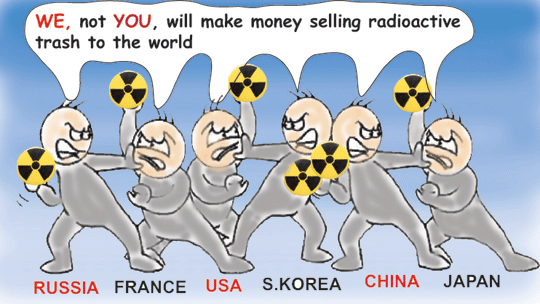 Defence, nuclear reactor deals on agenda for Fabius’ India visit http://www.thenewage.co.za/129938-1020-53-Defence_nuclear_reactor_deals_on_agenda_for_Fabius_India_visit A multi-billion-dollar deal for fighter jets and another for nuclear reactors are expected to be discussed between Indian leaders and French Foreign Minister Laurent Fabius, who arrives in New Delhi later on Sunday.
 The negotiations for six nuclear reactors from French company Areva for the state-run Nuclear Power Corporation’s power plant in Jaitapur in western India was initiated in 2010.
False alarm at Californian nuclear power plant
Erroneous Alerts, Sirens, Calls, Alarm Californians, Firehouse MATT HAMILTON ASSOCIATED PRESS JUNE 28, 2014 Repairs to a nuclear power plant’s siren system in San Luis Obispo County sent residents into a panic as they were accompanied by cellphone messages telling them to ‘prepare for action.’ LOS ANGELES (AP) — People in San Luis Obispo County received a series of unsettling, erroneous emergency alerts Friday as repairs were being made to a nuclear power plant’s siren system, including a vague cellphone message that told them to “prepare for action.”
The chain of mistaken alerts began arousing confusion and fear when a siren that’s part of the Diablo Canyon Power Plant’s warning system began wailing Friday afternoon for no apparent reason, county emergency services manager Ron Alsop said………http://www.firehouse.com/news/11539311/erroneous-alerts-sirens-calls-alarm-californians
‘Nobody told us Anything’: film tell story of British nuclear veterans
Nuclear test veterans hope film will help fight http://www.edp24.co.uk/news/politics/nuclear_test_veterans_hope_film_will_help_fight_1_3660114 Nuclear test veterans in Norfolk are hoping a film shown to MPs in Parliament last week that outlines their experiences more than 50 years ago will finally help them get recognition for their suffering. Thousands of servicemen took part in the tests in Australia and the South Pacific in the 1950s and 1960s, and veterans claim that they were made ill as a result of being exposed to radiation.
The 40-minute film, entitled Nobody told us Anything, documents the veterans’ participation in the tests, as well as their experiences and their families’ experiences since the tests took place.
The film screening was hosted on Wednesday by the British Nuclear Test Veterans’ Association and campaigning MP, John Baron. As well as gaining official recognition, the remaining veterans hope to secure a £25m fund to be held in trust to fund their needs and their families’ needs. It comes only months after prime minister David Cameron said he would ask “further questions” within government to see what more could be done to help thousands left afflicted due to the atomic tests.
Gordon Wilcox, a 76-year-old grandfather-of-four from Attleborough, who features in the film, was just 20 when he was sent to Christmas Island in 1957.
He said: “A lot of veterans and their families were affected very soon after the tests. Touch wood, at the moment I’m okay. Our concern is long-term, and the fact that radiation does affect chromosomes and genes, and the effects can last for 10 generations. The film has passed the message on to MPs and we hope a fund will be set up to cover health cover requirements for veterans and their families.”
Earlier this year, another veteran David Freeman, from Thorpe St Andrew, spoke about fears his family could suffer birth defects for generations because of his exposure to radiation. Several of his children and grandchildren have suffered genetic defects, he said, but the Ministry of Defence denies any link.
Are you fighting to get recognition or compensation from the government? Email david.bale2@archant.co.uk
To revitalise its economy, Japan needs to turn to renewable energy
To revitalize its economy and politics, Japan needs an efficiency-and-renewables leapfrog that enables the new energy economy, not protects the old one. Japanese frogs jump too, says Bashō’s famous haiku “The old pond / frog jumps in / plop.” But we’re still waiting for the plop
How Opposite Energy Policies Turned The Fukushima Disaster Into A Loss For Japan And A Win For Germany Forbes, Amory B Lovins 28 June 14 “……..More than the sacred sun on Japan’s flag, its leaders appear to worship old policies that retard wide use of the energy sources now taking over the global market. Since 2008, half the world’s added electric generating capacity has been renewable. Non-hydroelectric renewables, chiefly wind and solar, got a quarter-trillion dollars of private investment and added over 80 billion watts in each of the past three years. Three of the world’s top four economies—China, Japan, and Germany, as well as India—now produce more electricity from non-hydro renewables than from nuclear power. Japan is on that list only because its nuclear production is roughly zero; it remains the rich nations’ renewable laggard. Perhaps the unexpected May 2014 court decision that prohibited restart of the Oi reactors as unsafe, and for the first time prioritized public safety over utility profits, may signal an emergent change beyond the cosmetic reforms offered by the executive and legislative branches—2016 “deregulation” in name only.
In 2012 and 2013, China made more electricity from wind than from the world’s most aggressive nuclear power program. In 2013, China added more solar power than its first developer, the United States, has installed in its whole history. But Japan is heading in the opposite direction: of the 8 GW of renewables brought into operation in the first 20 months after it introduced renewable FITs in July 2012, 97.5% was solar and only 1% windpower. Windpower (especially onshore where it’s cheapest) is stymied, first by uniquely slow and onerous approval processes and then by outright rejection by utility monopsonists who get to bar competitors from their regional grids. Japan’s windpower association projects the same market share in 2050 that Spain achieved three years ago.
It’s not hard to figure out why. Solar power displaces daytime peak that’s costly to generate, but the way the solar feed-in tariff works, it’s profitable for utilities. In contrast, they lose money on cheap windpower that also runs at night, displacing coal and nuclear. Japan’s latest rules reiterate utilities’ right to refuse renewable power that would displace such legacy “baseload” plants. Japanese business leaders may be upset to learn that their electricity, among the world’s costliest, is even costlier because their utilities run their own costlier thermal plants while rejecting windpower with nearly zero operating cost.
The electricity reforms passed in late 2013 by the lower house of the Diet (23 years after Germany’s reforms began) still let Japan’s utilities reject cheaper renewable power for any reason or no reason. Many claim renewables could harm grid stability. So why do Germany, with 25% renewable electricity in 2013, and Denmark, with at least 47%, have Europe’s most reliable electricity, about ten times more reliable than America’s? These countries, like three others in Europe (none very rich in hydropower) that used roughly half-renewable electricity in 2013—Spain 45%, Scotland 46%, Portugal 58%—simply require fair grid access and competition. Of all major industrial nations, only Japan doesn’t.
Germany also uses energy more efficiently. In each of the past three years, German electricity consumption fell while GDP grew. During 1991–2013, i.e.since reunification, German real GDP grew 33% using 4% less primary energy and 2% less electricity, and emitting 21% less carbon. Even more ambitious savings are available and planned.
In contrast, Japan’s world-leading energy efficiency gains in the 1970s later stagnated. Japanese industry has continued to improve, and remains among the most efficient of 11 major industrial nations, but Japan ranks tenth in industrial cogeneration and commercial building efficiency, eighth in truck efficiency, and next-to-last (tied with the U.S.) in car efficiency. Yet Japan’s sky-high energy prices make energy efficiency very profitable, most of all in buildings. Semiconductor company Rohm’s office opposite Kyōto Station, for example, cut its energy use 46% and repaid its cost in two years. With a few exceptions, like the Tōkyō Metropolitan Government’s efficiency efforts, few Japanese buildings have received the kind of kaizen (continuous improvement) that has long distinguished Japanese industry.
To revitalize its economy and politics, Japan needs an efficiency-and-renewables leapfrog that enables the new energy economy, not protects the old one. Japanese frogs jump too, says Bashō’s famous haiku “The old pond / frog jumps in / plop.” But we’re still waiting for the plop.http://www.forbes.com/sites/amorylovins/2014/06/28/how-opposite-energy-policies-turned-the-fukushima-disaster-into-a-loss-for-japan-and-a-win-for-germany/
A legal precedent, as Japanese town sues government, in opposition to nuclear power
 Abe’s nuclear renaissance ignores stiff opposition BY JEFF KINGSTON SPECIAL TO THE JAPAN TIMES 28 June 14 “……….Are the potential dangers of hosting a reactor an acceptable risk given the alternative of economic decline and depopulation? Many communities in remote coastal areas where Japan’s fleet of reactors are sited are grappling with this calculus. Until now the Aomori Prefecture fishing port of Oma has been famous for its bluefin tuna catches, but that is changing due to the town’s decision to host a nuclear power plant.
Just across the Tsugaru Strait from Oma, the city of Hakodate, Hokkaido, filed a lawsuit earlier this year against the central government and the utility to block construction of the Oma mixed-oxide fuel (MOX) reactor. This is the first lawsuit in Japan of its kind in which a local government is the plaintiff seeking an injunction against building a nuclear plant. The two towns are separated by about 23 km of water, meaning that part of Hakodate, which has a population of 275,000, falls within the newly extended 30-km evacuation zone. The mayor of Hakodate complains that he is being asked to prepare an evacuation plan without adequate information and asserts that the lessons of Fukushima are being ignored as government support for nuclear energy does not include adequate assistance for disaster management, outsourcing it to local communities that lack sufficient capacity.
The possibility of legal entanglements casts a shadow over Abe’s nuclear renaissance as local governments and citizens groups mount challenges that could delay restarts and new plant construction. Indeed, in May 2014, the Fukui district court ruled against Kansai Electric Power Co. (Kepco) in a lawsuit filed by citizens who oppose the restart of the utility’s Oi reactors. The judge rejected Kepco’s claims that the reactors could be operated safely and asserted that the intrinsic dangers of nuclear reactors combined with the unpredictability of earthquakes endanger the fundamental constitutional rights of citizens.
This establishes a precedent that could influence 16 similar cases in the judicial pipeline, but Kepco is appealing the ruling and Abe’s spokesperson shrugged it off, insisting that it would have no influence on safety evaluations. His aplomb is understandable as Japan’s higher courts are reliably submissive in nuclear energy lawsuits.
Maybe this is why the government rules out a national referendum on nuclear energy because citizens are not so predictably compliant and oppose the vested interests Abe represents.http://www.japantimes.co.jp/opinion/2014/06/28/commentary/abes-nuclear-renaissance-ignores-stiff-opposition/#.U7HUBpRdUnk
Nuclear energy: Thorium fuel has risks
http://www.nature.com/nature/journal/v492/n7427/full/492031a.html
Fracking brings radioactive risks in USA
Radioactive Risks From Fracking Waste, Living on Earth Air Date: Week of June 27, 2014 New techniques allow companies to extract oil and gas from deep in the ground, but as Matt Richmond of WSKS and the Allegheny Front reports, naturally radioactive rocks above the Marcellus shale in the Eastern US can create a dangerous waste product. Transcript……http://www.loe.org/shows/segments.html?programID=14-P13-00026&segmentID=2
Pilgrim nuclear protestors raise problems of climate change affecting nuclear plant
Islanders Join Chorus Against Pilgrim Nuclear Power Station Vineyard Gazette Olivia Hall, 26 June 14“…….Three Cape Cod activists will join the panel on Monday, including Mary Lampert of Pilgrim Watch, Diane Turco of Cape Downwinders and Karen Vale of Cape Cod Bay Watch. Cape and Islands state Sen. Dan Wolf, who has called for closing the plant, will also speak Monday. A group called 350 Martha’s Vineyard Island, a local organization founded in early 2013 to address climate change, has also been vocal on the issue.
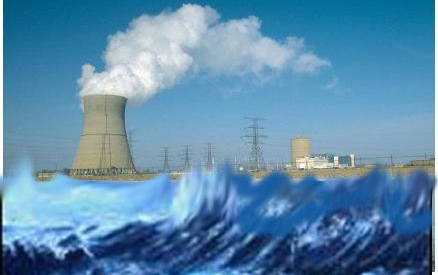 Though not directly related to climate change, founder Mas Kimball said sea level rise and sea temperature rise could imperil the plant in the event of a storm. The warming of bay waters could also compromise the necessary cooling of fuel rods, he said. “Climate change is impacting the plant,” said Ann Rosenkranz. “Rising seas, warming waters, the severity and frequency of the storms, all of those things are really imperiling what is not a safe situation to begin with and making it even more dangerous.” …….. :http://mvgazette.com/news/2014/06/26/islanders-join-chorus-against-pilgrim-nuclear-power-station?k=vg53acdc3930608&r=1#sthash.yF08kclK.dpuf
1 This Month


Tell the Ukrainian Government to Drop Prosecution of Peace Activist Yurii Sheliazhenko

Petition to revoke the licensing of the Near Surface Nuclear Disposal Facility (NSDF) at Chalk River. https://www.ourcommons.ca/petitions/en/Petition/Details?Petition=e-7247


of the week – STOP SMALL MODULAR REACTORS IN CANADA
To see nuclear-related stories in greater depth and intensity – go to https://nuclearinformation.wordpress.com
-
Archives
- March 2026 (204)
- February 2026 (268)
- January 2026 (308)
- December 2025 (358)
- November 2025 (359)
- October 2025 (376)
- September 2025 (258)
- August 2025 (319)
- July 2025 (230)
- June 2025 (348)
- May 2025 (261)
- April 2025 (305)
-
Categories
- 1
- 1 NUCLEAR ISSUES
- business and costs
- climate change
- culture and arts
- ENERGY
- environment
- health
- history
- indigenous issues
- Legal
- marketing of nuclear
- media
- opposition to nuclear
- PERSONAL STORIES
- politics
- politics international
- Religion and ethics
- safety
- secrets,lies and civil liberties
- spinbuster
- technology
- Uranium
- wastes
- weapons and war
- Women
- 2 WORLD
- ACTION
- AFRICA
- Atrocities
- AUSTRALIA
- Christina's notes
- Christina's themes
- culture and arts
- Events
- Fuk 2022
- Fuk 2023
- Fukushima 2017
- Fukushima 2018
- fukushima 2019
- Fukushima 2020
- Fukushima 2021
- general
- global warming
- Humour (God we need it)
- Nuclear
- RARE EARTHS
- Reference
- resources – print
- Resources -audiovicual
- Weekly Newsletter
- World
- World Nuclear
- YouTube
-
RSS
Entries RSS
Comments RSS
 nuclear-news