Passionate calls from shareholders to shut down Fukushima nuclear power station
 Japan’s TEPCO shareholders demand shutdown http://www.sbs.com.au/news/article/2014/06/26/japans-tepco-shareholders-demand-shutdown
Dozens of demonstrators with loud speakers and banners said on Thursday Tokyo Electric Power Co (TEPCO), which wants to restart some of the reactors at the world’s largest nuclear plant, amongst others, must act to not repeat the 2011 Fukushima Daiichi disaster.
There was pushing and shoving between security guards and demonstrators as they tried to approach shareholders going into the gathering. Activists from conservation group Greenpeace wore full protective suits and industrial face masks to remind shareholders what families who lived near Fukushima – where three reactors went into meltdown after an earthquake-sparked tsunami – must wear to check on their homes.
Katsutaka Idogawa, former mayor of Futaba town, which hosts the plant, lashed out at supporters of nuclear power, including TEPCO’s management, urging them to put their own ancestral land at risk.
“Why don’t you get exposed to radiation yourself? Why don’t you lose your homeland?” he asked as shareholders filed into Tokyo International Forum for the company’s annual meeting.
His town remains evacuated because of elevated levels of radiation, amid expectations that it will be decades before it is safe to return, if ever.
Idogawa, who bought TEPCO shares last year, said the firm has been slow to offer compensation to those who lost homes, jobs, farms and their communities, and that which has been offered has been inadequate. “You don’t pay enough compensation and don’t take responsibility (for the accident). I can’t forgive you!” he said. The sentiment was echoed during the meeting by fellow shareholders whose communities host other nuclear plants.
A woman from Niigata prefecture, where TEPCO hopes to start a major power station, also expressed her desire for the utility to end nuclear energy. “Are we going to make the same mistake that we had in Fukushima, also in Niigata?” she said. “Fellow shareholders, please support this proposal of scrapping the Kashiwazaki-Kariwa nuclear plant… and revitalising the site with plans for renewable energy,” she said.
Japan’s entire stable of 48 working reactors is offline, shuttered for safety checks in the months after the 2011 disaster.
The government and electricity companies, like TEPCO, would like to fire them up again, but public unease has so far prevented that, as has a new, toothier watchdog.
TEPCO has argued that restarting selected reactors at Kashiwazaki-Kariwa, the world’s largest nuclear power plant, is the key to ensuring the company’s survival as it battles huge costs.
The calls for an end to nuclear power were expected to be rejected by TEPCO, which is majority-owned by a government-backed fund designed to rescue it.
The government has poured billions of dollars into TEPCO to keep afloat a company that supplies electricity to Tokyo and its surrounding area, as it stumps up cash for decommissioning the reactors, cleaning up the mess they have made and paying compensation.
Nuclear decommissioning costs shooting up in Sweden
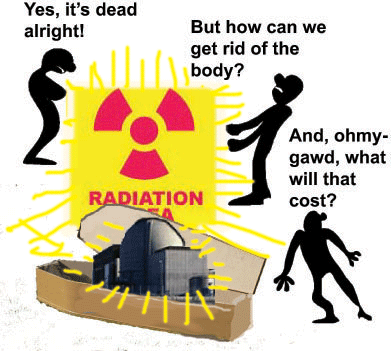 Sweden plans big rise in fees to nuclear decommissioning fund http://economictimes.indiatimes.com/news/international/business/sweden-plans-big-rise-in-fees-to-nuclear-decommissioning-fund/articleshow/37335517.cms By Reuters | 27 Jun, 2014 OSLO: Sweden on Friday proposed a sharp rise in fees nuclear power producers have to pay the country’s nuclear decommissioning fund, saying previous cost estimates were too low.
Sweden has three nuclear power plants with ten reactors in operation, generating about 40 per cent of the country’s electricity needs. The oldest reactors are expected to be shut at the beginning of the next decade.
OSLO: Sweden on Friday proposed a sharp rise in fees nuclear power producers have to pay the country’s nuclear decommissioning fund, saying previous cost estimates were too low. The Swedish Radiation Safety Authority (SSM) said it has proposed raising fees by 73 per cent to 0.038 crowns ($0.01) per kilowatt-hour from 0.022 crowns for 2015.
It said the Swedish Nuclear Fuel and Waste Management Company (SKB) had to recalculate fees to the nuclear decommissioning fund for the period of 2016-2017.
“The SSM has assessed that the costs for decommissioning and final disposal for the Swedish nuclear power industry may be underestimated by SKB by at least 11 billion Swedish crowns ($1.63 billion),” the authority said in a statement.
Sweden’s state-owned utility Vattenfall operates seven reactors and Germany’s E.ON three. Finnish utility Fortum has stakes in six Swedish nuclear reactors.
Looks like Thorium Nuclear Energy has no future in USA
 G. Bothun · University of Oregon Researcj gaste ( apro nuke forum) 27 June 14
1) Currently the timescale to go from permit to actual turning ON line any nuclear power plant is about 15 years (I think currently there are only 2 recently (2012) approved plans coming on line in Georgia and that will take likely another 8–10 years) – meaning that this really isn’t a “bridge fuel” (especially compared to fracked natural gas – which is being rapidly depleted)
2) The whole US nuclear infrastructure is based on handling Uranium. Thorium has much more stringent handling requirements and I just don’t think the US will ramp up an infrastructure to deal with this. Its probably not even wise to do so as those investments are better made in renewable energy and/or carbon capture and storage projects (like the one in Michigan)
In just 8 years, German State goes from 30% to 100% renewable energy
 German State to Reach 100% Renewable Power This Year http://inhabitat.com/german-state-to-reach-
100-renewable-power-this-year/ by Josh Marks, 06/25/14 Germany recently smashed three solar energy records in just two weeks and set a new overall renewables record last month with 74 percent clean energy use during the middle of the day. Now the Federal Republic’s northernmost — and windiest — state of Schleswig-Holstein is set to generate all of its electricity from green energy this year. The state, which borders Denmark and the North and Baltic Seas, has a goal to generate 300 percent of its electricity needs from renewables.
Related: Germany Smashes Three Solar Energy Records in Just Two Weeks!
Schleswig-Holstein is home to more than 200 businesses in the wind energy sector with around 7,000 employees. As of 2010, wind power in Germany provided more than 96,000 jobs and that figure is expected to increase as the nation commits to phasing out nuclear energy and replacing it with renewables.
While Schleswig-Holstein aims to become the first of Germany’s 16 states to pass the 300 percent renewables mark, a Bavarian village has already blown past that milestone. In 2011, Wildpoldsried produced a whopping 321 percent of its electricity from clean energy, generating four million Euro (US $5.7 million) in revenue by selling it back to the national grid. Via CleanTechnica
Very high levels of radiation again at WIPP nuclear facility
Radiation spikes at WIPP nuclear facility — Hits highest levels since initial hours of radioactive release in February — Document link removed from official website — Gov’t analyzing samples for “potential impact on human health” http://enenews.com/large-spike-radiation-levels-wipp-nuclear-facility-highest-measurements-recorded-first-days-incident-govt-analyzing-potential-impact-human-health?utm_source=feedburner&utm_medium=email&utm_campaign=Feed%3A+ENENews+%28Energy+News%29
: June 27th, 2014 Station A and B Filter Readings for Public Release 6-16-14, New Mexico Environment Department Air Filter Station Sampling Data (pdf):
(Note: Measurements are taken after air passes through the filtration system. Also, the June data is shown in 4-hour intervals, while most in February are around 8 hours.)
*See the archived version of the NMED’s document list here and the current version here
1 This Month
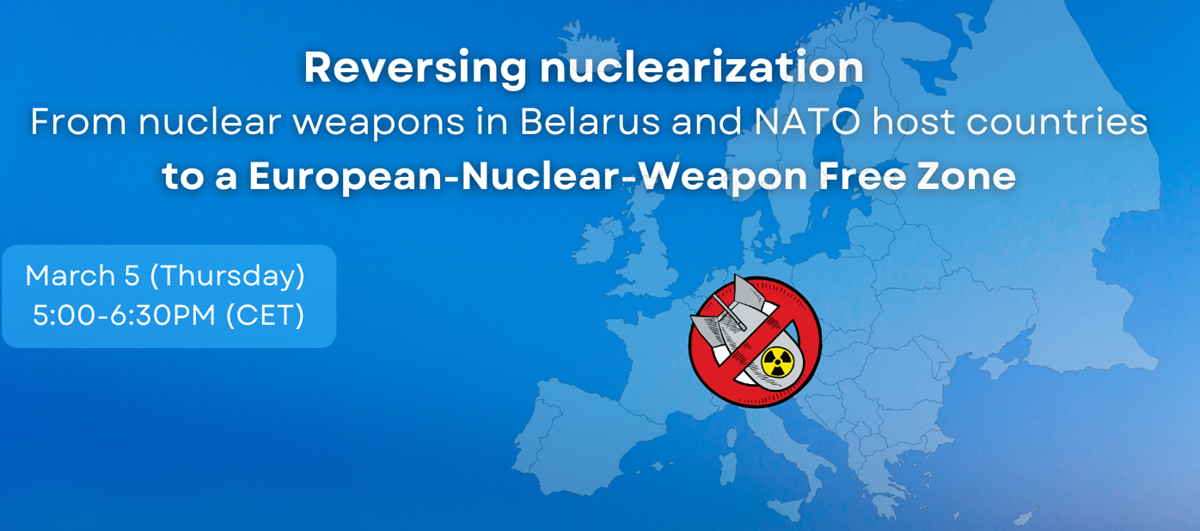
5 March -Online – Reversing nuclearization:
From nuclear weapons in Belarus and NATO host countries to a European-Nuclear-Weapon Free Zone
11am-12:30pm Eastern Time USA / 5pm-6:30pm CET

of the week – Advocating for a
nuclear free beach – https://www.samuellawrencefoundation.org/
The Samuel Lawrence Foundation advocates for a Nuclear Waste Free Beach at San Onofre, join us and take action!

10 March A LIVE WEBINAR THE REAL EFFECTS OF NUCLEAR POWER
What the Industry Isn’t Telling Us
1:00 PM Mountain, 2 pm Central, 3 pm Eastern. Live on the Keepers of the Water Facebook page

18 March Webinar @ 1 PM EST: An Assessment of SMR Projects: The Case of Canada
register for the zoom:
https://us02web.zoom.us/webinar/register/WN_o8BIIOUvQ2ONJR1nta65DQ#/registration

of the week – STOP SMALL MODULAR REACTORS IN CANADA
To see nuclear-related stories in greater depth and intensity – go to https://nuclearinformation.wordpress.com
-
Archives
- March 2026 (38)
- February 2026 (268)
- January 2026 (308)
- December 2025 (358)
- November 2025 (359)
- October 2025 (376)
- September 2025 (258)
- August 2025 (319)
- July 2025 (230)
- June 2025 (348)
- May 2025 (261)
- April 2025 (305)
-
Categories
- 1
- 1 NUCLEAR ISSUES
- business and costs
- climate change
- culture and arts
- ENERGY
- environment
- health
- history
- indigenous issues
- Legal
- marketing of nuclear
- media
- opposition to nuclear
- PERSONAL STORIES
- politics
- politics international
- Religion and ethics
- safety
- secrets,lies and civil liberties
- spinbuster
- technology
- Uranium
- wastes
- weapons and war
- Women
- 2 WORLD
- ACTION
- AFRICA
- Atrocities
- AUSTRALIA
- Christina's notes
- Christina's themes
- culture and arts
- Events
- Fuk 2022
- Fuk 2023
- Fukushima 2017
- Fukushima 2018
- fukushima 2019
- Fukushima 2020
- Fukushima 2021
- general
- global warming
- Humour (God we need it)
- Nuclear
- RARE EARTHS
- Reference
- resources – print
- Resources -audiovicual
- Weekly Newsletter
- World
- World Nuclear
- YouTube
-
RSS
Entries RSS
Comments RSS
 nuclear-news