A legal precedent that could stall Japan’s nuclear power restart

 Oi ruling may fuel anti-nuclear push Plaintiffs elated as district court prioritizes rights over profits Japan Times, BY ERIC JOHNSTON MAY 22, 2014 Wednesday’s court ruling blocking restarts of the No. 3 and 4 reactors at Kansai Electric Power Co.’s Oi plant may embolden opponents of nuclear power nationwide.
It creates a legal precedent and could fuel resistance to restarts, throwing into question whether the administration of Prime Minister Shinzo Abe will be able to push ahead with them as swiftly as planned.
The government earlier asserted that the ruling, by the Fukui District Court, would have no impact on its plans.
Kepco announced Thursday it has appealed the lower court’s decision to the Kanazawa branch of the Nagoya High Court. There, the case could take two or three years to be decided……….
Kepco came under intense criticism from the Fukui court, which said the utility had made optimistic safety projections with no clear evidence. But in a move that could have ramifications nationwide, the court also ruled that 166 plaintiffs living within a 250-km radius of the Oi plant faced concrete dangers from the operation of nuclear power stations.
That could open the door to lawsuits from anyone living within 250 km of a nuclear plant, if the Fukui court’s decision is used as the basis for a claim that other utilities, as well as the Nuclear Regulation Authority, have created inadequate safety measures to deal with the possibility of an accident.
The entire Kansai region, most of Chubu, including Nagoya, much of Chugoku, including Hiroshima, and roughly a third of Shikoku lies within 250 km of the Oi plant.
Plaintiffs were particularly happy the court ruling included language that said providing electricity via nuclear plants is a mere economic activity, and as such has a lower priority than personal rights……..ww.japantimes.co.jp/news/2014/05/22/national/oi-ruling-may-fuel-anti-nuclear-push/#.U4PbrnJdWik
The dismal history of USA’s failed thorium nuclear experiment
 Thorium: the wonder fuel that wasn’t http://thebulletin.org/thorium-wonder-fuel-wasnt7156 Robert Alvarez May 2014, “Thorium-Fueled Automobile Engine Needs Refueling Once a Century,” reads the headline of an October 2013 story in an online trade publication. This fantastic promise is just one part of a modern boomlet in enthusiasm about the energy potential of thorium, a radioactive element that is far more abundant than uranium. Thorium promoters consistently extol its supposed advantages over uranium. News outlets periodically foresee the possibility of “a cheaper, more efficient, and safer form of nuclear power that produces less nuclear waste than today’s uranium-based technology.”
Early thorium optimism. The energy potential of the element thorium was discovered in 1940 at the University of California at Berkeley, during the very early days of the US nuclear weapons program. Although thorium atoms do not split, researchers found that they will absorb neutrons when irradiated. After that a small fraction of the thorium then transmutes into a fissionable material—uranium 233—that does undergo fission and can therefore be used in a reactor or bomb.
By the early 1960’s, the US Atomic Energy Commission (AEC) had established a major thorium fuel research and development program, spurring utilities to build thorium-fueled reactors. Back then, the AEC was projecting that some 1,000 nuclear power reactors would dot the American landscape by the end of the 20th century, with a similar nuclear capacity abroad. As a result, the official reasoning held, world uranium supplies would be rapidly exhausted, and reactors that ran on the more-plentiful thorium would be needed.
With the strong endorsement of a congressionally created body, the Joint Committee on Atomic Energy, the United States began a major effort in the early 1960s to fund a two-track research and development effort for a new generation of reactors that would make any uranium shortage irrelevant by producing more fissile material fuel than they consumed.
The first track was development of plutonium-fueled “breeder” reactors, which held the promise of producing electricity and 30 percent more fuel than they consumed. This effort collapsed in the United States in the early 1980’s because of cost and proliferation concerns and technological problems. (The plutonium “fast” reactor program has been able to stay alive and still receives hefty sums as part of the Energy Department’s nuclear research and development portfolio.)
The second track—now largely forgotten—was based on thorium-fueled reactors. This option was attractive because thorium is far more abundant than uranium and holds the potential for producing an even larger amount of uranium 233 in reactors designed specifically for that purpose. In pursuing this track, the government produced a large amount of uranium 233, mainly at weapons production reactors. Approximately two tons of uranium 233 was produced, at an estimated total cost of $5.5 to $11 billion (2012 dollars), including associated cleanup costs.
The federal government established research and development projects to demonstrate the viability of uranium 233 breeder reactors in Minnesota, Tennessee, and Pennsylvania. By 1977, however, the government abandoned pursuit of the thorium fuel cycle in favor of plutonium-fueled breeders, leading to dissent in the ranks of the AEC. Alvin Weinberg, the long-time director of the Oak Ridge National Laboratory, was, in large part, fired because of his support of thorium over plutonium fuel.
By the late 1980’s, after several failed attempts to use it commercially, the US nuclear power industry also walked away from thorium. The first commercial nuclear plant to use thorium was Indian Point Unit I, a pressurized water reactor near New York City that began operation in 1962. Attempts to recover uranium 233 from its irradiated thorium fuel were described, however, as a “financial disaster.” The last serious attempt to use thorium in a commercial reactor was at the Fort St. Vrain plant in Colorado, which closed in 1989 after 10 years and hundreds of equipment failures, leaks, and fuel failures. There were four failed commercial thorium ventures; prior agreement makes the US government responsible for their wastes.
Where is the missing uranium 233? As it turned out, of course, the Atomic Energy Commission’s prediction of future nuclear capacity was off by an order of magnitude—the US nuclear fleet topped out at about 100, rather than 1,000 reactors—and the predicted uranium shortage never occurred. America’s experience with thorium fuels faded from public memory until 1996. Then, an Energy Department safety investigation found a national repository for uranium 233 in a building constructed in 1943 at the Oak Ridge National Laboratory. The repository was in dreadful condition; investigators reported an environmental release from a large fraction of the 1,100 containers “could be expected to occur within the next five years in that some of the packages are approaching 30 years of age and have not been regularly inspected.” TheEnergy Department later concluded that the building had “deteriorated beyond cost-effective repair. Significant annual costs would be incurred to satisfy current DOE storage standards, and to provide continued protection against potential nuclear criticality accidents or theft of the material.”
The neglect extended beyond the repository and storage containers; the government had also failed to keep proper track of its stores of uranium 233, officially classified as a Category I strategic special nuclear material that requires stringent security measures to prevent “an unauthorized opportunity to initiate or credibly threaten to initiate a nuclear dispersal or detonation.”
A 1996 audit by the Energy Department’s inspector general reported that the Oak Ridge National Laboratory, the Rocky Flats nuclear weapons facility, and the Idaho National Laboratory “had not performed all required physical inventories ... the longer complete physical inventories are delayed, the greater the risk that unauthorized movement of special nuclear materials could occur and go undetected.” The amounts of uranium 233 that the Oak Ridge and Idaho national labs have reported in their inventories has significantly varied. Based on a review of Energy Department data, there appears to be an inventory discrepancy; 96 kilograms or 6 percent of the U-233 produced is not accounted for. The Energy Department has yet to address this discrepancy, which difference is enough to fuel at least a dozen nuclear weapons.
Uranium 233 compares favorably to plutonium in terms of weaponization; a critical mass of that isotope of uranium—about 6 kilograms, in its metal form—is about the same weight as a plutonium critical mass. Unlike plutonium, however, uranium 233 does not need implosion engineering to be used in a bomb. In fact, the US government produced uranium 233 in small quantities for weapons, and weapons designers conducted several nuclear weapons tests between 1955 and 1968 using uranium 233. Interest was renewed in the mid-1960s, but uranium 233 never gained wide use as a weapons material in the US military because of its high cost, associated with the radiation protection required to protect personnel from uranium 232, a highly radioactive contaminant co-produced with uranium 233.
For a terrorist, however, uranium 233 is a tempting theft target; it does not require advanced shaping and implosion technology to be fashioned into a workable nuclear device. The Energy Department recognizes this characteristic and requires any amount of more than two kilograms of uranium 233 to be maintained under its most stringent safeguards, to prevent “onsite assembly of an improvised nuclear device.” As for the claim that radiation levels from uranium 232 make uranium 233 proliferation resistant, Oak Ridge researchers note that “if a diverter was motivated by foreign nationalistic purposes, personnel exposure would be of no concern since exposure … would not result in immediate death.”
The end of an unfortunate era. After its 1996 safety investigation at the Oak Ridge National Laboratory, the Energy Department spent millions to repackage about 450 kilograms of uranium 233 that is mixed with uranium 235 and sitting in the lab’s Building 3019, and to dispose of diluted uranium 233 fuel stored at the Idaho National Lab. The Energy Department’s nuclear weapons program managed to shift responsibility for the stockpile in Building 3019 from Oak Ridge to the Office of Nuclear Energy, which envisioned using the uranium 233 to make medical isotopes. This plan fell apart, and in 2005 Congress ordered the Energy Department to dispose of the uranium 233 stockpile as waste.
Since then, the Energy Department’s Office of Environmental Management has considered uranium 233 disposal to be an unfunded mandate, disconnected from other, higher-priority environmental cleanup compliance agreements. After several fits and starts, including a turnover of four project managers in less than two years, the Energy Department’s disposition project “had encountered a number of design delays, may exceed original cost estimates, and will likely not meet completion milestones,” the department’s inspector general reported in 2010. The cost of the project increased from $384 million to $473 million—or more than $1 million per kilogram for the disposal of uranium 233.
In an effort to reduce costs, the Energy Department developed a plan to ship nearly 75 percent of the fissile materials in Building 3019, as is, to a landfill at the Nevada Nuclear Security Site by the end of 2014. Because such disposal would violate the agency’s formal safeguards and radioactive waste disposal requirements, the Energy Department changed those rules, which it can do without public notification or comment. Never before has the agency or its predecessors taken steps to deliberately dump a large amount of highly concentrated fissile material in a landfill, an action that violates international standards and norms.
In June 2013, Nevada Gov. Brian Sandoval and members of the state’s congressional delegation announced their opposition to the landfill disposition plan. Energy Secretary Ernest Moniz visited with Sandoval but did not back down from the landfill plan. Even though the Oak Ridge material in its current form meets the legal definition for radioactive waste requiring geologic disposal, the Energy Department has taken the position that the sweeping authority granted to it under the Atomic Energy Act allows the department to dispose of the fissile material however it pleases, regardless of the state’s objection.
The United States has spent nearly $10 billion to discourage practices like landfill dumping of fissile materials in the former Soviet Union, only to have the Energy Department try it at home. Heedless of the discrepancy between overseas and domestic disposal policies, the department’s agenda—which focuses on saving money on guards who would be needed to secure the uranium 233—is placing the United States in an impossible position when it comes to criticizing the nuclear materials security of other countries. So ends America’s official experience with thorium, the wonder fuel.
Iran has sharply reduced enriched uranium – IAEA report

 IAEA Confirms: Iran Sharply Reducing Uranium Stockpile http://news.antiwar.com/2014/05/23/iaea-confirms-iran-sharply-reducing-uranium-stockpile/ 20 Percent Enriched Uranium Almost Used Up by Jason Ditz, May 23, 2014 Many of the contents of the IAEA report on Iran were already leaked the day before it came out, and the good news of Iran abiding by the P5+1 interim nuclear deal was as expected. There’s more to the report, however. One of the biggest pieces of data in the report shows Iran’s stockpile of 20 percent enriched uranium, the highest level they made, has sharply fallen as the nation continues to convert it into fuel for the Tehran Research Reactor.
Though 20 percent is far short of the level needed for nuclear weapons, it was repeatedly pushed by the US as a “threat,” and Iran stopped enriching at that level at the start of the nuclear deal. Only about 40 kg are left to be converted to fuel rods, a trivial amount. The Tehran Research Reactor, built by the US in 1967, provides materially all of the medical isotopes in Iran. The aging facility will eventually be replaced with a modern one using unenriched uranium, but in the meantime Iran has created what seems to be all of the fuel rods it can use for the conceivable lifespan of the facility.
Iran is now only enriching to 3.5 percent, the level used in the Bushehr Power Plant. Iran is in talks with Russia to build more power plants in the nation, with a deal for as many as 8 reported to be close.
IN Japan, huge public opposition to nuclear power is ignored by the Abe government
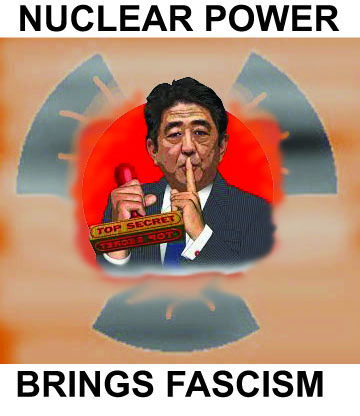 Abe administration ignored massive public opposition to nuclear power Asahi Shimbun, By ATSUSHI KOMORI/ Senior Staff Writer, 25 May 14, More than 90 percent of respondents during a public comment period on the Abe administration’s basic energy policy were opposed to nuclear power generation, according to an Asahi Shimbun estimate released on May 25.
The Asahi Shimbun made the determination by tallying how many of 2,109 of about 19,000 comments sent to the government from December to January were in opposition.
Failing to take into account that overwhelming public sentiment, the Cabinet approved in April the basic energy policy, which described nuclear power generation as an “important base load electricity source.” The base load electricity source means that nuclear power will continue to be relied on to meet a percentage of the electricity demand, regardless of the season or time of day.
The Ministry of Economy, Trade and Industry released on Dec. 6, 2013, the draft of the basic energy policy, the first compiled by the Abe administration since the accident at the Fukushima No. 1 nuclear power plant triggered by the March 2011 Great East Japan Earthquake and tsunami.
After releasing the draft, the Abe administration gathered public comments for a month until Jan. 6 through e-mails, faxes and other means. In all, about 19,000 responses were sent to the government.
The industry ministry disclosed representative comments in February. However, it did not tally how many replies it received were for or against nuclear power generation………..
As for the 2,109 e-mails, The Asahi Shimbun counted how many were for or against nuclear power generation. It found that 2,008 of them, or 95.2 percent, opposed nuclear power generation. Only 33, or 1.6 percent, supported nuclear power. The remaining 68 e-mails, or 3.2 percent, were “other replies.”
As for the reasons why they opposed nuclear power generation, many of the 2,008 respondents said that the nuclear accident in Fukushima Prefecture has yet to be resolved or that there are no disposal sites for spent nuclear fuels. Some of the comments also criticized the draft plan, which regarded nuclear power as an important electricity source, for going against public opinion……… http://ajw.asahi.com/article/behind_news/politics/AJ201405250023
Anti-nuclear protestors plan rally against Pilgrim nuclear power plant i

 Pilgrim nuclear plant protesters to gather at Sagamore Bridge http://www.gazettenet.com/businessmoney/12117764-95/pilgrim-nuclear-plant-protesters-to-gather-at-sagamore-bridge Sunday, May 25, 2014 BOURNE — Protesters are planning to gather near the Sagamore Bridge on Memorial Day to highlight concerns about the safety of the Pilgrim nuclear power plant in Plymouth.
The protesters called the current emergency plan in the event of an accident at the power plant unacceptable for those on the Cape.
The protest comes two months after Gov. Deval Patrick wrote the Nuclear Regulatory Commission expressing concerns about the plant. Patrick said he was writing on behalf of 15 southeastern Massachusetts communities.
Patrick said he shares their concerns because of what he called the lack of a “viable evacuation route” off of Cape Cod.
The NRC relicensed Pilgrim through 2032. The plant’s operators say it’s safe and secure.Patrick said the NRC should require the plant be decommissioned if it can’t comply with safety regulations.
Indian government contemplating nuclear attack on Pakistan?
 Narendra Modi will have to ‘press the nuclear button’ if Pakistan does not ‘mend its ways’, says Shiv Sena chief Uddhav Thackeray DNA, 25 May 2014 – : Mumbai | Agency: PTI “……..In a statement issued in Mumbai, Sena president Uddhav Thackeray said, “So far only India has taken initiative of forgetting the past and starting afresh. Hence, it is difficult to trust Pakistan. But we trust Modi’s leadership and hence we do not want to create hurdles for him. If Pakistan does not mend its ways, Modi will have to press the nuclear button.” ………http://www.dnaindia.com/india/report-narendra-modi-will-have-to-press-the-nuclear-button-if-pakistan-does-not-mend-its-ways-says-shiv-sena-chief-uddhav-thackeray-1991286
The nuclear industry is not winning hearts and minds in China
 People power holds key to China’s nuclear plans FT.com, By Lucy Hornby at Daya Bay, 26 May 14, China’s nuclear industry has in recent years ventured overseas for new opportunities but it is now facing challenges at home gaining public acceptance of its $150bn expansion plans.
Fears of a nuclear power backlash, stoked by recent demonstrations against other large industrial projects, have rattled regulators as well as nuclear operators China National Nuclear Corp (CNNC) and China General Nuclear Power Corp (CGN).
Regulators fear images of riot police crushing protests at a reactor site – like this month’s violent clashes over a planned garbage incinerator – could quickly harden attitudes against nuclear power.
“If the government just keeps the same attitude of secrecy as in the past, it will create more problems. They need to pursue nuclear power appropriately and safely otherwise there will be more conflicts between the government and people,” says Cao Heping, who studies green economy at Peking University.
The concerns have even moved Chinese regulators to request help from the UK in the hope its government can offer tips on developing public and media support for nuclear power.
Industry executives say Mr Li’s “when appropriate” caveat followed internal discussions about the need to tread carefully, to avoid arousing any anti-nuclear sentiment.
Meanwhile, the meltdown at Fukushima in Japan strengthened Chinese regulators’ hand but also raised worries about public acceptability.
After the Fukushima meltdown, regulators shelved almost half of the 100 or so planned reactor projects due to design or site concerns, including those in earthquake zones or on inland rivers with limited water supply.
That review plus signs of slippage in construction means China could struggle to have all of the new reactors operational in the next six years.
China’s protracted crackdown on civil dissent deters local activists from taking the lead publicly on sensitive projects. Opposition can thus quickly turn into street protests despite new government initiatives to allow public feedback and that could prove a problem if public opinion sours on nuclear power.
Local governments often welcome the investment and jobs nuclear projects bring but disagreement among local officials can fuel protests. City officials’ unease over oil company Sinopec’s long-delayed paraxylene plant was a factor http://www.ft.com/intl/cms/s/0/a6f10e96-e41c-11e3-a73a-00144feabdc0.html#axzz32rprEjFF
Uranium – the ever losing investment


Investors counted on a convergence of factors to power up the uranium market and put down the critics, including:
- Japan reversing its ban on nuclear power following the Fukushima reactor meltdown.
- The hope that Germany would revisit its phase out of nuclear power by 2021, as coal remains a dirty word.
- Russian hegemony in the Ukraine creating instability in the gas market.
- The completion last year of the U.S. and Russia’s “megatons to megawatts” program that converted old nuclear warheads into fuel for reactors, effectively removing a large supply from the market.
Shares of uranium stocks enjoyed a run-up late last year on the belief that 2014 would jump-start a recovery. Between mid-October and mid-March, Cameco saw its shares appreciate some 50% in value.,,,,,,,,,,,
Yet, the promise of substantial gains didn’t hold up as uranium pricing continued to fall.
Japan, after all, has delayed restarting its nuclear reactors. Germany hasn’t made any movement to reverse its policies, and the uranium supply glut remains in place. Uranium prices hit eight-year lows, sliding to $29 a pound at the start of May, or levels not seen since 2005. They’re down 16% so far in 2014 alone. …..http://www.fool.com/investing/general/2014/05/24/not-even-godzilla-can-save-this-uranium-stock.aspx
latest UN report shows that Iran has reduced is stockpile of uranium gas
Iran: U.N. report proves its nuclear intentions are peaceful http://english.alarabiya.net/en/News/asia/2014/05/25/Iran-U-N-report-proves-its-nuclear-intentions-are-peaceful.html Reuters, Dubai Saturday, 24 May 2014 Iran on Saturday said the latest U.N. report on its nuclear activities, which calculated it had slashed its nuclear stockpile by around 80 percent, proved its atomic programme was peaceful.
The International Atomic Energy Agency (IAEA) said in its quarterly report on Friday that Iran had reduced its stockpile of higher-grade enriched uranium gas under an interim pact with world powers.
It also said it had started to engage with a long-stalled IAEA investigation into suspected weapons research.
A steep cut in uranium gas – a relatively short technical step away from weapons-grade material – is among concessions demanded by the United States and its Western countries in return for limited easing of economic sanctions against Tehran.
“The report is an affirmation of Iran’s claim to peaceful activities,” nuclear spokesman Behruz Kamalvandi told the official news agency IRNA. “No deviations have been seen in these activities.”
Western countries have long suspected the Islamic republic of seeking nuclear weapons capability and Tehran’s cooperation with the IAEA is a test of any progress in the current talks with the six world power known as P5+1.
The latest round of negotiations failed to make much headway last week, raising doubts over the prospects for a breakthrough by the late July deadline.
1 This Month
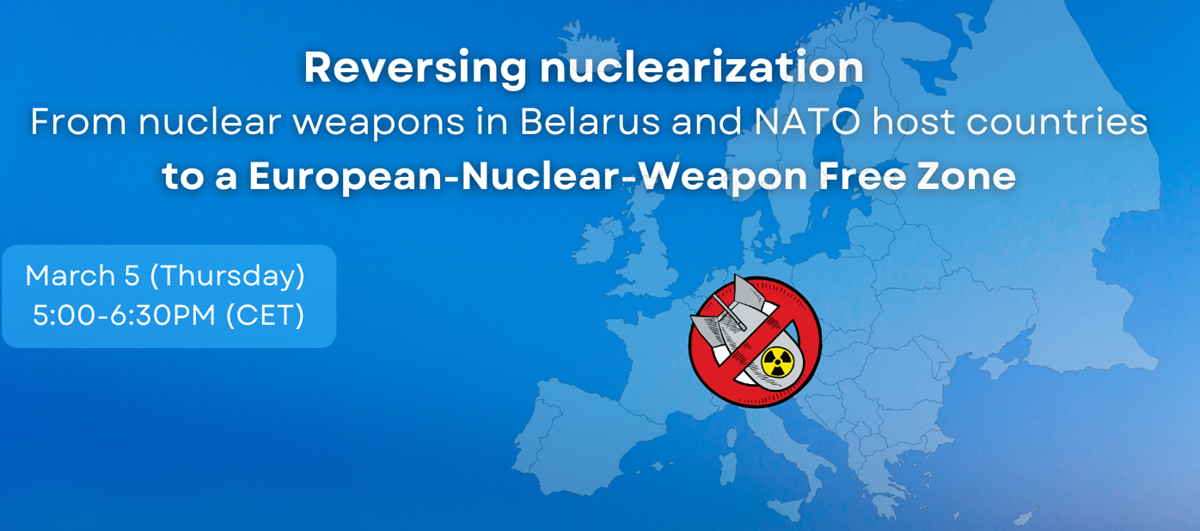
5 March -Online – Reversing nuclearization:
From nuclear weapons in Belarus and NATO host countries to a European-Nuclear-Weapon Free Zone
11am-12:30pm Eastern Time USA / 5pm-6:30pm CET

of the week – Advocating for a
nuclear free beach – https://www.samuellawrencefoundation.org/
The Samuel Lawrence Foundation advocates for a Nuclear Waste Free Beach at San Onofre, join us and take action!

10 March A LIVE WEBINAR THE REAL EFFECTS OF NUCLEAR POWER
What the Industry Isn’t Telling Us
1:00 PM Mountain, 2 pm Central, 3 pm Eastern. Live on the Keepers of the Water Facebook page


18 March Webinar @ 1 PM EST: An Assessment of SMR Projects: The Case of Canada
register for the zoom:
https://us02web.zoom.us/webinar/register/WN_o8BIIOUvQ2ONJR1nta65DQ#/registration

of the week – STOP SMALL MODULAR REACTORS IN CANADA
To see nuclear-related stories in greater depth and intensity – go to https://nuclearinformation.wordpress.com
-
Archives
- March 2026 (37)
- February 2026 (268)
- January 2026 (308)
- December 2025 (358)
- November 2025 (359)
- October 2025 (376)
- September 2025 (258)
- August 2025 (319)
- July 2025 (230)
- June 2025 (348)
- May 2025 (261)
- April 2025 (305)
-
Categories
- 1
- 1 NUCLEAR ISSUES
- business and costs
- climate change
- culture and arts
- ENERGY
- environment
- health
- history
- indigenous issues
- Legal
- marketing of nuclear
- media
- opposition to nuclear
- PERSONAL STORIES
- politics
- politics international
- Religion and ethics
- safety
- secrets,lies and civil liberties
- spinbuster
- technology
- Uranium
- wastes
- weapons and war
- Women
- 2 WORLD
- ACTION
- AFRICA
- Atrocities
- AUSTRALIA
- Christina's notes
- Christina's themes
- culture and arts
- Events
- Fuk 2022
- Fuk 2023
- Fukushima 2017
- Fukushima 2018
- fukushima 2019
- Fukushima 2020
- Fukushima 2021
- general
- global warming
- Humour (God we need it)
- Nuclear
- RARE EARTHS
- Reference
- resources – print
- Resources -audiovicual
- Weekly Newsletter
- World
- World Nuclear
- YouTube
-
RSS
Entries RSS
Comments RSS
 nuclear-news