Obama launches renewable energy actions, aided by corporations
 With corporate help, Obama announces actions on renewable energy http://af.reuters.com/article/energyOilNews/idAFL2N0NU2OG20140509 WASHINGTON May 9 (Reuters) – President Barack Obama on Friday will announce executive orders to increase the use of solar panels, boost energy efficiency in federal buildings and train more people to work in the renewable energy field, the White House said.
The president, who will make the announcement during a visit to Wal-Mart in Mountain View, California, will also highlight commitments by corporations to lift solar generation at their facilities. Wal-Mart, Apple Inc, Yahoo Inc, Google Inc and Ikea were among the companies making such commitments.
Several financial institutions, including Citigroup Inc and Goldman Sachs Group Inc, were announcing new plans for “large scale investment and innovative programs” to develop solar and renewable energy installations, the White House said.
Obama’s executive actions would support efforts at community colleges so that 50,000 workers would join the solar industry by 2020, it said.
Another initiative would press for $2 billion in energy efficiency upgrades for federal buildings over the next three years, building on another $2 billion commitment from 2011.
Actions to strengthen building codes were also part of the mix. “Investing in solar and efficiency makes sense to reduce our carbon emissions, but also for our pocketbooks and for our economy,” said Dan Utech, an energy adviser to Obama, during a conference call on Thursday to preview Obama’s announcement.
He said the U.S. solar energy industry had expanded dramatically under Obama’s watch, with installations increasing to an amount enough to power more than 2 million homes.
“So momentum is increasing,” Utech said. “Since President Obama took office we’ve increased production from U.S. solar electricity more than tenfold, and in the last year, U.S. production of electricity from solar energy was double what it was just two years ago.”
An Obama spokesman also announced the completion of a project to install solar panels at the White House itself. The panels were American-made and part of an energy “retrofit” for the building that would improve its energy efficiency.
“The project, which helps demonstrate that historic buildings can incorporate solar energy and energy efficiency upgrades, is estimated to pay for itself in energy savings over the next eight years,” spokesman Matt Lehrich said. (Reporting by Jeff Mason; Editing by Cynthia Osterman)
Renewable energy can bring Europe’s nations together in co-operation
 Balance of power: a renewed case for renewable energy for Europe EurActiv 9 May 14, Reinier de Graaf argues that in the midst of the Ukrainian crisis and the energy risks looming over Europe, EU member states should look more seriously into the Roadmap 2050 project initiated in 2009, and aim at cutting Europe’s greenhouse gas emissions by 80% by 2050 through renewable energy use.
Reinier de Graaf directs the work of AMO, the research and design studio established as a counterpart to the architectural practice of OMA. He has been responsible for AMO’s increasing involvement in sustainability and energy planning, which has included Zeekracht: a strategic Masterplan for the North Sea, the publication in 2010 of “Roadmap 2050: A Practical Guide to a Prosperous, Low-Carbon Europe” with the European Climate Foundation, and “The Energy Report,” a global plan for 100 percent renewable energy by 2050, made with the WWF……….
The introduction of a European Supergrid would thus create a situation of mutual complementarity between both Europe’s energy sources and its individual nations. This would help overcome a major disadvantage of renewable energy: the volatility of supply of its individual sources (wind, sun, tidal, etc…) in the face of constant demand. The possibility to draw from multiple sources would create a robust system where the surplus of one source could immediately be used to mitigate the shortfall of another. A system of permanent back-up between nations would ensure constant energy supply for all. (When there is no wind in the north, there is fair chance that there is sun in the south, and vice versa.) A conservative estimate of the amount of terawatt-hours that could be derived from such a system – relying exclusively on existing technology and assuming no major technological breakthroughs – indicates an energy capacity that would surpass that of the entire oil and gas reserves of the Middle East.
Although little more than a footnote at the time, there was another important aspect to the project: Europe could become self-sufficient in its energy supply. Tied to this is an interesting political trade off: independence from external energy providers in exchange for increased energy interdependence between EU member states. Strangely enough, the byproduct of this essentially technical exercise turned out to be a more compelling case for European integration than any which had ever been made in the political arena. ……..
At the time of its launch in 2010, Roadmap 2050 was primarily driven by technological and environmental parameters; today, it is first and foremost the political aspect that grants the project a renewed momentum. Roadmap 2050 could provide Europe the necessary energy security, so it can remain firm about its democratic principles. Energy is primarily exchanged between European states that have committed to the same values and the dependence on outsiders is drastically reduced. The beauty of the idea lies in that within the proposed system no single European state can ever claim a monopoly on energy provision. Energy is exchanged for energy; todays suppliers are tomorrow’s recipients. Dependencies shift, simply on the basis of seasonal or meteorological conditions. The very strength of the project resides in the fact that it ultimately does not assume energy is ever un-political and the profound knowledge that a Europe that relies on energy provided by those who do not share its principles may ultimately well be a Europe unable to afford those principles. http://www.euractiv.com/sections/energy/balance-power-renewed-case-renewable-energy-europe-302030
UK climate denial organisation’s plan to avoid having to be accurate
Nigel Lawson’s climate sceptic thinktank to launch campaigning arm http://www.theguardian.com/environment/2014/may/09/nigel-lawson-climate-sceptic-thinktank Global Warming Policy Forum will escape scrutiny for accuracy of information by becoming a non-charitable company Fiona Harvey, environment correspondent theguardian.com, Saturday 10 May 2014 The climate sceptic organisation founded by former chancellor Nigel Lawson is to set up a new campaigning arm, which would be free from charity regulations.
The Global Warming Policy Foundation, which is classified as an educational charity and thus covered by strict Charity Commission rules that restrict its ability to conduct political campaigns, said that the new non-charitable company would undertake “activities which do not fall squarely within the educational remit of the charity”.Similar structures are also used by some other non-profit organisations, because it gives them greater freedom in lobbying and in some commercial activities.
The new arm, to be called the Global Warming Policy Forum, will share the same website and initials and publish reports and research papers, as well as organising lectures and debates on science and policy. In particular, it will put out news articles and opinion columns through a section of its website.
If the Charity Commission agrees with the restructuring, the new organisation will start operating by the end of July.
Bob Ward, policy and communications director at the Grantham Research Institute at the London School of Economics, last yearcomplained to the Charity Commission, over what he saw as the dissemination by the GWPF of “misleading and inaccurate” information. Charity Commission rules require organisations granted charitable status – which allows them, and their donors, to benefit from favourable tax treatment – to ensure that any information they put out is fair and as accurate as possible.
Ward said: “I think it is apparent that this move is designed to get around Charity Commission rules that specify that it must not disseminate inaccurate information. It is a deeply cynical move by the Foundation to avoid any formal requirement that they should stop misleading the public with inaccurate information. However, I hope now that it will be more obvious that when Lord Lawson speaks about climate change, it is as a campaigner rather than as an expert. And at least its secret donors will no longer be able to claim tax relief on funding the Foundation’s political propaganda.”
Greenpeace, which was named by the GWPF as an organisation that operates a campaigning arm as well as its core charity, told the Guardian: “They do say imitation is the sincerest form of flattery.” But he said that if Lord Lawson really wants to emulate Greenpeace’s structure he should be open about where his funding comes from and “root his political campaign in the reality of climate science.”
The GWPF does not disclose the names of organisations or individuals who provide its funding, but says that fossil fuel companies are not among them. It did not respond to requests for comment.
Agua Caliente, Florida – the first of many big solar power arrays
World’s Largest Solar Array Set to Crank Out 290 Megawatts of Sunshine Power Megaplants like Agua Caliente in Arizona herald a new efficiency in solar-sourced electricity Megaplants like Agua Caliente in Arizona herald a new efficiency in solar-sourced electricity Scientific American May 9, 2014 |By Roni Jacobson
Global climate change is here, and it’s only going to get worse, according to a White House report released on Tuesday. To combat rising sea levels and blistering summers, the Obama administration has been pushing for clean, renewable energy sources that cut down on carbon emissions. Now one of its projects is poised to pan out: Agua Caliente, the largest photovoltaic solar power facility in the world, was completed last week in Arizona.
The plant comprises more than five million solar panels that span the equivalent of two Central Parks in the desert between Yuma and Phoenix. It generates 290 megawatts of power—enough electricity to fuel 230,000 homes in neighboring California at peak capacity. The Agua Caliente Solar Project represents a significant advance in the technology compared with just four years ago, when the largest solar facility in the U.S. generated only 20 megawatts. “Solar has completely arrived as a competitive energy resource,” says Peter Davidson, executive director of the Loan Programs Office at the U.S. Department of Energy (DoE).
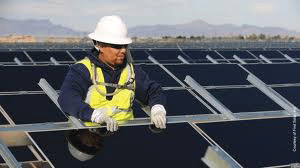
The project, which cost a total of $1.8 billion to construct, received a million-dollar loan from the Loan Programs Office. Under its “SunShot” initiative (so-named in the spirit of president John F. Kennedy’s “moon shot” program), the DoE provides guaranteed loans to unproved ventures in solar power in the hopes of promoting innovation and making the technology more cost-effective.* Although Agua Caliente (owned by U.S. energy giant NRG Energy and partner MidAmerican Solar) is now the largest photovoltaic solar facility in the world, it probably will not hold that distinction for long. …….
But as solar power becomes cheaper, Davidson predicts that utilities will pass those savings on to consumers. And as the technological advancements emerging from megaplants like Agua Caliente become more widely available, individual solar power adopters may eventually see savings as well. http://www.scientificamerican.com/article/world-s-largest-solar-array-set-to-crank-out-290-megawatts-of-sunshine-power/
1 This Month
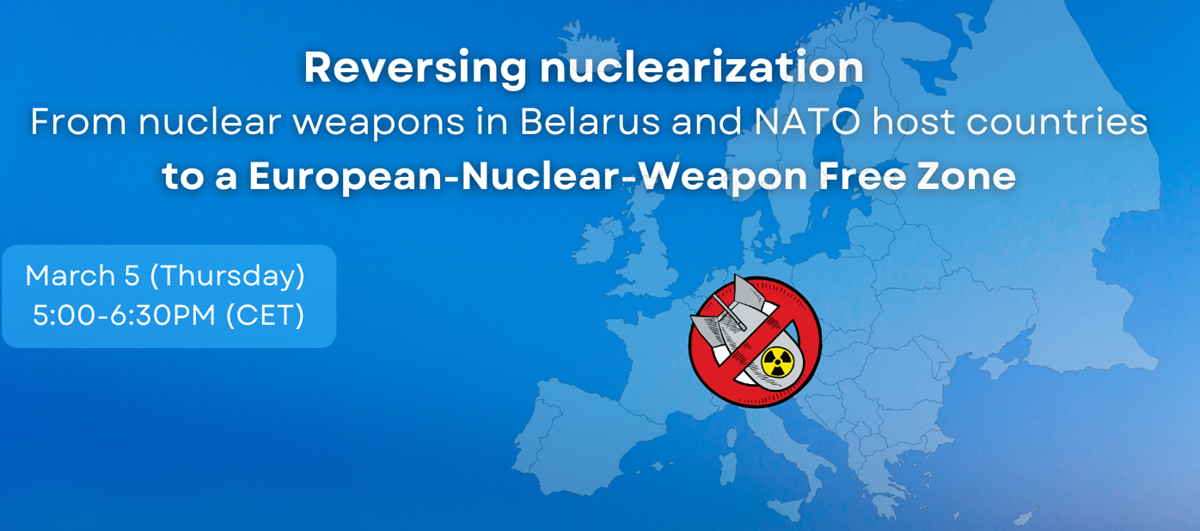
5 March -Online – Reversing nuclearization:
From nuclear weapons in Belarus and NATO host countries to a European-Nuclear-Weapon Free Zone
11am-12:30pm Eastern Time USA / 5pm-6:30pm CET

of the week – Advocating for a
nuclear free beach – https://www.samuellawrencefoundation.org/
The Samuel Lawrence Foundation advocates for a Nuclear Waste Free Beach at San Onofre, join us and take action!

10 March A LIVE WEBINAR THE REAL EFFECTS OF NUCLEAR POWER
What the Industry Isn’t Telling Us
1:00 PM Mountain, 2 pm Central, 3 pm Eastern. Live on the Keepers of the Water Facebook page


18 March Webinar @ 1 PM EST: An Assessment of SMR Projects: The Case of Canada
register for the zoom:
https://us02web.zoom.us/webinar/register/WN_o8BIIOUvQ2ONJR1nta65DQ#/registration

of the week – STOP SMALL MODULAR REACTORS IN CANADA
To see nuclear-related stories in greater depth and intensity – go to https://nuclearinformation.wordpress.com
-
Archives
- March 2026 (38)
- February 2026 (268)
- January 2026 (308)
- December 2025 (358)
- November 2025 (359)
- October 2025 (376)
- September 2025 (258)
- August 2025 (319)
- July 2025 (230)
- June 2025 (348)
- May 2025 (261)
- April 2025 (305)
-
Categories
- 1
- 1 NUCLEAR ISSUES
- business and costs
- climate change
- culture and arts
- ENERGY
- environment
- health
- history
- indigenous issues
- Legal
- marketing of nuclear
- media
- opposition to nuclear
- PERSONAL STORIES
- politics
- politics international
- Religion and ethics
- safety
- secrets,lies and civil liberties
- spinbuster
- technology
- Uranium
- wastes
- weapons and war
- Women
- 2 WORLD
- ACTION
- AFRICA
- Atrocities
- AUSTRALIA
- Christina's notes
- Christina's themes
- culture and arts
- Events
- Fuk 2022
- Fuk 2023
- Fukushima 2017
- Fukushima 2018
- fukushima 2019
- Fukushima 2020
- Fukushima 2021
- general
- global warming
- Humour (God we need it)
- Nuclear
- RARE EARTHS
- Reference
- resources – print
- Resources -audiovicual
- Weekly Newsletter
- World
- World Nuclear
- YouTube
-
RSS
Entries RSS
Comments RSS
 nuclear-news
