Powerful criticisms of Japan’s handling of the Fukushima nuclear crisis
 (NaturalNews), March 27, 2014 by: Ethan A. Huff, staff writerThe three-year anniversary of the Fukushima Daiichi nuclear disaster recently passed, and a prominent nuclear expert has come out in protest of the way both the Japanese government and the country’s nuclear industry continue to handle the situation. During a recent episode of the Nuclear
  Hotseat podcast, celebrity and lawmaker Taro Yamamoto lamented how the Tokyo Electric Power Company (TEPCO) is still downplaying the threat of radiation, which he believes will end up “sacrificing” 99.99 percent of the Japanese population. In Japan, stated Yamamoto, it is still taboo to even talk about radiation, even though its effects have been felt throughout the country and even beyond its borders. Insinuating that the country as a whole has essentially buried its head in the sand on this important issue, Yamamoto called out the nuclear industry in particular for minimizing the radioactive impact of Fukushima, which many now believe to be the worst nuclear accident in recorded history.
“Idiotic ideas — like restarting the nuclear plants — are being considered here in Japan,” stated Yamamoto during the interview. “I think it is wrong that people’s lives are being sacrificed because of money and the company profits… 99.99 percent of the people are being sacrificed.”
You can listen to this podcast episode here:
http://www.nuclearhotseat.com.
“[R]adioactive water is still leaking, there is still a very long way to go until it can be decommissioned, and we must be prepared for a long term battle which will go beyond the present generation,” wrote Fukushima resident Arao Shunsuke in a letter posted at DiaNuke.org. “Even now over 100,000 people from Fukushima are still living in miserable conditions in temporary housing.”
You can read Shunsuke’s full letter here:
http://www.dianuke.org………… http://www.naturalnews.com/044478_Japan_nuclear_industry_radiation.html#
Why did Canadian government stop testing seafoods for radioactive contamination?
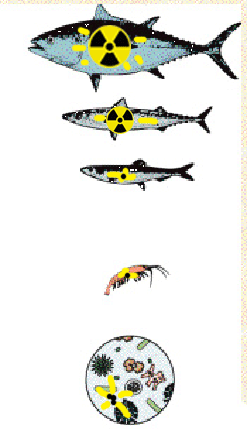
 School Science Project Reveals High Levels Of Fukushima Nuclear Radiation in Grocery Store Seafood Investment Watch By Michael Snyder March 27th, 2014 A Canadian high school student named Bronwyn Delacruz never imagined that her school science project would make headlines all over the world. But that is precisely what has happened. Using a $600 Geiger counter purchased by her father, Delacruz measured seafood bought at local grocery stores for radioactive contamination. What she discovered was absolutely stunning. Much of the seafood, particularly the products that were made in China, tested very high for radiation. So is this being caused by nuclear radiation from Fukushima? Is the seafood that we are eating going to give us cancer and other diseases? The American people deserve the truth, but as you will see below, the U.S. and Canadian governments are not even testing imported seafood for radiation. To say that this is deeply troubling would be a massive understatement.
In fact, what prompted Bronwyn Delacruz to conduct her science project was the fact that the Canadian government stopped testing imported seafood for radiation in 2012…
Alberta high-school student Bronwyn Delacruz loves sushi, but became concerned last summer after learning how little food inspection actually takes place on some of its key ingredients.
The Grade 10 student from Grande Prairie said she was shocked to discover that, in the wake of the 2011 Fukushima nuclear disaster in Japan, the Canadian Food Inspection Agency (CFIA)stopped testing imported foods for radiation in 2012.
And what should be a major red flag for authorities is the fact that the seafood with the highest radiation is coming from China… Armed with a $600 Geiger counter bought by her dad, Delacruz studied a variety of seafoods – particularly seaweeds – as part of an award-winning science project that she will take to a national fair next month.
“Some of the kelp that I found was higher than what the International Atomic Energy Agency sets as radioactive contamination, which is 1,450 counts over a 10-minute period,” she said. “Some of my samples came up as 1,700 or 1,800.”
Delacruz said the samples that “lit up” the most were products from China that she bought in local grocery stores.
It is inexcusable that the Canadian government is not testing this seafood. It isn’t as if they don’t know that it is radioactive. Back in 2012, the Vancouver Sun reported that cesium-137 was being found in a very high percentage of the fish that Japan was selling to Canada…
• 73 percent of the mackerel
• 91 percent of the halibut
• 92 percent of the sardines
• 93 percent of the tuna and eel
• 94 percent of the cod and anchovies
• 100 percent of the carp, seaweed, shark and monkfish
So why was radiation testing for seafood shut down in Canada in 2012?
Someone out there needs to answer some very hard questions……..http://investmentwatchblog.com/school-science-project-reveals-high-levels-of-fukushima-nuclear-radiation-in-grocery-store-seafood/
Rushed to hospital – more Hanford nuclear workers get sick
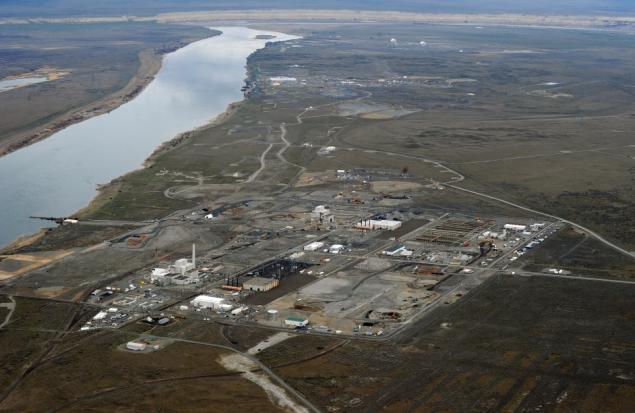 TV: More workers rushed to hospital at U.S. nuclear site — 17 sickened in past week — Former Employee: “It’s pretty scary… to have this many in 8 days is really abnormal” — Company: We’re trying to understand what’s happening (VIDEO) http://enenews.com/tv-more-workers-rushed-to-hospital-at-u-s-nuclear-site-now-17-workers-sickened-in-past-week-former-employee-its-pretty-scary-to-have-this-many-in-8-days-is-really-abnormal-c?utm_source=feedburner&utm_medium=email&utm_campaign=Feed%3A+ENENews+%28Energy+News%29
KING 5 News Seattle, Mar. 26, 2014: Hanford workers sickened by unknown vapors rises to 17— The KING 5 Investigators have found that six Hanford workers were sickened Wednesday from ingesting chemical vapors at the nuclear facility. […] This brings the total to 17 Hanford employees who have needed medical care since last Wednesday due to the inhalation of toxic vapors. […] “Data collection and analysis is underway in the affected (tank) farms to understand what happened and what might be done to reduce the likelihood of future occurrences,” said [Jerry Holloway, External Affairs Manager at U.S. Dept. of Energy’s contractor Washington River Protection Solutions]. […] The incident Wednesday occurred in yet another location at the Hanford site […] Sources tell the reporter 17 people were working on the video inspection when three were suddenly sickened by the release of vapors.
Mike Geffre, retired WRPS employee who spent 26 years at Hanford: “It’s pretty scary. It doesn’t usually happen like this. Usually you see four or five a year. But to have this many in eight days is really abnormal […] Whenever you hear of someone getting tank vapors, you never know what the long term affects are. The affects of exposures like this can show up as health problems years down the road.”
KING 5 News transcript The King 5 investigators learned that workers at the Hanford Nuclear Reservation have been rushed to the hospital. […] I was in Richland doing an interview on this very topic […] during that interview we got word from sources that right at that time that 3 more employees were either going to the hospital here or taken to the onsite medical facility at Hanford because of another such incident […] In those three separate incidents the workers were all at different locations at Hanford, so this isn’t just one problem area where they’re seeing a repeat problem. […] Obviously, workers are concerned, feel there’s a problem here, and they want their employer and the Department of Energy to do something about it.
Defence Committee foresees non nuclear defence system
 CND welcomes Defence Committee’s vision of a post-nuclear future http://www.cnduk.org/cnd-media/item/1886-cnd-welcomes-defence-
 committee%E2%80%99s-vision-of-a-post-nuclear-future 27 March 2014
The Campaign for Nuclear Disarmament (CND) has welcomed a report by the House of Commons Defence Committee which highlights the decreasing salience of nuclear weapons in UK defence policy.
The report, Deterrence in the twenty-first century, states:
‘It is possible to foresee an environment in which the core role of nuclear deterrence – to protect a state from attack – is achieved by the deployment of advanced conventional weapons… This will be a matter which our successor Committee may wish to examine further.’
The paper explores issues around the UK’s possession of nuclear weapons in a shifting security landscape: emphasising ‘the greater significance of asymmetric threats compared to the Cold War strategic context’.
CND’s General Secretary, Kate Hudson, said:
‘It’s good to see the Defence Committee taking a dispassionate and evidence-based approach to nuclear weapons policy: the Ministry of Defence should follow suit.’
‘While the report does not challenge government plans to replace Trident, it presents a stark analysis of a changing security landscape in which it sees nuclear weapons as increasingly irrelevant.’
‘Most tellingly, the report emphasises the difficulty in identifying or retaliating against “asymmetric threats”, as well as concerns amongst senior military figures over the impact of Trident spending on cuts to the Armed Forces.’
‘As we approach a parliamentary vote in 2016 on whether or not to spend £100bn on a new generation of nuclear weapons, greater public and parliamentary debate about this crucial issue is needed: and this report is a step in the right direction.’
Japanese municipality to sue central govt to stop new nuclear power plant
 Hakodate assembly OKs lawsuit against nuclear plant http://www.japantimes.co.jp/news/2014/03/26/national/hakodate-assembly-oks-lawsuit-against-nuclear-plant/#.UzQ9eqhdV9UKYODO HAKODATE, HOKKAIDO – The municipal assembly of Hakodate in Hokkaido on Wednesday approved a plan to sue the central government and an electric utility to stop construction of a nuclear power plant in neighboring Aomori Prefecture.
The assembly plans to file the lawsuit with the Tokyo District Court as early as April 3 in what will be the first nuclear power-related lawsuit against the central government by a local government.Located at the southern tip of Hokkaido, Hakodate is only 23 km across the Tsugaru Strait from the Oma plant, which Electric Power Development Co., better known as J-Power, started building in May 2008.
“In the event of an accident, Hakodate’s core industries of fishery and tourism would suffer devastating damage,” Mayor Toshiki Kudo said after the assembly unanimously approved the suit.Construction of the 1,383-megawatt plant was suspended in the wake of the Fukushima nuclear accident in 2011 but was resumed in October 2012.
J-Power plans to apply to the Nuclear Regulation Authority for safety assessment of the plant as early as this autumn. The plant will house an advanced boiling water reactor using plutonium-uranium mixed oxide fuel, which contains plutonium extracted from spent fuel.
Britain’s contradictory nuclear policies
the problem is that while the Home Office pursues various ways to minimise the dangers from and impact of failures in nuclear security, the Department for Energy and Climate Change is promoting the indigenous development of a new nuclear programme, with the attendant plutonium-based nuclear fuel cycle.
Britain’s Flawed Nuclear Policy http://www.morningstaronline.co.uk/a-9771-Britains-flawed-nuclear-policy#.UzNRm_2gHDZ Under-informed ministers don’t seem to understand the impact of their twin-track policies of nuclear promotion and nuclear controls, writes DAVID LOWRY
At the biennial Global Nuclear Summit in The Hague this week ministers did not see their own policies as promoting nuclear proliferation.
But proliferators they are, just as ministers in the predecessor Labour government were.
It is part of the problem that underinformed ministers do not always recognise the the impact of their policies. But they urgently need to.
Perhaps they suffer from acute cognitive dissonance when pursuing their twin-track policies of nuclear promotion and nuclear controls. This is a term used by social psychologists when “incongruent relations among cognitions (thought and understanding)… result in excessive mental stress and discomfort.
“Individuals who hold two or more contradictory beliefs frequently experience cognitive dissonance.”
That’s a rather dangerous condition for senior decision-makers dealing with a technology that carries the twin dread threats of major accidents and malevolent misuse by determined terrorists.
In January at Lancaster House in London the Home Office, supported by the Ministry of Defence, Foreign Office and Atomic Weapons Establishment, hosted a major international conference of the Global Initiative to Combat Nuclear Terrorism, which Britain co-chairs.
Home Office Minister James Brokenshaw noted that “the impact of a terrorist attack involving chemical, biological, radiological or nuclear materials would be potentially catastrophic. Our focus is to ensure that the UK remains a hard target for any terrorist.
“National security is the first priority of this government,” he stressed.
Is it really? Brokenshaw said that the likelihood of terrorists obtaining a “functioning radiological or nuclear device” to attack Britain is “low,” though he provided no evidence of this.
And he did warn that “the International Atomic Energy Agency’s incident-tracking database records incidents of radiological and nuclear materials being found outside of regulatory control – and between 1993 and 2012 the trafficking database recorded 419 incidents of unauthorised possession and criminal activity relating to radiological or nuclear material. “The availability of nuclear material could increase as more nations adopt nuclear energy.”
The Global Initiative to Combat Nuclear Terrorism aimed to “strengthen global capacity to prevent, detect and respond to nuclear terrorism by conducting multilateral activities that strengthen the plans, policies, procedures and interoperability of partner nations,” the minister said.
Eighty-five nations are signed up to the Global Initiative, alongside four official observers – the EU, IAEA, Interpol and UNODC.
Britain had now developed a nuclear forensics capability which would allow it to investigate criminal acts involving nuclear materials, Brokenshaw claimed.
And he pointed out that nuclear forensics is just part of an interconnected picture.
Expertise had to be embedded and integrated into existing enforcement systems “to provide a seamless end-to-end capability for managing nuclear security incidents.”
Keeping us safe from nuclear accidents would require co-ordinated efforts across government, from the Foreign Office “leading counter-proliferation work overseas” and the Department for Energy and Climate Change ensuring that “robust security architecture exists at our civil nuclear sites.”
He went on to describe the Home Office’s Cyclamen programme, which aims to detect the illicit import of radioactive material.
It sounds impressive – using a combination of fixed and mobile equipment to screen vehicles, containers, freight and pedestrians for the presence of nuclear materials and operating at points of entry to the country 24 hours a day.
But the problem is that while the Home Office pursues various ways to minimise the dangers from and impact of failures in nuclear security, the Department for Energy and Climate Change is promoting the indigenous development of a new nuclear programme, with the attendant plutonium-based nuclear fuel cycle.
At the same time the Department for Business, Innovation and Skills (BIS) is pursuing the export of nuclear explosive materials in new nuclear fuels.
In so doing they are following the strategy initiated by the Labour government, which in 2009 published a document which claimed to “lay out a credible road map to further disarmament” but also proposed increasing the civilian nuclear trade across the world.
A year ago BIS published a suite of documents supporting the expansion of civil nuclear power in Britain and the nuclear export trade abroad.
The 128-page Nuclear Energy Research and Development Roadmap: Future Pathways document “assesses the needs and opportunities for nuclear energy R&D in the context of new build of nuclear generation capacity to levels required.”
It sets out “R&D pathways” to getting nuclear contributions to electricity generation up to 75 gigawatts by the middle of the century – “equivalent to approximately seven times the current level of installed nuclear power capacity.”
The perfect pro-proliferation model for would-be proliferators. At the start of the year the Washington DC-based Nuclear Threat Initiative (NTI) published its latest annual report.
The NTI is a non-profit, non-partisan organisation dedicated to strengthening global security by reducing the risk of nuclear weapons being used and by preventing the spread of nuclear, biological and chemical weapons.
NTI published a table in its report that ought to set alarm bells ringing in Whitehall, whatever Brokenshaw’s claims.
It assessed the nuclear materials security provisions of the 25 countries identified as having the technologies and materials necessary to produce nuclear weapons of mass destruction.
It placed Britain bottom. That should worry ministers. But they are fixated on promoting the growth of nuclear – and thus the risk of proliferation.
That way insanity and disaster lies.
Strong start to USA renewable energy sources in 2014
|
by Renew Grid on March 26, 2014 For the first two months of this year, renewable energy sources accounted for 91.9% of the 568 MW of new installed U.S. electrical generating capacity, according to a report from the Federal Energy Regulatory Commission (FERC). Coal, oil and nuclear provided none, while natural gas and 1 MW of “other” resources provided the balance.
In February alone, wind and solar made up 80.9% of new domestic capacity, with five new “units” of wind providing 99 MW and 12 units of solar providing 92 MW. In addition, one new unit of natural gas provided 45 MW. Citing the FERC statistics, the SUN DAY Campaign, a renewable energy advocacy group, notes renewable energy sources, including hydropower, now account for 16.14% of total installed U.S. operating generating capacity: hydro – 8.45%, wind – 5.26%, biomass – 1.37%, solar – 0.73% and geothermal steam – 0.33%. This is more than nuclear (9.26%) and oil (4.05%) combined. |
Libbe HaLevy – Creating a 21st Century Manhattan Project
Libbe HaLevy – “Creating a 21st Century ‘Manhattan Project’ for Alternative Energy”is the topic Libbe is passionate about. Libbe was one mile from the nuclear accident at Three Mile Island when it happened. In the wake of the ongoing Fukushima nuclear disaster, she produces and hosts “Nuclear Hotseat” a weekly podcast containing nuclear news, expert interviews, holistic healing tips for nuclear survivors, and activist opportunities. She tours and performs a multi-character one-woman show, “Auntie Nuke Presents: My Nuclear Meltdown” as a fundraiser and consciousness raiser on nuclear energy issues. A life action coach who specializes in working with writers and survivors of childhood sexual abuse, her clients have included Julie Andrews and the Julie Andrews Collection of chidren’s books, New York Times #1 Bestselling author Emma Walton Hamilton, and Dr. Michael Rabinoff, a first time author whose book was endorsed by the Dalai Lama.
Negligence of USA govt in not testing seafood for Fukushima radiation
School Science Project Reveals High Levels Of Fukushima Nuclear Radiation in Grocery Store Seafood Investment Watch By Michael Snyder March 27th, 2014 “……..Meanwhile, PBS reporter Miles O’Brien has pointed out the extreme negligence of the U.S. government when it comes to testing seafood for Fukushima radiation. The following comes from a recent EcoWatch article…
O’Brien also introduces us to scientists from the Woods Hole Oceanographic Institute who have been testing waters around the reactors—as well as around the Pacific Rim—to confirm the levels of Fukushima fallout, especially of cesium.
These scientists are dedicated and competent. But they are also being forced to do this investigation on their own, raising small amounts of money from independent sources. They were, explains lead scientist Ken Buesseler, turned down for even minimal federal support by five agencies key to our radiation protection. Thus, despite a deep and widespread demand for this information, no federal agency is conducting comprehensive, on-the-ground analyses of how much Fukushima radiation has made its way into our air and oceans.
In fact, very soon after Fukushima began to blow, President Obama assured the world that radiation coming to the U.S. would be minuscule and harmless. He had no scientific proofthat this would be the case. And as O’Brien’s eight-minute piece shows all too clearly, the “see no evil, pay no damages” ethos is at work here. The government is doing no monitoring of radiation levels in fish, and information on contamination of the ocean is almost entirely generated by underfunded researchers like Buesseler.
A video news report in which O’Brien discusses these issues is posted below https://www.youtube.com/watch?v=QIjJlK5EWOw
Fishing for data in the radioactive waters off Fukushima It is the job of the authorities to keep us safe, and the Fukushima nuclear disaster was the worst nuclear disaster in human history.
So why aren’t they doing testing?
Why aren’t they checking to make sure that this radiation is not getting into our food chain? Continue reading
UK socialises nuclear risk, privatises nuclear profits
 UK’s nuclear obsession will add costs to bills http://www.snp.org/media-centre/news/2014/mar/uks-nuclear-obsession-will-add-costs-bills Westminster’s damaging obsession with nuclear power will add “considerable costs” to consumer energy bills for decades to come – according to a leading energy firm.
A report by Scottish and Southern Energy (SSE) has said that the UK Government’s deal for the construction of two reactors at the Hinkley Point nuclear power station will see increased energy bills for the next 35 years.
The report also states: “One leading analyst, Peter Atherton, described it as “the most expensive conventional power station in the world” and a ‘clear case of socialising risk and privatising profits’.”
The new SSE report echoes warnings in a December report led by Dr David Toke from the University of Aberdeen – which also pointed to the increased costs to consumer bills from new nuclear power.
Scotland’s Future makes clear that after a Yes vote, the Scottish Government proposes to permanently transfer the responsibility for the Energy Company Obligation and the Warm Homes Discount from consumer bills to the government – reducing energy bills by around £70 per year on an ongoing basis, but also ensuring that vital energy efficiency measures go ahead – unlike under UK Government policy.
The taxpayer subsidy that the new Hinkley Point nuclear power station could receive dwarfs the amount offered to renewables. Hinkley Point could receive an estimated £35bn subsidy – over four times the cost of support to all renewable development across the UK over the last ten years.
The SNP has previously called upon the UK Government to provide appropriate investment and support for the renewables industry – rather than continuing to direct support at nuclear energy.
Commenting, SNP MSP Mike Mackenzie said:
“SSE has confirmed that the UK Government’s investment in nuclear will add costs to energy bills for the next 35 years– people in Scotland will be lumbered with the bill for Westminster’s obsession with nuclear power.
“As SSE points out, energy experts have highlighted the risks and costs associated with nuclear energy – and last year the European Commission has also warned that nuclear power could push up energy prices for consumers.
“Scotland has the potential to be the renewables powerhouse of Europe – a Yes vote will allow Scotland to take action to prioritise our incredible renewable resources, and cut energy bills by around £70 a year on a permanent basis.”
SSE’s report can be found here: http://sse.com/media/204699/SSE-RESPONSE-TO-LABOUR-PARTY-GREEN-PAPER-MARCH-2014.pdf
The paper states: “the deal which the UK government has reached with EdF over the construction of two reactors at Hinkley Point, which will add considerable costs to consumer energy bills for 35 years. One leading analyst, Peter Atherton, described it as “the most expensive conventional power station in the world” and a ‘clear case of socialising risk and privatising profits’.”
The Scottish Government’s plans to reduce energy bills by 5% are set out on Page 516 of Scotland’s Future.
Previous SNP calls for the UK Government to support renewables rather than nuclear can be found here:http://www.snp.org/media-centre/news/2014/jan/uk-government-urged-support-offshore-renewables
On 18 December 2013, the European Commission stated that new nuclear costs will likely push up consumer bills, stating Hinkley C “could hardly be argued to contribute to affordability – at least at current prices, when it will instead and most likely contribute to an increase in retail prices.”
Report: “Is an Independent Scottish Electricity System now a good solution for renewable energy?” Led By David Toke (University of Aberdeen), 4 December 2013
“We previously argued that, relative to remaining with the Union, Scottish Independence could substantially increase the cost to Scottish consumers of achieving its renewable energy targets. However, having reviewed the impact of the [UK] Government’s recent decisions on nuclear power and incentives for renewables, we believe that this is no longer the case.
How to destroy the world – one ‘small’ nuclear war can do it
 Study: ‘Small’ Nuclear War Would Destroy The World http://denver.cbslocal.com/2014/03/26/study-small-nuclear-war-would-destroy-the-world/ March 26, 2014 DENVER (CBS4) – With an estimated 17,000 nuclear weapons in the world, we have the power to exterminate humanity many times over.
But it wouldn’t take a full-scale nuclear war to make Earth uninhabitable, reports Live Science.
Even a relatively small regional nuclear war, like a conflict between India and Pakistan, could spark a global environmental catastrophe, says a new study.
“Most people would be surprised to know that even a very small regional nuclear war on the other side of the planet could disrupt global climate for at least a decade and wipe out the ozone layer for a decade,” said lead author Michael Mills, an atmospheric scientist at the National Center for Atmospheric Research in Colorado.
Researchers developed a computer model of the Earth’s atmosphere and ran simulations to find out what would happen if there was a nuclear war with just a fraction of the world’s arsenal.
What they saw was the stuff of nightmares:
Firestorms would belch over 5 million tons of ash into the sky.
The ash would absorb the sun’s rays, causing deadly cooling on the surface.
Global temperatures would plummet my nearly 3 degrees Farenheit on average, with most of North America experiencing winters that would be colder by 4 to 10 degrees.
Lethal frosts would cover the Earth and reduce the growing seasons bu about a month for several years.Rainfall and other precipitation would be reduced by about 10 percent, triggering worldwide droughts and leading to wildfires in the Amazon, which would spew more smoke into the atmosphere.
The sky ash would heat the stratosphere and accelerate the chemical reactions that destroy the ozone layer.
The intense ultraviolet radiation that would get through to the surface would be a dramatic threat to human health and damage fragile ecosystems on land and sea.
“All in all, these effects would be very detrimental to food production and to ecosystems,” Mills said.
The findings are published in the journal Earth’s Future.
Air Force officers sacked after USA nuclear test cheating probe
U.S. Air Force fires nine officers following nuclear test cheating probe WP, By Ernesto Londoño , March 27,
The Air Force announced Thursday that it has relieved nine mid-level commanders assigned to safeguard the nation’s nuclear arsenal following a wide-ranging probe into a test cheating scandal that implicated scores of airmen.
The dismissed officers, most of whom were colonels and lieutenant colonels, were not found to have facilitated or condoned the cheating at Malmstrom Air Force Base in Montana. But they were held accountable for creating a culture that enabled it, officials said……. http://www.washingtonpost.com/world/national-security/us-air-force-fires-nine-officers-following-nuclear-test-cheating-probe/2014/03/27/9e5eaffa-b5e0-11e3-b899-20667de76985_story.html
Renewable energy projects funded jointly by India and UK
| UK and India jointly fund renewable energy R&D projects, Optic.org |
| 27 Mar 2014 |
| UK universities, Indian research center and Tata Steel aim “to revolutionize” solar energy collection and storage techniques. Researchers from the University of Surrey, UK, have been awarded funding “of the order of hundreds of thousands of pounds” by the UK and Indian governments to support two photonics-based R&D projects which will explore how nanotechnology can benefit the future of renewable energy – both in its generation and storage. Awarded to researchers from the Advanced Technology Institute (ATI) at the University of Surrey through the UK-India Education and Research Initiative, both programs, which commenced in the first quarter of 2014, will involve close collaboration between universities in the UK and India over the coming two years, as well as with Tata Steel Research and Development UK.
Project 1 – Solar energy The first project will bring together researchers from the University of Surrey and the University of Hyderabad, India, with collaborators from Tata Steel Research and Development UK to investigate how to better capture and store solar energy with an approach known as “inorganics-in-organics”, in which composite materials work together to increase efficiency. Tata Steel will provide its fuel cell expertise, partnering research with industry to provide technologies for improved energy generation and storage. Project 2 – ZnO gas sensors The second project will examine the use of zinc oxide nanomaterials in ultra-high sensitivity gas sensors. These gas sensors can be used in environmental monitoring devices to deliver improved sensitivity and increased energy efficiency…….http://optics.org/news/5/3/38 |
Barack warns of nuclear terrorism, but Homeland Security cuts NYPD bomb detection funding
Homeland Security To Cut NYPD Bomb Detection Funding After Obama Says NYC Nuclear Blast Bigger Concern Than Russia NEW YORK (CBSNewYork/AP), 26 Mar 14, – Less than 24 hours after President Barack Obama said he’s more concerned about the prospect of a nuclear weapon exploding in New York City than Russia’s recent actions, Homeland Security officials announced plans to cut the NYPD’s bomb detection funding by 50 percent….. http://newyork.cbslocal.com/2014/03/26/obama-nuclear-blast-in-nyc-bigger-concern-than-russia/
‘Americans For Prosperity’ sabotaging renewabl energy
 How can renewable-energy supporters compete with Kochs? We Blog, 27 March 14 “……the Senate approved a bill revoking the state’s renewable portfolio standard. The standard has helped generate billions of dollars of investment in Kansas and is overwhelmingly supported by the public, according to a recent survey. But the standard is opposed by the Koch-backed Americans for Prosperity and Kansas Chamber of Commerce, which spent more than a million dollars last election purging moderates from the state Senate.
How can supporters of renewable energy, which includes faith groups, compete with those resources? http://blogs.kansas.com/weblog/2014/03/how-can-renewable-energy-supporters-compete-with-kochs/
1 This Month


Tell the Ukrainian Government to Drop Prosecution of Peace Activist Yurii Sheliazhenko

Petition to revoke the licensing of the Near Surface Nuclear Disposal Facility (NSDF) at Chalk River. https://www.ourcommons.ca/petitions/en/Petition/Details?Petition=e-7247


of the week – STOP SMALL MODULAR REACTORS IN CANADA
To see nuclear-related stories in greater depth and intensity – go to https://nuclearinformation.wordpress.com
-
Archives
- March 2026 (193)
- February 2026 (268)
- January 2026 (308)
- December 2025 (358)
- November 2025 (359)
- October 2025 (376)
- September 2025 (258)
- August 2025 (319)
- July 2025 (230)
- June 2025 (348)
- May 2025 (261)
- April 2025 (305)
-
Categories
- 1
- 1 NUCLEAR ISSUES
- business and costs
- climate change
- culture and arts
- ENERGY
- environment
- health
- history
- indigenous issues
- Legal
- marketing of nuclear
- media
- opposition to nuclear
- PERSONAL STORIES
- politics
- politics international
- Religion and ethics
- safety
- secrets,lies and civil liberties
- spinbuster
- technology
- Uranium
- wastes
- weapons and war
- Women
- 2 WORLD
- ACTION
- AFRICA
- Atrocities
- AUSTRALIA
- Christina's notes
- Christina's themes
- culture and arts
- Events
- Fuk 2022
- Fuk 2023
- Fukushima 2017
- Fukushima 2018
- fukushima 2019
- Fukushima 2020
- Fukushima 2021
- general
- global warming
- Humour (God we need it)
- Nuclear
- RARE EARTHS
- Reference
- resources – print
- Resources -audiovicual
- Weekly Newsletter
- World
- World Nuclear
- YouTube
-
RSS
Entries RSS
Comments RSS
 nuclear-news