nuclear-news

The News That Matters about the Nuclear Industry Fukushima Chernobyl Mayak Three Mile Island Atomic Testing Radiation Isotope

Young American soldiers afflicted and dying due to depleted uranium, abandoned by US government

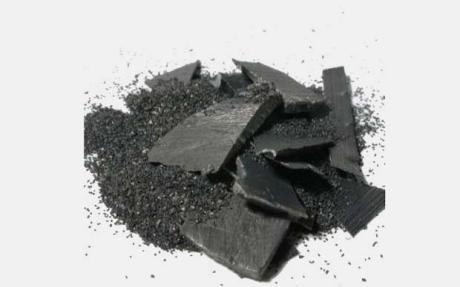
depleted-uraniumAstonishingly, the U.S. Department of Defense claims that no human cancer of any type has occurred as a result of exposure to either natural or depleted uranium. Additionally, numerous studies have been done claiming that there is no correlation – but how many of those studies were funded by the government?

VA Abandons Vets Suffering From Depleted Uranium Contamination Intellectual Conservative, BY RACHEL ALEXANDERMarch 24, 2014“………After young and healthy Marine Matt Parker fought for his country in the Middle East, he mysteriously came down with tumors. Now, he finds himself without adequate help from the country he fought for….

Matt enlisted in the Marine Corps in 1994 at age 19. ……

His unit was tasked in part with arming Cobra helicopters in Kuwait with special 20mm rounds tipped in depleted uranium. No one instructed the Marines to wear gloves or protective clothing.


Continue reading

March 25, 2014 Posted by | Uncategorized | Leave a comment

Increased risk of cancer to young girls in Fukushima zone

Cancer Risk To Young Children Near Fukushima Daiichi Underestimatedhttp://enenews.com/gundersen-terrifying-cancer-data-for-fukushima-statistics-are-astounding-especially-for-young-girls-growing-concern-around-cancer-risk-video?utm_source=feedburner&utm_medium=email&utm_campaign=Feed%3A+ENENews+%28En

Gundersen: Terrifying cancer data for Fukushima — “Statistics are astounding especially for young girls” — “Growing concern around cancer risk” (VIDEO) http://enenews.com/gundersen-terrifying-cancer-data-for-fukushima-statistics-are-astounding-especially-for-young-girls-growing-concern-around-cancer-risk-video?utm_source=feedburner&utm_medium=email&utm_campaign=Feed%3A+ENENews+%28En

Fairewinds Energy Education, Mar. 20, 2014: Cancer Risk To Young Children Near Fukushima Daiichi Underestimated — As the three year anniversary of the triple meltdown at Fukushima Daiichi just passed, our minds have been on the health of the Japanese people, in particular the children. This week’s film is a reissue of a film we released last year featuring Ian Goddard and Fairewinds’ Arnie Gundersen discussing the risk of cancer in children in and around Fukushima prefecture. The statistics are astounding especially for young girls. For every year a young girl is the in the radiation zone 1 in 100 girls is going to get cancer due to their exposure from Fukushima. As each year passes itcompounds, so if a young girl is there for 10 years, 10 out of 100 will get cancer. The statistics are terrifying and the Japanese government has allowed families with young children to return to Fukushima prefecture.

Introduction: “In response to growing concern around cancer risk to children, in particular young girls, in and around the Fukushima Prefecture, we’re reissuing a film we made last year. […] 1 in every 100 young girls will devlop cancer for every year they are exposed to Fukushima’s radiation”
Watch the presentation here

March 25, 2014 Posted by | Uncategorized | Leave a comment

What’s going on with unreported worker deaths among Fukushima’s clean-up force?

Japanese Journalist: Fukushima workers die suddenly but it’s not reported, says nurse at plant — Gov’t agents following me for surveillance(VIDEO) http://enenews.com/japanese-journalist-fukushima-workers-die-suddenly-but-its-not-reported-says-nurse-at-plant-govt-agents-following-me-for-surveillance-video?utm_source=feedburner&utm_medium=email&utm_campai

Fukushima Voice, Mar. 21, 2014: On March 4-7, 2014 […] international conference was held, 25 minutes outside of Frankfurt, on “Effects of Nuclear Disasters on Natural Environment and Human Health,” co-organized by the German chapter of the International Physicians for Prevention of Nuclear War (IPPNW) and the Protestant Church in Hesse and Nassau.  Mako Oshidori, a Japanese comedienne and a freelance journalist, was part of the press conference on March 6, 2014. The Ustream video in Japanese can be found here […] Mako Oshidori was enrolled in the School of Life Sciences at Tottori University Faculty of Medicine for three years […] Mako Oshidori herself discovered a TEPCO memo telling officials to “cut Mako-chan(‘s question) short appropriately.”

Transcript of Oshidori’s presentation by Fukushima Voice,  Transcription by Takashi Mizuno/Translation by @YuriHiranuma, Mar. 21, 2014: […] government agents began following me for surveillance. I heard about it from researchers who were my friends as well as some government officials. I will show you a photo I secretly took of the agent, so you know what sort of surveillance I mean. When I would talk to someone, a surveillance agent from the central government’s public police force would come very close, trying to eavesdrop on the conversation. […] I would like to talk a little about my interview of a nurse who used to work at Fukushima Daiichi nuclear power plant (NPP) after the accident. […] He was a nurse at Fukushima Daiichi NPP in 2012. He quit his job with TEPCO in 2013, and that’s when I interviewed him.  As of now, there are multiple NPP workers who have died, but only the ones who died on the job are reported publicly. Some of them have died suddenly while off work, for instance, during the weekend or in their sleep, but none of their deaths are reported. Not only that, they are not included in the worker death count. For example, there are some workers who quit the job after a lot of radiation exposure, such as 50, 60 to 70 mSv, and end up dying a month later, but none of these deaths are either reported, or included in the death toll. This is the reality of the NPP workers.

Watch Oshidori’s presentation here (Japanese only)

See also: KPFA: I’ve learned over 800 people have disappeared from Fukushima plant — “May have been killed or died during work” — “Gov’t actually in business with the Yakuza” (AUDIO)

March 25, 2014 Posted by | Uncategorized | Leave a comment

Thorium nuclear reactors – too good to be true – yes, afraid so, sorry

If we did as Evans-Pritchard suggests—marshal America’s vast scientific and strategic resources behind a new Manhattan Project to develop thorium reactors—we would forego the opportunity to develop other sources of energy, to learn how to live with less energy, etc. Since he writes abouteconomic issues for the Telegraph, one would think he knows this already. And if he knows about Free Lunches & opportunity costs, then only shamelessness, combined with willful ignorance, can explain why he wrote such a  misleading sales pitch for thorium reactors. 

Wake me up when there’s a commercial thorium reactor up & running somewhere on Earth. Then, and only then, will we know the true costs & benefits of energy from thorium.

Thorium Reactors — The New Free Lunch

http://www.declineoftheempire.com/2010/09/thorium-Thorium-pie-in-skyreactors-the-new-free-lunch.html

Continue reading

March 25, 2014 Posted by | Uncategorized | 2 Comments

Radiation: physical and mental effects on Fukushima’s children

Fukushima Evacuee: 50% of class with nosebleeds at same time — Immune system problems reported by many families (VIDEOhttp://enenews.com/fukushima-evacuee-50-class-nosebleeds-same-time-recurring-hear-immune-system-problems-reported-many-families-video?utm_source=feedburner&utm_medium=email&utm_campaign=Feed%3A+ENENews+%2

Fukushima Evacuee Geoff Read,, Public Meeting at the UK’s House of Commons in the UK, Mar. 10, 2014:

Children have been experiencing health effects already. As Paul said, it’s important not to jump to conclusions. But it’s hard to understand why, for example, that a teacher I personally know witnessed 50% of his class with noses bleeding at the same time. And this is a recurring thing that we hear, that children’s noses are bleeding a lot.

There have been respiration problems and immune system problems reported by some teachers and many families. This is coming from lots of different areas.

Watch the meeting at the UK’s House of Commons here

March 25, 2014 Posted by | Uncategorized | Leave a comment

Insidious censorship of scientists studying nuclear radiation to Japan

Scientists studying radiation in Japan are subject to ‘insidious censorship’

http://www.censorshipnaturalnews.com/044414_insidious_censorship_radiation_Japan.html

 
Sunday, March 23, 2014 by: L.J. Devon, Staff Writer n order to appease the fears of the public and maintain order, leaders of government institutions often restrict valuable and alarming information from broadcast or publication. This censorship keeps the masses unaware but cooperative, as the truth is picked through and decimated. Such leaders are often timid and tend to uphold the status quo. They will typically refrain from riling people up so as not to disturb the powers of special interest that could shutter their career and livelihood.
While vital information is picked apart and wrought with censorship, people may suffer from the consequences of not knowing and not being able to take action.

Scientist finds alarming initial Fukushima cesium-137 measurements but is censored

When the Fukushima nuclear crisis began in March 2011, much censorship was placed on scientists and researchers who set out to measure the radioactive fallout that was silently affecting the public.

One scientist, Michio Aoyama, recorded initial findings that were too startling for the Japanese government. As a senior scientist working within the Japanese government’s Meteorological Research Institute, Aoyama reported dangerous levels of radioactive cesium-137 in the surface water of the Pacific Ocean. His reports estimated that levels of cesium-137 could be 10,000 times higher than nuclear contamination measurements from Chernobyl, the world’s worst nuclear accident.

When Aoyama reported these alarming radiation levels in an article for a publication called Nature, he was met with criticism and publication restrictions. The director general of the institute called Aoyama and asked him to remove his name from the paper. Apparently, he did not want to startle the public with Aoyama’s findings. When Aoyma asked to have his name removed, the article was suddenly halted from publication.Aoyama is not the only one placed under this kind of pressure and censorship. Various university researchers in Japan report that their respective universities will not give them funds or support for the work they conduct involving the Fukushima Daiichi plant. Professors report off the record in many cases that they are either obstructed or told to steer clear of data that might cause public “concern.”

The result so far has been three years of downplaying the Fuskushima disaster, leaving people unaware of the dangers of high levels of radiation that adversely affect their health.

Politically dangerous research

Joji Otaki, a biologist from Japan’s Ryukyu University, has written several papers on how Fukushima radiation triggers inherited deformities in butterflies, but said, “Getting involved in this sort of research is dangerous politically.” Otaki, says the public supports his work through crowdfunding donations.

American professor obstructed from research, cites “insidious censorship”

The Japanese government hopes to persuade 155,000 people to return home as they invest $50 billion in a large decontamination project that involves scraping away millions of tons of radioactive dirt and placing it in temporary dumps. These dumps make a great real-life research laboratory and are drawing the attention of researchers from around the world.

imothy A. Mousseau, a professor of biological sciences at the University of South Carolina, has tried to conduct three research projects, but the Japanese government has made his research difficult.
Upon further investigation, one Japanese professor and two postdoctoral students involved in Mousseau’s research dropped out, because they could not risk being associated with his findings. “They felt it was too provocative and controversial,” Moussea said, “and the postdocs were worried it could hamper their future job prospects.”

“It’s pretty clear that there is self-censorship or professors have been warned by their superiors that they must be very, very careful,” he said. Mousseau referred to the lack of funding at the national level as some of the “more insidious censorship” measures. He added, “They’re putting trillions of yen into moving dirt around and almost nothing into environmental assessment.”

Japan’s government institutions promotes nuclear power and controls academia

As the Fukushima reality is downplayed, nuclear power continues to be promoted by the political elite parties in Japan. Prime Minister Shinzo Abe has been trying to sell Japan’s nuclear technology abroad since he came to power in 2012.

With nuclear power as a priority, dissenters are silenced and propaganda is pushed through Japan’s government-controlled academia structure. In fact, government funding for academic research in Japan mostly funnels through the Japan Society for the Promotion of Science and the Ministry of Education, Culture, Sports, Science and Technology. Academic committees and government officials are in charge of screening and reviewing the pro-nuclear energy propaganda.

Mr. Mousseau, eager for solutions, says, “If we [are] ever going to make any headway into the environmental impact of these disasters, statistical power, scientific power, is what counts.”

Continue reading

March 25, 2014 Posted by | Uncategorized | 2 Comments

Japan’s nuclear watchdog under new management and reticent about information

safety-symbol1flag-japanJAPAN’s nuclear watchdog http://www.economist.com/blogs/banyan/2014/03/japans-nuclear-watchdog said next to nothing last week about why it had chosen two reactors at Kyushu Electric Power’s Sendai plant, in Kagoshima prefecture, as the country’s very first to restart. The plants (pictured) had “cleared major agenda items”, said Shunichi Tanaka, chairman of the Nuclear Regulation Authority (NRA). It was left to an off-the-record interview with the Nikkei newspaper to give some more hints. Kyushu Electric had been more realistic than other nuclear utilities about how violently the ground under reactors could shake in the event of an earthquake, confided NRA officials. Striking away from the pack, Kyushu Electric decided to increase its assumption for peak ground acceleration (how hard the earth shakes in the event of a quake) from 540 Gal up to 620. That impressed the NRA. The other utilities, complained the regulator to Nikkei, were still clinging to older, less safe assumptions.

The whole manner in which the NRA said, on March 13th, that reactors at Sendai will probably be the first to restart says a lot about how Japan will return to nuclear power. As well as the lack of explanation, the NRA made no effort whatsoever to reassure the public. It did not say that its new rules are the “toughest” in the world, as the government likes to boast. Mr Tanaka has repeatedly said that the unenviable task of selling nuclear power to a frightened public is not its job but the government’s. The NRA only wants to deal with the scientific and technical side of things. Shinzo Abe, the prime minister, on the other hand, would prefer to rely heavily on the NRA’s imprimatur to justify restarting nuclear plants.From a public-relations point of view, also, the timing of the NRA’s announcement could not have been worse. It suggests that the regulator is absolutely resolved not to help the government in managing public opinion. Nuclear-power advocates must be wondering whether it was truly necessary to choose the second day after the third anniversary of the earthquake, tsunami and resulting triple meltdown at the Fukushima Dai-ichi plant in March 2011 to pinpoint the Sendai reactors as the first to restart. Harrowing accounts from some of the 130,000 or so evacuees from Fukushima, still living in temporary housing, crowded the airwaves. At an official memorial marking the anniversary, Bunmei Ibuki, a senior politician from Mr Abe’s Liberal Democratic Party who is the speaker of Japan’s lower house of parliament, surprised his party by giving a speech calling for a future phase-out of nuclear power.

The NRA’s refusal to sell nuclear power to the Japanese public is to be praised. In the past, public opinion was all too skilfully channelled into an unquestioning acceptance of Japan’s nuclear-safety myth, including by the NRA’s discredited predecessor, the Nuclear and Industrial Safety Agency. The NRA doubtless recalls that Kyushu Electric itself was caught using highly irregular PR tactics. In the summer of 2011 its employees were found to have sent fake pro-nuclear power e-mails purporting to be from members of the public to a TV programme. The aim was to try to speed the restart of reactors at Kyushu Electric’s Genkai nuclear-power station, which lies to the northwest of the Sendai plant. The utility now has new management—another fact that someone, at some point, should state loudly and clearly to the public.

March 25, 2014 Posted by | Uncategorized | Leave a comment

Japan will hand over some (?all) of its plutonium to USA

Japan cedes control of nuclear cache to U.S.

http://www.theglobeandmail.com/news/world/japan-cedes-control-of-nuclear-cache-to-us/article17632562/

MICHAEL D. SHEAR AND DAVID E. SANGER

THE HAGUE, NETHERLANDS — The New York Times News Service

Published Sunday, Mar. 23 2014, Japan will announce Monday that it will turn over to Washington more than 700 pounds of weapons-grade plutonium and a large quantity of highly enriched uranium, a decades-old research stockpile that is large enough to build dozens of nuclear weapons, according to U.S. and Japanese officials.

The announcement is the biggest single success in President Barack Obama’s five-year-long push to secure the world’s most dangerous materials, and will come as world leaders gather here Monday for a nuclear security summit. Since Obama began these meetings with world leaders – this will be the third – 13 nations have eliminated their caches of nuclear materials and scores more have hardened security at their storage facilities to prevent theft by potential terrorists.

March 25, 2014 Posted by | Uncategorized | Leave a comment

A ‘heist’ of plutonium or enriched uranium could be done

We’re Not Prepared for a Nuclear Heist

How did an 82-year-old nun come so close to getting her hands on highly enriched uranium?
In September 2009, a group of masked men armed with automatic weapons and explosives arrived on the roof of a cash depot in Vastberg, Sweden in a helicopter. The men blasted their way through a skylight and hoisted millions of dollars up to the hovering aircraft — the operation took less than 20 minutes. When police rushed to respond they discovered a bag with the word “bomb” at their heliport — a diversion planted by the thieves — and caltrops (road spikes) near the depot to slow down their response on the ground. While many of the thieves were caught after an investigation, most of the money was never recovered.
The Vastberg heist was not a nuclear event, but a new report from my colleagues at Harvard University makes the case that the incident should have deeply troubling implications for the leaders from over 50 countries convening in the Netherlands on March 24-25 for a summit on nuclear security. The stark truth is that many locations around the world that store highly enriched uranium (HEU) and plutonium — the essential ingredients of nuclear weapons — would not be able to repel an attack from adversaries using tactics and weapons as sophisticated as those used by the Vastberg thieves. . An amount of plutonium that would fit in a soda can would be enough for terrorists to construct a crude nuclear bomb capable of reducing the heart of a major city to rubble (it wouldn’t require much HEU, either). Today, there are approximately 1440 tons of HEU and 500 tons of separated plutonium in hundreds of buildings in dozens of countries around the world; the theft of only .001 percent of this stockpile could lead to hundreds of thousands of deaths………
In the U.S. in 2012, an 82-year old nun and two other peace protestors broke into Y-12, a facility in Tennessee that contains the world’s largest repository of highly enriched uranium (HEU) in metal form and until the incident was colloquially known as “the Fort Knox of HEU” for its state-of-the-art security equipment. The nun bypassed multiple intrusion-detection systems because faulty cameras had not been replaced and guards at the central alarm station had grown weary of manually validating sensors that produced frequent false alarms.  When the protestors started hammering on the side of a building that contains enough HEU for hundreds of weapons, the guards inside assumed the noise was coming from construction workers that they had not been told were coming. She and her fellow protestors were eventually challenged by a single guard……….
http://time.com/35965/world-leaders-cancel-g8-summit-in-russia-after-ukraine-crisis/

March 25, 2014 Posted by | Uncategorized | Leave a comment

Examining the inaccurate story of the new ‘nuclear arms race’

So much for the new ‘nuclear arms race’ http://www.msnbc.com/rachel-maddow-show/so-much-the-new-nuclear-arms-race

03/24/14 10:48 AM—UPDATED 03/24/14 By Steve Benen
Despite his recent electoral failures, Former Sen. Rick Santorum (R-Pa.) hasn’t abandoned his national ambitions. In fact, in an interview with Timelast week, he even boasted that he would have defeated President Obama “without a doubt” had he been the GOP nominee in 2012.
 And as he gears up for another try, Santorum is even starting to talk more about foreign policy. In reference to President Obama, the former senator said, “Here’s a president whose main goal is stopping nuclear proliferation, to get a deal with the Russians, which was a bad deal that gave the Russians a decided edge in nuclear weapons – that was his big thing, START II.”
Santorum added, “[W]hat [Obama’s] done is start a nuclear arms race because the U.S. is not standing by its commitments.”
It’s tough to take any of this seriously. For one thing, the Obama administration hasn’t broken any of its international commitments. For another, Santorum’s complaints about START II were debunked years ago.
And as for Obama starting a new “nuclear arms race,” there’s ample evidence to the contrary. Japan will announce Monday that it will turn over to Washington more than 700 pounds of weapons-grade plutonium and a large quantity of highly enriched uranium, a decades-old research stockpile that is large enough to build dozens of nuclear weapons, according to American and Japanese officials.
The announcement is the biggest single success in President Obama’s five-year-long push to secure the world’s most dangerous materials, and will come as world leaders gather here on Monday for a nuclear security summit meeting. Since Mr. Obama began the meetings with world leaders – this will be the third – 13 nations have eliminated their caches of nuclear materials and scores more have hardened security at their storage facilities to prevent theft by potential terrorists.
This looks less like Obama starting “a nuclear arms race” and more like Obama doing the opposite.
Remember, last year Ukrainian officials gave up more than 500 pounds of weapons-grade uranium. What’s more, four months ago, Iran agreed to at least temporarily stop enriching uranium beyond 5%, while scrapping its stockpile that’s already been enriched to 20%.
And now Japan is giving up more than 700 pounds of weapons-grade plutonium. To be sure, this does not represent the entirety of the country’s overall stockpile, but as the New York Times’ report noted, the developments nevertheless come with “practical and political significance.”
For years these stores of weapons-grade material were not a secret, but were lightly guarded at best; a reporter for The New York Times who visited the main storage site at Tokaimura in the early 1990s found unarmed guards and a site less-well protected than many banks. While security has improved, the stores have long been considered vulnerable.
The president’s legacy on this issue will be shaped by developments on multiple fronts, including tenuous talks with Iran.
But there has been movement. Former Sen. Sam Nunn (D-Ga.), who’s spent much of his career focused on addressing the nuclear threat, told theNYT, “What President Obama has done is put it more on the front burner and accelerated the process…. Significant progress has been made – not enough.”

Continue reading

March 25, 2014 Posted by | Uncategorized | Leave a comment

Germany and Italy: solar energy now a mainstream power source

sun-championSolar joins the mainstream in Italy and Germanyhttp://www.businessspectator.com.au/article/2014/3/25/energy-markets/solar-joins-mainstream-italy-and-germany?utm_source=exact&utm_medium=email&utm_content=622014&utm

 25 Mar 14 Once all its costs are accounted for, the price of commercial solar power has pulled even with retail electricity rates in Italy and Germany, according to a new report.The analysis is the third installment in a regular report by the consulting firm Eclareon, done on behalf of an international group of sustainable energy interests. This installment was also the first to look at solar power in the commercial sector rather than the residential sector. It looked at a standard 30 kilowatt solar photovoltaic system for your average commercial building, and the built a methodology to assess its “leveled cost of energy” in seven different countries: Brazil, Chile, France, Germany, Italy, Mexico and Spain.

The LCOE of any source of power – solar, natural gas, coal, wind, etc — accounts for everything that goes into determining that electricity’s cost: installation, maintenance, investment, the electricity itself, depreciation, and so forth. The goal is to give a more complete picture of each power source’s economic position vis-a-vis its rivals. According to Eclareon’s analysis, solar’s LCOE in Italy and Germany is now at ‘grid parity’, meaning it’s even with retail electricity prices in general in those countries. Spain’s already gotten there as well, and Mexico and France are coming up.

Solar’s LCOE actually dropped significantly from 2012 to 213 in every country but Germany – between 20 and 25 per cent. Even Germany saw a drop of just over 10 per cent. But these drops don’t always translate into grid parity (the Y axis in the graph), since the prices of other sources are always moving as well.

The analysis also looked at the level of regulatory support solar enjoys in each country. (The X axis.) This does not mean subsidies. Right now, regulatory law in both European countries and the states isn’t set up to handle a world in which electricity consumers also generate and sell their own electricity. Sometimes there are added fees for people who generate their own solar power, sometimes they aren’t legally allowed to sell their excess power back to the grid, and sometimes laws can rocket back and forth from solar-friendly to solar-unfriendly in short order. As a result, meaningful market competition between solar power and other forms of electricity is really hard to come by, even when their respective prices have pulled alongside one another.

None of the countries have an ideal circumstance. But some – those in the top right-hand quadrant – get closer to a world in which electricity is generated not just by a small number of really big suppliers, but by lots and lots of little suppliers as well, and everyone can buy and sell electricity to everyone else as they see fit.

March 25, 2014 Posted by | Uncategorized | Leave a comment

Ukraine is well off to have got rid of its nuclear weapons

Ukraine and Nuclear Weapons

HUFFINGTON POST, Alan Robock 03/22/2014When the Soviet Union ended in 1991, Ukraine gave up their nuclear weapons to Russia. By 1996 they had rid themselves of the third largest arsenal in the world, larger than those of Britain, China and France combined. Belarus and Kazakhstan did the same thing, thus setting an important example for the world, that they were better off without nuclear weapons.

Some have suggested that if Ukraine had retained their nuclear weapons, Russia would not have invaded and captured Crimea. This is absurd. There is no evidence that nuclear weapons have ever deterred an invasion or won a war. …….

Suggestions that Ukraine has become more vulnerable because it gave up nuclear weapons are support for nuclear proliferation. Does this mean that every nation needs to have nuclear weapons to prevent invasion? Putin did not invade Belarus or Kazakhstan, and they have no nuclear weapons. Rather than re-arming nations, we have to go the other way to make the world safe for ourselves and future generations…….

Immediate American and Russian reductions to the same nuclear arsenal sizes of the other nuclear nations, about 200 weapons each, would maintain the nuclear deterrence of each and prevent nuclear winter from ever happening. Nuclear abolition will prevent nuclear famine, the horrendous consequences on food of even a “small” nuclear war using less than 1 percent of the current global arsenal. Nuclear weapons are already stigmatized, and no sane person would consider using them. As we move toward their reduction and elimination, we will not prevent all human conflict, but we will lessen their potential horrific consequences.http://www.huffingtonpost.com/alan-robock/ukraine-and-nuclear-weapo_b_5014360.html

March 25, 2014 Posted by | Uncategorized | Leave a comment

China warns about Japan’s dangerous nuclear ambitions


..Be wary of Japan’s nuclear ambitions

(People’s Daily Online)    10:……55, March
24, 2014 It is indisputable that Japan holds a large amount of
weapons-grade nuclear materials; thisshould be a matter of concern to
the international community.

Yun Byung-se, Minister of Foreign Affairs of South Korea, emphasized that
if a countyholds or produces more nuclear materials than it
actually needs there is always a risk thatit will become a threat
to itself and to other countries. Meanwhile John Kerry,
U.S.Secretary of State, also said that preventing Japan from
developing nuclear weapons is oneof the key points of American
diplomacy.

Facing such pressure from the international community, Japan
has participated ininternational nuclear affairs in apparent
good faith. But according to a report from KyodoNews Agency,
the draft of the statement which will be released after the
non proliferationand disarmament initiative meeting in Hiroshima
next month may demand that China and some other countries join in
the arms control negotiations between the US and Russia.

China strictly abides by its commitment to no first use of
nuclear weapons at any time andin any circumstances, and commits
not to use or threaten to use nuclear weapons against nuclear weapon-free countries and in nuclear weapon-free zones.
..
Japan has always assumed an ambiguous attitude towards nuclear
weapons issues. Asearly as 1957, the then Japanese premier
Nobusuke Kishi asserted that Japan would not
exclude the possibility of owning nuclear weapons for self-defense purposes. And whenKishi’s brother Satō Eisaku was
elected Japanese premier, though he announced the ThreeNon-Nuclear Principles, in private he claimed that these principles
were simply “windowressing”. For decades, Japan has purpose ly maintained itself
“a screwdriver’s distance”from making nuclear warheads.What is
the purpose of Japan’s large stocks of weapon-grade nuclear materials? Japanmust come clean, and remove any
doubts of the part of the international community bypractical
actions.

The article is edited and translated from《日本,别有用心的“核热心”》, source: People’sDaily, author: Zhong Sheng. http://english.peopledaily.com.cn/98649/8576368.html

March 25, 2014 Posted by | Uncategorized | Leave a comment

USA would do better to export clean non nuclear technology

Vermont Law’s Cooper said the U.S. “would be better off exporting much more benign technology,” and should forget about getting into the nuclear game. He stressed “the agony we go through once we lose control of the technology. Is it worth the risk?” By CNBC’s Javier E. David.

March 25, 2014 Posted by | Uncategorized | Leave a comment