International concern as USA bans food and fish imports from irradiated areas of Japan
 FDA Import Alert: U.S. bans agricultural and fishery products from 14 prefectures in Japan due to Fukushima radionuclides — Top Newspaper: Concern over contamination is spreading to most countries around Pacific http://enenews.com/fda-import-alert-u-s-bans-japans-agricultural-and-fishery-products-from-14-prefectures-due-to-fukushima-radionuclides-concern-over-contamination-is-spreading-to-most-countries-around-pacific
Dong-A Ilbo, Sept. 28, 2013 (Korea’s top newspaper): […] Concerns over Japan’s radioactive contamination and its seafood is spreading to most countries in the  Pacific basin. The United States has recently banned agricultural and fishery imports from 14 prefectures in Japan, up from eight. South Korea puts a similar ban on fishery imports from eight prefectures, while China and Taiwan does so for 10 and five prefectures, respectively. [… The IAEA’s] upcoming probe needs to shed light on the cause and situation of soil and sea water contamination. […] It would be much better if experts from South Korea, the United States and China participate in the investigation. It is natural for a global organization to intervene in an international issue. […] Continue reading
Financial meltdown facing Central New York nuclear plants
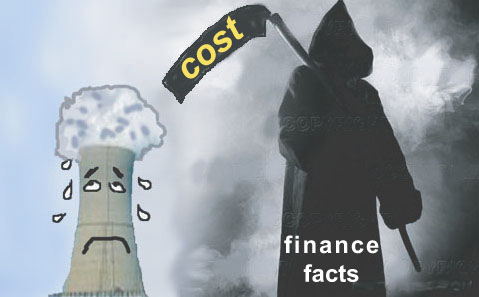 Central New York nuclear plants struggle to avoid financial meltdown Syracuse.com, By Tim Knauss | tknauss@syracuse.com September 29, 2013 SCRIBA, N.Y. – As recently as four years ago, nuclear power companies were planning to spend billions of dollars to build a new reactor in Oswego County, alongside three existing nuclear plants.
Then the bottom fell out. Natural gas-burning power plants that benefit from a glut of cheap gas produced by hydrofracking cut wholesale electricity prices in half.
Now the outlook for nuclear power plants is so bleak that Wall Street analysts say one or more Upstate nuclear plants could go out of business if conditions don’t change.
Two Upstate nukes in particular – the James A. FitzPatrick Nuclear Power Plant in Oswego County and the R.E. Ginna Nuclear Power Plant in nearby Wayne County – are high on the watch list of plants that industry experts say are at risk of closing for economic reasons……Nuclear critics and industry supporters finally agree on something: Nuclear power, the bedrock of Oswego County’s economy and the biggest source of electricity in Central New York, faces a financial crisis…….
“We should expect more early (plant) retirements,” nuclear critic Mark Cooper, senior fellow at the Institute for Energy and the Environment at Vermont Law School, wrote in a July report. “Rising costs of an aging fleet and the availability of lower cost alternatives are likely to persist over the next couple of decades.”
Across the country, four nukes have shut down this year — the first plant retirements in 15 years — and a fifth announced it will close next year……
The fragile finances of nuclear power have provided new ammunition to anti-nuclear groups. In March, prior to the announcement of Vermont Yankee’s shutdown, a coalition of four groups petitioned the NRC to suspend Entergy’s license to operate FitzPatrick and Vermont Yankee arguing that the plants produce insufficient revenue to maintain and operate the reactors safely. Entergy has not yet responded to the petition…….http://www.syracuse.com/news/index.ssf/2013/09/oswego_county_nuclear_plants_struggle_to_avoid_financial_meltdown.html
Cut subsidies to fossil fuel industries – says International Monetary Fund
 IMF: The Murky Cobweb Of Energy Subsidies http://www.energymatters.com.au/index.php?main_page=news_article&article_id=3961 29 Sept 13 Solar power subsidies are a drop in the bucket compared to the gravy train the fossil fuel sector still rides. The International Monetary Fund has pledged to “shine a light on the murky cobweb of energy subsidies”.
In an address to the UN High-Level Forum on Sustainable Development; IMF Managing Director Christine Lagarde spoke of a triple challenge facing the planet – economic instability, environmental damage and insufficient equity. ”We cannot view these in isolation. Each feeds on and magnifies the other,” she said.
 Ms. Largarde stated energy subsidies, including tax subsidies, came to almost $2 trillion in 2011; “a whopping 2½ percent of global GDP that could have been used more wisely.”
Even US President Barack Obama has recognised enough is enough. Earlier this year, he proposed billions more be invested in renewable energy and the elimination of $4 billion in fossil fuel subsidies in his 2014 budget proposal.
In recent years the International Energy Agency (IEA) has also repeatedly called for a winding back of fossil fuel subsidies, which are at times obscured from public view. “Governments need to stop hiding their handouts to oil, gas and coal and come clean,” says the IEA.
Renewable energy subsidies are the relatively new kid on the block, as is the industry itself – and it’s not unusual for fledgling sectors to require a helping hand. However, the fossil fuel sector has been around for well over a century, has been hugely profitable for much of the time; yet has had its snout firmly planted in the public trough for decades – and still does today.
While renewables such as solar power have still flourished on an uneven playing field; with fossil fuel subsidisation wound back and the support diverted to renewable energy, a cheap yet clean energy future will arrive even faster.
Nuclear industry desperately lobbying for government funding
Faced with this situation, the NEI is on a public relations campaign to convince policy makers that nuclear power should be supported and expanded not because it is cheaper – because it is not – but because it provides for energy diversity, reliability and does not produce greenhouse gases.
As for reducing greenhouse emissions, lawmakers are more likely to support solar and wind power. The NEI’s arguments suggest a level of desperation.

Nuclear power rides an economic roller coaster The Day, By Paul Choinie 09/29/2013 It now appears more likely the nuclear industry is entering a period of steady decline, rather than preparing for a rebirth. Adding to the pricing pressure is lower demand for electricity in the United States, caused by a combination of the sluggish economy and improved conservation. Less demand equals lower prices.
It has not been a good year for the nuclear industry. Four reactors have shut down. Vermont Yankee will become a fifth next year. This will leave the nation with fewer than 100 nuclear plants for the first time in decades. The industry acknowledges that at least two of the closings, Vermont Yankee and Kewaunee in Wisconsin, directly relate to price competition. Continue reading
Can USA afford Oakridge’s $12 billion uranium processing folly?
 Estimate for uranium facility goes from $600 million to $11.6 billion, LA Times, 28 Sept 13 It would be one of the largest nuclear weapons investments since World War II. The cost of a proposed uranium processing facility for nuclear weapons in Oakridge, Tenn., has soared as high as $11.6 billion — 19 times the original estimate — even as critics accuse the Energy Department of overstating the need for spare bomb parts.
Under a proposal unveiled in 2005, the manufacturing plant at the Y-12 National Security Complex would produce new uranium cores for the nation’s stockpile of aging hydrogen bombs.
But not long after the plan was disclosed, with an estimated cost of $600 million, the price tag began to climb. Now, the processing facility would be among the largest investments in the U.S. nuclear weapons infrastructure since the Manhattan Project, which developed the atomic bomb during World War II.
The facility has drawn sharp criticism by the Project on Government Oversight, a Washington watchdog group, which advocates that the plan be scrapped. In a report issued Wednesday, the group cites a little-noticed report by the Army Corps of Engineers that made the $11.6-billion cost estimate and argued that the work could be done more cheaply at existing facilities……
The escalating cost reflects questions that have troubled the Energy Department’s nuclear weapons complex since the end of the Cold War: How long will the Pentagon need a stockpile of nuclear weapons, and how can the massive industrial network needed to maintain the bombs be kept going at an affordable level?…… http://www.latimes.com/nation/la-na-bomb-factory-20130925,0,6160248..story
Pilot study of cancer rates near nuclear sites
Oyster Creek plant part of new study examining cancer risks near nuclear sites NJ.com 29 Sept 13,A pilot study of cancer risks in people living near six nuclear power plants across the United States will include Oyster Creek in Ocean County, the nation’s oldest nuclear plant.
The U.S. Nuclear Regulatory Commission said Monday that the pilot study will examine multiple cancer types in populations of all ages living near the sites, and will study cancers in children born near the sites…… The National Academy of Sciences, which is conducting the study, said the sites provided a good sampling of facilities with different operating histories and population sizes. It would not say whether the locations were chosen because of their cancer rates. Continue reading
Even Eskom admits nuclear power is by far South Africa’s most expensive energy option
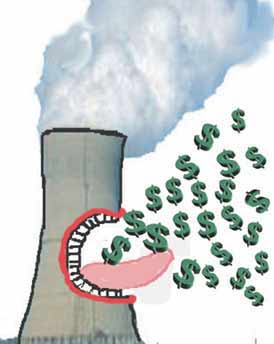 The intended nuclear plan would be “very costly” and if anything went wrong it would have a devastating impact on people and the environment
Doubts over nuclear costs Business Report (South Africa) September 29 2013 By Donwald Pressly. REUTERS The Government is forging ahead with its nuclear build programme to boost the electricity supply although details of its costings are scant, but Eskom’s own figures indicate it will be the most expensive option.
In the wake of an announcement on Thursday by Energy Minister Ben Martins that a  detailed costing and the extent of the nuclear programme would be made known before the end of the financial year, a range of organisations have come out against the government’s stance in favour of extending South Africa’s nuclear power footprint beyond Koeberg…….
.While Eskom has not provided recent build programme cost estimates, it did provide comparative figures in its third multiyear price determination application to Nersa of gas, coal, wind, solar and concentrated solar power (CSP). Nuclear ended up being the most expensive by far. Continue reading
Slides on USA’s 14 nuclear power plants soon to be closed
 14 U.S. Nuclear Plants Closing or at Risk—in Photographs and Text http://insideclimatenews.org/slideshow/14-us-nuclear-plants-closing-or-risk%E2%80%94-photographs-and-text
Four companies announced nuclear plant closures in 2013—representing the first shutdowns in 15 years, and an unprecedented single-year retrenchment for the U.S. nuclear industry. “Renaissance in Reverse,” a July 2013 report by Mark Cooper, highlighted at least ten nuclear plants that could be forced to close earlier than planned. Cooper, a senior fellow at the Vermont Law School’s Institute for Energy and the Environment, drew his conclusions in part from reports by Wall Street analysts. Cooper stopped short of predicting specific plant closures, but he noted that about ten are at greater risk for closure because of low power prices, rising costs and other woes.
(Read: First U.S. Nuclear Power Closures in 15 Years Signal Wider Problems for Industry)
Image: San Onofre Nuclear Generating Station, Units 2 and 3/Credit: Southern California Edison
Large area received Fukushima radiation fallout
Textbook: Fukushima disaster contaminated the territory of Japan, Sea of Japan, Korea — Up to 8 orders of magnitude above global fallout background off prefecture’s coast http://enenews.com/book-fukushima-contaminated-japan-sea-of-japan-korean-peninsula-cesium-137-up-to-8-orders-of-magnitude-above-global-fallout-background-in-coastal-seawater
September 28th, 2013_
Title: Fukushima Accident: Radioactivity Impact on the Environment
Source: Elsevier
Authors: Pavel P. Povinec, Katsumi Hirose, Michio Aoyama
Date: July 9, 2013
Emphasis Added
Apart from the contamination of the Japanese territory (Hirose, 2012; Kanai, 2012; Tanaka et al., 2012), the Japan Sea (Inoue et al., 20I2a), and the Korean Peninsula (Hernandez-Ceballos et al., 2012; Lee et al., 2012), due to prevailing western winds, the radionuclides emitted to the atmosphere were mainly transported from Fukushima over the Pacific Ocean (Kamenik et al., 2013) […]
[…] large quantities of radioactive materials released to the atmosphere and coastal waters following a nuclear accident at the Fukushirna Dai-ichi NPP increased considerably the Cs-137 concentrations in coastal seawater off Fukushima up to eight orders of magnitude above the global fallout background (TEPCO, 2012; MEXT, 2012).
Portions of the book available here
Iran ready to negotiate about limiting its uranium enrichment

 Iranian Official Says Tehran Ready To Discuss Limits To Uranium Enrichment http://www.rferl.org/content/iran-uranium-enrichment-limits/25121320.html 29 Sept 13 Iran’s deputy foreign minister says Tehran is willing to discuss limits to its uranium enrichment but will not suspend the process completely. Abbas Araqchi said in a September 29 interview with state-run TV that “the frameworks, level, amount, form, and place of enrichment are liable to negotiation.”
But he said Tehran would only negotiate if the West recognized its “right to enrichment.”
Araqchi’s comments come after Iranian officials held talks with representatives from the major powers last week on the framework for October 15-16 negotiations on its nuclear program scheduled in Geneva.
Western countries want Iran to suspend all enrichment of uranium beyond the level required to fuel nuclear power plants and close its underground enrichment facilities.
Tehran insists its nuclear program is designed for peaceful purposes, and not to build an atomic bomb.
Iran speaks out about Israel’s 200 nuclear warheads
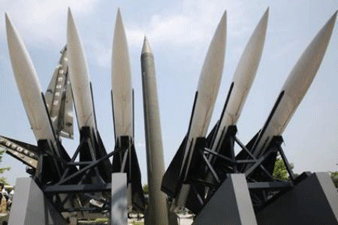 Iranian foreign minister: Israel has an arsenal of 200 nuclear warheads Jerusalem Post, 29 Sept 13 In interview with ABC, Zarif
  says Holocaust “is not a myth. Iranian Foreign Minister Javad Zarif accused Israel on Sunday of having an arsenal of 200 nuclear warheads, and said it is the source of insecurity in the Middle East.
“Israel has 200 nuclear warheads. Israel is the source of insecurity in our region. Israel is the source of aggression and violation of human rights of the Palestinian people. It should not have the audacity to continue to lie to the American people and to the world and mislead everybody,” Zarif toldABC’s This Week in his first appearance on the show in 26 years……..
Echoing similar statements made by Iranian President Hassan Rouhani when he was asked to address the issue, Zarif made the leap from the Nazis’ condemnable crime to the suffering of the Palestinian people.
“We condemn the killing of innocent people, whether it happened in Nazi Germany or whether it’s happening in Palestine. One crime, however heinous – and [the] Holocaust was a heinous crime, it was a genocide, it must never be allowed to be repeated. But that crime cannot be, and should not be, a justification to trample the rights of the Palestinian people for 60 years. We should have abandoned this game and start recognizing the fact that without respect for the rights of the Palestinians we will never have peace in our region,” he said.
Iran’s right for nuclear enrichment ‘nonnegotiable’……. http://www.jpost.com/Iranian-Threat/News/Iranian-foreign-minister-Israel-has-an-arsenal-of-200-nuclear-warheads-327408
Sharp increase in physical health symptoms in Fukushima residents
Fukushima Mother’s Plea to U.N.: Children and adults are suffering tremendously — Sharp increase in bloody urine, bone pain, more — Doctor says many have similar symptoms with unknown causes — Family’s health deteriorated all at once, recovered soon after moving http://enenews.com/fukushima-mothers-letter-to-u-n-children-and-adults-suffering-tremendously-sharp-increase-in-bloody-urine-bone-pain-low-blood-pressure-more-familys-health-deteriorated-all-at-once-reco
Fukushima City mother’s letter to the United Nations Scientific Committee on the Effects of Atomic Radiation (UNSCEAR), translated by journalist Mari Takenouchi and published by Save Kids Japan on Sept. 24, 2013: […] 2 years after the accident, members of my family had deteriorated health all at once. We continued to have stuffed throat with phelm, could not stop dry coughing […] the doctor couldn’t tell the cause of our symptoms [… he] said that there are many patients who show the same symptom with unknown causes. My child began to complain pain in his foot bones and I heard many people including children and adults have the same […] I myself had bone pains […] After that, my son and I had continued naucea [sic] and headaches. My son had lowered blood pressure and bloody urine, too.
My family moved out of Fukushima in July. One month afterwards, we all became better […] there is a sharp increase of people who show the same symptoms. There is a much increase of children who has prolonged nose bleeding […] people who died of acute myocardial infarction is increasing. […] Both children and adults have been suffering tremendously. […]
Read more at Save Kids Japan here and follow journalist Mari Takenouchi on Twitter here
Solar photovoltaic energy growing even faster than wind power
 Solar PV To Out-Pace Wind Power This Year http://www.energymatters.com.au/index.php?main_page=news_article&article_id=3962 29 Sept 13 Bloomberg New Energy Finance (BNEF) predicts more solar panel capacity will be added around the world this year than wind power.
BNEF forecasts 33.8GW of new onshore wind farms and 1.7GW of offshore wind will be added this year along with 36.7GW of new PV capacity – the first time the solar technology has outpaced wind.
“The dramatic cost reductions in PV, combined with new incentive regimes in Japan and China, are making possible further, strong growth in volumes,” said Jenny Chase, BNEF’s head of solar analysis.
Looking further ahead, BNEF believes onshore wind and PV will contribute almost equally to the world’s new electricity capacity installations between now and 2030. It forecasts onshore and offshore wind combined will grow from representing 5% of the world’s total installed power generation capacity in 2012 to 17% in 2030. Solar panel based power generation will increase from 2% in 2012 to 16% by 2030.
In other relatively recent news from the company, BNEF says development banks financed USD$109bn in renewable energy, energy efficiency, and electrical transmission and distribution last year. The 26 institutions covered by its analysis have financed a total of $425bn in clean energy investment since 2007.
Roughly half of the global total ($217bn out of $425bn) went to European projects.
Of all the sectors within renewables, large hydro secured the largest amount of funding, with $29.2bn of investment since 2007. Solar power projects received a total of $12.1b for the period.
Kreditanstalt für Wiederaufbau (KfW), a German government-owned development bank based in Frankfurt, has been the biggest investor by a large margin; ploughing nearly $147b into clean energy between 2007 and 2012. Next on the leader-board is China Development Bank (CDB) at $77b.
This year BNEF expects at least another 15% growth in development bank financing; but this could be as much as 30% more if new entrants begin participating in the market.
Japan’s intractable Fukushima radioactive trash problem
 Mission Impossible. What Future Fukushima? The Asia-Pacific Journal, Vol. 11, Issue 39, No. 1. September 30, 2013. Critics say Japan’s government is engaged in a vast, duplicitous and fruitless campaign to decontaminate Fukushima Prefecture. David McNeill and Miguel Quintana in Fukushima, Japan
“……The differences over what constitutes “acceptable” radiation levels will inevitably complicate policy over the return of evacuees. Local leaders like Kanno and Sakurai set limits lower than central government requirements. “The government says we don’t need to get radiation down to 1millisievert a year but that’s not how we see it,” says Sakurai. The central government, however, is sticking to its guns on its original limit. “In principle, the threshold of 20 millisieverts remains valid,” says Matsumoto Shintaro, of the Cabinet Office’s Support Team for Residents Affected by Nuclear Incidents. “But the lifting of evacuation orders won’t be decided on the basis of radiation doses alone. It will also depend on the status of each municipality’s infrastructure, whether the community is able to function, and the understanding of residents.
The government plans to define a specific policy by the end of 2013.” The Fukushima cleanup, however, faces another, perhaps insurmountable challenge: securing sites to store contaminated soil, leaves and sludge. Many landowners balk at hosting “interim” dumps – in principle for three years – until the central government builds a mid-term storage facility. Local governments throughout Japan have refused to accept the toxic waste, meaning it will probably stay in Fukushima for good.
The waste is stored under blue tarpaulins across much of the prefecture, sometimes close to schools and homes. Makita Kunihiro, who heads Minamisoma’s decontamination office, accepts that storage is the biggest difficulty it faces. “We need 19 sites according to our estimates, and we have seven.” The city’s contracts with landowners are usually signed for a minimum of three years, but Ito says the timeframe is simply not believable. “Nobody believes that temporary storage will be for only 3 years.” – See more at:http://japanfocus.org/-David-McNeill/4000#sthash.RH288s36.dpuf
At UN Egypt calls for nuclear-free Middle East
Egypt proposes nuclear-free Mideast Sky News Sunday September 29, 2013 Egypt has proposed for the Middle East, including Israel, to rid itself of all weapons of mass destruction after the UN Security Council ordered Syria to destroy its chemical arsenal. Addressing the UN General Assembly, Foreign Minister Nabil Fahmy on Saturday called on the five permanent members of the Security Council to support the idea of a Middle East free of nuclear, biological and chemical weapons.
Fahmy, part of Egypt’s army-installed government, proposed that all nations in the Middle East would then commit by the end of the year to ratify agreements against weapons of mass destruction……..http://www.skynews.com.au/world/article.aspx?id=910396
1 This Month


18 March Webinar @ 1 PM EST: An Assessment of SMR Projects: The Case of Canada
register for the zoom:
https://us02web.zoom.us/webinar/register/WN_o8BIIOUvQ2ONJR1nta65DQ#/registration


of the week – STOP SMALL MODULAR REACTORS IN CANADA
To see nuclear-related stories in greater depth and intensity – go to https://nuclearinformation.wordpress.com
-
Archives
- March 2026 (141)
- February 2026 (268)
- January 2026 (308)
- December 2025 (358)
- November 2025 (359)
- October 2025 (376)
- September 2025 (258)
- August 2025 (319)
- July 2025 (230)
- June 2025 (348)
- May 2025 (261)
- April 2025 (305)
-
Categories
- 1
- 1 NUCLEAR ISSUES
- business and costs
- climate change
- culture and arts
- ENERGY
- environment
- health
- history
- indigenous issues
- Legal
- marketing of nuclear
- media
- opposition to nuclear
- PERSONAL STORIES
- politics
- politics international
- Religion and ethics
- safety
- secrets,lies and civil liberties
- spinbuster
- technology
- Uranium
- wastes
- weapons and war
- Women
- 2 WORLD
- ACTION
- AFRICA
- Atrocities
- AUSTRALIA
- Christina's notes
- Christina's themes
- culture and arts
- Events
- Fuk 2022
- Fuk 2023
- Fukushima 2017
- Fukushima 2018
- fukushima 2019
- Fukushima 2020
- Fukushima 2021
- general
- global warming
- Humour (God we need it)
- Nuclear
- RARE EARTHS
- Reference
- resources – print
- Resources -audiovicual
- Weekly Newsletter
- World
- World Nuclear
- YouTube
-
RSS
Entries RSS
Comments RSS
 nuclear-news