Pacific Ocean – a handy drain for Fukushma’s radioactive trash
Use sea as nuclear sink, says Tokyo http://www.theaustralian.com.au/news/world/use-sea-as-nuclear-sink-says-tokyo/story-fnb1brze-1226709319491 BY:RICK WALLACE, TOKYO CORRESPONDENT September 03, 2013 THE head of Japan’s nuclear watchdog has flagged dumping contaminated water from the Fukushima Daiichi nuclear power plant into the Pacific Ocean amid mounting woes over storage and seepage of radioactive water.
But Nuclear Regulation Authority chairman Shunichi Tanaka said any water released would be treated to an extent that the level of contaminants was well below international limits.
“If (the situation) becomes more severe, and some water falls below regulatory limits, it might have to be discharged into the ocean,” he said yesterday in a speech to the Foreign Correspondents’ Club of Japan in Tokyo.
“I know this (previously) created a great stir in some circles. However, I will absolutely not support the dumping of water where the level of contamination is above the limits.”
Mr Tanaka said properly functioning nuclear plants dumped contaminated water into the ocean as part of normal operations, provided it met the limits.
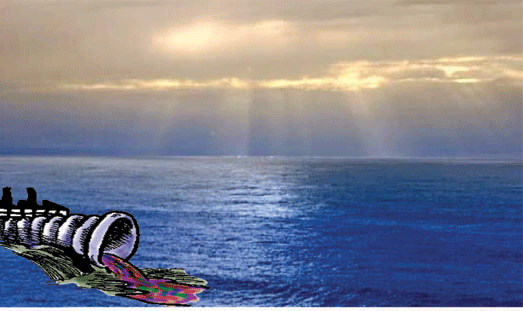
But any discharge of water – irrespective of the level of decontamination carried out – is likely to spark outrage from environmentalists, fishing operators and neighbouring countries.
Mr Tanaka said he realised there would be “negative effects, based on rumours” and efforts would have to be made to counteract these.
The pressure to dump water stems from the sheer volume (400 tonnes a day) that is being generated to keep the damaged fuel assemblies below reactors one to three cool.
Some of it is being decontaminated and recycled as cooling water, but much of it is piling up in large storage tanks hastily assembled on site. “I believe we will have to dispose of this water, whether it’s in the ocean or another way,” Mr Tanaka said.
The recent leak of 300 tonnes of water, which Mr Tanaka said yesterday might have partly seeped into the Pacific Ocean, was from one of the storage tanks. The apparent failure of the tank, and the fact it went undetected for so long, has increased pressure on power company TEPCO over its handling of the crisis – which Mr Tanaka described as “haphazard”.
“The fact that the water level was not checked on a regular basis is an indication that management was not done in a very effective way,” Mr Tanaka said.
“Even over the weekend some of our fears have come to be realised. We have detected relatively high levels of radiation around similar tanks.”
Mr Tanaka stressed that the NRA had decided to go beyond its mandate and actually provide advice and guidance to TEPCO. But these actions stop well short of the demands from some quarters for a government takeover of the emergency response.
Mr Tanaka called for a more pro-active approach from TEPCO, saying there were many other issues at the site that had the potential to become serious problems and early intervention was needed.
No comments yet.
1 This Month

10 March A LIVE WEBINAR THE REAL EFFECTS OF NUCLEAR POWER
What the Industry Isn’t Telling Us
1:00 PM Mountain, 2 pm Central, 3 pm Eastern. Live on the Keepers of the Water Facebook page

18 March Webinar @ 1 PM EST: An Assessment of SMR Projects: The Case of Canada
register for the zoom:
https://us02web.zoom.us/webinar/register/WN_o8BIIOUvQ2ONJR1nta65DQ#/registration


of the week – STOP SMALL MODULAR REACTORS IN CANADA
To see nuclear-related stories in greater depth and intensity – go to https://nuclearinformation.wordpress.com
-
Archives
- March 2026 (9)
- February 2026 (268)
- January 2026 (308)
- December 2025 (358)
- November 2025 (359)
- October 2025 (376)
- September 2025 (258)
- August 2025 (319)
- July 2025 (230)
- June 2025 (348)
- May 2025 (261)
- April 2025 (305)
-
Categories
- 1
- 1 NUCLEAR ISSUES
- business and costs
- climate change
- culture and arts
- ENERGY
- environment
- health
- history
- indigenous issues
- Legal
- marketing of nuclear
- media
- opposition to nuclear
- PERSONAL STORIES
- politics
- politics international
- Religion and ethics
- safety
- secrets,lies and civil liberties
- spinbuster
- technology
- Uranium
- wastes
- weapons and war
- Women
- 2 WORLD
- ACTION
- AFRICA
- Atrocities
- AUSTRALIA
- Christina's notes
- Christina's themes
- culture and arts
- Events
- Fuk 2022
- Fuk 2023
- Fukushima 2017
- Fukushima 2018
- fukushima 2019
- Fukushima 2020
- Fukushima 2021
- general
- global warming
- Humour (God we need it)
- Nuclear
- RARE EARTHS
- Reference
- resources – print
- Resources -audiovicual
- Weekly Newsletter
- World
- World Nuclear
- YouTube
-
RSS
Entries RSS
Comments RSS
 nuclear-news
Leave a comment