Even Miniscule Amounts of Radiation Can Be Dangerous
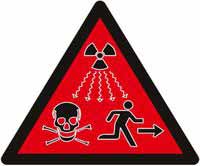 Fukushima: Think Low Level Radiation Is Harmless? Think Again… UKIAH BLOG In Around the web on August 25, 2013Time to combat radiation threat From WASHINGTON’S BLOG Cutting through the Misinformation
In response to the news that mass quantities of highly-radioactive water are flowing from Fukushima into the Pacific Ocean – and that the radioactivity is spreading to North America – the usual suspects are saying that that low-level radiation won’t hurt anyone.
Indeed, some advocate intentionally dumping all of Fukushima’s radiation into the sea as a “safe” solution.
(And some folks are pretending that a little radiation is good for you.)
The truth is quite different.
Even Miniscule Amounts of Radiation Can Be Dangerous
A major 2012 scientific study proves that low-level radiation can cause huge health problems. Science Daily reports:
Even the very lowest levels of radiation are harmful to life, scientists have concluded in the Cambridge Philosophical Society’s journal Biological Reviews. Reporting the results of a wide-ranging analysis of 46 peer-reviewed studies published over the past 40 years, researchers from the University of South Carolina and the University of Paris-Sud found that variation in low-level, natural background radiation was found to have small, but highly statistically significant, negative effects on DNA as well as several measures of health.
The review is a meta-analysis of studies of locations around the globe …. “Pooling across multiple studies, in multiple areas, and in a rigorous statistical manner provides a tool to really get at these questions about low-level radiation.”
Mousseau and co-author Anders Møller of the University of Paris-Sud combed the scientific literature, examining more than 5,000 papers involving natural background radiation that were narrowed to 46 for quantitative comparison. The selected studies all examined both a control group and a more highly irradiated population and quantified the size of the radiation levels for each. Each paper also reported test statistics that allowed direct comparison between the studies.
The organisms studied included plants and animals, but had a large preponderance of human subjects. Each study examined one or more possible effects of radiation, such as DNA damage measured in the lab, prevalence of a disease such as Down’s Syndrome, or the sex ratio produced in offspring. For each effect, a statistical algorithm was used to generate a single value, the effect size, which could be compared across all the studies.
The scientists reported significant negative effects in a range of categories, including immunology, physiology, mutation and disease occurrence. The frequency of negative effects was beyond that of random chance…….
No comments yet.
1 This Month

of the week – Shut Down Drone Warfare!


Tell the Ukrainian Government to Drop Prosecution of Peace Activist Yurii Sheliazhenko

Petition to revoke the licensing of the Near Surface Nuclear Disposal Facility (NSDF) at Chalk River. https://www.ourcommons.ca/petitions/en/Petition/Details?Petition=e-7247
To see nuclear-related stories in greater depth and intensity – go to https://nuclearinformation.wordpress.com
-
Archives
- April 2026 (7)
- March 2026 (251)
- February 2026 (268)
- January 2026 (308)
- December 2025 (358)
- November 2025 (359)
- October 2025 (376)
- September 2025 (257)
- August 2025 (319)
- July 2025 (230)
- June 2025 (348)
- May 2025 (261)
-
Categories
- 1
- 1 NUCLEAR ISSUES
- business and costs
- climate change
- culture and arts
- ENERGY
- environment
- health
- history
- indigenous issues
- Legal
- marketing of nuclear
- media
- opposition to nuclear
- PERSONAL STORIES
- politics
- politics international
- Religion and ethics
- safety
- secrets,lies and civil liberties
- spinbuster
- technology
- Uranium
- wastes
- weapons and war
- Women
- 2 WORLD
- ACTION
- AFRICA
- Atrocities
- AUSTRALIA
- Christina's notes
- Christina's themes
- culture and arts
- Events
- Fuk 2022
- Fuk 2023
- Fukushima 2017
- Fukushima 2018
- fukushima 2019
- Fukushima 2020
- Fukushima 2021
- general
- global warming
- Humour (God we need it)
- Nuclear
- RARE EARTHS
- Reference
- resources – print
- Resources -audiovicual
- Weekly Newsletter
- World
- World Nuclear
- YouTube
-
RSS
Entries RSS
Comments RSS
 nuclear-news
Leave a comment