Japan getting ready to officially discharge radioactive water to Pacific Ocean?
The government’s expanded role will likely be led by the Ministry of Economics, Trade and Industry, or METI, which has been criticized for its close ties to TEPCO and the rest of the nuclear industry
Other aspects of the Fukushima plant’s decommissioning have also been dominated by other members of Japan’s collusive “nuclear village,” as the close-knit industry is called, including reactor makers and politically connected large construction companies.

 Japanese government intervenes to shore up crippled Fukushima Daiichi nuclear plant, The Globe and Mail, MARTIN FACKLER TOKYO — The New York Times News Service , Aug. 08 2013,“……….As the scope of the latest crisis became clearer Wednesday, Japan’s popular prime minister, Shinzo Abe, ordered his government to intervene in the cleanup of the plant – taking a more direct role than any government since the triple meltdowns in 2011 qualified Fukushima as the world’s second worst nuclear disaster after Chernobyl.
Abe, a staunch defender of the country’s nuclear program, appears to have calculated that he needed to intervene to rebuild public trust and salvage a pillar of his economic revival plan: the restarting of Japan’s many idled nuclear plants………Some experts suggested Wednesday that the government’s intervention may be the first step in attempts to win public acceptance for what they say is an increasing inevitability: the dumping into the ocean of some of the less contaminated of the huge amount of water being stored in hulking tanks that are overwhelming the plant.
At a news conference last week, Shunichi Tanaka, chairman of Japan’s Nuclear Regulation Authority, seemed to lay the groundwork, saying eventually “it will be necessary to discharge water,” a possible solution likely to raise concerns not only in Japan but in other Pacific Rim countries.
Whether the government intervention will help remedy the groundwater issue is an open question, Yamaguchi and others said. The government’s expanded role will likely be led by the Ministry of Economics, Trade and Industry, or METI, which has been criticized for its close ties to TEPCO and the rest of the nuclear industry that it nurtured since before Japan’s first commercial reactor went online in the 1960s.
Other aspects of the Fukushima plant’s decommissioning have also been dominated by other members of Japan’s collusive “nuclear village,” as the close-knit industry is called, including reactor makers and politically connected large construction companies. Experts have long worried that the government erred early on by refusing to bring in other Japanese and foreign companies in leading roles despite their expertise, such as U.S. companies with experience in nuclear cleanups from Three Mile Island.
“Without involving outsiders, there will be no way to know for sure what is really happening at Fukushima Daiichi,” Yamaguchi said.
It was also not entirely clear how intensively the government would actually get involved in the cleanup, or whether it will allow TEPCO to remain in charge. Abe did not give specifics beyond directing his ministers to help resolve the water problem, which he said was causing public anxiety….. “There is no precedent in the world to create a water-shielding wall with frozen soil on such a large scale,” the government’s top spokesman, Chief Cabinet Secretary Yoshihide Suga, told reporters.
Indeed, the proposed ice wall is seen here as a symbol of both the daunting technological challenges posed by the cleanup, and the need – critics say desperation – for creative solutions as the plant, which already stores enough contaminated water to fill 160 Olympic-size swimming pools, is faced with having to store hundreds of more tons every day.
The plan calls for freezing the soil around the reactor buildings to keep out groundwater before it can become contaminated. The wall would run nearly a mile in length and reach almost 100 feet into the ground. Officials said no wall of ice on such a scale has ever been attempted before, and was thus beyond the capacities of TEPCO alone to pull off.
But even as TEPCO – and now the government – place a bet on the ambitious plans for the wall, experts have begun to raise concerns, such as that the wall will need to be consistently cooled using electricity at a plant vulnerable to power failures. The original disaster was brought on by an earthquake and tsunami that knocked out electricity. http://www.theglobeandmail.com/news/world/japanese-government-intervenes-to-shore-up-crippled-fukushima-daiichi-nuclear-plant/article13659454/
No comments yet.
1 This Month
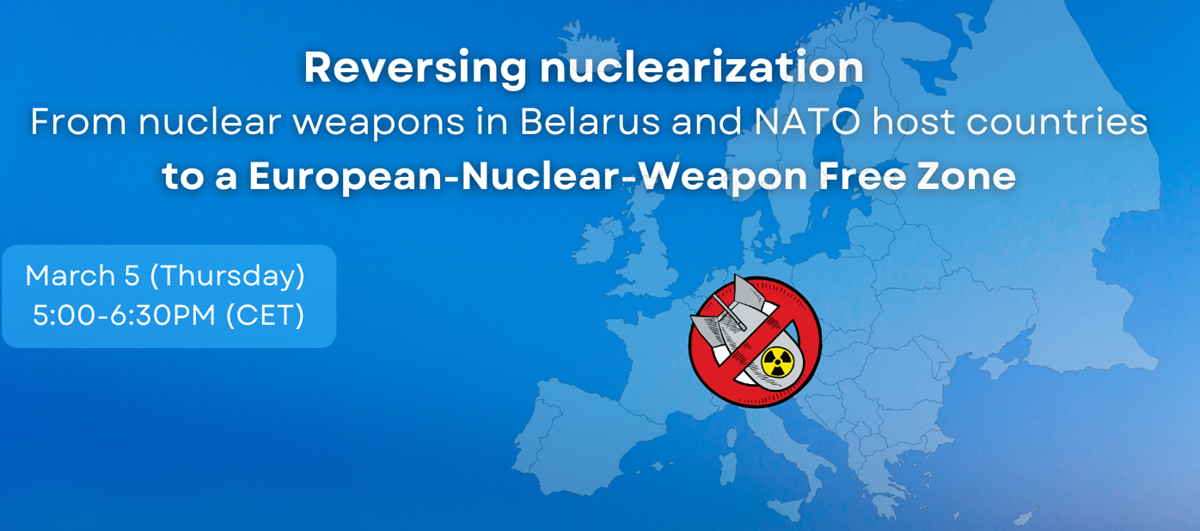
5 March -Online – Reversing nuclearization:
From nuclear weapons in Belarus and NATO host countries to a European-Nuclear-Weapon Free Zone
11am-12:30pm Eastern Time USA / 5pm-6:30pm CET

of the week – Advocating for a
nuclear free beach – https://www.samuellawrencefoundation.org/
The Samuel Lawrence Foundation advocates for a Nuclear Waste Free Beach at San Onofre, join us and take action!

10 March A LIVE WEBINAR THE REAL EFFECTS OF NUCLEAR POWER
What the Industry Isn’t Telling Us
1:00 PM Mountain, 2 pm Central, 3 pm Eastern. Live on the Keepers of the Water Facebook page

18 March Webinar @ 1 PM EST: An Assessment of SMR Projects: The Case of Canada
register for the zoom:
https://us02web.zoom.us/webinar/register/WN_o8BIIOUvQ2ONJR1nta65DQ#/registration

of the week – STOP SMALL MODULAR REACTORS IN CANADA
To see nuclear-related stories in greater depth and intensity – go to https://nuclearinformation.wordpress.com
-
Archives
- March 2026 (51)
- February 2026 (268)
- January 2026 (308)
- December 2025 (358)
- November 2025 (359)
- October 2025 (376)
- September 2025 (258)
- August 2025 (319)
- July 2025 (230)
- June 2025 (348)
- May 2025 (261)
- April 2025 (305)
-
Categories
- 1
- 1 NUCLEAR ISSUES
- business and costs
- climate change
- culture and arts
- ENERGY
- environment
- health
- history
- indigenous issues
- Legal
- marketing of nuclear
- media
- opposition to nuclear
- PERSONAL STORIES
- politics
- politics international
- Religion and ethics
- safety
- secrets,lies and civil liberties
- spinbuster
- technology
- Uranium
- wastes
- weapons and war
- Women
- 2 WORLD
- ACTION
- AFRICA
- Atrocities
- AUSTRALIA
- Christina's notes
- Christina's themes
- culture and arts
- Events
- Fuk 2022
- Fuk 2023
- Fukushima 2017
- Fukushima 2018
- fukushima 2019
- Fukushima 2020
- Fukushima 2021
- general
- global warming
- Humour (God we need it)
- Nuclear
- RARE EARTHS
- Reference
- resources – print
- Resources -audiovicual
- Weekly Newsletter
- World
- World Nuclear
- YouTube
-
RSS
Entries RSS
Comments RSS
 nuclear-news
Leave a comment