The development of MOX nuclear fuel, and the Global Nuclear Energy Partnership
an industrial-scale facility in America capable of turning plutonium into reactor fuel — a key step on the path to a revived breeder program.
The MOX plant was “the plutonium nose under the tent”
Ernest Moniz…his June 2000 deal, approved by the two country’s presidents, called for both sides to use the  plutonium mostly as a reactor fuel, as Moscow sought.
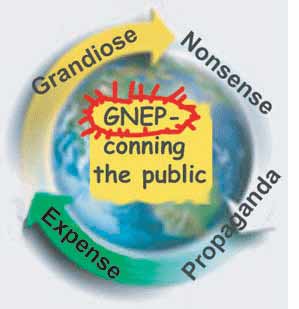 The George W. Bush administration subsequently embraced a plan to promote breeder reactors and the recycling of plutonium, not just domestically, but by other nuclear states including Russia, in a controversial program known as the Global Nuclear Energy Partnership. . Formal papers ordering the start of the MOX plant construction were signed in August 2007 by a former chief of the Bush-Cheney energy policy transition team, according to an internal Energy Department document.
How a Massive Nuclear Nonproliferation Effort Led to More Proliferation, The Atlantic, DOUGLAS BIRCH AND R. JEFFREY SMITHJUN 24 2013 SAVANNAH RIVER SITE, South Carolina “,……….Breeder reactors, in a kind of Atomic Age alchemy, can manufacture more plutonium than they consume, inspiring dreams of almost limitless energy. By generating fast-moving neutrons that transform the uranium mixed into their fuel into additional plutonium, they hold the promise of a significant energy reward: One gram of plutonium can produce more energy than a ton of oil. At one time or another, breeders have been pursued by every major nuclear nation.
Until 1983, the federal government’s biggest civilian nuclear program was the promotion of plutonium breeder reactors, according to von Hippel. But breeder reactors are costly to build and operate, have special safety and reliability problems, and have long raised proliferation concerns. President Jimmy Carter decided not to pursue them, principally out of worry that making a lot more plutonium would eventually promote the spread of nuclear weapons worldwide.
His decision, which was opposed by the U.S. nuclear industry, led to a fundamental disagreement with Russia. “The U.S. has always looked at plutonium as a proliferation risk,” said Kenneth Bromberg, who helped set up the Energy agency’s Office of Fissile Materials Disposition in the early 1990s and served as its chief from 2004 until his retirement in 2011. “The Russians have always looked at it as an energy source,” ideal for use in breeders.
In early discussions, Nikolai Yegorov, the deputy minister at Russia’s Ministry of Atomic Energy, described the American plan to immobilize the plutonium in ceramic and glass as foolhardy. Yegerov told Matt Bunn, an MIT-trained policy expert who helped craft the deal, that “If the United States wants to throw gold down the toilet, let them.”
Ernest Moniz, an MIT physicist who became Energy Secretary last month, played a key role in resolving the early impasse, while serving as a special negotiator for the Clinton administration. His June 2000 deal, approved by the two country’s presidents, called for both sides to use the plutonium mostly as a reactor fuel, as Moscow sought.
But the deal also demanded that almost all of the fuel be burned in standard reactors, from which Russia could not extract any residual plutonium in spent fuel for several decades, a significant nonproliferation achievement.
To encourage Moscow to proceed, Washington agreed to forego the burial option for all but 9 tons of its plutonium. Washington also promised to share technology and help fund the Russian effort, including construction of the Russian MOX fuel plant.
Some experts say that lurking behind that deal were not-so-hidden political and industry agendas to revive the development of breeder reactors. Breeder advocates were pleased because it would create, for the first time, an industrial-scale facility in America capable of turning plutonium into reactor fuel — a key step on the path to a revived breeder program.
The MOX plant was “the plutonium nose under the tent,” said Henry Sokolski, who served as a senior nonproliferation official under President Reagan.
The U.S. breeder revival got a more concerted push in 2001, when an industry-friendly energy task force formed by Vice President Dick Cheney called for nuclear “fuel treatment technologies” that would lead to the recovery and reuse of plutonium for electricity production.
A year later, the Energy Department dropped the plan to encase some of the U.S. plutonium in glass or ceramic, citing the Russian insistence on burning plutonium as a fuel and asserting it was too costly to pursue both approaches.
The George W. Bush administration subsequently embraced a plan to promote breeder reactors and the recycling of plutonium, not just domestically, but by other nuclear states including Russia, in a controversial program knownas the Global Nuclear Energy Partnership. . Formal papers ordering the start of the MOX plant construction were signed in August 2007 by a former chief of the Bush-Cheney energy policy transition team, according to an internal Energy Department document.
Russia’s construction of its own MOX fuel factory nonetheless stalled as the two countries squabbled about whether U.S. contractors working on it would have immunity from Russian lawsuits. ……..”http://www.theatlantic.com/international/archive/2013/06/how-a-massive-nuclear-nonproliferation-effort-led-to-more-proliferation/277140/
No comments yet.
1 This Month

of the week – Shut Down Drone Warfare!


Tell the Ukrainian Government to Drop Prosecution of Peace Activist Yurii Sheliazhenko

Petition to revoke the licensing of the Near Surface Nuclear Disposal Facility (NSDF) at Chalk River. https://www.ourcommons.ca/petitions/en/Petition/Details?Petition=e-7247
To see nuclear-related stories in greater depth and intensity – go to https://nuclearinformation.wordpress.com
-
Archives
- April 2026 (68)
- March 2026 (251)
- February 2026 (268)
- January 2026 (308)
- December 2025 (358)
- November 2025 (359)
- October 2025 (376)
- September 2025 (257)
- August 2025 (319)
- July 2025 (230)
- June 2025 (348)
- May 2025 (261)
-
Categories
- 1
- 1 NUCLEAR ISSUES
- business and costs
- climate change
- culture and arts
- ENERGY
- environment
- health
- history
- indigenous issues
- Legal
- marketing of nuclear
- media
- opposition to nuclear
- PERSONAL STORIES
- politics
- politics international
- Religion and ethics
- safety
- secrets,lies and civil liberties
- spinbuster
- technology
- Uranium
- wastes
- weapons and war
- Women
- 2 WORLD
- ACTION
- AFRICA
- Atrocities
- AUSTRALIA
- Christina's notes
- Christina's themes
- culture and arts
- Events
- Fuk 2022
- Fuk 2023
- Fukushima 2017
- Fukushima 2018
- fukushima 2019
- Fukushima 2020
- Fukushima 2021
- general
- global warming
- Humour (God we need it)
- Nuclear
- RARE EARTHS
- Reference
- resources – print
- Resources -audiovicual
- Weekly Newsletter
- World
- World Nuclear
- YouTube
-
RSS
Entries RSS
Comments RSS
 nuclear-news
Leave a comment