Travesty of justice – Bradley Manning on trial
 The United States should be in the dock, not Bradley Manning, The Independent, Owen Jones, 2 June 2013 The whistleblower has allowed us to scrutinise the hidden realities of US power “…..Today, American hero stands in the dock, damned for a relatively tiny ray of light he shone on the darker recesses of this elite. Over three years ago, US soldier Bradley Manning – even now just 25 years old – leaked 250,000 US diplomatic cables and half a million army reports. There has never been a bigger leak of classified material in the history of the United States.
His punishment has already been severe. According to Juan Méndez, the UN special rapporteur on torture, he has faced cruel, inhuman and degrading treatment. For months, he was deprived of human contact. He was stripped of his clothes, left without privacy, and forced to sleep without any darkness. In 2011, P J Crowley was forced to resign as the US state department’s official spokesman after slamming Manning’s treatment as “ridiculous and counterproductive and stupid”. Continue reading
Compensation for Fukushima evacuees’ radiation anxiety
 Fukushima Evacuees To Get Radiation Uncertainty Compensation http://www.rttnews.com/2128844/fukushima-evacuees-to-get-radiation-uncertainty-compensation.aspx?type=gn&utm_source=google&utm_campaign=sitemap 6/3/2013 A government-backed arbitration body in Japan directed the operator of the tsunami-wrecked Fukushima nuclear power plant to pay compensation to former residents of a district for radiation exposure and future healthuncertainties.
As per a directive issued by the Nuclear Damage Claim Dispute Resolution Center, the Tokyo Electric Power Company (TEPCO) has to pay about $10,000 each to pregnant women and those aged below 18 years. The other residents of Nagadoro district would get $5,000 each, Japanese media reported on Sunday.
Nagadoro is near the Fukushima plant where radiation levels remain high and it is the only district that the government declared uninhabitable for a long period.
An evacuation order for the area was issued more than a month after the nuclear accident on March 11, 2011. The arbitrators accepted the residents’ claim of fear and anxiety as they had lived without any protection against high radiation doses because of their delayed evacuation. The residents had already received compensation for having to evacuate, but the amount did not cover health anxieties. Lawyers representing the residents said it was for the first time that compensation for health anxietywas granted.
The massive tsunami severely damaged four reactors at the Fukushima plant north of Tokyo, knocking out its cooling systems and triggering meltdowns and radiation leaks. Tens of thousands of people fled their homes in the worst atomic disaster since the 1986 Chernobyl nuclear accident.
The fight to save Grand Canyon from uranium radioactive contamination
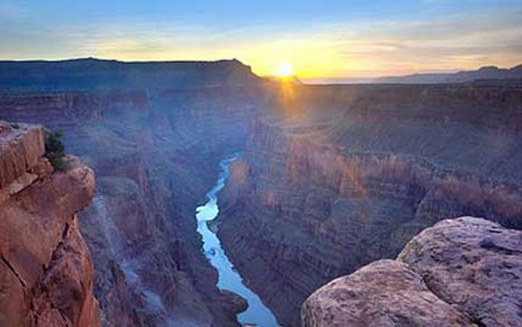 Tribes, Enviros Fight Uranium Mining Near Grand Canyon KPBS, June 3, 2013 By Laurel Morales “……environmentalists and Indian tribes oppose mining near the canyon. On a recent sunny day EcoFlight pilot Gary Kraft steered the six-seat Cessna onto the tarmac of the Grand Canyon Airport and gracefully took off. He flew a group over the Grand Canyon to check out mines from above.
“As Gary brings the plane around we’ll get a little better look at the site,” said Grand Canyon Trust’s Roger Clark who served as our guide.
He has been fighting uranium mining companies for many years. Last year he scored a victory. The Obama Administration put a ban on any new mining claims on federal land surrounding the park. In the 1980s and 1990s a dozen mines pocked the landscape surrounding the park. All but a few have been cleaned up and reseeded. But a handful of older claims are still being mined. Continue reading
Nuclear weapons countries determined to keep those weapons
Nuclear weapon-possessing states will not give up arsenals: Think tank http://www.presstv.ir/detail/2013/06/03/306894/nuke-states-will-not-give-up-arsenals/ 3 June 13, A Swedish think tank report says the nuclear weapon-possessing states of the US, the UK, France, Russia and China are either modernizing their nuclear weapons or appear determined to keep their nuclear arsenals indefinitely.
Stockholm International Peace Research Institute (SIPRI) published on Monday its latest yearbook, which assesses the current state of international security, armaments and disarmament.
The report said the five states are in the process of deploying new nuclear weapon delivery systems or have announced programs to do so.
“Once again there was little to inspire hope that the nuclear weapon-possessing states are genuinely willing to give up their nuclear arsenals. The long-term modernization programs under way in these states suggest that nuclear weapons are still a marker of international status and power,” said SIPRI Senior Researcher Shannon Kile.
The report also revealed that at the start of 2013, the United States, Russia, the UK, France, China, India, Pakistan and the Israeli regime possessed roughly 4,400 operational nuclear weapons.
When counting all nuclear warheads, these eight states together have nearly 17,300 nuclear weapons. SIPRI estimated that the Israeli regime has about 80 intact nuclear weapons, including 50 Jericho II medium-range ballistic missiles and 30 for gravity bombs carried by aircraft.
In addition, the think tank also believes that the Tel Aviv regime has produced non-strategic nuclear weapons, including artillery shells and atomic demolition munitions.
Separate reports say that the Israeli regime has between 200 and 400 nuclear warheads. Tel Aviv continuously rejects all the regulatory international nuclear agreements, particularly the Non-Proliferation Treaty, and it refuses to allow its nuclear facilities to come under international regulatory inspections.
USA’s Hanford nuclear radioactive wasteland
In all, since that very first leak in the 1950s, at least 69 tanks are known to have excreted more than 1 million gallons of waste – and possibly far more – into the soil.
Nuclear dump an environmental wasteland 3 New NZ, By Shannon Dininny, 3 June 13, A stainless steel tank the size of a basketball court lies buried in the sandy soil of southeastern Washington state, an aging remnant of US efforts to win World War II. The tank holds enough radioactive waste to fill an Olympic-sized swimming pool. And it is leaking.
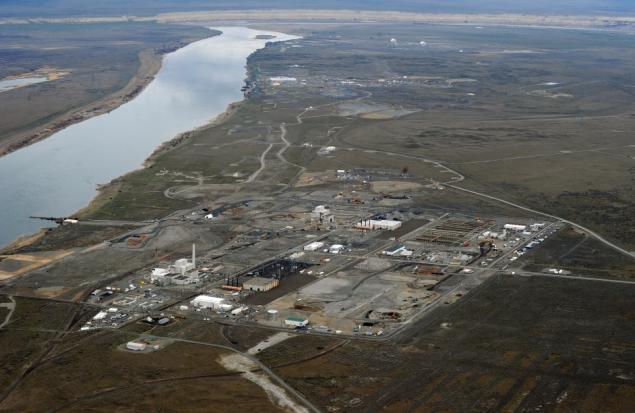
For 42 years, tank AY-102 has stored some of the deadliest material at one of the most environmentally contaminated places in the country: the Hanford Nuclear Reservation. Continue reading
Britain’s rather horrible plutonium and Mixed Oxide Fuel (MOX) dilemma
 “……….The Government wants to try and turn plutonium into a fuel which can be used
Another try to fix Fukushima reactor – inject cement-like grout
Cement-like grout to be injected into Fukushima reactor? (PHOTO) http://enenews.com/cement-like-grout-to-be-injected-into-fukushima-reactor-photo Tepco Handout, May 30, 2013 (Summary translation of page 26 by Fukushima Diary): […] the […] the committee of experts suggested Tepco to fill the torus room with grout. […] Tepco plans to conduct the feasibility study with United States Department of Energy this year. […] They assume it takes 1.5 years to make planning, and 2 years to inject the grout material. […] The committee points out the benefit of using grout is it doesn’t directly touch the molten fuel. However, it hasn’t been confirmed that the fractured molten fuel is not really in the torus rooms.
Department of Energy: Grouting—Grout is a promising option to stop water leakage that’s occurring between reactor and turbine buildings at Fukushima Daiichi’s reactor units, and could be a key step toward facilitating decommissioning of units 1-4. SRNL has extensive experience in grout development and also has operating experience with grouting components reactors and other facilities.
Reuters: The company may resort to pouring a cement-like material into the rectors’ suppression chambers to plug leaks it has not been able to locate, Suzuki said. “One approach we are considering is putting grout, like cement,” he said. “In other words, filling it in. That would block all the holes.”
See also: “Too many holes” in Fukushima reactors? May have to fill up suppression chambers with cement -Tepco
Britain is missing its excellent renewable energy opportunities
Renewable energy is clean, cheap and here – what’s stopping us? Guardian UK, Ashley Seager, 3 June 13 Energies such as solar and wind have seen dramatic price falls. The revolution in non-grid energy should be embraced by the UK The report from the Committee on Climate Change arguing that investing in renewable energy would eventually save consumers a lot of money is spot on.
We are regularly told by conventional utility companies, many politicians and commentators that energies such as solar and wind are hopelessly expensive and reliant on enormous subsidy.
But this is simply wrong. Renewables have seen such dramatic price fallsin the past few years that they are threatening to upset the world as we know it and usher in an almost unprecedented boom in the spread of cheap, clean, home-produced energy.
Solar will be the cheapest form of power in many countries within just a few years. In places such as California and Italy it has already reached so-called “grid parity”. Onshore wind, on a piece of land not constrained by years of planning delays, is already the cheapest form of energy on earth. These are not wild claims – those are figures from General Electric, Citibank and others…….
And solar is starting to pay its subsidy back. Germany now has more than 30 gigaWatt peak (gWp) of solar plants installed, such that on almost all days in the spring, summer and autumn, solar energy surges into the grid at a time when demand is at is strongest (air conditioning etc is running like mad) and when spot market energy prices are at their highest.
This peak price is being forced down by solar, helping to reduce wholesale prices. The big energy companies hate this because this peak is where they make their money. Solar in Germany is almost down to wholesale prices – in sunnier countries it already is…..
so-called “distributed” (ie non-grid) energy is where the real revolution is taking place. Distributed energy not only saves on the huge amount of energy lost in grid distribution, but it helps lighten the load on the grid. Whole German towns are going completely renewable. …. http://www.guardian.co.uk/commentisfree/2013/jun/01/renewable-energy-clean-cheap-uk
The Asian nuclear arms race
Asian countries pile up nuclear arms DW, 3 June 13 The arms race in
Asia has increased since 2008 mainly due to growing tensions between
China and Japan, the two Koreas, and India and Pakistan, says the
Stockholm International Peace Research Institute in its report.
The Stockholm International Peace Research Institute (SIPRI) says in
its latest report that China, India and Pakistan have added more
nuclear weapons to their stock in the last few years.
The annual report claims that while China appears to be expanding its
nuclear arsenal, India and Pakistan are increasing both their nuclear
as well as their conventional weapons.
Pakistan is also enhancing its plutonium production at the central
Khushab city, which is home to the Heavy Water and Natural Uranium
Research Reactor – an important component of the Islamic state’s
special weapons program.
SIPRI further says that in 2012 China, India and Pakistan added 10
warheads each to their nuclear storage. China, it says, now has 250
nuclear warheads, whereas Pakistan possesses 100 to 120, and India 90
to 110.
The three Asian countries are home to over 2.7 billion people, which
is nearly 40 percent of the global population…..
http://www.dw.de/asian-countries-pile-up-nuclear-arms/a-16856178
How USA built a forest in order to atomic bomb it
How Do We Know Nuclear Bombs Blow Down Forests? Because we built a forest in Nevada and blew it down. Slate, By Ann Finkbeiner May 31, 2013, “……. Once the United States had built the first atomic bomb in 1945, it then improved it by building the first hydrogen bomb in 1952. It then began working on building more portable bombs, and since the Soviet Union had done the same, the United States also wondered about the bombs’ effects. So in the early 1950s, the government set up models of all the things that bombs could blow up—houses, bridges, cars, pigs, sheep—and exploded bombs near them. The government did this for at least a decade and didn’t stop until it and the rest of the world banned above-ground testing. The tests, many of them at the Nevada Test Site, were called “shots,” and they had names.
The shot called Encore was on May 8, 1953, and among the many effects it tested was what a nuclear bomb would do to a forest. The Nevada Test Site wasn’t replete with forests, so the U.S. Forest Service brought 145 ponderosa pines from a nearby canyon and cemented them into holes lined up in tidy rows in an area called Frenchman Flat, 6,500 feet from ground zero. Then the Department of Defense air-dropped a 27-kiloton bomb that exploded 2,423 feet above the model forest. The heat set fire to the forest, then the blast wave blew down the trees and put out some fires and started others.Here’s the video.
I’m not sure what I make of this. Certainly in the 1950s nobody was controlling nuclear weapons; they were alive, reproducing, and roaming the world. So knowing precisely what damage they cause might help mitigate that damage. And certainly I’m not going to think about the more distant and longer-term effects of those shots, more than 200 of them above ground, except to say that as a 10-year old girl in Illinois, even I wasn’t safe.
I do know I’m impressed by the amount of directed effort, the thoroughness of thought that went into cutting down 145 ponderosa pines, trucking them out of the canyon, digging holes, filling them with concrete, sticking the trees into them, dropping the bomb, and beginning the measurements. And though the United Nations belatedly began negotiating a ban on above-ground tests in 1955, the Limited Test Ban Treaty didn’t get signed until 1963. That was the limited treaty; the comprehensive one banning all tests everywhere took another 40-plus years, and even now the United States hasn’t ratified it.* I’m most impressed by the contrast between the pointed determination of the test shots and the infinite dithering about the (yes, infinitely more complicated) test bans. I might suspect that human nature and its governments have a dark side.
Add this little public service booklet, illustrated with the drawing above and written by the Atomic Energy Commission to the people of Nevada:
“You are in a very real sense active participants in the Nation’s atomic test program. … Some of you have been inconvenienced by our test operations. At times some of you have been exposed to potential risk from flash, blast, or fall-out. You have accepted the inconvenience or the risk without fuss, without alarm, and without panic. Your cooperation has helped achieve an unusual record of safety.”
USA’s Dept of Energy’s plans for allowing recycling of radioactive metals
Nuclear site scrap metal could be headed to recyclers June 2, 2013 By Len Boselovic / Pittsburgh Post-Gazette A U.S. Department of Energy proposal to recycle scrap metal from its nuclear facilities has set off the radiation detectors of environmental groups, some in the metals industry and one member of Congress.
But the industry group representing metals recyclers says current safeguards will prevent any radioactive scrap from getting into jewelry, knives and forks and other common goods consumers use every day.
The DOE’s draft proposal, issued in December, comes 13 years after then Energy Secretary Bill Richardson suspended shipments of metal scrap from the agency’s sites because of public safety concerns.
“This involves risk. Radiation causes cancer,” said Daniel Hirsch, president of the Committee to Bridge the Gap. “The U.S. population should not be used as a disposal facility.”
Mr. Hirsch — whose nonprofit examines nuclear safety, waste disposal and related issues — said rescinding the scrap recycling moratorium that has been in place since 2000 demonstrates the Energy Department’s “callous disregard for the public.”……
Despite radiation detectors at scrap yards and metals plants, there have been cases of radioactive metals making it into mills as well as onto store shelves.
Last year, Bed, Bath and Beyond pulled metal tissue boxes out of about 200 stores after it was discovered that the household items emitted low levels of radiation…….http://www.post-gazette.com/stories/business/news/nuclear-site-scrap-metal-could-be-headed-to-recyclers-690043/#ixzz2VBlSDy22
Numbers of nuclear warheads in various countries 2013
Think Tank: China Boosts Nuclear Arms Arsenal abc news, By MALIN RISING Associated PressSTOCKHOLM June 3, 2013 (AP)
20132012
Russia 8,50010,000
United States 7,7008,000
France 300300
China 250240
United Kingdom225225
Pakistan 100-12090-110
India 90-11080-100
Uranium and thorium distribution rules, from NRC
NRC Finalizes Rules on Using & Distributing Uranium & Thorium http://smnewsnet.com/archives/66243 2 June 13, The Nuclear Regulatory Commission is amending its regulations for products and materials containing unenriched uranium and thorium, also known as source material. The changes include new requirements for distributing source material and licensing its use.
Manufacturers and importers of products that can be used without a license—such as welding rods and gas lantern mantles that contain thorium, and decorative glassware containing uranium—will now need to apply to the NRC for specific licenses to distribute these products. Such licenses will impose new requirements for labeling, quality control, reporting and recordkeeping.
The new regulations also modify distribution, possession and use requirements for small quantities of source material that can be used or transferred without a specific license. Distributors of small quantities must now apply for specific licenses. For source material being processed or in a dispersible form, such as liquid or powder, the limit on the use or transfer at any one time without a license is decreasing from 15 to 3.3 pounds; the annual limit will drop from 150 to 15.4 pounds. Limits are not changing for anyone possessing source material in a solid, non-dispersible form (such as display samples of depleted uranium metal), removing uranium from drinking water, or determining the concentration of uranium and thorium in a material at a laboratory.
Finally, the new regulations expand the exemption from licensing for optical lenses containing thorium to include lenses and mirrors coated with or containing uranium or thorium. These products are typically used in lasers or other high-technology optical systems.
These new license requirements and possession limits are intended to ensure those who possess source material do so safely, and that the NRC has a better understanding of how much source material is being distributed annually.
China pledges no pre-emptive nuclear strike
Shangri-La Dialogue: China reiterates ‘no-first-use’ nuclear pledge Straits Times News Jun 02, 2013 CHINA is maintaining its pledge not to be the first to use nuclear weapons in a conflict, a top Chinese general said on Sunday.
Omission of the “no-first-use” pledge in a recently released defence
white paper had created ripples in military circles and sparked
speculation that China may have dropped the policy.
“I want to make a solemn statement that the Chinese government will
never discard our pledge of no first-use of nuclear arms,”
Lieutenant-General Qi Jianguo told the Shangri-La Dialogue security
forum in Singapore.
“We have been sticking to this policy for half a century, and its
facts have proven that it is not only in the interest of the Chinese
people but also of the people of all the world.” ….. subscribers
only http://www.straitstimes.com/breaking-news/asia/story/shangri-la-dialogue-china-reiterates-no-first-use-nuclear-pledge-20130602
They’re back in the Pacific – Russian nuclear submarines
Russian nuclear submarines resuming patrols in southern hemisphere NewHaven Register, June 02, 2013 By Alexei Anishchuk, Reuters MOSCOW — Russia plans to resume nuclear submarine patrols in the southern seas after a hiatus of more than 20 years following the break-up of the Soviet Union, Itar-Tass news agency reported on Saturday, in another example of efforts to revive Moscow’s military.
The plan to send Borei-class submarines, designed to carry 16 long-range nuclear missiles, to the southern hemisphere follows President Vladimir Putin’s decision in March to deploy a naval unit in the Mediterranean Sea on a permanent basis starting this year.
“The revival of nuclear submarine patrols will allow us to fulfill the tasks of strategic deterrence not only across the North Pole but also the South Pole,” state-run Itar-Tass cited an unnamed official in the military General Staff as saying.
The official said the patrols would be phased in over several years. The Yuri Dolgoruky, the first of eight Borei-class submarines that Russia hopes to launch by 2020, entered service this year….. http://nhregister.com/articles/2013/06/02/news/60cae553-ae3d-4c89-bc59-b279d1f680de.txt
1 This Month

of the week – Shut Down Drone Warfare!


Tell the Ukrainian Government to Drop Prosecution of Peace Activist Yurii Sheliazhenko

Petition to revoke the licensing of the Near Surface Nuclear Disposal Facility (NSDF) at Chalk River. https://www.ourcommons.ca/petitions/en/Petition/Details?Petition=e-7247
To see nuclear-related stories in greater depth and intensity – go to https://nuclearinformation.wordpress.com
-
Archives
- March 2026 (237)
- February 2026 (268)
- January 2026 (308)
- December 2025 (358)
- November 2025 (359)
- October 2025 (376)
- September 2025 (257)
- August 2025 (319)
- July 2025 (230)
- June 2025 (348)
- May 2025 (261)
- April 2025 (305)
-
Categories
- 1
- 1 NUCLEAR ISSUES
- business and costs
- climate change
- culture and arts
- ENERGY
- environment
- health
- history
- indigenous issues
- Legal
- marketing of nuclear
- media
- opposition to nuclear
- PERSONAL STORIES
- politics
- politics international
- Religion and ethics
- safety
- secrets,lies and civil liberties
- spinbuster
- technology
- Uranium
- wastes
- weapons and war
- Women
- 2 WORLD
- ACTION
- AFRICA
- Atrocities
- AUSTRALIA
- Christina's notes
- Christina's themes
- culture and arts
- Events
- Fuk 2022
- Fuk 2023
- Fukushima 2017
- Fukushima 2018
- fukushima 2019
- Fukushima 2020
- Fukushima 2021
- general
- global warming
- Humour (God we need it)
- Nuclear
- RARE EARTHS
- Reference
- resources – print
- Resources -audiovicual
- Weekly Newsletter
- World
- World Nuclear
- YouTube
-
RSS
Entries RSS
Comments RSS
 nuclear-news