India’s long range missile to have Multiple Nuclear Warheads
India’s Agni-V ICBM to Carry Multiple Nuclear Warheads The Diplomat, By Zachary Keck May 31, 2013 India is reconfiguring its longest-range missile to enable it to carry multiple nuclear warheads, Chennai-based The Hindu reported on Wednesday, citing a senior Indian official.
V.K. Saraswat, Director-General of the Defence Research and Development Organisation, told the newspaper that a team is modifying the Agni-V to give it the ability to carry Multiple Independently Targetable Re-entry Vehicles (MIRVs).
“Work on that is going on and it is at design stage,” Saraswat told The Hindu.
The Agni-V is a nuclear-capable three-stage, solid-fuel missile with an initial range of 5,000 kilometers that will likely be extended to over 5,5000 kms, making it an Inter-Continental Ballistic Missile (ICBM). India first tested the Agni-V last April, and the launch was a success…… http://thediplomat.com/flashpoints-blog/2013/05/31/indias-agni-v-icbm-to-carry-multiple-nuclear-warheads/
Indigenous international co-operation strengthened – World Indigenous Network conference
 Native People More Than Just Park Rangers By Milagros Salazar DARWIN, Australia, May 30 2013 (IPS) – Some good-byes can actually mean the start of a long road working together. That was how it felt at the end of the World Indigenous Network (WIN) conference in this northern Australian city.
The big challenge is to consolidate “the indigenous network so its collective voice can be heard” and to get governments to implement its proposals, said one of the 10 speakers chosen by the delegations from more than 50 countries to sum up what was discussed in four days of sessions at the May 26-29 conference.
The gathering, supported by the Australian government, enabled face-to-face exchanges among indigenous people from around the world, who shared best practices in conservation of ecosystems and biodiversity and in the sustainable use of protected natural areas in Africa, Asia, Latin America, Canada and Australia.
The delegates to the conference of the “international network of indigenous and local community land and sea managers” stressed the importance of the world recognising that for ages, indigenous people have protected the land and sea thanks to their ancestral knowledge, and that their culture and way of life depends on their territories……
In the full auditorium during the closing session, perhaps the most sensitive issue was brought up by the representatives of Latin America, whose spokespersons pointed out that the question of defending indigenous territories was glaringly absent during the conference……..
The Latin American delegation, mainly made up of people from Ecuador and Brazil, as well as activists from Bolivia, Colombia, Mexico and Peru, said they went “one step further” by demanding that governments recognise indigenous rights over their ancestral territories.
“It’s not just about indigenous people taking care of parks and protected natural areas, but about a question of legitimacy, of states recognising that we have been the owners of the territory for a very long time,” Paulina Ormaza, an indigenous woman who formed part of the group from Ecuador, told IPS…….
The Equator Initiative is a partnership that brings together the United Nations, governments, civil society, businesses, and grassroots organisations to build the capacity and raise the profile of local efforts to reduce poverty through the conservation and sustainable use of biodiversity. http://www.ipsnews.net/2013/05/native-people-more-than-just-park-rangers/
South African renewable energy investment by Google
Google Is Investing in the Next Hotspot for Renewable Energy: South Africa By Todd Woody, Quartz | National Journal 30 May 13, There’s a place where a developer can propose, finance and build a big solar power project in a matter of months. That place is notCalifornia, Germany or China. It’s South Africa. And the country’s embrace of renewable energy has attracted investors like Google, which today said it is helping finance a 96 megawatt (MW)photovoltaic power plant in the Northern Cape province.
South Africa had “the highest growth in clean energy investment in the world last year,” Rick Needham, Google’s director of energy and sustainability, noted in a blog post about the Jasper Power Project. Google has put more than $1 billion into renewable energy, but this is only its second overseas venture. (The company put $5 million into a German photovoltaic power plant in 2011.) The search giant’s stake in Jasper is relatively small—103 million rand, or $12 million of the $260 million total cost—but the solar power station will be one of Africa’s largest, supplying enough electricity to power 30,000 homes.
Latest from Quartz: South Africa aims to install 20,000 MW of renewable energy over the next 15 years. That’s attracted SolarReserve, a California-based startup, which is developing the Jasper project as well as two other 75 MW photovoltaic power plants. …… http://news.yahoo.com/google-investing-next-hotspot-renewable-energy-south-africa-132603943.html
South Korea seeking uranium enrichment, despite its previous pledges
Two-Decade-Old Pledge Complicates South Korean Nuclear Goals National Journal, By Elaine M. Grossman May 30, 2013 | South Korea’s designs on producing atomic fuel recently scotched a 2014 trade deal with the United States, but could yet have new ramifications: Potentially shattering a twenty-one-year-old pledge Seoul made to never process sensitive nuclear materials, according to issue experts.
“By dint of the Joint Declaration of 1992, South Korea has said it will not possess enrichment or reprocessing facilities on its peninsula,” Thomas Moore, deputy director of the Proliferation Prevention Program at the Center for Strategic and International Studies, said at a recent panel discussion. …………http://www.nationaljournal.com/nationalsecurity/two-decade-old-pledge-complicates-south-korean-nuclear-goals-20130530
Finland and Poland to co-operate in renewable energy investments
Poland, Finland seek cleaner Baltic, renewable energy investments GDANSK, Poland, May 31 (UPI) –– Finland and Poland are looking to cooperate on cleaning up the Baltic Sea and renewable energy investments, Finnish Prime Minister Jyrki Katainen says….. http://www.upi.com/Business_News/Energy-Resources/2013/05/31/Poland-Finland-seek-cleaner-Baltic-renewable-energy-investments/UPI-68641369972920/#ixzz2UvZgFAIt
Upsurge of phytoplankton observed near the Japan deep
Posted by Mochizuki on May 30th, 2013
According to Japan Agency for Marine-Earth Science and Technology, Cs-134 was detected from 7300m deep in the Pacific only 4 months after the Fukushima nuclear accident.
The location is in approximately 115km east from the epicenter, 4.9km east from the trench axis of the Japan Deep.
From their press release of 5/29/2013, 20 Bq/Kg of Cs-134 was measured from the the sea ground sediment (0~1cm depth) in July of 2011. It proves the Fukushima contamination reached 7300m deep in the Pacific detecting Cs-134.
They observed the upsurge of phytoplankton around the Japan deep from late March to early April in 2011. They assume Cs-134 fell down with the mass of marine snow.
Also, at the point of 110km east from the epicenter, they observed the local strong current with a certain direction. Due to this strong current, dead bodies of sea creatures and the sorts of fish that can’t fix themselves at one location were carried to the deeper area. Almost no living benthos was found.
At both of the 110km area and 115km area, they observed mineral particles causing seawater extraordinary unclear. The thickness of the unclear layers were 30m and 50m in each.
http://www.jamstec.go.jp/j/about/press_release/20130529/
Iori Mochizuki
The real problem behind Fukushima accident was “Everyone wanted a LIE.”
Fukushima accident was physically an end. However, it was socially nothing but a check point. As time passes, it’s becoming clear.
By taking advantage of their old brand as “hardworking and honest”, they were depraved to blind themselves from reality.
Media blackout can’t stand without the demand.
By sacrificing the long-term benefit, they will increasingly seek short-term benefit. We don’t have a long way to convergent point.
Not to mention, Fukushima Diary says No to it, anytime, anywhere.
Update and clarification on Japanese deep sea waste dumps
Op-Ed by Arclight2011
7 March 2013
https://nuclear-news.net/2013/04/07/update-and-clarification-on-japanese-deep-sea-waste-dumps/
One of the overlooked subjects concerns the undersea waste dumps located approximately 200 Km off the Japanese coast. These dumps need monitoring for more than just cesium.
Recent evidence shows us the approximate position of these dumps and I have been collecting the data together to find out if these dumps were affected by the great earthquake of March 2011 that caused 3 meltdowns at Fukushima Daichi.
The first evidence to look at is from Ian Fairlies presentation from the Helen Caldicott Symposium in New York. Below is a diagram of the area most impacted by the initial Large earthquake.
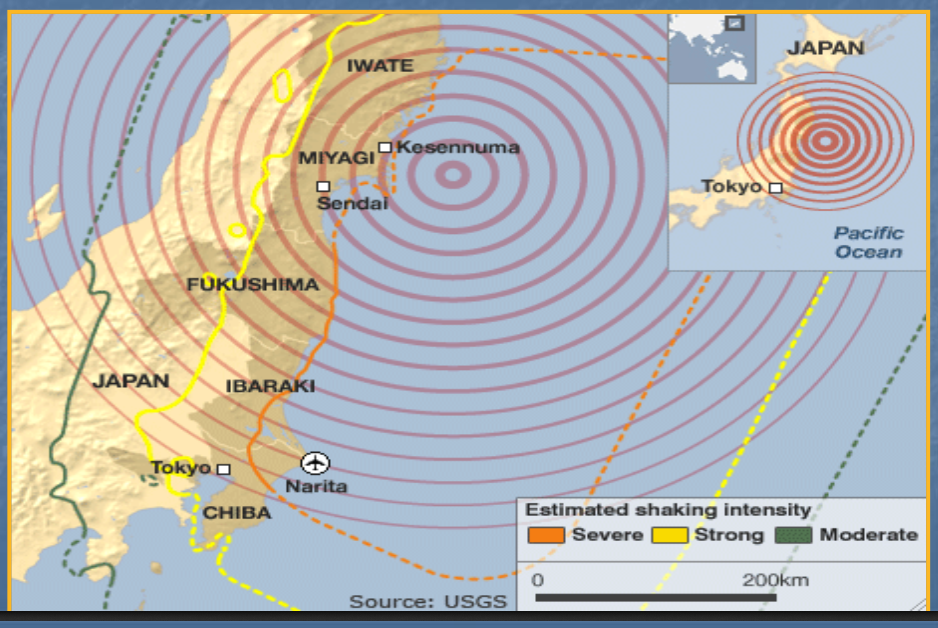
(It might be worth noting that the area of extreme shaking stops at the coast, leaving the nuclear power stations seemingly unaffected. I am only suspicious as Ian Fairlie also used data from Richard Wakeford (a Professor and ex BNFL sellafield) as evidence for the dose measurements. So, the dose measurements found on this PDF are likely an underestimate. There are many reasons to distrust Richard Wakeford to go into here. Please google his name for details in alternate news blogs, LLRC and Green Audit etc. Also, google his name with Chris Busby for interesting information.)
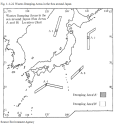
Next is the diagram of the dumps themselves. You will notice that area A3 and A2 seem to be possible targets from the heavy shaking area.

Next is the deposition of Cs 134 and 137 found by the recent released evidence from this report
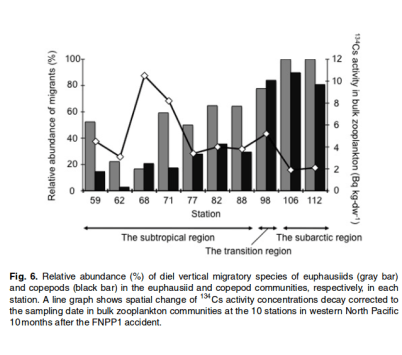
Horizontal distribution of Fukushima-derived radiocesium in
zooplankton in the northwestern Pacific Ocean
Medvedev issues bold first by stumping for more renewable energy in Russia
Additional reporting by .
http://www.bellona.org/articles/articles_2013/medvedev_renewables
MURMANSK – Russian Prime Minister Dmitry Medvedev has signed a resolution aimed at stimulating more use of alternative energies and government compensation for the high cost of renewables – the first sign ever from the prime minister that he believes in an alternative energy future for Russia.
 |
| Prime Minister Dmitry Medvedev speaks in favor of preserving a Moscow forest from a highway project in his videoblog in 2008. |
| Still from Medvedev’s blog on Kremlin.ru |
Analysts have suggested that Medvedev is often the hardline Kremlin’s mouthpiece for soft issues that Putin’s inner circle is neither concerned about, nor intends to honor.
But Medvedev, with his record of attendance at United Nations climate negotiations and recent domestic efforts to lead modernization campaigns that openly admit to Russia’s ecological shortcomings make him, if only in title, Russia’s highest-level governmental advocate for the environment.
“At the moment, the use of renewable energy sources and green energy is far from what we would like it to be. We probably use only an inconsiderable part of our potential,” said Medvedev, addressing the Startup Village international investor conference at the Skolkovo hi-tech hub outside Moscow, hosted by the Skolkovo Foundation, according to RIA Novosti.
“But now that attitude has changed, for various reasons. I see various countries and their leaders changing their approach to the issue of green energy, green growth and renewable energy sources,” he said, adding, “These changes are happening before our eyes. In Russia, the attitude toward renewable energies is changing, and we think a serious future stands behind them.”
Medvedev said “the abundance of hydrocarbons” in Russia was a reason for the low use of renewable energy sources, according to the news agency.
The development of the resolution
At a mid April meeting on renewable energy with Deputy Prime Minister Arkady Dvorkovich, he presented an accounting to Medvedev that each year some 100 million rubles ($3.1 million) is earmarked to compensate for the costs associated with plugging renewable technologies into Russia power grid. The resolution to allow for manifold increases in investment in the solar, wind, and small hydroelectric sectors was prepared at Medvedev’s behest.
Russian Baltic nuclear power plant debacle- Shut down for good?
….Rosatom’s search in the past three years for partners in Europe has failed to deliver either future energy buyers or potential shareholders willing to pledge funds to the project – a first in which the Russian nuclear industry has made 49% equity available to a foreign investor….
Baltic NPP debacle: Construction reported halted, possibly mothballed

| A KLT-40C reactor plant. Afrikantov OKBM has developed these 40-megawatt reactors for use on board of floating nuclear power plants. Rosatom now considers operating one at the site of the beleaguered Baltic NPP project – a baffling idea that will likely relegate the currently 2,300-megawatt design, and possibly the entire construction, to the annals of failed projects of the nuclear industry |
| Source: okbm.nnov.ru |
http://www.bellona.org/articles/articles_2013/baltic_npp_debacle
MOSCOW – Two subcontractors for Kaliningrad Region’s Baltic Nuclear Power Plant (Baltic NPP) say works at the site are being stopped and a two-year freeze is expected on the construction. Hitting a wall of uniform rejection after years of courting energy importers and investors in Europe, the project has Moscow attempting a last-ditch look at a limited pool of smaller reactor designs – but reeks of a prompt demise
Representatives of two companies subcontracted at the site of the Baltic NPP – a nuclear power plant that Russia is building in the town of Neman in the westernmost exclave of Kaliningrad Region, near the border with the European member nation of Lithuania – have told Kaliningrad-based news outlet RUGRAD.EU (in Russian) that works at the station have been halted and, one of the sources said,
“the station will be mothballed, the many workers will be put on leave.”
The other source told RUGRAD.EU that “construction is being frozen for two years, no idea what to do with the migrant workers.”
This sparks doubt that the station as the Russian State Atomic Energy Corporation Rosatom planned it – a two-unit plant built to a latest Rosatom design known as AES-2006 (NPP-2006), based on the VVER-1200 reactor – may be completed at all.
On May 24, reports were carried by the Russian media saying Rosatom was considering reducing reactor capacity for the Baltic NPP. A story on the Novy Kaliningrad website (in Russian) said an instruction was issued by Rosatom head Sergei Kiriyenko to explore the option of using reactors of smaller capacity than was earlier planned at the site. Instead of two units of 1,150 megawatts each, 640- and 40-megawatt reactors may be under discussion, the story said, citing a report by the Russian news agency Interfax, which relied on information from industry sources.
The total capacity of the Baltic NPP, where construction has already started, may thus be cut by more than three times – from 2,300 to 680 megawatts.
Novy Kaliningrad cited Interfax and its source as saying that the issue is that of looking into the possibility of building at the Baltic NPP site “firstly” units of smaller capacity, and putting online the large-capacity reactors “upon the availability of contracts for consumption and a power delivery scheme.”
This means, in effect, that five years forward since a construction agreement was signed with the government of Kaliningrad Region in August 2008, there are still no power purchasing contracts for the future station’s output, nor any clarity as to how this power would be delivered to the grid.
However, according to one of Interfax’s sources, Novy Kaliningrad said, equipment is still being produced for the 1,150-megawatt units.
Export hopes spurned
Kaliningrad Region – Russia’s territory wedged between the Baltic Sea to the west, Lithuania to the north, Poland to the south, and Belarus to the east – is currently energy sufficient: Kaliningradskaya Thermal Power Plant 2 was built there just two years ago. But it lacks the necessary modern transmission and distribution lines needed to accommodate a 2,300-megawatt nuclear power plant with either export or internal power consumption as the intended goal of future production.
1 This Month

of the week – Shut Down Drone Warfare!


Tell the Ukrainian Government to Drop Prosecution of Peace Activist Yurii Sheliazhenko

Petition to revoke the licensing of the Near Surface Nuclear Disposal Facility (NSDF) at Chalk River. https://www.ourcommons.ca/petitions/en/Petition/Details?Petition=e-7247
To see nuclear-related stories in greater depth and intensity – go to https://nuclearinformation.wordpress.com
-
Archives
- April 2026 (103)
- March 2026 (251)
- February 2026 (268)
- January 2026 (308)
- December 2025 (358)
- November 2025 (359)
- October 2025 (376)
- September 2025 (257)
- August 2025 (319)
- July 2025 (230)
- June 2025 (348)
- May 2025 (261)
-
Categories
- 1
- 1 NUCLEAR ISSUES
- business and costs
- climate change
- culture and arts
- ENERGY
- environment
- health
- history
- indigenous issues
- Legal
- marketing of nuclear
- media
- opposition to nuclear
- PERSONAL STORIES
- politics
- politics international
- Religion and ethics
- safety
- secrets,lies and civil liberties
- spinbuster
- technology
- Uranium
- wastes
- weapons and war
- Women
- 2 WORLD
- ACTION
- AFRICA
- Atrocities
- AUSTRALIA
- Christina's notes
- Christina's themes
- culture and arts
- Events
- Fuk 2022
- Fuk 2023
- Fukushima 2017
- Fukushima 2018
- fukushima 2019
- Fukushima 2020
- Fukushima 2021
- general
- global warming
- Humour (God we need it)
- Nuclear
- RARE EARTHS
- Reference
- resources – print
- Resources -audiovicual
- Weekly Newsletter
- World
- World Nuclear
- YouTube
-
RSS
Entries RSS
Comments RSS
 nuclear-news