UK – FINANCIAL SERVICES AUTHORITY gets Caught Out on Tape – by White Rabbit investigates
Published on May 28, 2013

Image source ; http://citywire.co.uk/new-model-adviser/fsa-confirms-mcdermott-as-director-of-enforcement-and-crime/a610365
Not to be construed as legal advice in any way shape or form. For entertainment purposes only/ A lawful excuse production. So who precisely does prosecute fraud?
Apparently it’s the City of London Police? But they merely pass reports through to ‘Action Fraud‘, who in turn do naff all with the information.
A recorded call to the regulators tells all!
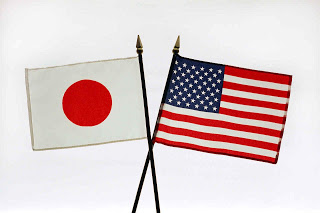
USA and Japan corrupt United Nations “Optional Protocol” – Fukushima citizen groups lose out!
……In addition to the billions being contributed to various bodies within the U.N. system, the United States provides 22 percent of the U.N.’s operating budget, more than twice as much as the No. 2 contributor, Japan (10.8 percent)….
……“It’s disturbing that no one, including our ambassador to the United Nations, knows exactly how much money we send the U.N. every year,” Enzi said in a statement.
“With a national debt exceeding $17 trillion, we need to be able to account for every dime we spend, including what we send to the U.N.”…..
…… 24 May 2013 – (The date of submission was JUST before the last meeeting so as to stop any challenges to the Japanese BAD SCIENCE)……

Published by nuclear-news.net
By Arclight2011
28 May 2013
HUMAN RIGHTS COUNCIL CONCLUDES DIALOGUE WITH SPECIAL RAPPORTEURS ON THE RIGHT TO HEALTH AND THE RIGHTS OF MIGRANTS
28 May 2013
[Extracts]
The Human Rights Council this morning concluded its interactive dialogue with the Special Rapporteurs on the right to health and on the human rights of migrants.
The Special Rapporteurs presented their reports on Monday, 27 May in the afternoon, and Azerbaijan, Tajikistan, Japan, European Union, Tunisia and Turkey spoke as concerned countries. Summaries of their statements can be found in HRC/13/54.
[…]
The Special Rapporteurs presented their reports on Monday, 27 May in the afternoon, and Azerbaijan, Tajikistan, Japan, European Union, Tunisia and Turkey spoke as concerned countries. Summaries of their statements can be found in HRC/13/54.
[,,,]
Human Rights Now said that the contamination of huge areas of Japan with radioactive materials following the Fukushima accidents created an important health risk for the population, particularly for children and pregnant women. Japan should urgently review current practices and ensure people’s right to live in a safe and health environment and take all measures to proactively prevent negative impact.
[…]
Peace Boat said that it was the right of those affected by radiation to resettle in a safe environment with all necessary assistance assured by the Japanese authorities. Affected citizens had to be entitled to unrestricted access to accurate and comprehensive information on radiation levels and risks and the evolving situation at the plant from independent sources.
[…]
Concluding Remarks by the Special Rapporteurs on the Right to Health and the Human Rights of Migrants
ANAND GROVER, Special Rapporteur on the right to the highest attainable standard of physical and mental health, stressed that the right to health framework required participation which was very meaningful for those affected by the decision-making process. Central and local authorities should proactively arrange meetings to seek and take into account the view of civil society. The participation of vulnerable groups including women and children and the elderly, had to be adequately ensured. Japan was urged to consider public participation in the manner just highlighted. The Committee on Economic, Social and Cultural Rights in its concluding observations had urged the Japanese Government to provide credible and accurate information on hazards, for prevention plans. On access to medicines, it was suggested that the right to health framework be rights-based. This was an opportune moment for Brazil, Russia, India and China, the BRICS countries, to transfer technologies to Least Developed Countries. On migration and data on irregular migrants, if irregular migrants were criminalised and stigmatised, then such information would not be obtainable.
[…]
http://www.unog.ch/unog/website/news_media.nsf/%28httpNewsByYear_en%29/2EFAFBD270514B47C1257B79003DC922?OpenDocument
Opening Statement by UN High Commissioner for Human Rights Navi Pillay at the 23rd session of the Human Rights Council, Geneva,
27 May 2013
[Extracts]
OPTIONAL PROTOCOL ON ECONOMIC, SOCIAL AND CULTURAL RIGHTS
Earlier this month, the Optional Protocol to the International Covenant on Economic, Social and Cultural Rights entered into force. By enabling individuals to bring complaints to the Committee on Economic, Social and Cultural Rights, this instrument ensures the same protection for economic, social and cultural rights as for civil and political rights. It therefore remedies the false hierarchies among ‘groups’ of rights that arose during the Cold War and were largely resolved twenty years ago in Vienna.
The current economic context is an opportune moment for States to ratify the Optional Protocol. In doing so, they will create an impetus to strengthen national protection mechanisms for economic, social and cultural rights and encourage policies that promote greater equality, sustainability, and protection.
NGOs AND VIENNA
The Vienna Conference that we will commemorate next month was remarkable in many ways; one was the participation of civil society.
Bearing that in mind, it is particularly depressing to observe policy debates and legislative measures — in many countries, across all regions — which may severely undermine non-governmental organizations that are vital to the healthy functioning of democracy. I am disturbed at continuing reports of reprisals against human rights defenders.
Civil society is crucial to the framework of human rights that was reinforced in Vienna twenty years ago. It remains vital to advancing the human rights agenda, both at the national level and internationally, and I must speak out to warn you of the real setbacks to human rights protection that will follow if civil society is threatened or restricted.
Thank you.
http://www.ohchr.org/EN/NewsEvents/Pages/Media.aspx

HUMAN RIGHTS COUNCIL HEARS STATEMENTS BY SPECIAL RAPPORTEURS ON THE RIGHT TO HEALTH AND ON THE HUMAN RIGHTS OF MIGRANTS
Concludes General Debate on the Update of the Annual Report of the High Commissioner, Decides to Hold Urgent Debate on Syria on 29 May
27 May 2013
[Extracts]
Osaka Mayor Hashimoto – What sex slaves? More lies from Japanese officials!
Osaka Mayor Denies Saying War Sex Slaves Necessary | Desipite Public Record
Published on May 28, 2013
At a meeting with foreign press Osaka Mayor Hashimoto flat out lied about his comments about war time sex slaves.
reference: http://www.japantimes.co.jp/news/2013…
NUCLEAR GANDHI – International nonviolent protests of proposed Japan–India nuclear deal
Monday, May 27, 2013
NUCLEAR GANDHI – International Nonviolent Protests of Proposed Japan–India Nuclear Deal Grow | Coalition Against Nukes | Petition

Image source ; http://bambubatu.blogspot.co.uk/2010/05/gandhi-on-economy-of-cotton.html
FOR IMMEDIATE RELEASE
CONTACT:
U.S.: Michael Leonardi, Coalition Against Nukes, 567-202-5327; mikeleonardi@hotmail.com
India: Kumar Sundaram, 91-9819556134 or SKYPE: pksundaram; message on Facebook
NUCLEAR GANDHI
International Nonviolent Protests of Proposed Japan – India Nuclear Deal Grow Despite Government’s Violent Opposition
The Coalition Against Nukes (CAN) and its international membership has stepped forward to support the protest currently being raised against Japan’s attempt to export nuclear technology to India. Specifically, an international petition to raise influential voices against this wrong-headed move has quickly gained more than fifteen hundred signatures as it continues to grow daily. Protest demonstrations are planned in Tokyo and across India. The India-Japan nuclear agreement is currently under negotiation, with Indian Prime Minister Dr. Manmohan Singhis visiting Tokyo on May 27 in an attempt to further the deal.
Increasingly, this struggle has been seen by many as a “Nuclear Gandhi” movement, involving non-violent resistance, hunger strikes, and oppression of a protesting population by a dominant, non-responsive government. More than 10,000 Indian citizens have been arrested for sedition for their peaceful protests.
A committed group of activists, experts and citizens in Japan, India and other countries launched this petition on website dianuke.org (http://www.dianuke.org/stop-india-japan-nuclear-agreement-an-international-appeal/) as a means of making their concerns known. The appeal has been endorsed by eminent citizens, including academicians, artists, scientists, film-makers and other public figures from India, Japan, US, France, Germany, Australia and a dozen other countries.
Since Japanese nuclear technology is used in large nuclear reactors made in the United States and France, it is difficult for India to import nuclear reactors from these countries unless it strikes a nuclear deal with Japan. To remove the obstacles to their export of nuclear technology to India, Washington and Paris have been unofficially urging Tokyo to conclude a nuclear deal with New Delhi.
The petition calls for termination of India-Japan nuclear negotiations, as its implementation would lead to expansion of nuclear installations in India. This in turn would mean more displacement of homes and families, loss of livelihoods and radiation risks for the Indian farmers and fishermen who have been leading massive resistance to proposed plants in Koodankulam and Chutka, among others. These protests intensified after the Fukushima nuclear disaster began on March 11, 2011, and the Indian government has responded with increasingly violent repression of the non-violent protestors.
The appeal also criticizes the absurdity of Japan’s policy of exporting nuclear technology to India and other countries when their problems from the Fukushima Daiichi nuclear disaster continue to mount with no end in sight. This advancement of Japan’s nuclear agenda is seen as a way for the country to compensate for the huge, ongoing financial losses incurred in the wake of the Fukushima disaster.
The Coalition Against Nuke (CAN) urges the global community to support these voices of sanity and demand termination of the India-Japan nuclear agreement. We also demand a moratorium on Japan’s nuclear export policy until and unless they can solve their own nuclear problems at Fukushima.
NOTE: A featured interview with Indian anti-nuclear activist Kumar Sudaram will be podcast on Nuclear Hotseat, the weekly international news magazine as of Wednesday, May 28, 2013; access the recording (#102) at: http://www.NuclearHotseat.com/blog or download from iTunes.
-0-
PETITION

h/t http://rceezwhatsup.blogspot.co.uk/2013/05/nuclear-gandhi-coalition-against-nukes.html
Japanese rebuff Human rights council with lies!! – 24 May 2013
…There is little scientific basis for urine and blood tests, and thus we cannot accept this recommendation….
……A health survey conducted on normal healthy people is rare and, therefore, many researchers are interested in conducting research. However, we do not agree with compelling unnecessary examination….
…..UNSCEAR is now assessing the influence of the nuclear accident on the health of residents, as well as the WHO……
Mission to Japan:
comments by the State on the report of the Special Rapporteur
Human Rights Council Twenty-third session
[Extracts]
24 May 2013 English only
b) The health management survey should be provided to persons residing in all affected areas with radiation exposure higher than 1 mSv/year;

Japanese response
Already completed.
There is not a sufficient scientific basis for the claim that health management is necessary for residents who live in areas where the additional radiation dose is 1 mSv/year.
Thus, the recommendation of the Special Rapporteur, which does not have a scientific basis, is not acceptable without changing the content of the recommendation The annual background radiation dose in Japan was estimated at 2.1 mSv.
When adding an extra 1 mSv/year due to the nuclear accident, the annual radiation dose increases to 3.1 mSv/year. This value is similar to the background radiation dose of the USA (3.1 mSv) and that of many countries in Europe (2 to 7 mSv/year).
When using effective dose, the effect of the additional radiation due to the nuclear accident is equal to that of the background radiation. If residents exposed to a radiation dose of ~3mSy/year must be included as subjects of health management survey, many countries, where residents are exposed with radiation doses of ~3 mSy/year, should conduct health management surveys for radiation.
Medical and scientific bases are necessary when we discuss whether the residents who live in areas with additional 1 mSv/year should be included as subjects of health management surveys.Health management has been in place for residents in Japan regardless of the nuclear accident (e.g. once a year for students at school)
. Moreover, a person who presents a certain symptom can consult a doctor at a medical institution without restriction.
The contents of the health monitoring of residents concerning the nuclear accident has been decided on a scientific basis and an estimation of radiation exposure. In areas where the radiation dose is relatively high or where long term evacuation is expected, individual radiation doses are estimated and blood tests are carried out.
In areas where the radiation dose is relatively low and which needs to investigate health conditions other than health effects of the radiation dose, health conditions of residents can be monitored with the data of existing health check ups and medical institutions, whether residents are exposed to an additional 1 mSv of radiation dose in a year or not.
The WHO assessed that the health risk from the Fukushima nuclear accident, and suggested that the increases in the incidence of human disease attributable to the additional radiation exposure from the nuclear accident are likely to remain below detectable levels. UNSCEAR is now assessing the influence of the nuclear accident on the health of residents, as well as the WHO. The Government will continue to work on measures so that suitable support will be provided to the people who truly need the support.
(e) Avoid limiting the health checkup for children to thyroid checks and extend checkups for all possible health effects, including urine and blood tests
Japanese response
Although some misunderstandings are in fact included in this opinion, the recommendation has already been carried out. There is little scientific basis for urine and blood tests, and thus we cannot accept this recommendation.
The children’s health survey is not limited to an ultrasound examination of thyroid. Urinalysis and an electrocardiogram are carried out in the existing health checkups described in 77 (b), and also blood tests are carried out in the areas where radioactivity doses are relatively high.
Such examinations are chosen because the examination is scientifically required or its necessity is indicated. The necessity of the examination recommended by the Special Rapporteur has not been demonstrated scientifically.
A health survey conducted on normal healthy people is rare and, therefore, many researchers are interested in conducting research. However, we do not agree with compelling unnecessary examination.
Link to Source document
http://www.ohchr.org/Documents/HRBodies/HRCouncil/RegularSession/Session23/A-HRC-23-41-Add5_en.pdf
Environmentalists survey Russia’s dirtiest radioactive ‘hot spot’
….A significant radioactive contamination of the Techa river basin occurred as a result of releases of medium-level and low-level radioactive waste into Lakes Kyzyltash, Tatysh, and Karachai, located near Mayak in the vicinity of the Techa’s upper course……
http://www.bellona.org/articles/articles_2013/mayaK_expedition

ST. PETERSBURG – St. Petersburg-based Bellona has taken part in a radiation and environmental survey of what has been dubbed the most contaminated place on earth: the site of the 1957 disaster at the nuclear reprocessing plant Mayak, one of the world’s greatest – and least recognized – radiation catastrophes
An eleven-strong expedition that pooled together environmental activism and expertise in natural science and technology history, nuclear industry, and radiation control travelled to the area surrounding Production Association Mayak in Russia’s Chelyabinsk Region – a territory where generations have been struggling to survive, battling the effects of decades of radioactive contamination that has been accumulating as a result of the so-called Kyshtym disaster of 1957 and continuous dumping of radioactive waste by Mayak into the local rivers and lakes.
Named so for Kyshtym, a town near the nuclear complex of Mayak, the 1957 Kyshtym disaster – a radioactive waste explosion accident that threw some 20 million curies of radiation into the atmosphere and left some 23,000 square kilometers of area contaminated – is considered one of the worst radiation catastrophes on the former Soviet Union territory, on a scale only surpassed by the explosion of the fourth reactor at Ukraine’s Chernobyl Nuclear Power Plant in 1986.
During the expedition, the experts surveyed the floodplains of the Techa-Iset and Sinara-Karabolka-Iset river systems and the territories of the villages of Muslyumovo, Novomuslyumovo, Russkaya Techa, and other settlements that Mayak’s operations have exposed to radioactive contamination.
Mayak: A six-decade-long contamination record
Since the start of Mayak’s activities in 1948, the enterprise’s operations have resulted in contamination of 25,000 square kilometers, and 500,000 people have been exposed to increased radiation levels. Altogether, some 1.8*1017 becquerels’ worth of radionuclides has been released into the surrounding atmosphere.
The expedition’s measurements showed that the external gamma radiation exposure dose at ground surface within 10 to 20 meters of the river Techa exceeds today the allowable standard – set in regulations at 0.3 microsieverts per hour – along the entire stretch of the river, though the dose decreases rapidly with increasing distance from the bank:
At a distance of over 10 meters from the river bed, radiation levels fall nearly to natural background radiation levels, registering at between 01. and 0.2 microsieverts per hour. Increased gamma radiation levels are found as well in areas that get flooded during high water season.
Formally, the Techa and its floodplains are excluded from water resources available for household, agricultural, or commercial use: As surveys conducted during previous expeditions have shown, the content of the isotope strontium-90 in all water samples exceeds the allowable level of interference established in the Norms of Radiation Safety-99/2009 – Russia’s radiation safety regulations, updated in 2009, that codify permissible levels of exposure and requirements for protection from ionizing radiation. These findings effectively prohibit using the Techa’s water for practical purposes.
Environmental group Bellona faces heavy fines In Putins Russia! Who is next?
…Surprisingly, prosecutors also said they intended to launch a case into serious environmental violations brought to their attention by ERC Bellona….
Image source ; http://michaeltasner.com/blog/adding-surprise-to-your-marketing/
😉

http://www.bellona.org/articles/articles_2013/Nikitin_vists_prosecutors
Prosecutors in St. Petersburg have finally signaled their intention to fine the Environmental Rights Center (ERC) Bellona by launching two administrative cases relative to alleged health and fire code violations, but will be leaving it to St. Petersburg’s health and fire inspectorates to determine the size of the fine.
Surprisingly, prosecutors also said they intended to launch a case into serious environmental violations brought to their attention by ERC Bellona.
 While greeting that as a silver lining, ERC Bellona Chairman Alexander Nikitin said the fines, as threatened previously could be has high as $20,000, but he added immediately that were ERC Bellona found guilty of any of the so-called administrative violations, it would appeal the decisions immediately.
Nikitin was initially summoned to meet with prosecutors Wednesday, but the meeting was put off until Thursday. His Thursday meeting was the eighth time representatives of ERC Bellona have had to meet with prosecutors since Bellona office was raided on March 19, only to be turned away on all previous occasions.
Since late March, a wide array of Russian authorities, ministries and federal agencies have been conducting raids on NGOs in conjunction with the new foreign agent law, trying to reveal administrative violations that can be very fluidly and arbitrarily interpreted – and lead to crippling fines.
Environmental organizations increasingly targeted
Some 600 Russian NGOs have faced similar unannounced inspections and are one by one being charged with administrative violations. At the beginning of this month, the government began targeting ecological groups with these notices of violation and by last count, according to Greenpeace, 30 plus environmental organizations are being harassed into registering as foreign agents under the new law
After the March raid on ERC Bellona, which was led by prosecutors, and representatives of the health and fire inspectorates, ERC Bellona was required over a three-day period to compile 15 tomes of documentation for prosecutors, according to ERC Executive Director Nikolai Rybakov.
Revolving door visits to prosecutors
Action urged on nuclear waste storage – Pilgrim
“regulators assumed that the spent fuel would be transferred offsite to a permanent disposal facility. More than 40 years later, a permanent repository still has not been constructed.”
By Joshua Miller
| Globe Staff
May 28, 2013
Two top Massachusetts officials on Friday called on the federal government to fulfill its obligation to dispose of spent nuclear fuel stored in the Commonwealth and around the country.

State attorney general Martha Coakley and state Senate president Therese Murray on Friday sent a letter to a bipartisan group of US senators, calling on them to pass a piece of legislation that would, among other actions, create a new federal Nuclear Waste Administration and move toward the creation of a long-stalled permanent storage facility for high-level nuclear waste.
There is no central federal facility for very radioactive nuclear waste, such as spent fuel from commercial power plants. That means the waste is usually stored on the site of the power plant where the fuel was used, including plants in New England, such as Pilgrim Nuclear Power Station in Plymouth.
Murray and Coakley, both of whom have expressed concern about Pilgrim’s stored nuclear waste over the years, sent the letter in support of the Nuclear Waste Administration Act of 2013.
“This legislation will establish long-needed procedures to move this waste to a permanent offsite location and ensure the safety of our communities and the quality of our environment,” said Murray, a Plymouth resident, in a statement. It is “the responsibility of our Congress to act quickly on this matter.”
“This is a public safety issue,” Coakley said in a statement, “and the federal government has an obligation to act.”
Murray and Coakley said in the letter that when Pilgrim and other reactors were licensed by the federal government in the 1970s, “regulators assumed that the spent fuel would be transferred offsite to a permanent disposal facility. More than 40 years later, a permanent repository still has not been constructed.”
Occupy Tokyo On Trial
Published on May 26, 2013
Protest to allow protesting! – fine of over 10 million yen 経産省前テントひろばがあぶない!
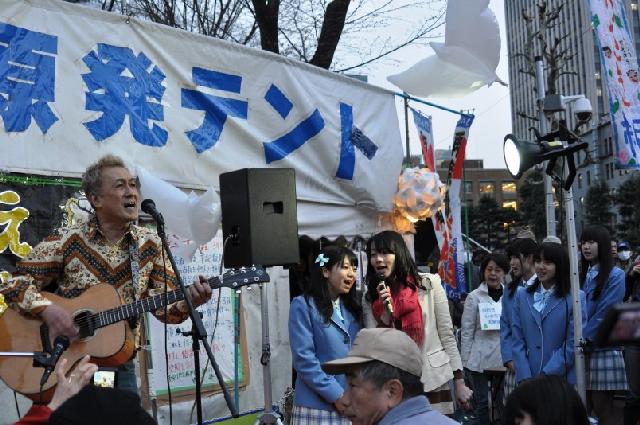
Saturday, 23 March 2013
UN asks Japan, operator to help nuclear power plant victims
Published by Mia
27 May 2013
UN asks Japan, operator to help nuclear power plant victims
国連は日本政府とTepcoに対し、福島原発事故による被災者の援助を、要請!

A report by special rapporteur Anand Grover, posted on the UN Human Rights Council’s website, says the government’s takeover of Tokyo Electric Power Co. allowed the utility to evade full responsibility for the nuclear disaster, the worst since Chernobyl.
Image source ; http://www.ohchr.org/EN/Issues/Health/Pages/SRBio.aspx
The report points to problems with the handling of the crisis, including a difficult process for seeking compensation for radiation exposure, a lack of openness about health risks from radiation and inadequate protection for nuclear plant workers.
It urges Japan to improve its emergency preparedness and its handling of compensation claims.
The Geneva-based council is due to discuss the report, compiled after a visit to Japan by Grover late last year, at its general meeting starting Monday.
Japan’s atomic energy industry remains in crisis more than two years after a powerful earthquake and tsunami triggered meltdowns in three reactors at the Fukushima Dai-Ichi nuclear plant.
[…]
The U.N. report cited a number of “serious challenges” and urged the government to involve affected communities in decisions and do more to protect and help vulnerable groups such as children, pregnant women, the disabled and the elderly.
[….]
That acquisition of a majority stake in the company “has arguably helped TEPCO to effectively avoid accountability and liability for damages,” the U.N. report said.
[…]
The compensation should include financial relief to help the tens of thousands of residents displaced by the disaster rebuild their lives, it said.
So far, TEPCO has paid 2.3 trillion yen, about half of it to companies and business owners. That amount includes 1.6 million individual claims, mostly from voluntary evacuees. Because the amount of claims is expected to exceed the initial estimate of 3 trillion yen ($29 billion), the government has injected an additional 154 billion yen ($1.5 billion) into the compensation fund.
About 150 000 Fukushima residents are still displaced. Hundreds have filed claims seeking greater compensation, including many living outside the prefecture.
http://fukushimaappeal.blogspot.co.uk/2013/05/un-asks-japan-operator-to-help-nuclear.html
Event May 28, HRN will organize a side event of the UNHRC on rights to health in Fukushima
…..A human rights expert from Japan, residents and civil society groups in
Fukushima will speak about how the lives and health of local women, children
and others in the Fukushima area are being affected after the disaster and
what should be done to provide immediate relief…
In May 2013,the UN special rapporteur on the rights to health
will submit his mission’s report on Fukushima to the 23rd session of the
Human Rights Council. In the occasion, HRN will organize a side event at the
UN( Geneva).


Great haste made great waste at Hanford – Fairewinds
About This Podcast
Posted On: May 22, 2013

The Hanford nuclear site, located on the Columbia River in Washington state, was built as part of the Manhattan Project to process plutonium for nuclear weapons. Operated until the end of the Cold War, the decades of weapons production has left Hanford as the most contaminated nuclear site in the US, with a long history of cover-ups about the leaking high-level radioactive waste.
In a project that is currently 10-years behind schedule, the DOE is attempting to build a vitrification plant at Hanford to process and neutralize the massive amounts of radioactive waste left behind by the creation of nuclear bombs. Today, nuclear policy expert Robert Alvarez joins Kevin and Arnie to discuss the ongoing environmental damage to the Hanford site.
1 This Month

of the week – Shut Down Drone Warfare!


Tell the Ukrainian Government to Drop Prosecution of Peace Activist Yurii Sheliazhenko

Petition to revoke the licensing of the Near Surface Nuclear Disposal Facility (NSDF) at Chalk River. https://www.ourcommons.ca/petitions/en/Petition/Details?Petition=e-7247
To see nuclear-related stories in greater depth and intensity – go to https://nuclearinformation.wordpress.com
-
Archives
- April 2026 (79)
- March 2026 (251)
- February 2026 (268)
- January 2026 (308)
- December 2025 (358)
- November 2025 (359)
- October 2025 (376)
- September 2025 (257)
- August 2025 (319)
- July 2025 (230)
- June 2025 (348)
- May 2025 (261)
-
Categories
- 1
- 1 NUCLEAR ISSUES
- business and costs
- climate change
- culture and arts
- ENERGY
- environment
- health
- history
- indigenous issues
- Legal
- marketing of nuclear
- media
- opposition to nuclear
- PERSONAL STORIES
- politics
- politics international
- Religion and ethics
- safety
- secrets,lies and civil liberties
- spinbuster
- technology
- Uranium
- wastes
- weapons and war
- Women
- 2 WORLD
- ACTION
- AFRICA
- Atrocities
- AUSTRALIA
- Christina's notes
- Christina's themes
- culture and arts
- Events
- Fuk 2022
- Fuk 2023
- Fukushima 2017
- Fukushima 2018
- fukushima 2019
- Fukushima 2020
- Fukushima 2021
- general
- global warming
- Humour (God we need it)
- Nuclear
- RARE EARTHS
- Reference
- resources – print
- Resources -audiovicual
- Weekly Newsletter
- World
- World Nuclear
- YouTube
-
RSS
Entries RSS
Comments RSS
 nuclear-news