Virginia gubernatorial candidate Terry McAuliffe against uranium minng
Anti-uranium forces press Va. candidates for gov News Leader, May 21, 2013 RICHMOND — Opponents of uranium mining in Virginia met with Democratic gubernatorial candidate Terry McAuliffe on the issue and they said he’s solidly in their corner, while a meeting with Republican nominee Ken Cuccinelli has yet to be arranged.
Gov. Bob McDonnell, in the meantime, has not decided his response to a February suggestion that he direct state agencies to put uranium mining regulations in place to help guide the 2014 General Assembly if it considers ending a decades-old prohibition on uranium mining in Virginia.
The two pro-mining legislators who proposed the approach after legislation fell flat in the 2013 session are divided on whether the issue will emerge in the next session of the Legislature. The meeting between mining opponents and McAuliffe occurred in Danville about three weeks ago. Two who attended said McAuliffe was clearly opposed to ending the state’s 1982 moratorium on uranium mining.
“He said he had studied the issue and that it made absolutely no sense, either economically or scientifically,” said Jack Dunavant, a longtime opponent of uranium mining from Halifax County. “He was opposed to it and he said you can quote me on that.”
Andrew Lester, executive director of the Roanoke River Basin Association, said McAuliffe called uranium mining a “horrible idea.”
Lester, who was not representing the association at the meeting, said McAuliffe assured him, “I’ll tell you right off the bat you don’t have to worry about me. I am against this thing.”….. http://www.newsleader.com/viewart/20130521/NEWS01/305210004/Anti-uranium-forces-press-Va-candidates-gov
Down she goes again – the uranium price
Spot uranium price slides to near $40.50/lb: market sources Washington (Platts Jasmin Melvin )–21May2013 The uranium spot price has been pushed down slightly to $40.50/lb or lower in a market with ample supply but few buyers looking to make deals, market sources said Tuesday.
Three market sources said Tuesday that the spot uranium price could be stuck within a $40/lb to $41/lb range for the next couple of weeks.
“There’s a very limited number of buyers, and there seems to be more interest on the selling side — again not large numbers but enough that if someone comes in and says they want to sell, it’s pushing the price down a little,” one of the sources said. Price publisher Ux Consulting said in its weekly report Monday that the market “can be characterized as rather quiet with a forward price curve that is about as flat as a pancake.” …. http://www.platts.com/RSSFeedDetailedNews/RSSFeed/ElectricPower/21056634
Human Rights Forum urges stop to new uranium mining in Kadapa, India
Excessive mining in AP uranium plant opposed http://www.deccanherald.com/content/333841/excessive-mining-ap-uranium-plant.html Hyderabad, May 21, 2013, DHNS:
The HRF has been opposing the proposed 4,500 TPD (tonnes per day) in comparison with the current 3,000 TPD.
The HRF, in a press release, stated that the excessive mining of uranium will make the land futile and deplete the groundwater. The scars left by increased uranium mining will be permanent. HRF’s claims are backed by the Environmental Impact Assessment (EIA) reports.
The uranium mining can eventually harm individuals. To evaluate the aftereffects of uranium mining, one has just to visit Jaduguda in Jharkhand where uranium mining takes place.
Greenhouse gas emissions to be capped by China
China emissions cap proposal hailed as climate breakthrough REneweconomy, By Giles Parkinson on 22 May 2013 China, the world’s biggest polluter, is proposing to set a cap on greenhouse gas emissions as early as 2016 in a move that is being hailed as a potentially transformative step in the fight against climate change.
According to news reports from China, the powerful National Development and Reform Commission (NDRC) has proposed setting absolute caps that would divorce the growth on emissions from growth in the economy, and will also set a peak in its overall emissions in 2025, five years earlier than planned.
China has already pledged to cut its emissions intensity – the amount of Co2 it emits per economic unit – by up to 45 per cent by 2020. The significance of an absolute cap is that it promises to reign in emissions even if the economy grows faster than expected.
Furthermore, Point Carbon reports, at a recent NDRC meeting, its vice director Xie Zhenhua said China should set long-term emission targets for 2030 and 2050 in a bid to decarbonise its economy. China, like Australia is heavily dependent on carbon-intensive coal to generate electricity – just over 82 per cent. But it has also proposed a cap on coal consumption of 4 billion tonnes.
Lord Nicholas Stern, the chair of the Grantham Research Institute on Climate Change at the London School of Economics, described it as “exciting news”, and said it should encourage all countries, the US in particular, to take stronger action.
“And it improves the prospects for a strong international treaty being agreed at the United Nations climate change summit in 2015,” he told The Independent in the UK…….. http://reneweconomy.com.au/2013/china-emissions-cap-proposal-seen-as-climate-breakthrough-40529
Renewable energy could be boosted by Compressed Air Storage
Compressed Air Storage Could Boost U.S. Renewable Energy Uptake http://www.energymatters.com.au/index.php?main_page=news_article&article_id=3752 21 May 13, New U.S. research into storing energy in underground caverns in the form of compressed air could lead to improved uptake of utility scale wind power in America’s Northwest.
A study by the Department of Energy’s Pacific Northwest National Laboratory and Bonneville Power Administration has found that compressed air energy storage (CAES) has the capacity to store wind power for up to 85,000 homes in two specific geologic areas of inland Washington and Oregon.
CAES storage helps solve the problem of intermittency in renewable energy generation. When the wind powers turbines, or the sun shines on a solar power plant, electricity is abundant and must be stored for later use.
CAES works by using excess energy from a power plant to pump compressed air deep into an underground storage structure such as porous rock, where it remains until needed. The pressurised air is then released back to the surface where it drives a turbine to generate electricity for the grid, thus providing a constant flow of energy.
Study manager for the BPA, Steve Knudsen, believes that with 13 percent of the Northwest’s power supply coming from wind energy sources, CAES technology will become a valuable tool in helping the states meet Renewable Portfolio Standards, which require 20 to 30 percent of all electricity come from variable sources such as wind and the sun.
There are just two CAES plants in the world and both are man-made, one in Alabama and one in Germany. The PNNL/BPA research looked instead for natural geologic formations in Oregon and Washington, finding seams of porous volcanic basalt rock, 450 metres below the surface and at least 10 metres thick.
So far two promising locations have been identified. One is the Columbia Hills Site in Oregon, which is near a natural gas pipeline and could be paired with a CAES system to provide up to 40 days of continual energy storage. The other is the Yakima Minerals Site, which would use geothermal power and CAES technology in a hybrid power plant and utilising geothermal energy to cool the facility’s air compressors, increasing their efficiency.

South Korea hopes to become a major exporter of nuclear plants….. It won a US$20.4-billion contract with the United Arab Emirates (UAE) to build four nuclear power plants there. Potential future export markets for South Korea include Saudi Arabia, India, Vietnam, Poland, and South Africa, as well as the U.S. and China…… http://english.yonhapnews.co.kr/national/2013/05/22/26/0301000000AEN20130522000200315F.HTML
Saudi Arabia and the nuclear bomb
Clear or nuclear: Will Saudi Arabia get the bomb? Arabiya, Dr. Naser al-Tamimi 21 May 2013 “…..Despite Riyadh’s long-held advocacy of making the Middle East a zone free of weapons of mass destruction, there has been much speculation in the past few years about the possibility of its acquiring, or developing, nuclear weapons should Tehran obtain the bomb.
In the words of Saudi King Abdullah: “If Iran developed nuclear weapons (…) everyone in the region would do the same,” a sentiment echoed by Prince Turki al-Faisal, former head of Saudi Arabia’s General Intelligence Directorate.
Why go nuclear?
A major deterioration in U.S.-Saudi relations – especially if Washington fails to stop Tehran’s nuclear program or decides to scale back its military presence in the Middle East due to its recent energy discoveries and/or fiscal constraints – could force Riyadh to reconsider nuclear weapon acquisition to avoid having to face foreign aggression without U.S. security assurances…… A third factor in the Saudi calculus is Israel’s nuclear and ballistic missile capabilities. Given Israel’s status as an assumed, but undeclared, nuclear weapons state, the most immediate consequence of Tehran’s crossing the nuclear threshold would be the possibility that Tel Aviv ends the ambiguity about its program and announces that it has nuclear weapons as a form of deterrence against Iran. This in turn will increase the pressure on Riyadh to acquire its own deterrent vis-à-vis Israel as well as Iran……
Fukushima Rad News 5/21/13: Radioactive Ocean; Contamination East of Hawaii;Taiwan Nuke Protests
Published on May 21, 2013
Kyodo: Highest levels of Fukushima contamination in plankton already EAST of Hawaii? (MAPS)
http://enenews.com/kyodo-highest-leve…
Japan Times: Discharges of Fukushima nuclear material into Pacific “have effectively contaminated the sea” — Melted reactor cores will burn again if water not perpetually poured in — “Tepco proposing some of it be dumped into ocean”
http://enenews.com/japan-times-discha…
Ruling parties draft new quake measures
Japan’s ruling parties are compiling draft legislation to invest in escape roads and other facilities to minimize damage from a projected mega-quake.
Seismologists are predicting a mega-quake and tsunami in the Nankai Trough region, which extends along the Pacific coast of central to western Japan. The area has been hit by large quakes throughout history.
Taiwan rally calls for scrapping nuclear plant
Thousands of Taiwanese have taken part in a rally to call for stopping the construction of a nuclear plant near the capital, Taipei.
Many people in Taiwan are increasingly worried about the safety of the plant under construction in Xinbei City following the accident at Japan’s Fukushima Daiichi plant in March 2011.
About 3,000 protesters took to the streets of central Taipei on Sunday. They included many mothers with children. They shouted that they do not need nuclear plants.
Health survey begins in Japan’s quake-hit region
A group led by Japanese universities has launched a long-term health survey in 2 prefectures that were hit by the 2011 earthquake and tsunami.
The survey conducted by Tohoku University and Iwate Medical University covers 150,000 residents of coastal communities in northeastern Japan. In these communities, 3 generations of a family typically live under the same roof.
The project aims to collect their medical data for health promotion and development of new drugs.
http://enenews.com/m6-quake-caused-le…
http://enenews.com/m6-quake-caused-le…
http://fukushima-diary.com/2013/05/pl…
http://fukushima-diary.com/2013/05/sr…
Meteorological Research Institute, “Cs-134/137 going deeper under ocean due to the subduction of winter”
http://fukushima-diary.com/2013/05/me…
http://fukushima-diary.com/2013/05/ma…
Fukushima Nuclear Crisis Update for May 17th to May 20th, 2013
http://www.greenpeace.org/internation…)
Generations have health affected by nuclear reactor accident radiation exposure (Video)
http://www.examiner.com/article/gener…
Physical Protection of Irradiated Reactor Fuel in Transit
http://cryptome.org/2013/05/nrc-13-05…
Why nuclear is still a booming business
http://money.cnn.com/video/news/2013/…
U.N. mulls excluding nuclear accidents from disaster prevention plan
Kyodo News InternationalMay 21, 2013 08:16
http://www.globalpost.com/dispatch/ne…
Excerpt from March to Recovery ~ Ken Watanabe – Whatever I Can Do ~
Ken Watanabe, one of Japan’s best-known actors, has repeatedly visited disaster stricken areas to meet with victims. He takes time out of his schedule to lend support to the recovery efforts.
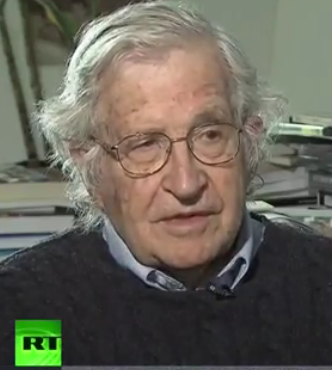
Dr. Noam Chomsky on War, Imperialism, and Propaganda – May 21, 2013
Published on May 21, 2013
Abby Martin Breaks the Set on Media Propaganda, War on Terror, Civil Liberties and more with Dr. Noam Chomsky
LIKE Breaking the Set @ http://fb.me/BreakingTheSet
FOLLOW Abby Martin @ http://twitter.com/AbbyMartin
EPISODE BREAKDOWN: On this episode of Breaking the Set, Abby Martin talks to Dr. Noam Chomsky, philosopher, linguist, professor, political critic, and author of over 100 books, about the Boston bombings, US terror inflicted abroad, drones, Obama’s rebranding of Bush administration policies, the National Defense Authorization Act & Holder v. Humanitarian Law, conventional wisdom, the evolution of media propaganda, and education as a form of elite indoctrination.
Take Action at Fukushima: An Open Letter to Secretary General Ban Ki-moon
…..The IAEA’s mission is to promote the peaceful use of nuclear energy. Concerns of proliferation are not applicable here, and the disaster itself has certainly called into question (again) what the peaceful use of nuclear energy means and whether it should be promoted. While the agency has recently urged safety improvements at Fukushima, the official line of thinking is still, incorrectly and impossibly, to use TEPCO to carry out the process….

April 30, 2013
Read in Japanese, French, Spanish , Portuguese, or German.
Dear Secretary General Ban Ki-moon:
You no doubt observed the Fukushima disaster on March 11, 2011, with terror and worry: what would another nuclear disaster mean for state relations, especially in your home region of East Asia? Fortunately, it seemed, the effects were largely kept to Japan’s islands and were less than many experts anticipated. Within weeks the stories dissipated if not disappeared from the major media outlets, only to be resurrected with personal interest stories of a hero or an especially tragic case of a lost loved one.
But the crisis is not over. Today, Martin Fackler reported in the New York Times that radioactively polluted water is leaking out of the plants and that the site is in a new state of emergency. Mitsuhei Murata, Japan’s former ambassador to Switzerland, wrote a letter last year that brought international attention to the thousands of radioactive spent fuel rods at the site and the danger their vulnerability presents; he has testified to this several times before Japan’s parliament. International experts, independent and of the International Atomic Energy Agency, have commented that the Tokyo Electric Power Company’s plans for the removal of the rods from the site and their storage in a safer, if still temporary, location are optimistic if not unrealistic.
The news media has done an adequate if meager job of reporting the many issues the fuel rods present. The radioactive fuel must be continuously cooled in order to stay safe; the improvised electric system that maintains this cooling has failed several times, once for more than 24 hours, both on its own and because of hungry rats. The mechanism that stands between safety and a fire at the Fukushima Daiichi plant is, to say the least, precarious. (And, as has been clear to many since the beginning, TEPCO hope to shirk its responsibility: first, in its safety and maintenance of the site; second, in paying its costs to Japan.)
One can only speculate to the extent of the consequences of a spent fuel fire, but, unarguably, once a fire ignites (from lack of cooling water or from an earthquake-caused spill), even the best case scenario would be an unprecedented global disaster. Possible consequences are the evacuation of Tokyo’s 35 million people, permanent disuse of Japan’s land, and poisoned food crops in the United States. These are not fantastic projections, but reasonable, if not conservative, expectations.
Yet, unimaginably but all too familiarly, the situation is still relegated to the back pages of our papers, and thus to the back of our leaders’ minds. This reminds me of our international approach to solving climate change, which I have partaken in for decades, first in the United Nations and then as the Secretary General of the Parliamentary Earth Summit in Rio de Janeiro: we have a latent but very serious issue that we can likely fix but lack the resolve and political will to do so. As you well know, a successful climate change agreement has eluded us.
In comparison with climate change, however, the radioactive fuel rod issue at Fukushima is both easier to solve and more urgent. Any Japanese can tell you another serious earthquake will hit Japan well inside the next decade. That is to say, this situation must be resolved quickly.
Still, even if possible to solve, the issue needs constant attention and competent and well funded actors. So who might take charge? The International Atomic Energy Agency said last week that it will take TEPCO 40 years to secure the radioactive fuel rods in more appropriate storage containers. TEPCO is already refusing to pay Japan billions of Yen in cleanup costs, and does not have the technology or wherewithal to perform the task competently and expediently. Yet, so far the Japanese government has only looked to TEPCO.
The next obvious choice outside Japan is the United States, for their technological superiority, money, and leadership. Early after the accident, the U.S. Department of Defense offered assistance to Japan, but the Japanese denied their help. It remains to be seen whether that door has permanently closed. This would not be a benevolent action: the U.S. sits in harm’s way in the case of a fuel pool fire; residents of California, Oregon, and Washington have already received much radiation. U.S.-led action, except perhaps by Oregon Senator Ron Wyden, is unlikely: U.S. senators and representatives continues to demonstrate their impotence at home or abroad.
I have long been advocating for an international team of independent experts to investigate the situation. The United Nations is one appropriate body to assemble and deliver such a team. The IAEA, however, should not take on the responsibility.
1 This Month


18 March Webinar @ 1 PM EST: An Assessment of SMR Projects: The Case of Canada
register for the zoom:
https://us02web.zoom.us/webinar/register/WN_o8BIIOUvQ2ONJR1nta65DQ#/registration


of the week – STOP SMALL MODULAR REACTORS IN CANADA
To see nuclear-related stories in greater depth and intensity – go to https://nuclearinformation.wordpress.com
-
Archives
- March 2026 (140)
- February 2026 (268)
- January 2026 (308)
- December 2025 (358)
- November 2025 (359)
- October 2025 (376)
- September 2025 (258)
- August 2025 (319)
- July 2025 (230)
- June 2025 (348)
- May 2025 (261)
- April 2025 (305)
-
Categories
- 1
- 1 NUCLEAR ISSUES
- business and costs
- climate change
- culture and arts
- ENERGY
- environment
- health
- history
- indigenous issues
- Legal
- marketing of nuclear
- media
- opposition to nuclear
- PERSONAL STORIES
- politics
- politics international
- Religion and ethics
- safety
- secrets,lies and civil liberties
- spinbuster
- technology
- Uranium
- wastes
- weapons and war
- Women
- 2 WORLD
- ACTION
- AFRICA
- Atrocities
- AUSTRALIA
- Christina's notes
- Christina's themes
- culture and arts
- Events
- Fuk 2022
- Fuk 2023
- Fukushima 2017
- Fukushima 2018
- fukushima 2019
- Fukushima 2020
- Fukushima 2021
- general
- global warming
- Humour (God we need it)
- Nuclear
- RARE EARTHS
- Reference
- resources – print
- Resources -audiovicual
- Weekly Newsletter
- World
- World Nuclear
- YouTube
-
RSS
Entries RSS
Comments RSS
 nuclear-news