Caldicott Versus The Nuclear Industry – an impressive symposium
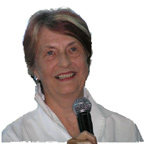
 Conference Highlights Fukushima Consequences http://rense.com/general95/confhigh.htm By Richard Wilcox Ph.D.
4-6-13 ”….Caldicott Versus The Nuclear IndustryLong time activist and medical doctor, Helen Caldicott, recently assembled some of the world’s top experts to enlighten us about the situation:
“The Medical and Ecological Consequences of the Fukushima Nuclear Accident,” a two-day conference is now posted onlinehttp://www.totalwebcasting.com/view/?id=hcf#
* Hisako Sakiyama summarized the many effects of the nuclear disaster, including the political fallout. For example, secondary school textbooks for Japanese public school students that were published after the 3/11 incident only mentioned the nuclear disaster in the introduction to the books and gave no details in the body of the texts. They ignored how the reactors melted down and where radiation was spread. Sakiyama’s presentation laid bare the propaganda and lies the government relied on to persuade the nation that they were in no danger from radiation.
* Akio Matsumura is a well known international diplomat and known for exposing the ongoing dangers at the Fukushima nuclear disaster site. He raised the issue of national security from a political perspective and described how radioactive accidents threaten international security. The world’s governments are now taking a very dangerous tack by burying their heads in the sand and ignoring the atomic dangers.
Fukushima Disaster Made In America
During the Q&A period Gundersen noted that Tepco would be able to stop the leakage of radioactive water into the Pacific Ocean, but to do so would have to build a zeolite-filled trench around the site of the reactors and that ground water would have to be sucked out from under the plant before it became contaminated. While a technically viable option, Tepco has stated that it is too expensive and therefore admits that ocean contamination will continue indefinitely.
The Power Of Prevention
* Steven Starr of the Physicians for Social Responsibility discussed cesium contamination and noted that “less than two grams of cesium 137, a piece smaller than an American dime, if made into micro particles and evenly distributed as a radioactive gas and distributed over one square mile will turn that square mile into an uninhabitable radioactive exclusion zone.” Cesium 134 and 137 are two of the main elements released by the accident and scattered across Japan and into the ocean.
Don’t Eat The Worms
* Renowned oceanographer Ken Buesseler spoke about the effects of Fukushima radiation, from the initial blasts, to the continuing liquid leakage from the damaged Fukushima site. Although much of the radiation has now sunk to the ocean floor, there is a wall of radiation that is washing its way via ocean currents toward the US Pacific coast. The flux and flow of radiation in the ocean is a complex process, much of which is still uncharted and therefore not yet clearly understood.
Population Risk
* Russian scientist Alexey Yablokov presented an overwhelming case for the devastating health effects from the Chernobyl accident. Yablokov’s critique obliterates the official version of events as championed by United Nations agencies as “based on methodologically invalid” assumptions. In science, bad assumptions which use invalid data create bad results. The Yablokov book is the most inclusive collection of data to date and posits over a million cancer incidences due to the radioactive fallout. The terrible health effects on infants and children in Russia and Europe have been heavily documented and linked to the fallout.
The Rape Of Womanhood
* Radiation biologist Ian Fairlie noted that 3,000 people in Japan could die from cancer due to Fukushima. Fairlie attacked the WHO radiation risk science as highly flawed yet takes a conservative view of mortality rates. He admitted his calculations do not include internal consumption of isotopes in food and water. Fairlie showed a map based on official data comparing the area and radiation density from Chernobyl fallout with Fukushima. While the area and intensity of the Fukushima map was vastly smaller than Chernobyl it did not include radiation that went into the ocean. An expansive map would have shown both disasters to be more similar in size.
Question Authority!
* Joe Mangano, also discussing radiation dangers, showed how infant mortality on the west coast of the USA rose just after the Fukushima disaster. Mangano emphasizes a vigorous approach to research science that weds critical thinking to civic action in order to safeguard the public. Mangano echoed Wing by warning that “the greatest challenge to the research community [is] corruption the corruption of the scientific method.”
Humanity At The Height Of Folly
Conspiracy To Intentionally Poison Humanity
* Mary Olson showed how data on effects of radiation exclude the effects on women, children and girls. The effects of radiation on young girls are proportionally more dangerous than on older men, for example. And yet this information is systematically ignored by the radiation industry.
Waste A Lot Want Not
Wake Up Call
* Herb Abrams rounded out the presentations with further information about the history and science of radiation risk assessment models and the biases in the establishment models.
The Toxic Soup We Swim In
All presentations from the symposium are available as video and by clicking on the participant’s name you can go directly to their presentation. Bullet points of key information can also be downloaded for study. The entire conference can be viewed at this web address:
No comments yet.
1 This Month

of the week – Shut Down Drone Warfare!


Tell the Ukrainian Government to Drop Prosecution of Peace Activist Yurii Sheliazhenko

Petition to revoke the licensing of the Near Surface Nuclear Disposal Facility (NSDF) at Chalk River. https://www.ourcommons.ca/petitions/en/Petition/Details?Petition=e-7247
To see nuclear-related stories in greater depth and intensity – go to https://nuclearinformation.wordpress.com
-
Archives
- April 2026 (103)
- March 2026 (251)
- February 2026 (268)
- January 2026 (308)
- December 2025 (358)
- November 2025 (359)
- October 2025 (376)
- September 2025 (257)
- August 2025 (319)
- July 2025 (230)
- June 2025 (348)
- May 2025 (261)
-
Categories
- 1
- 1 NUCLEAR ISSUES
- business and costs
- climate change
- culture and arts
- ENERGY
- environment
- health
- history
- indigenous issues
- Legal
- marketing of nuclear
- media
- opposition to nuclear
- PERSONAL STORIES
- politics
- politics international
- Religion and ethics
- safety
- secrets,lies and civil liberties
- spinbuster
- technology
- Uranium
- wastes
- weapons and war
- Women
- 2 WORLD
- ACTION
- AFRICA
- Atrocities
- AUSTRALIA
- Christina's notes
- Christina's themes
- culture and arts
- Events
- Fuk 2022
- Fuk 2023
- Fukushima 2017
- Fukushima 2018
- fukushima 2019
- Fukushima 2020
- Fukushima 2021
- general
- global warming
- Humour (God we need it)
- Nuclear
- RARE EARTHS
- Reference
- resources – print
- Resources -audiovicual
- Weekly Newsletter
- World
- World Nuclear
- YouTube
-
RSS
Entries RSS
Comments RSS
 nuclear-news
Leave a comment