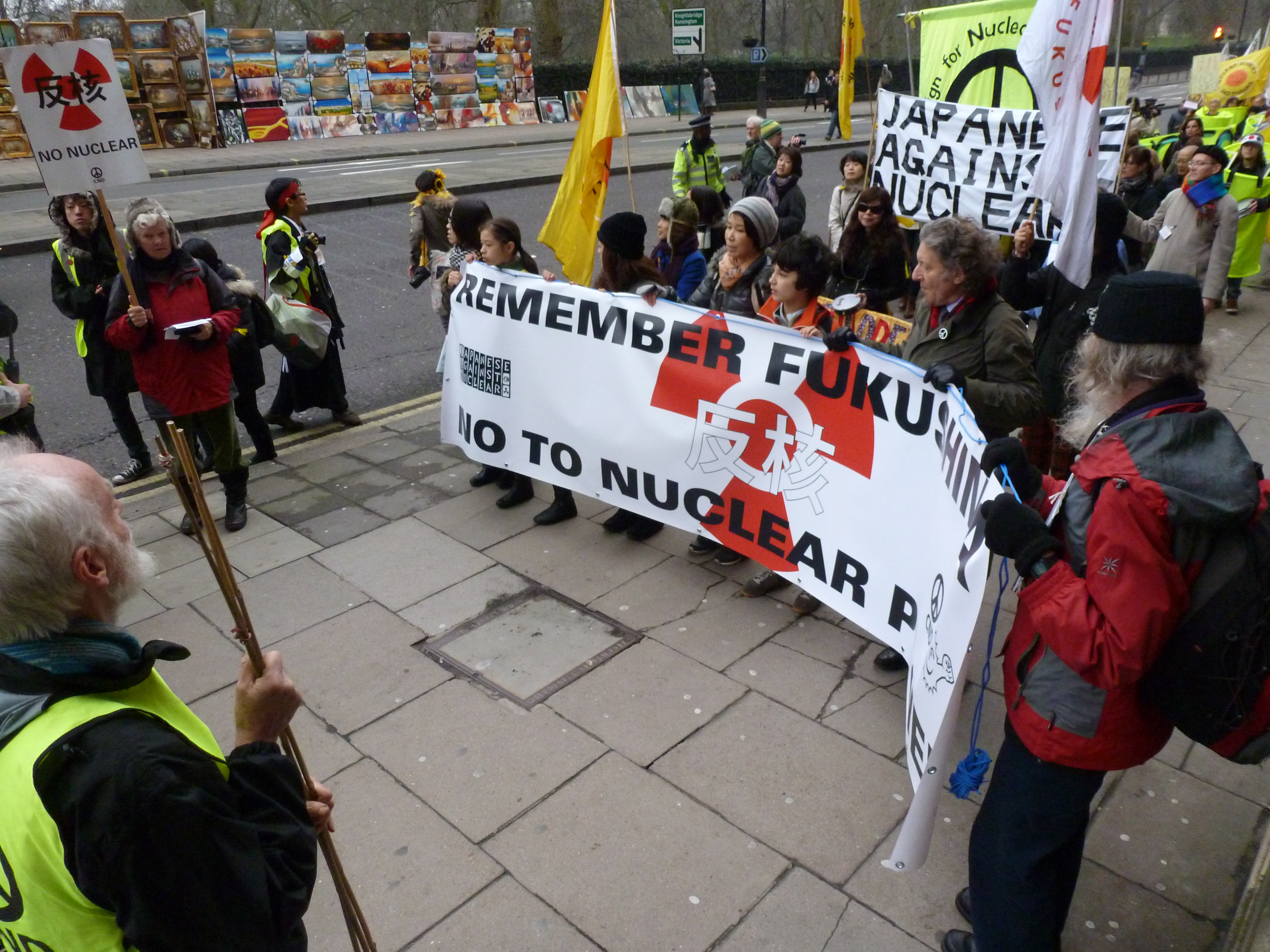
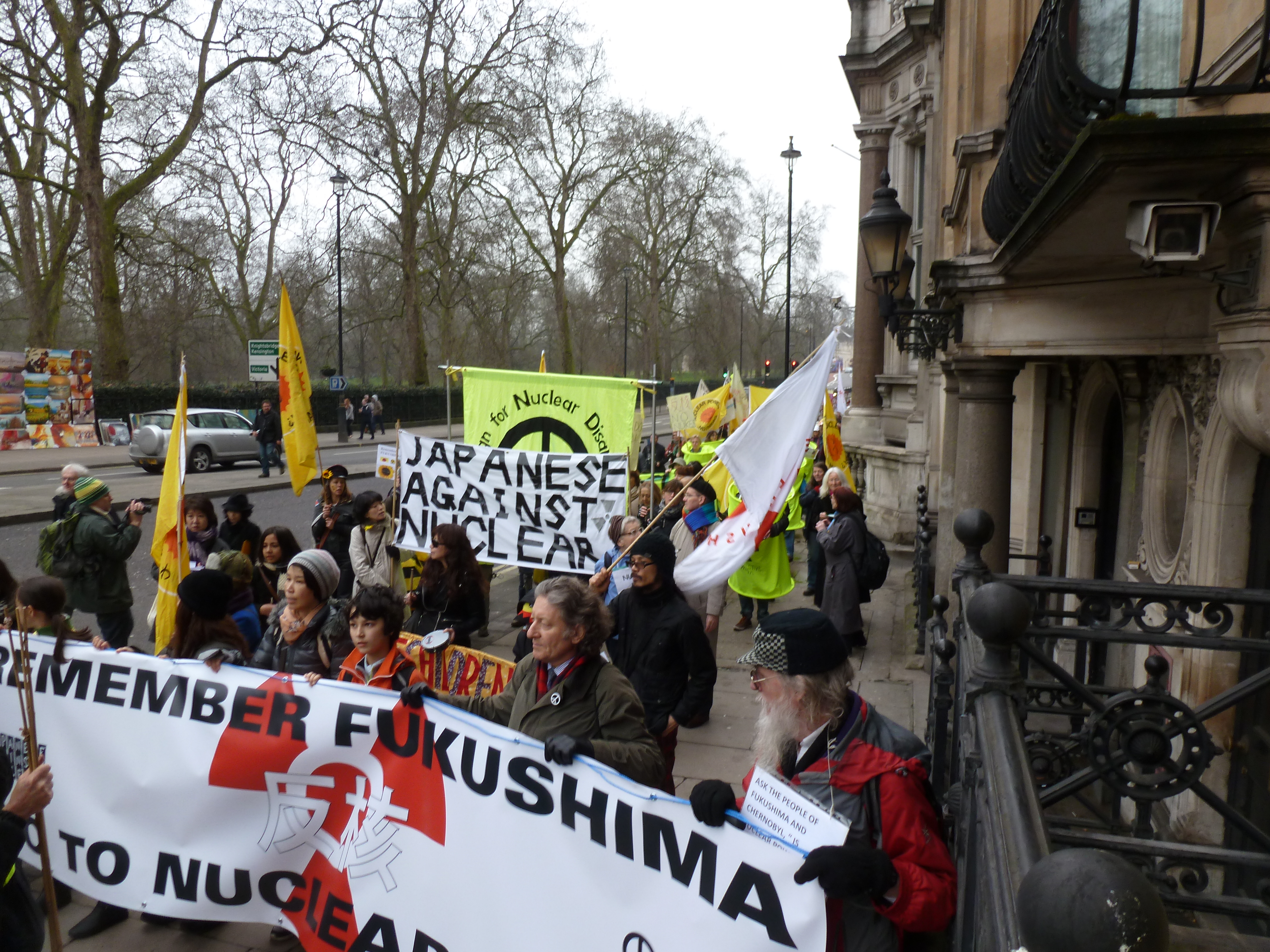
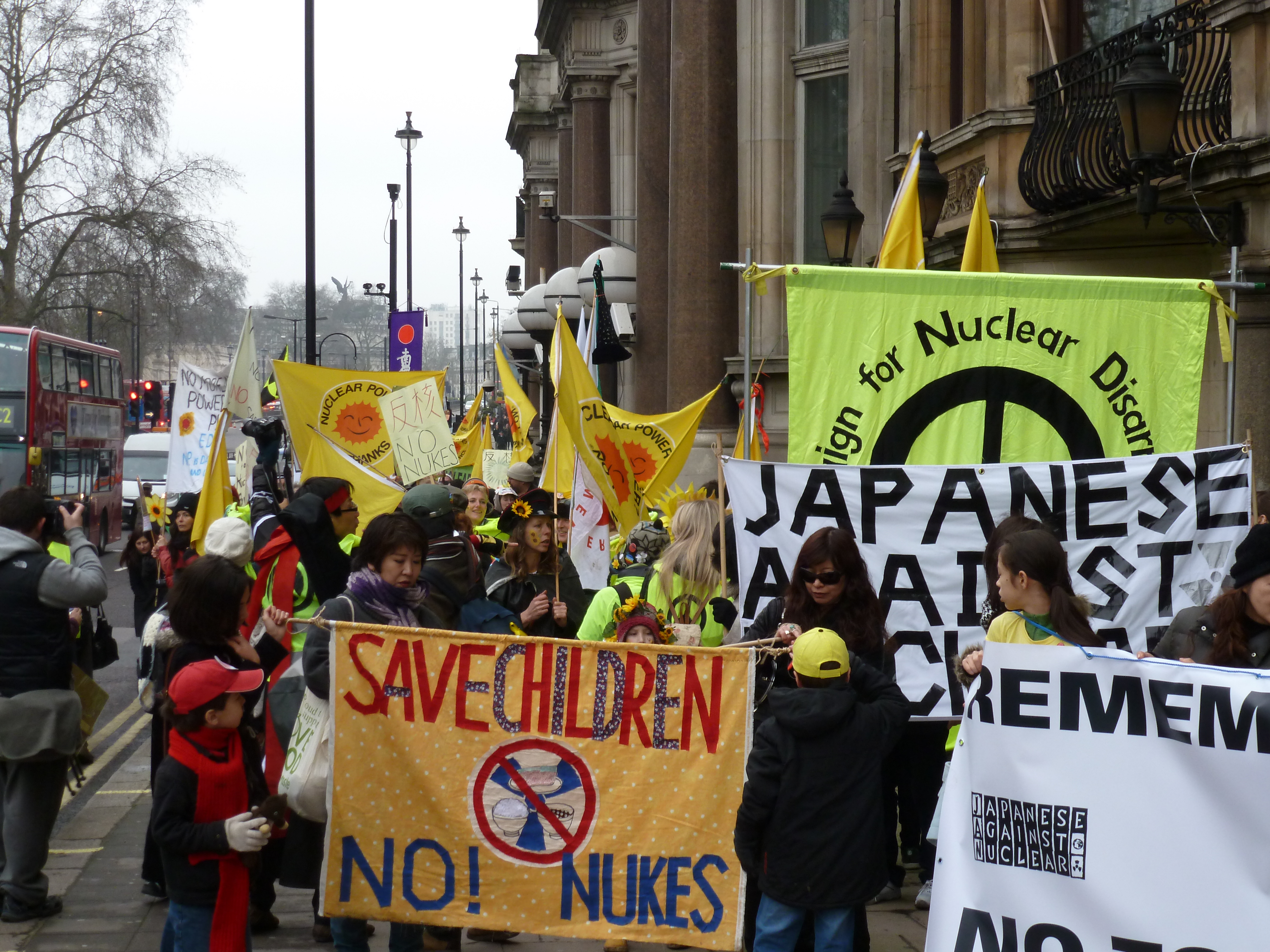
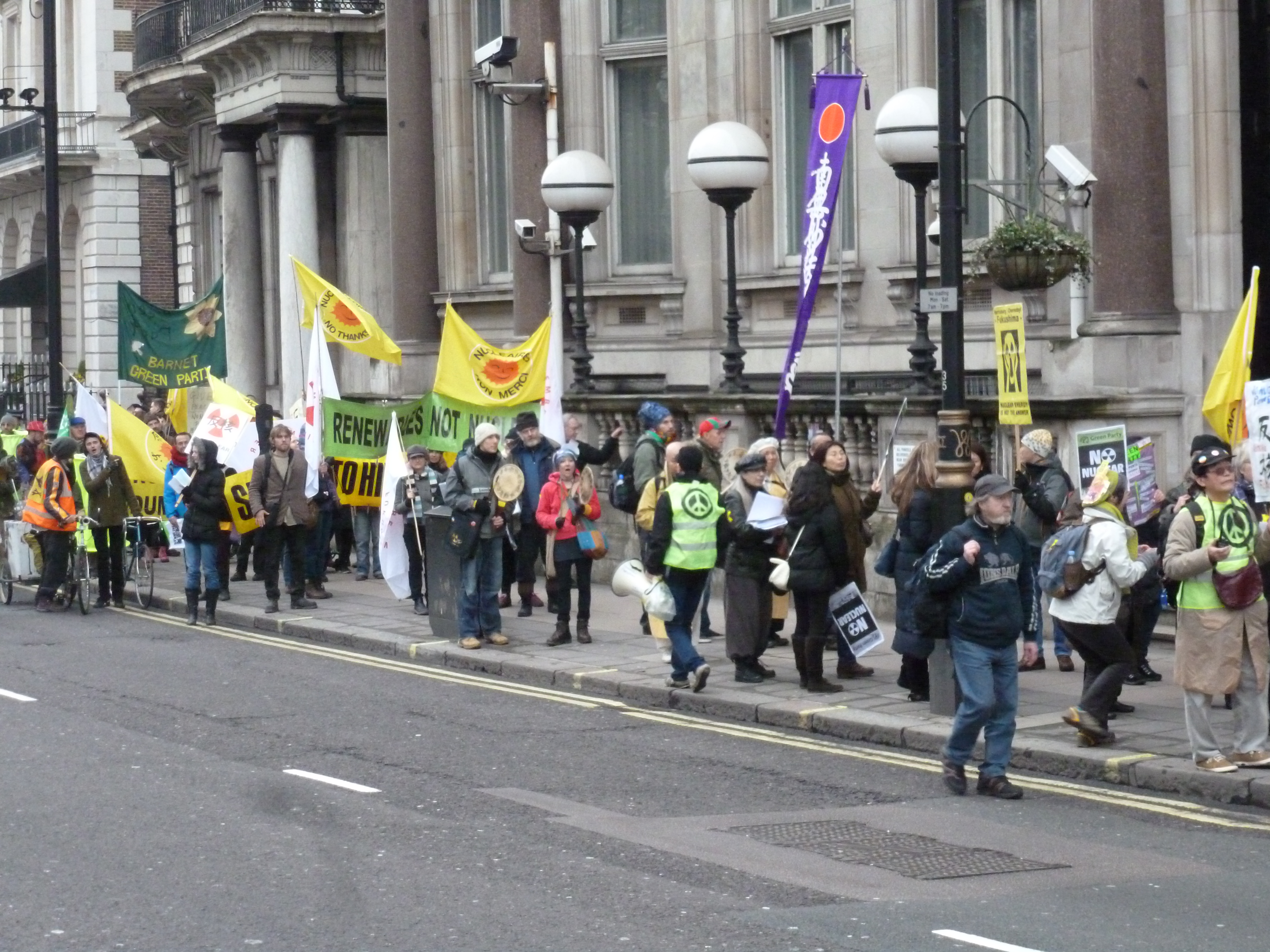
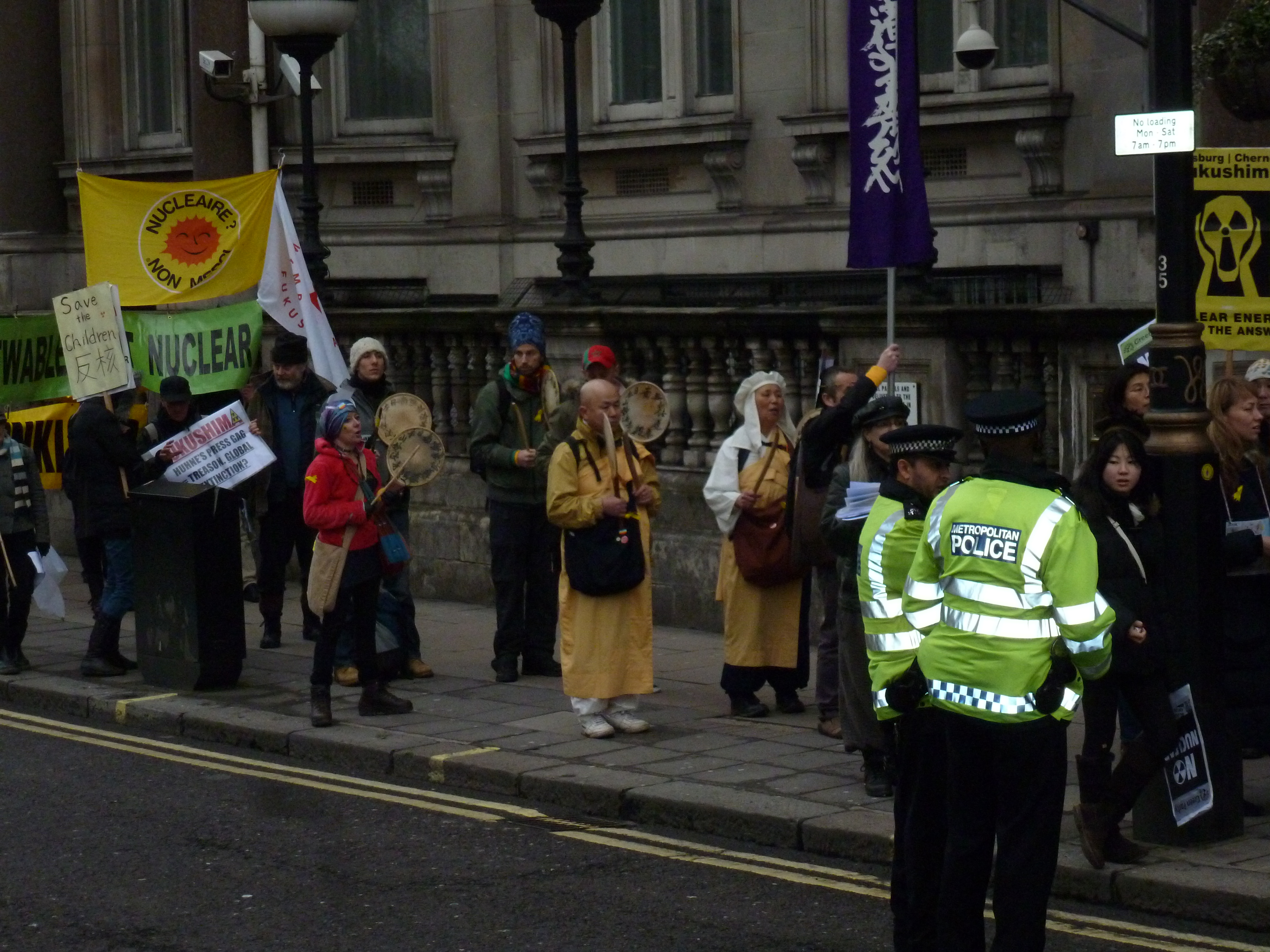
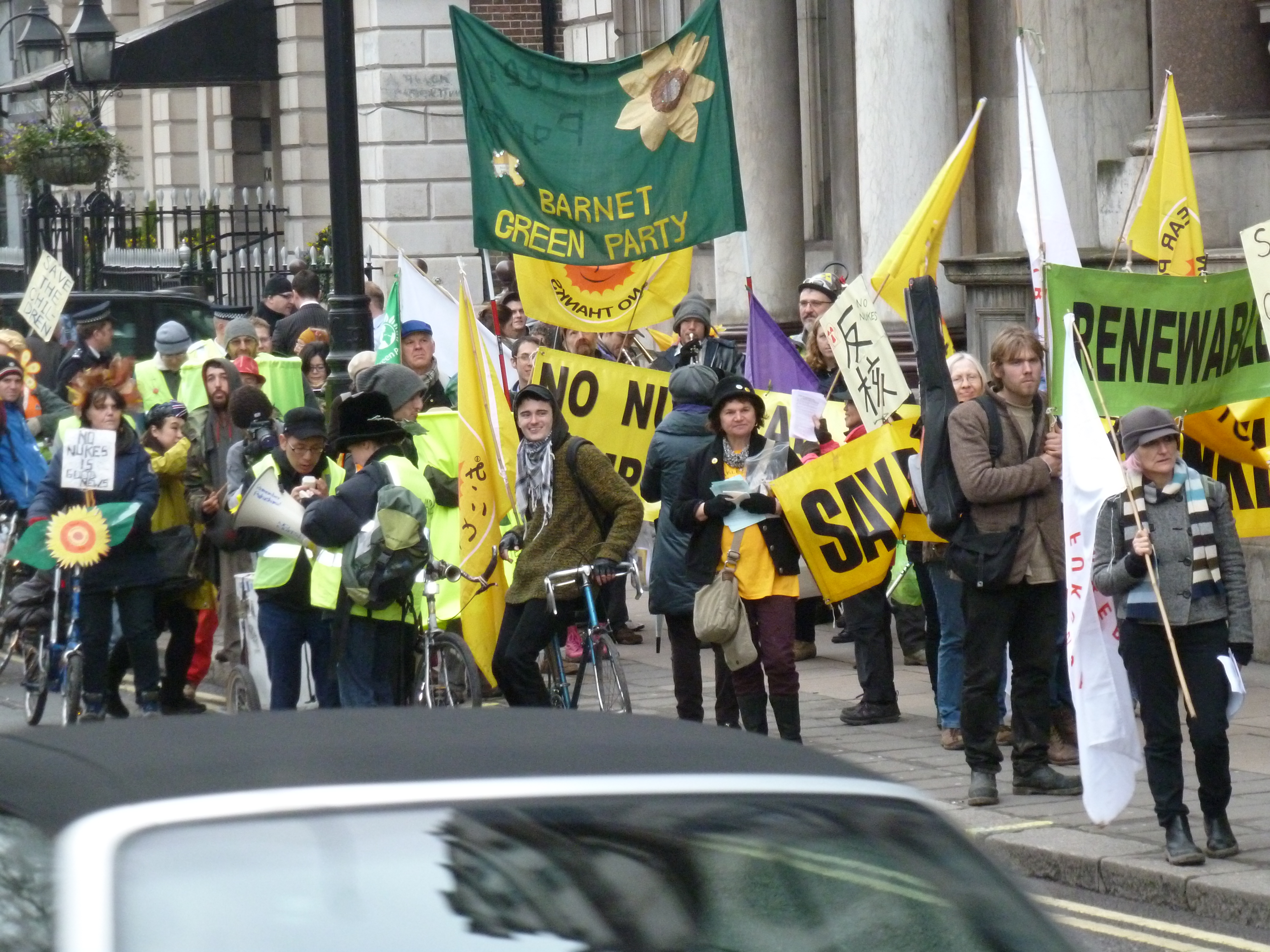
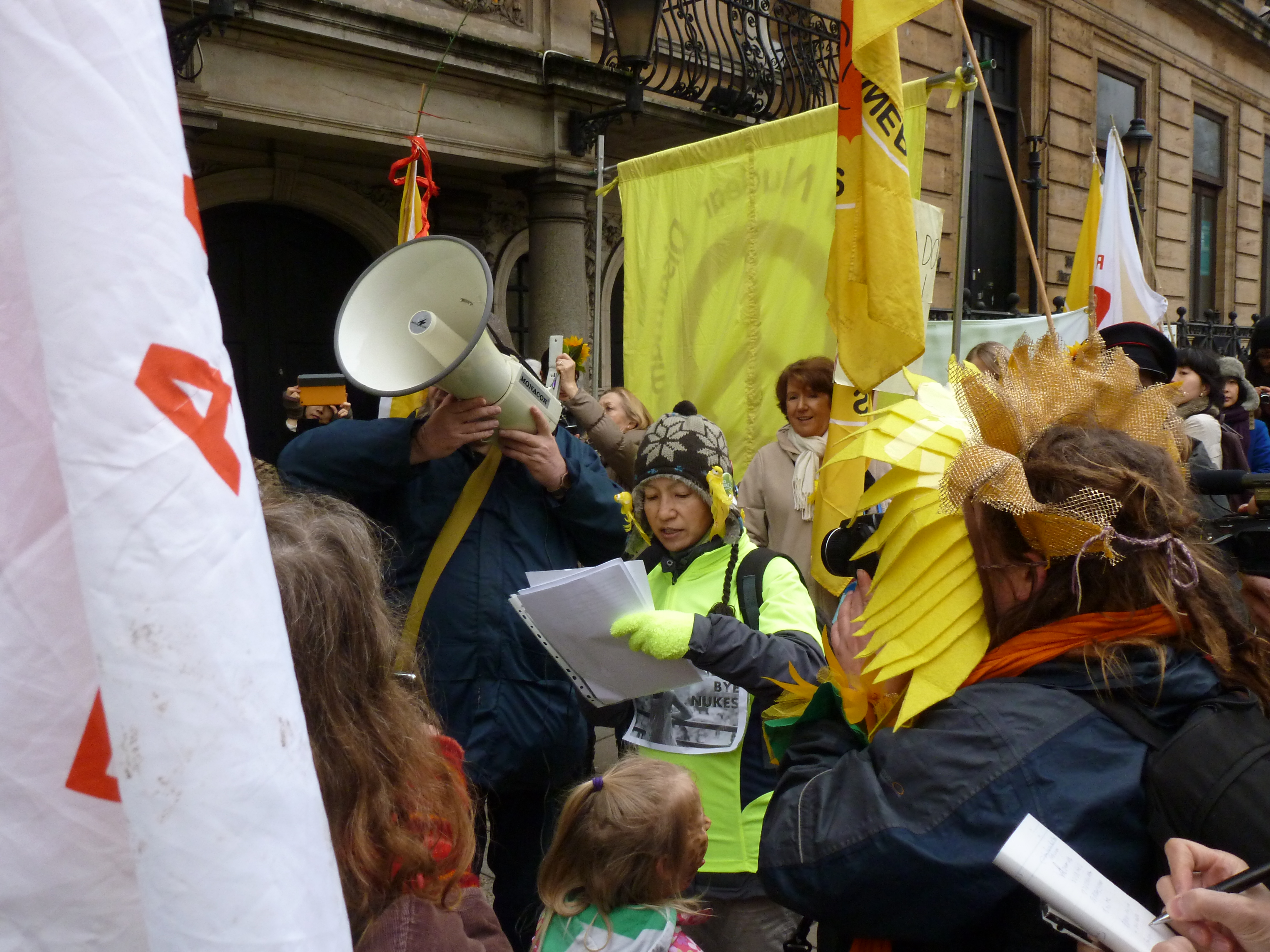
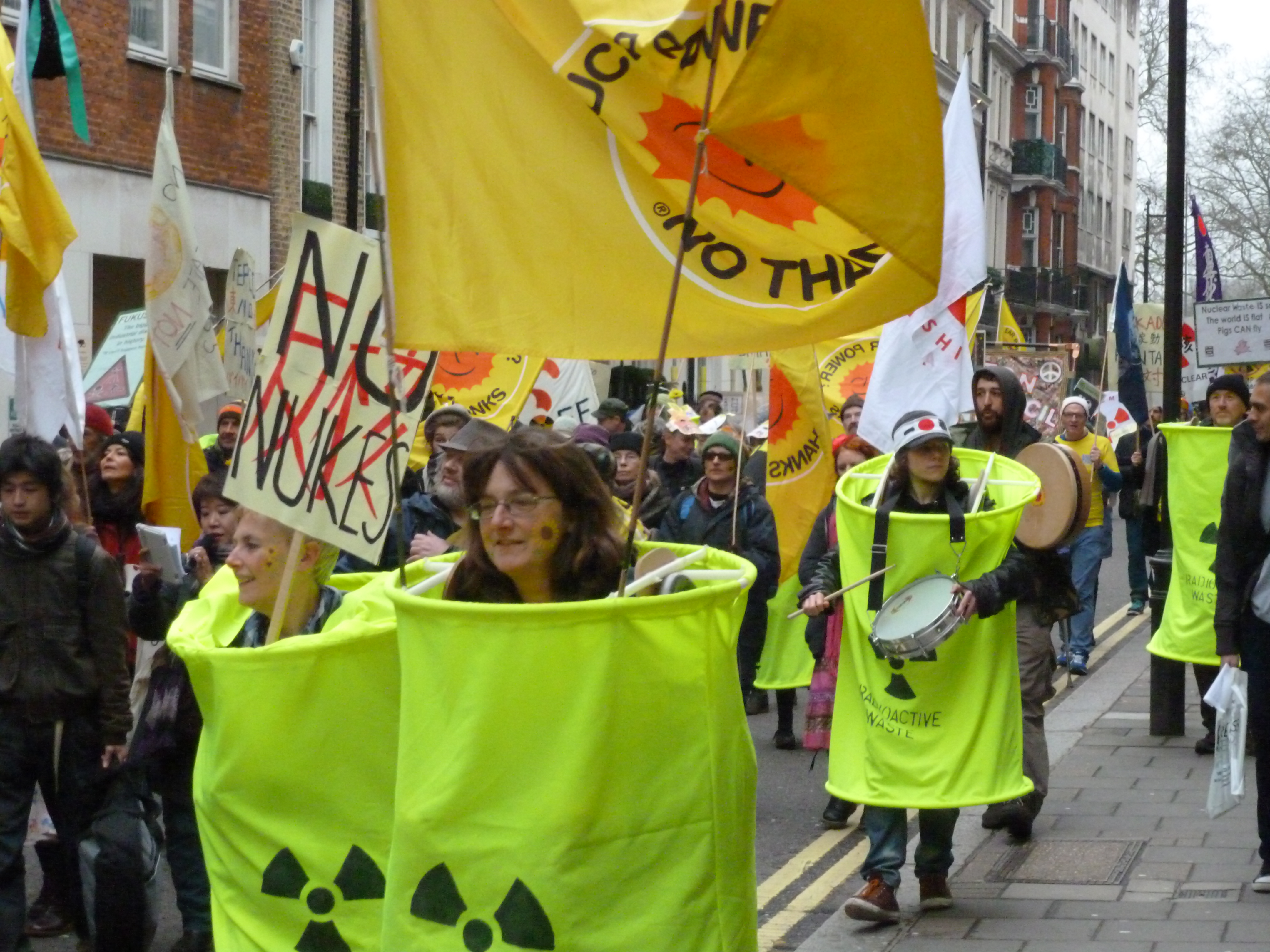
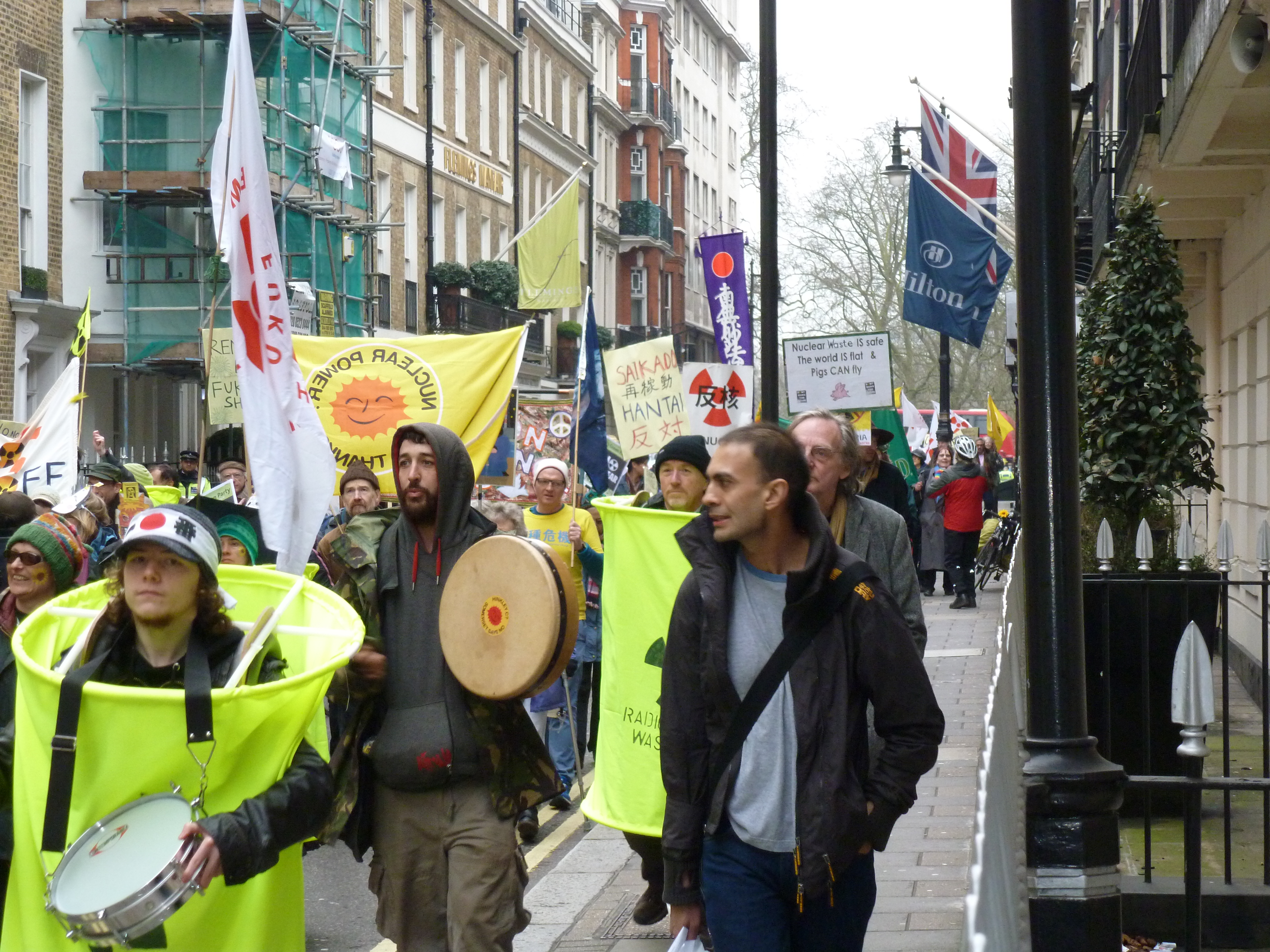
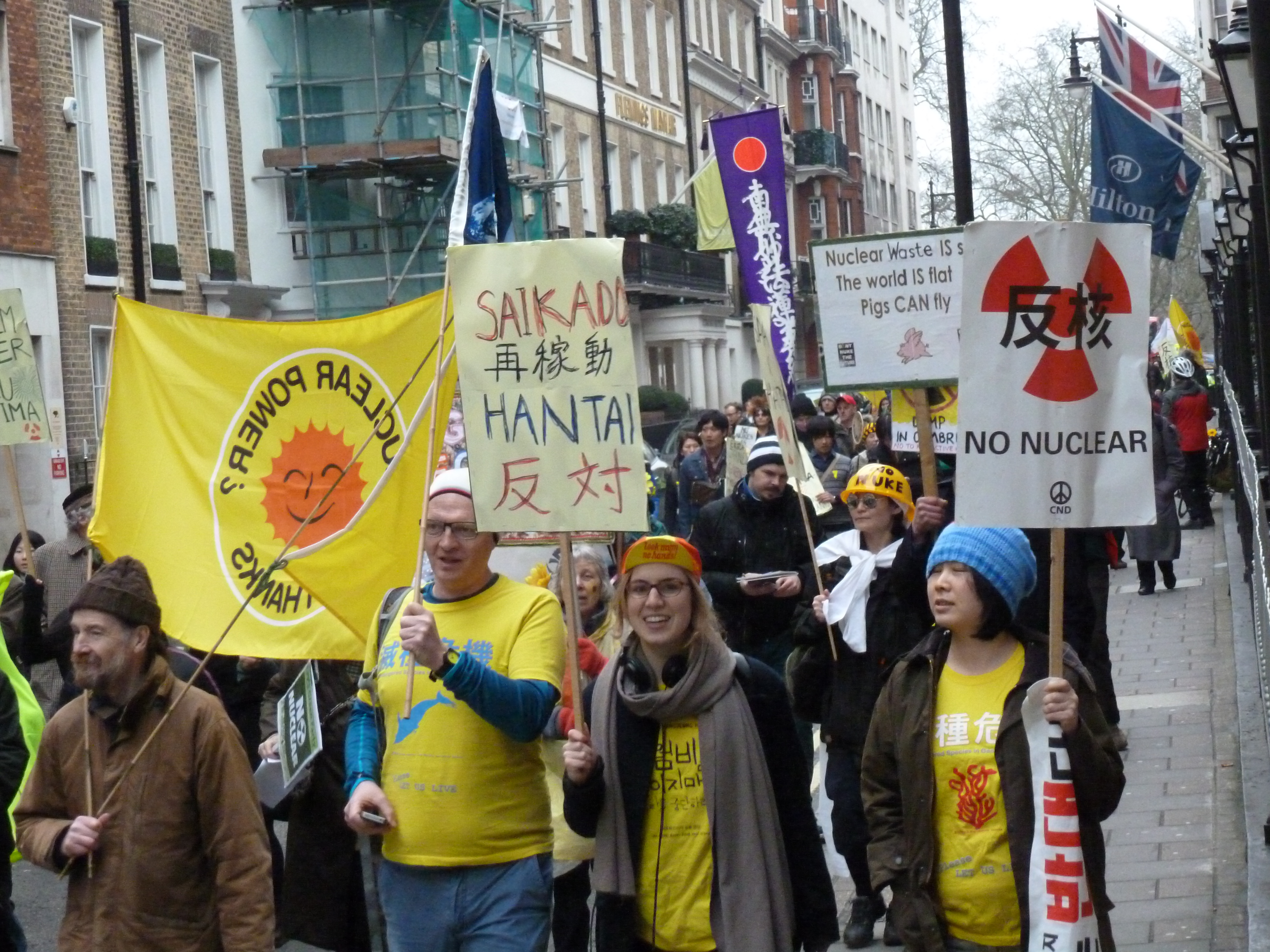
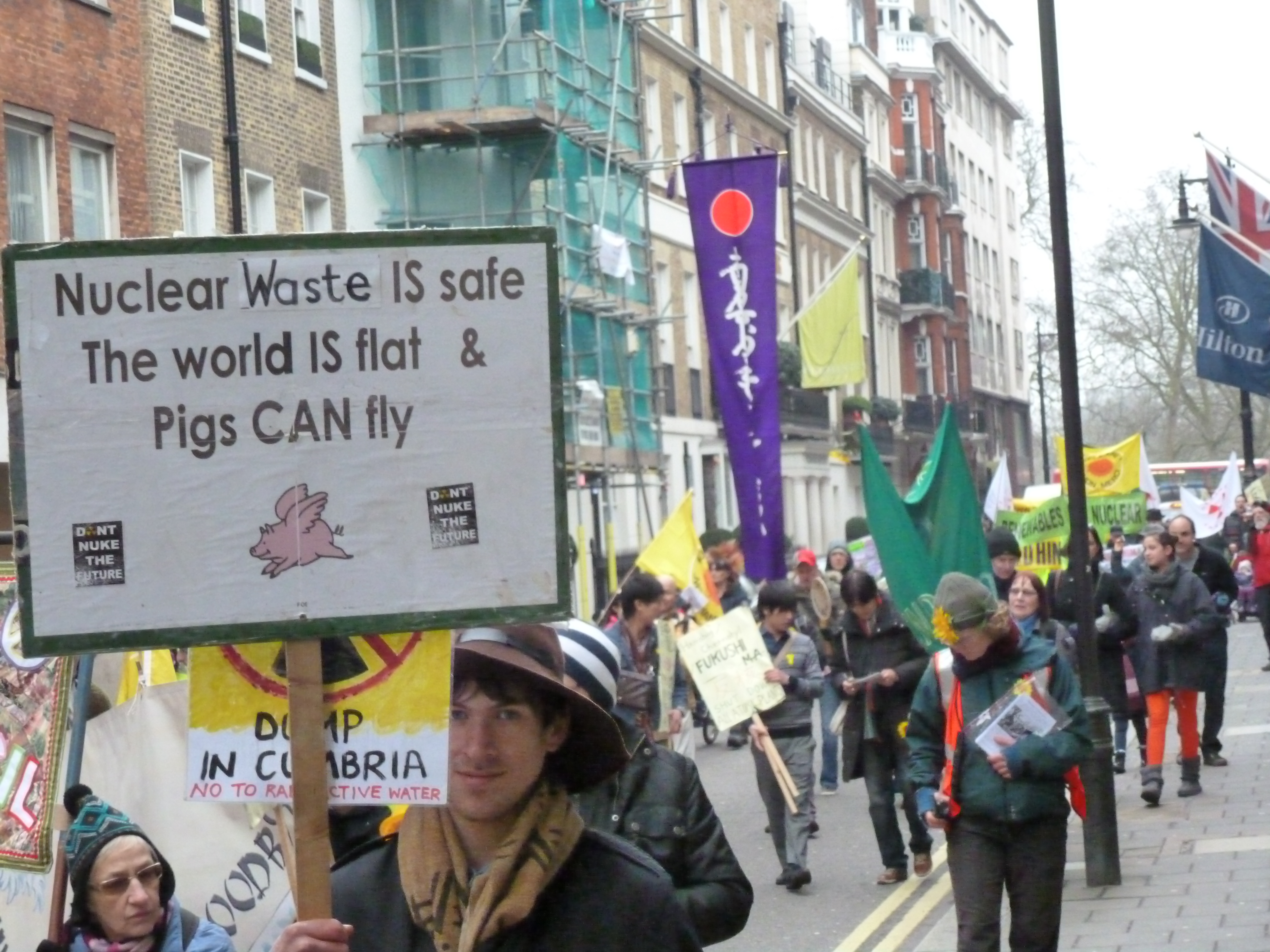
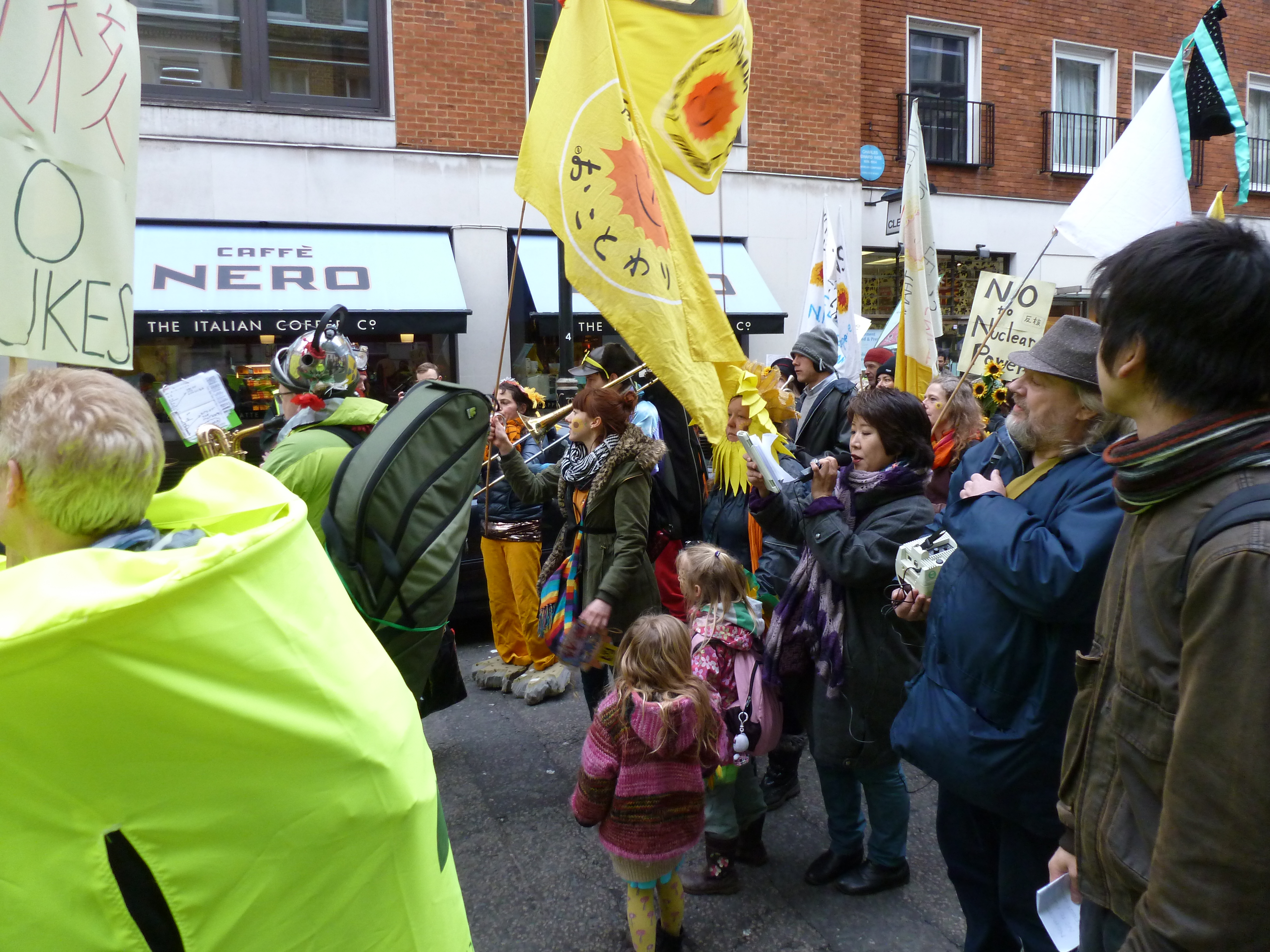
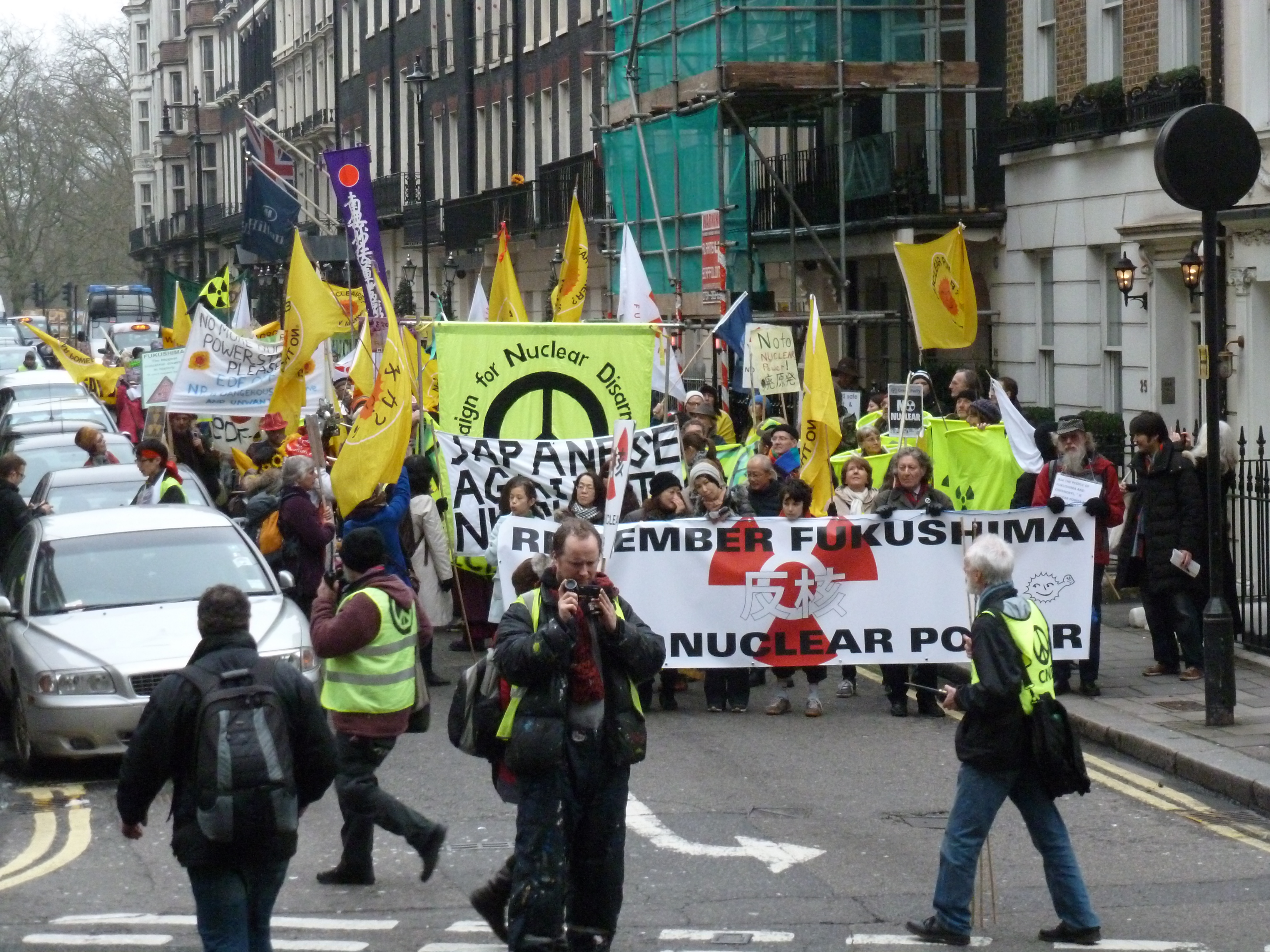
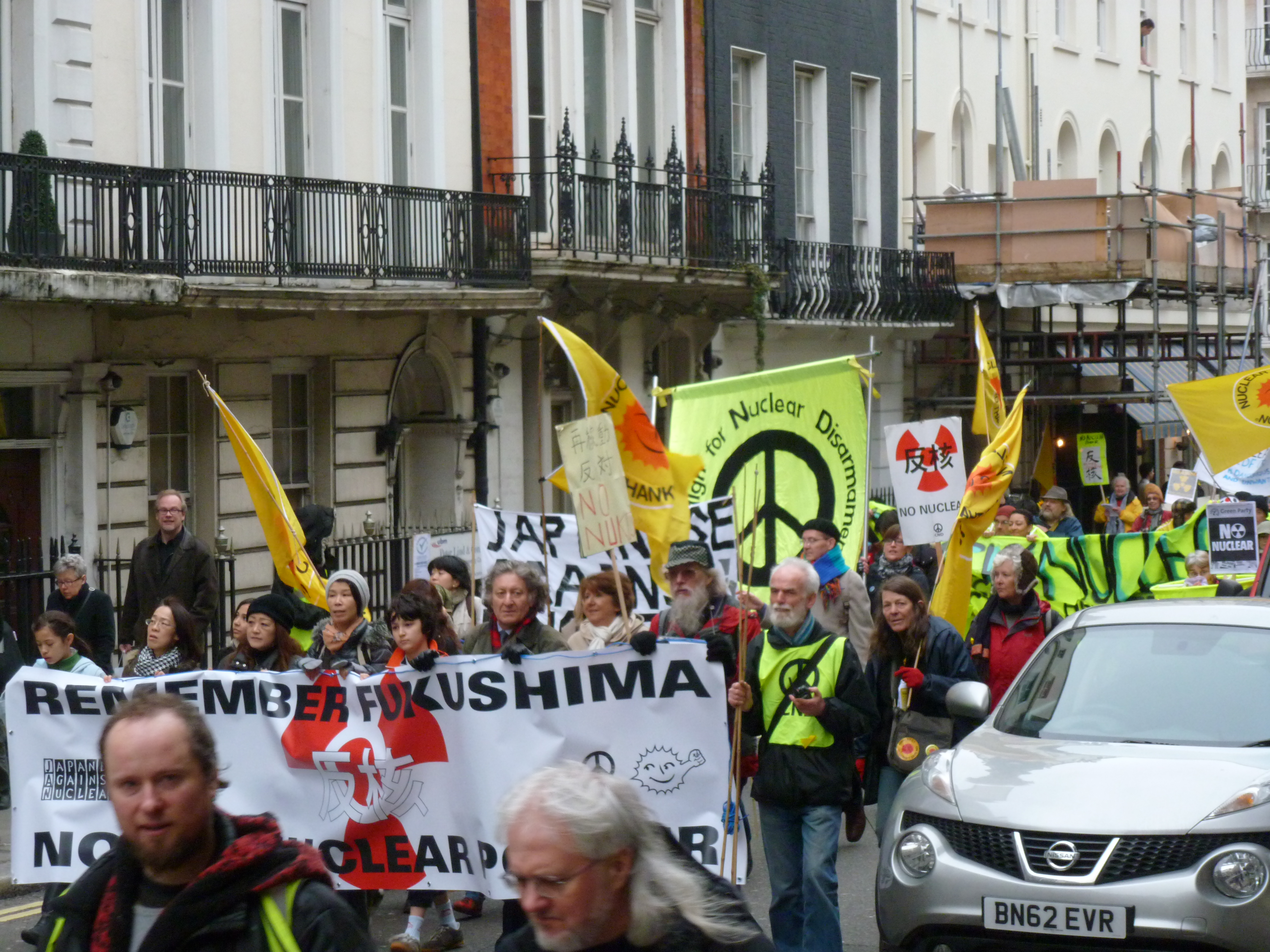
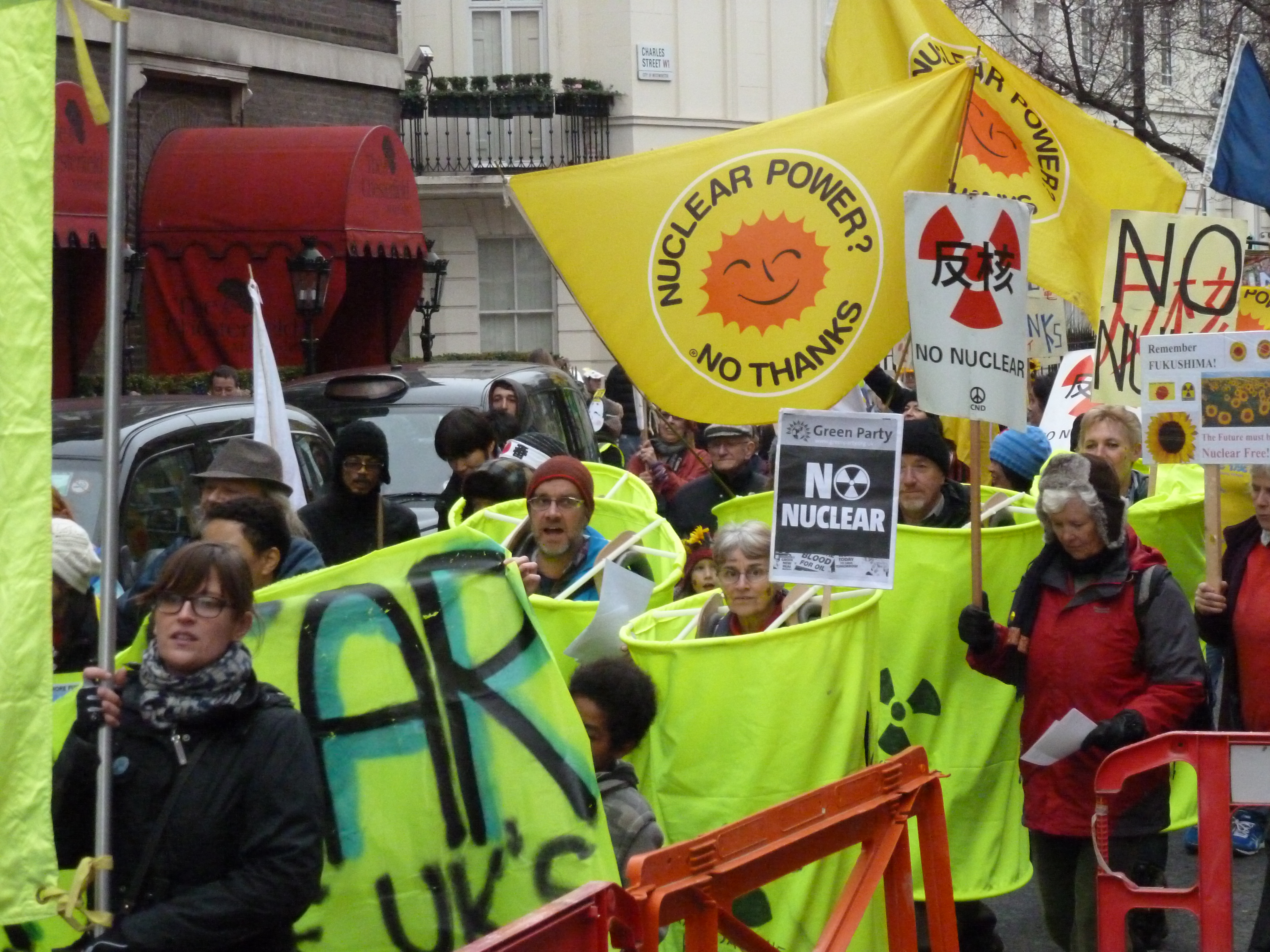
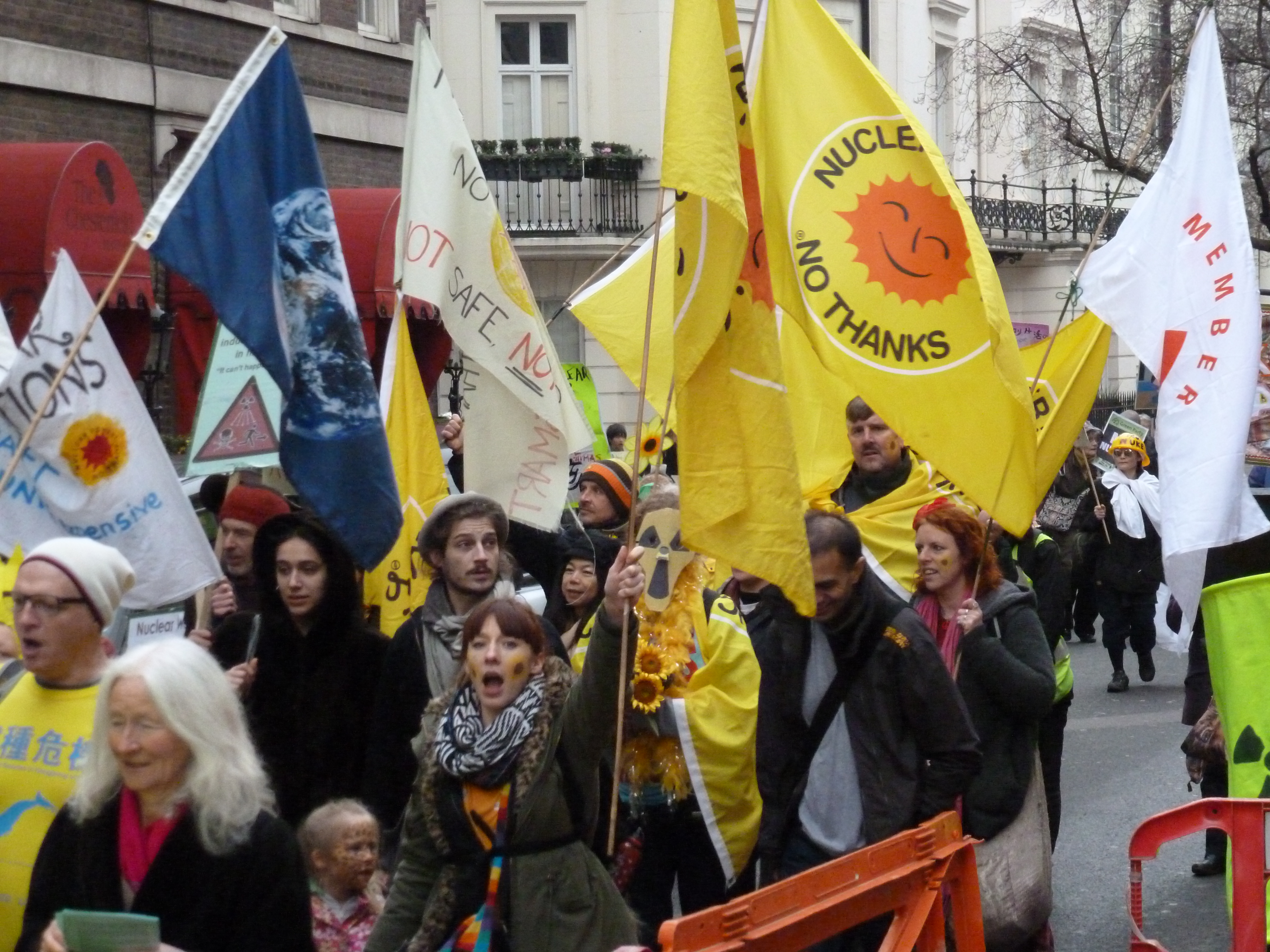
Pictures of the London demonstration and march against Nuclear – 9 March 2013
Some photos of the event for you to share and enjoy…

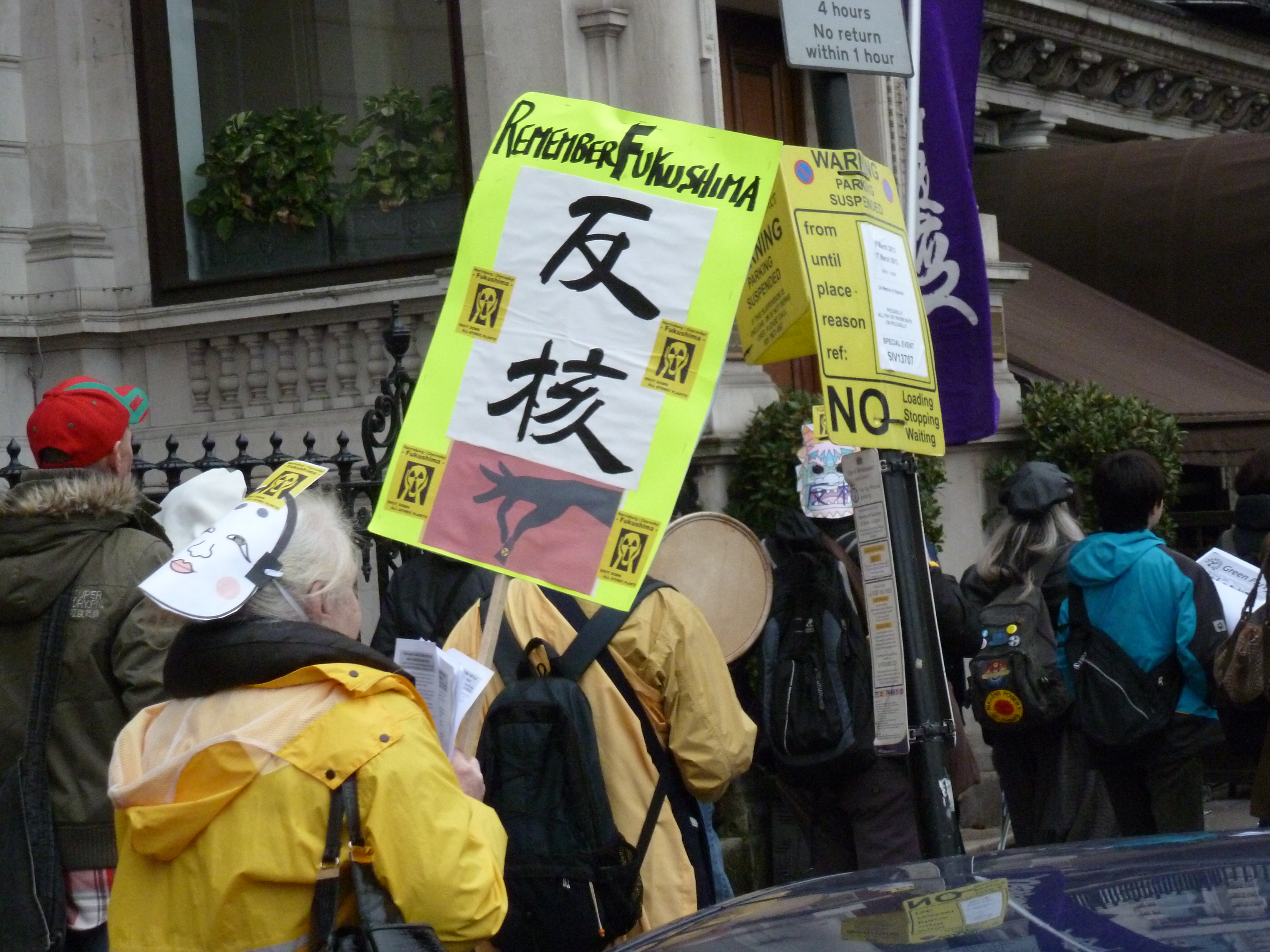
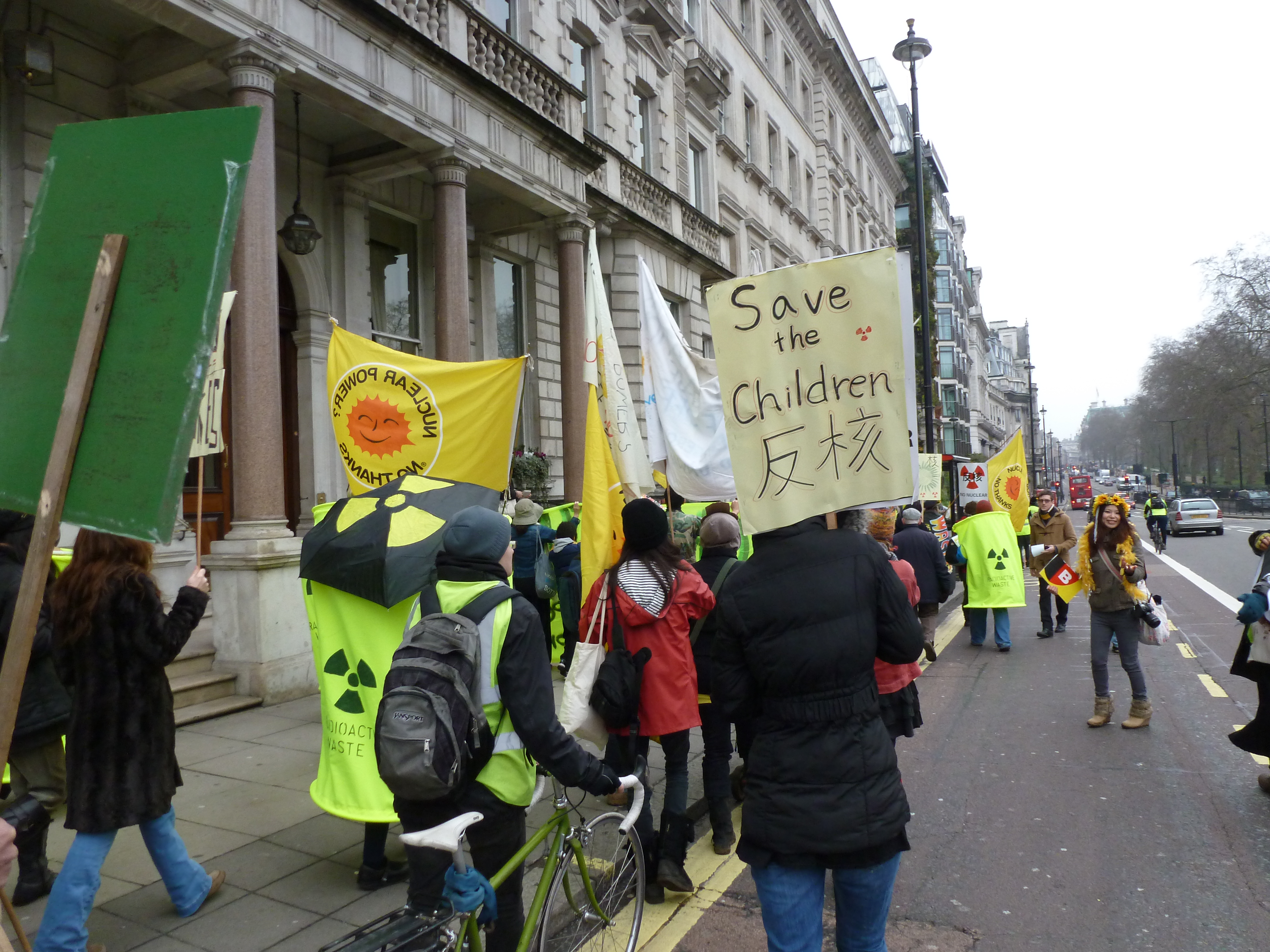
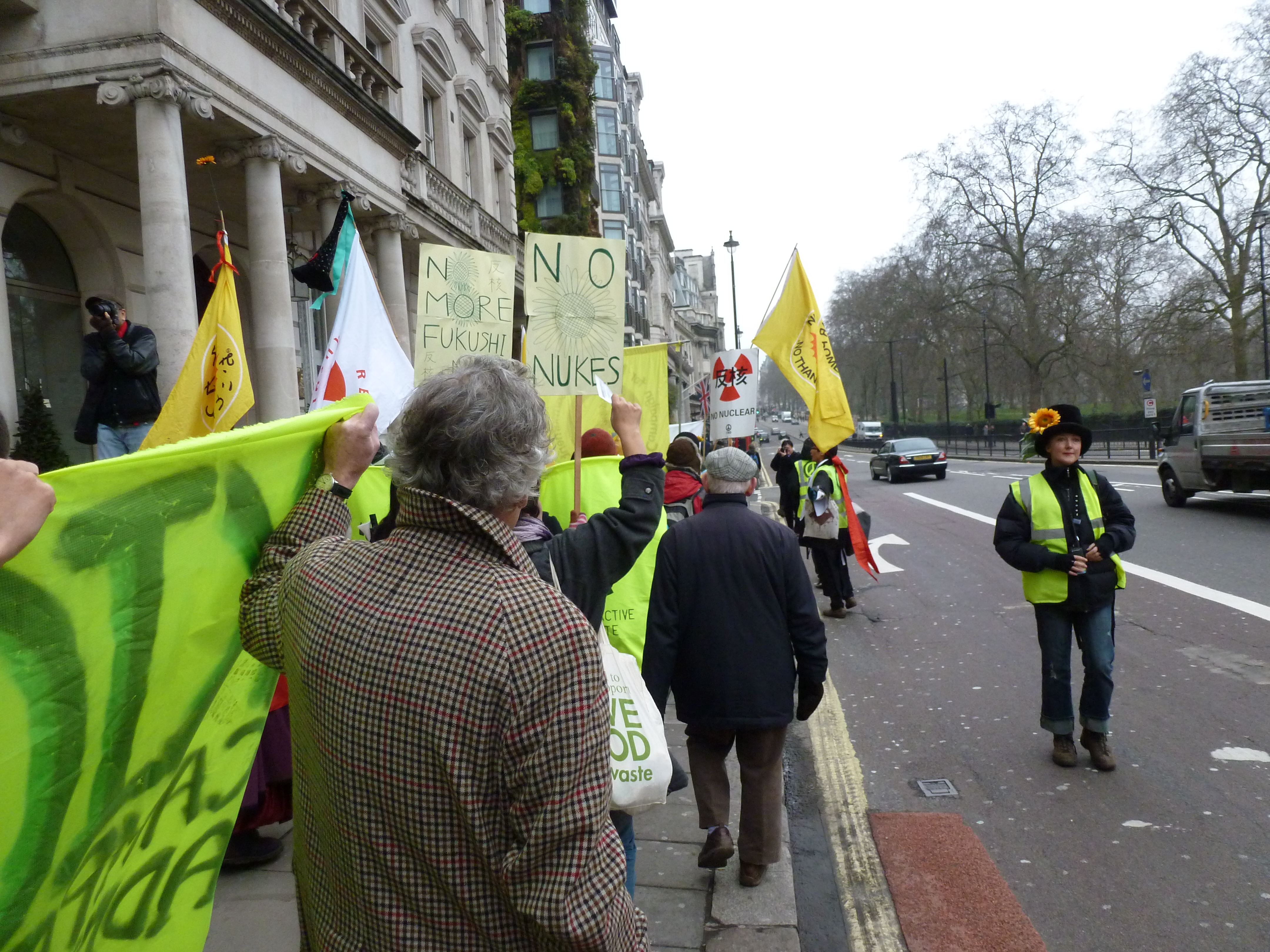
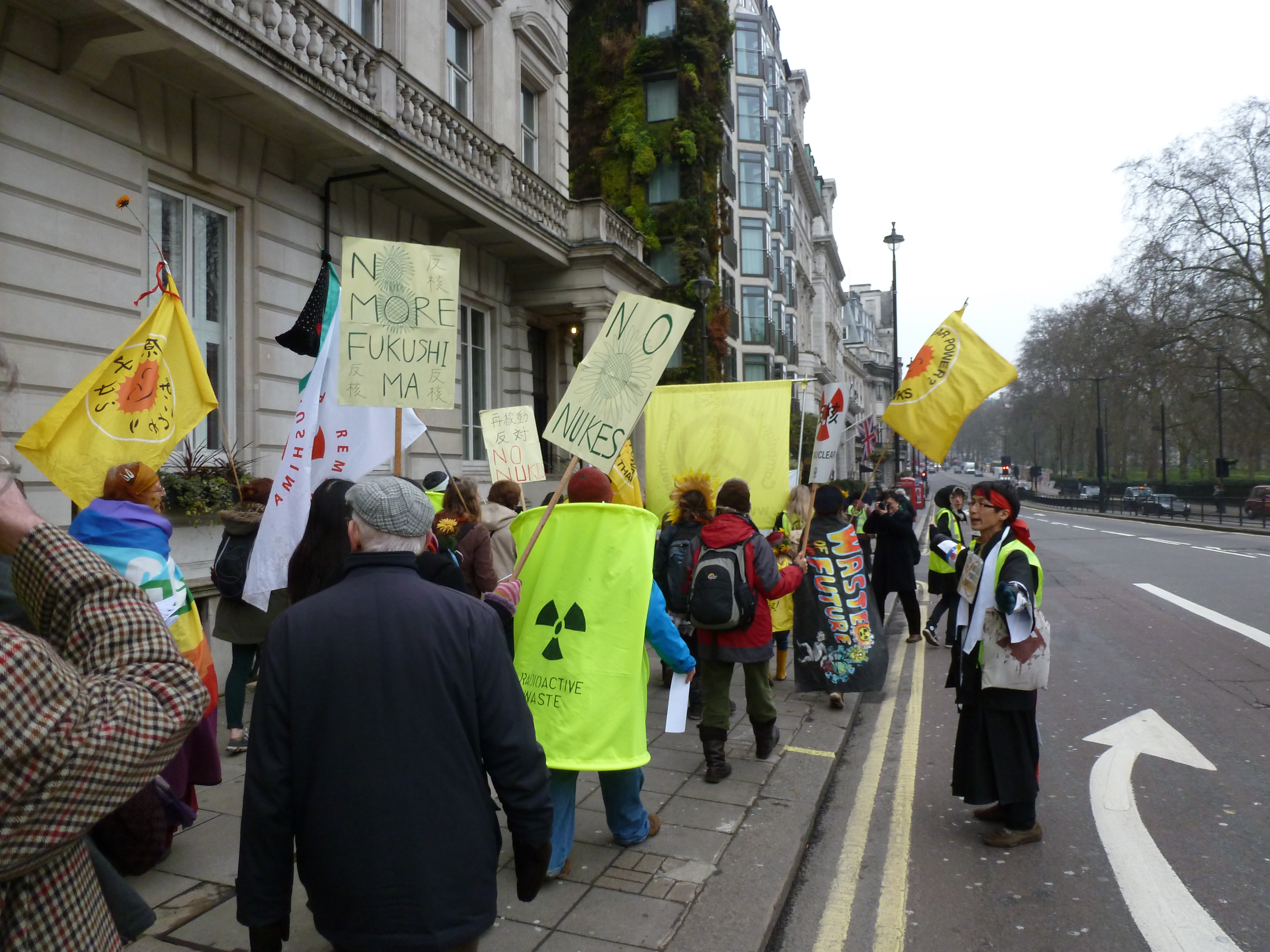
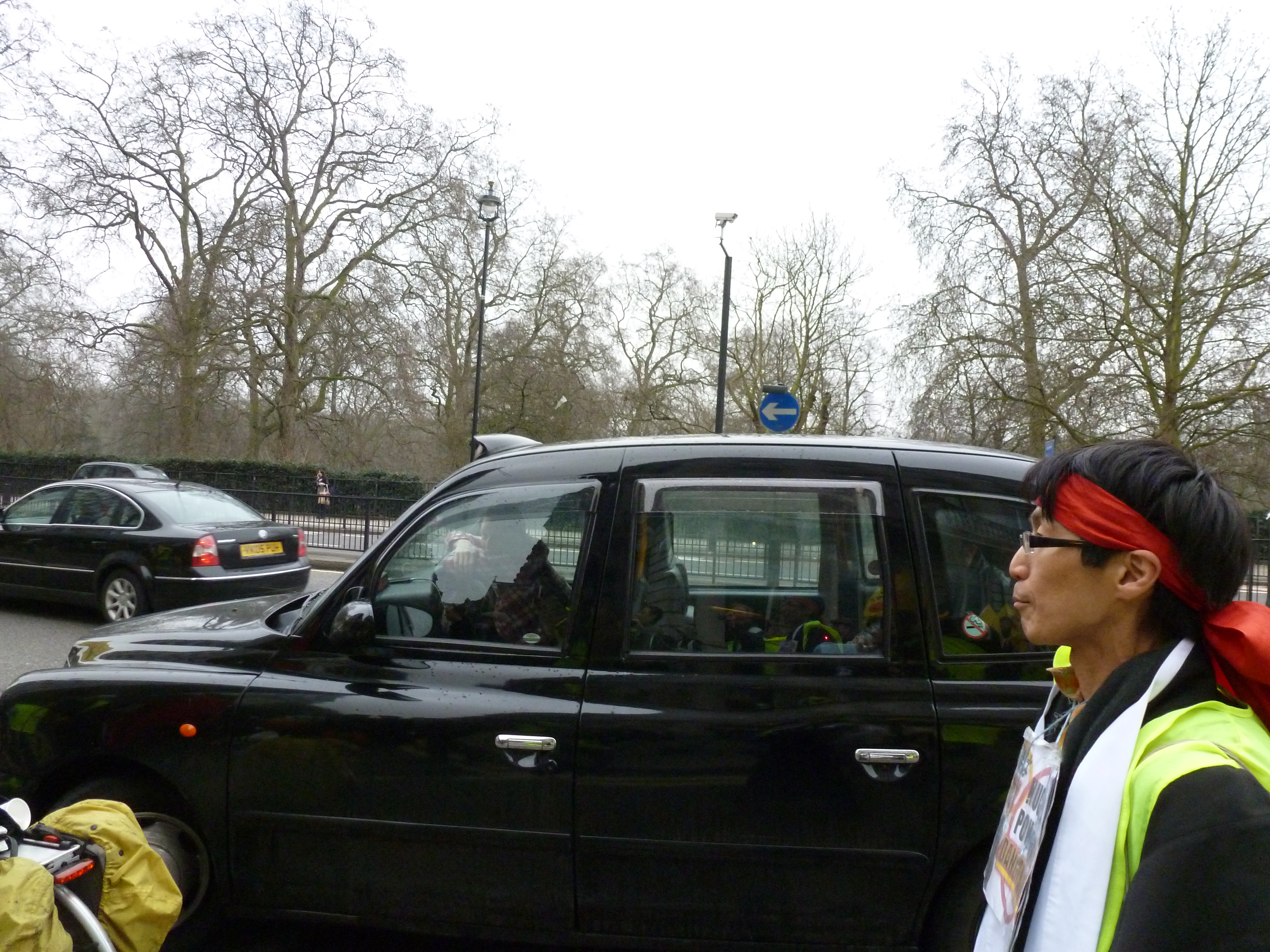
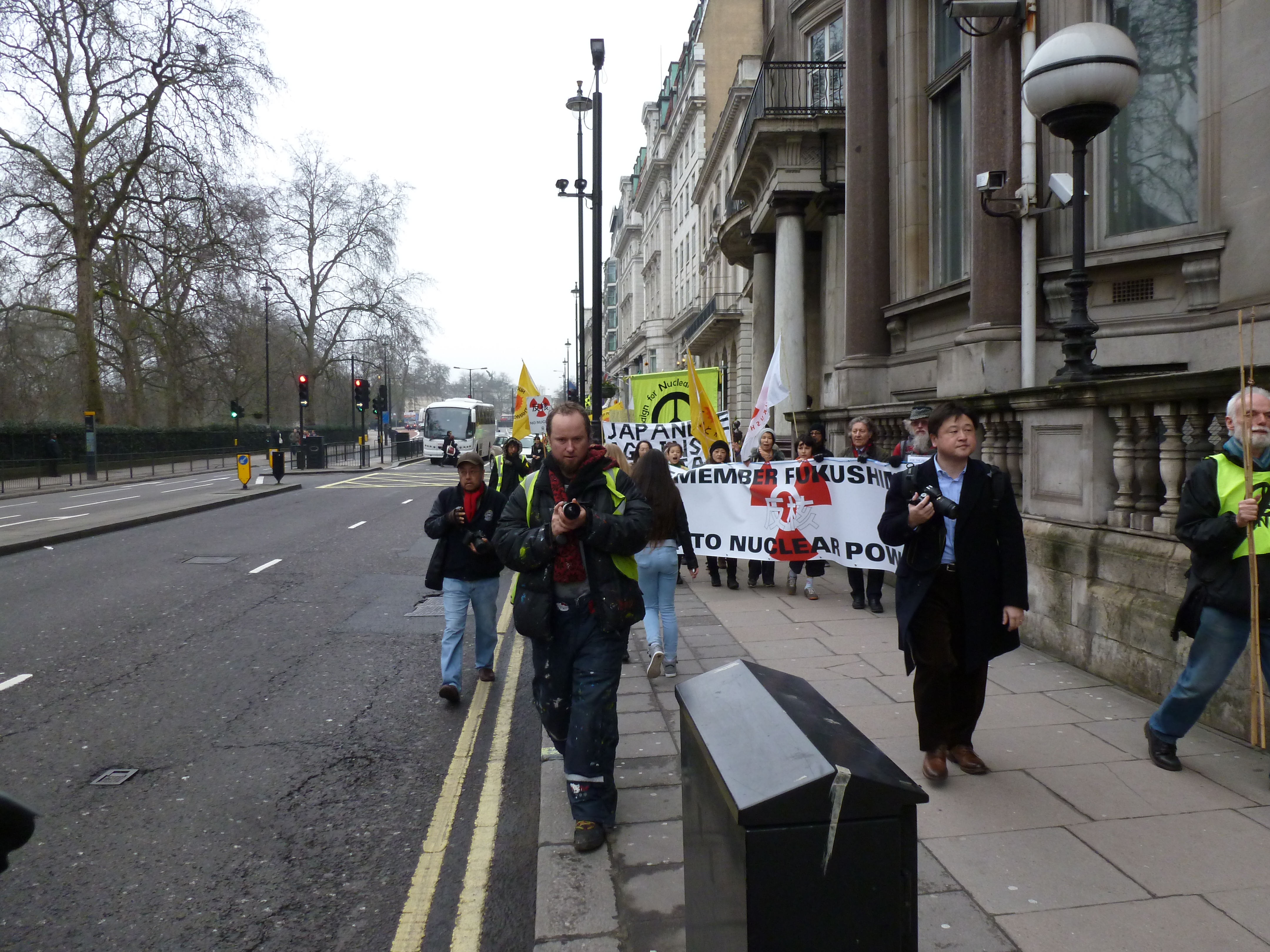
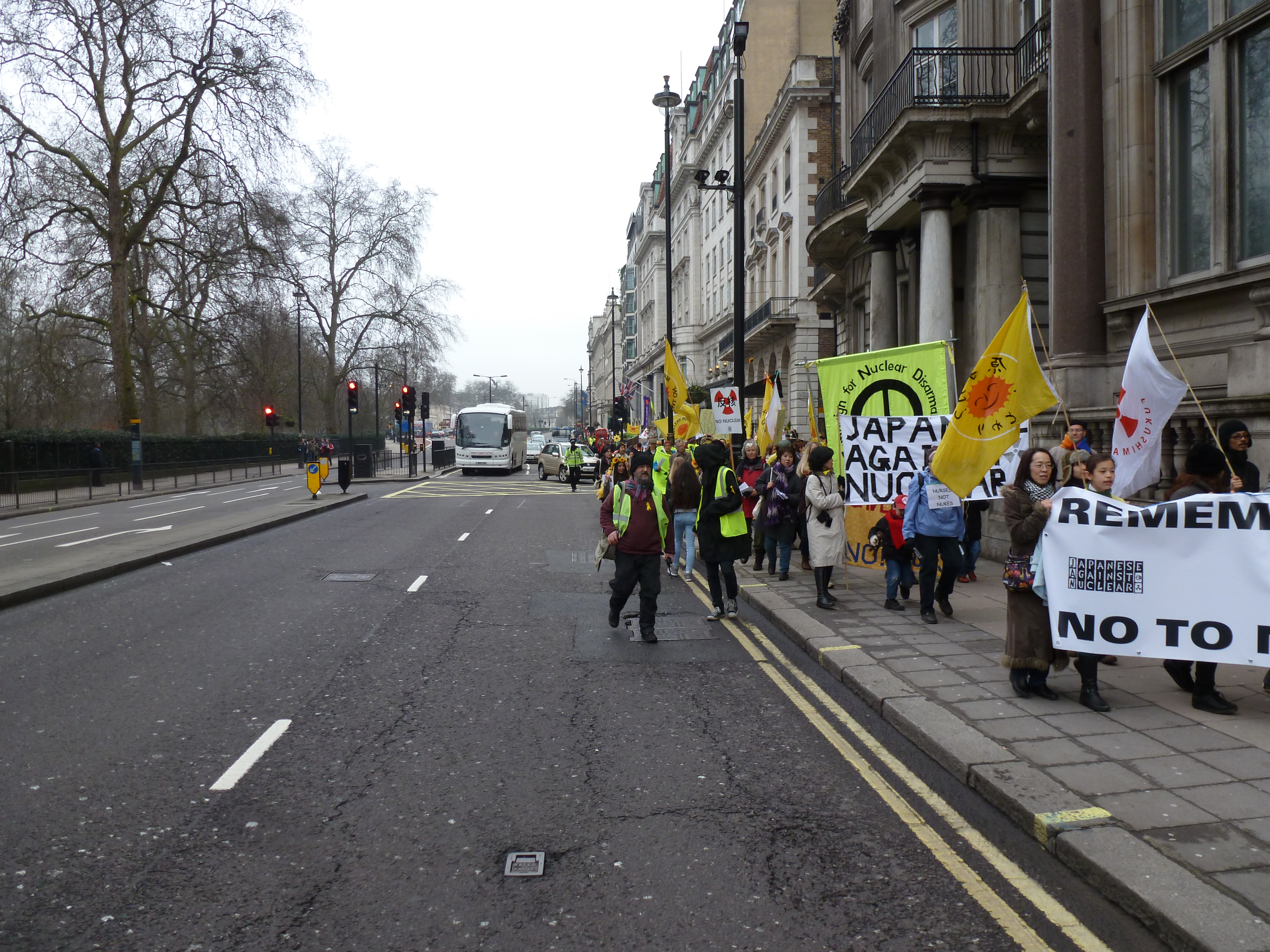
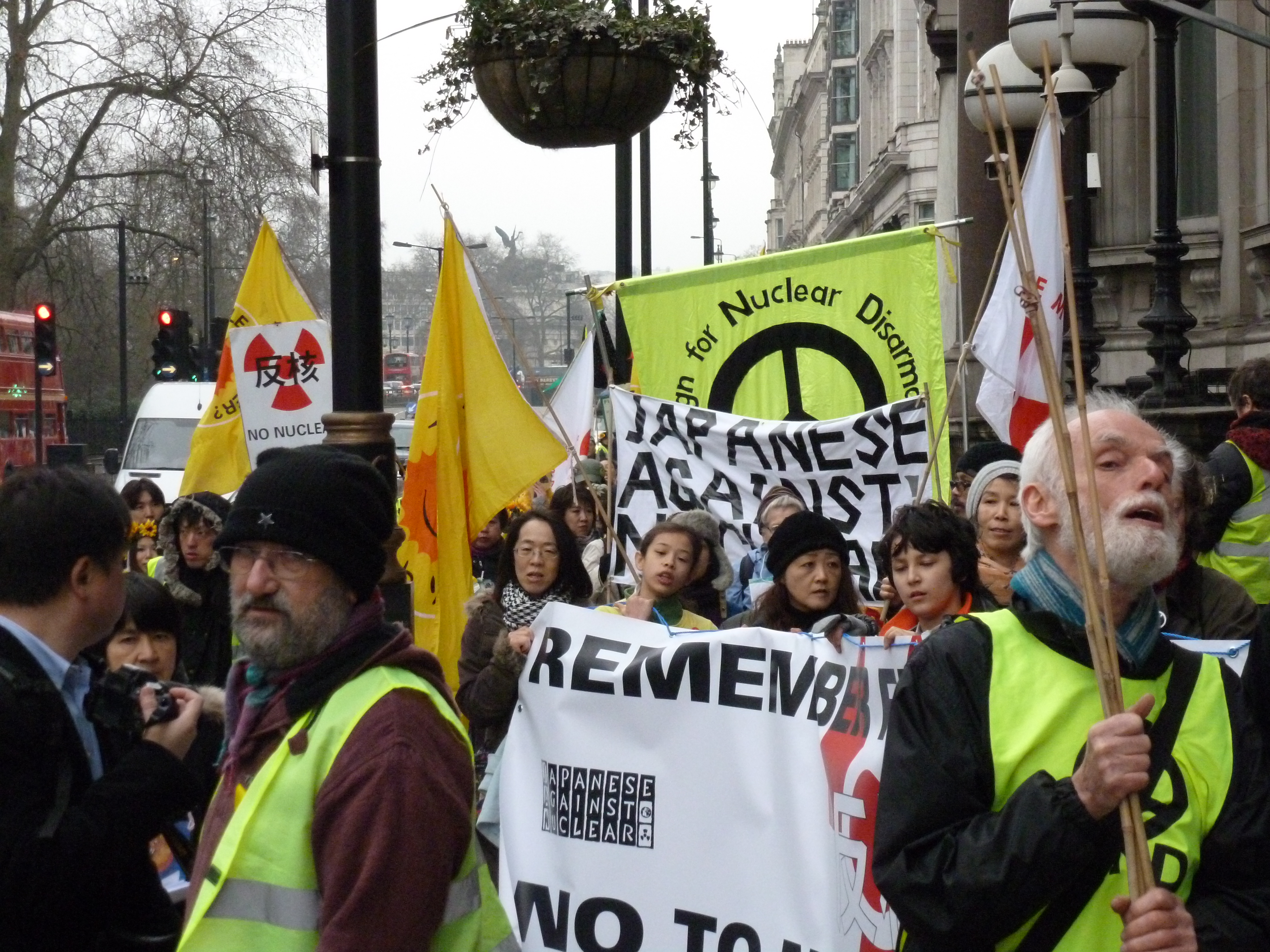

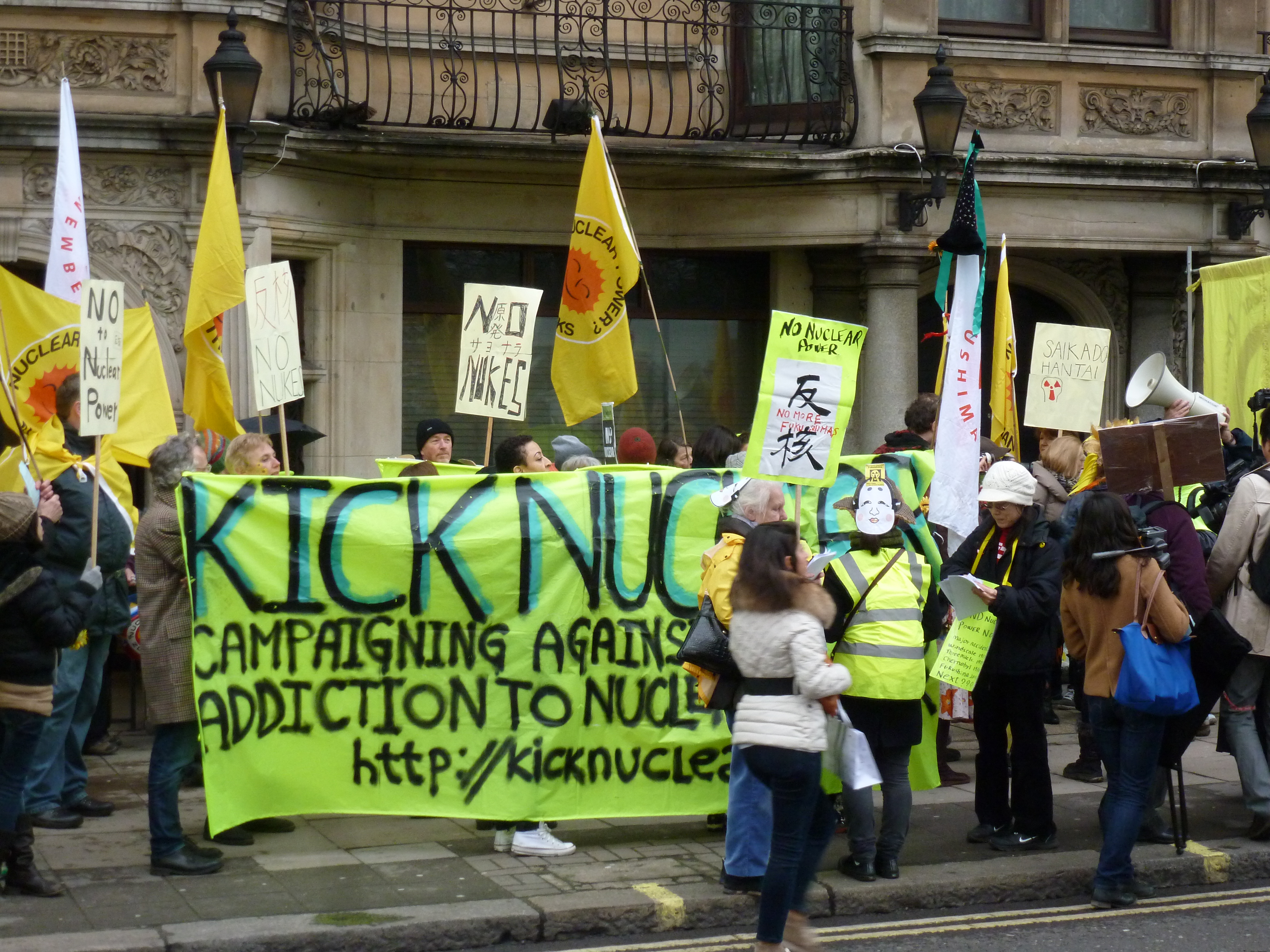
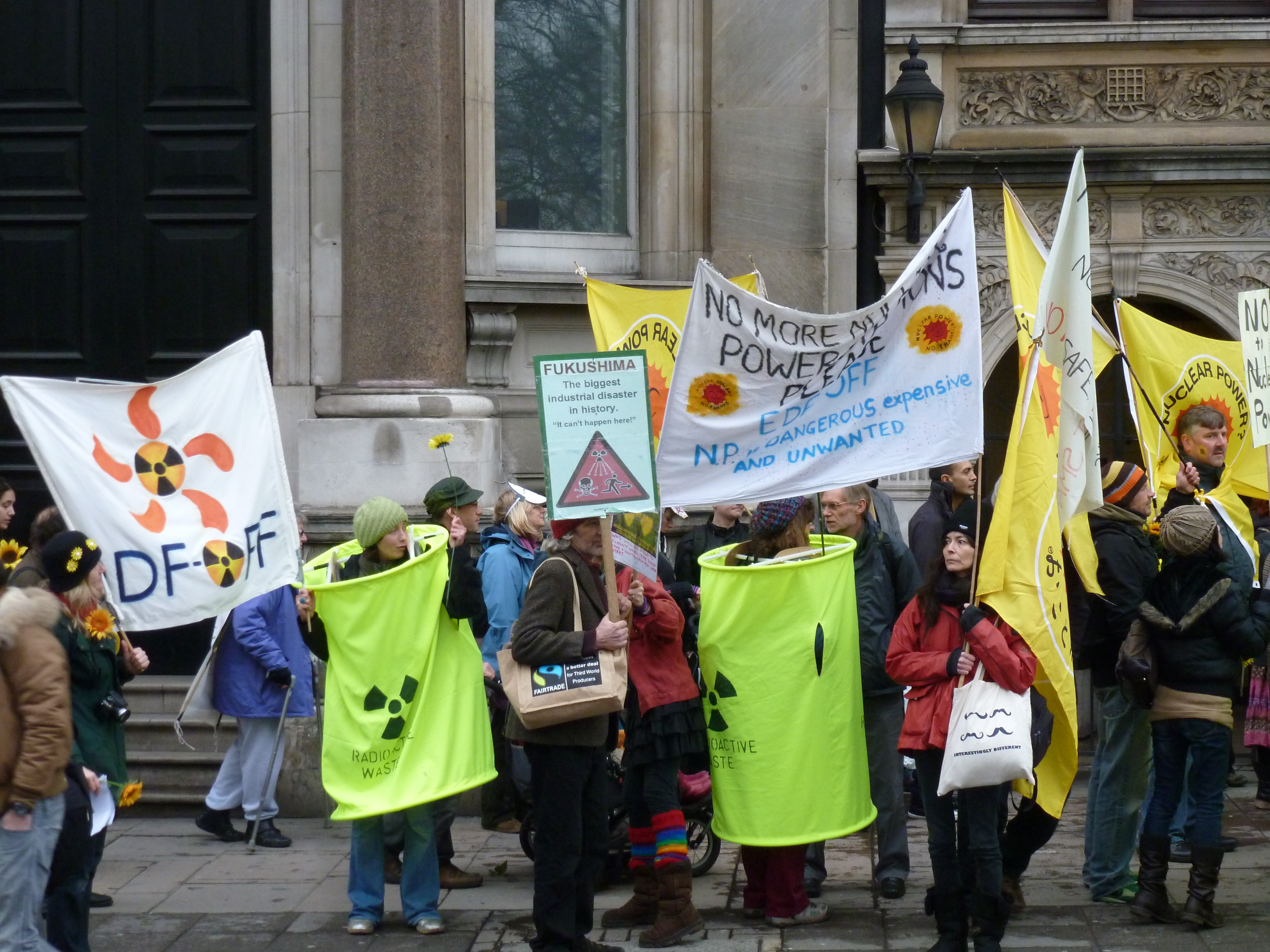
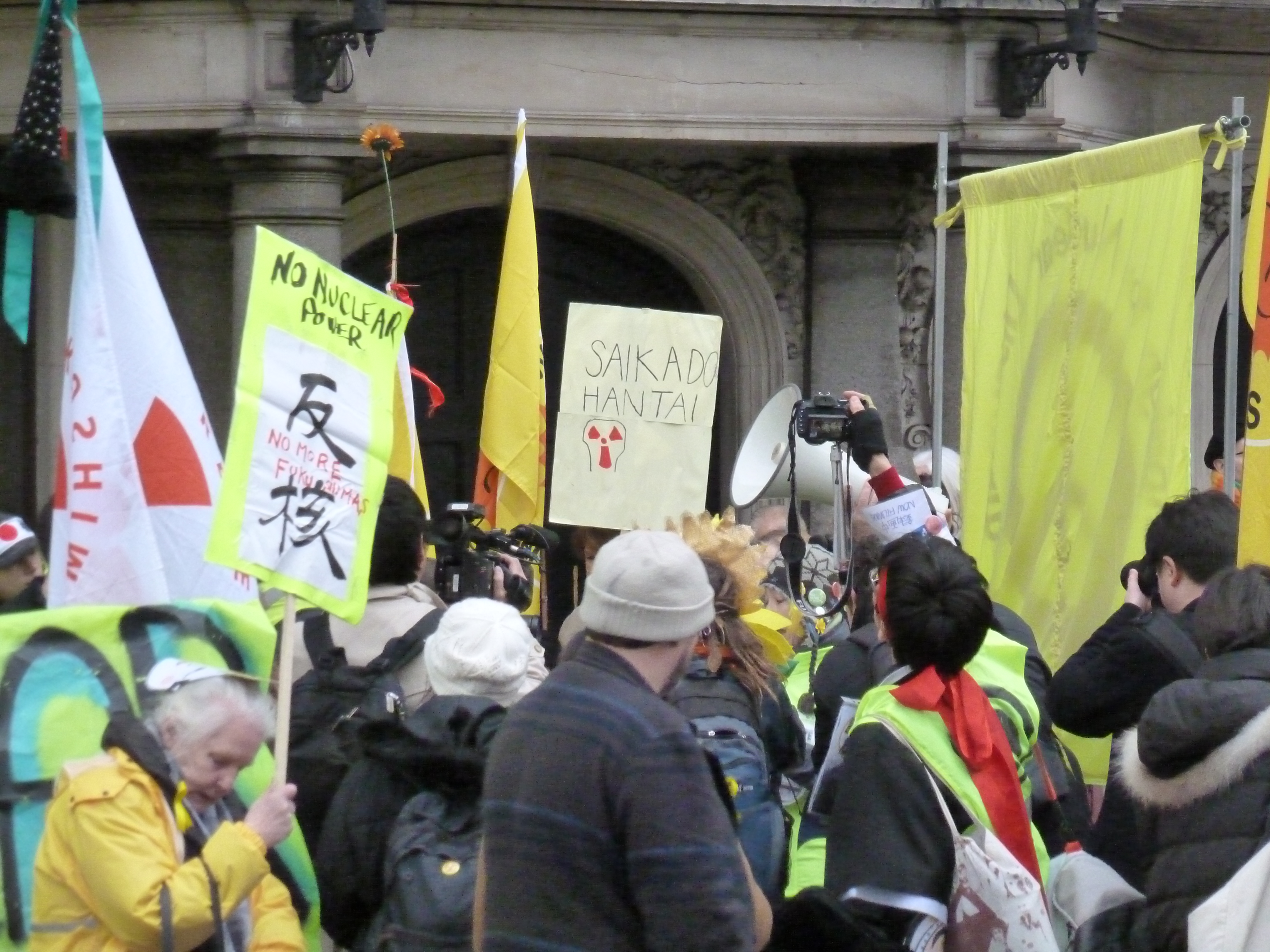
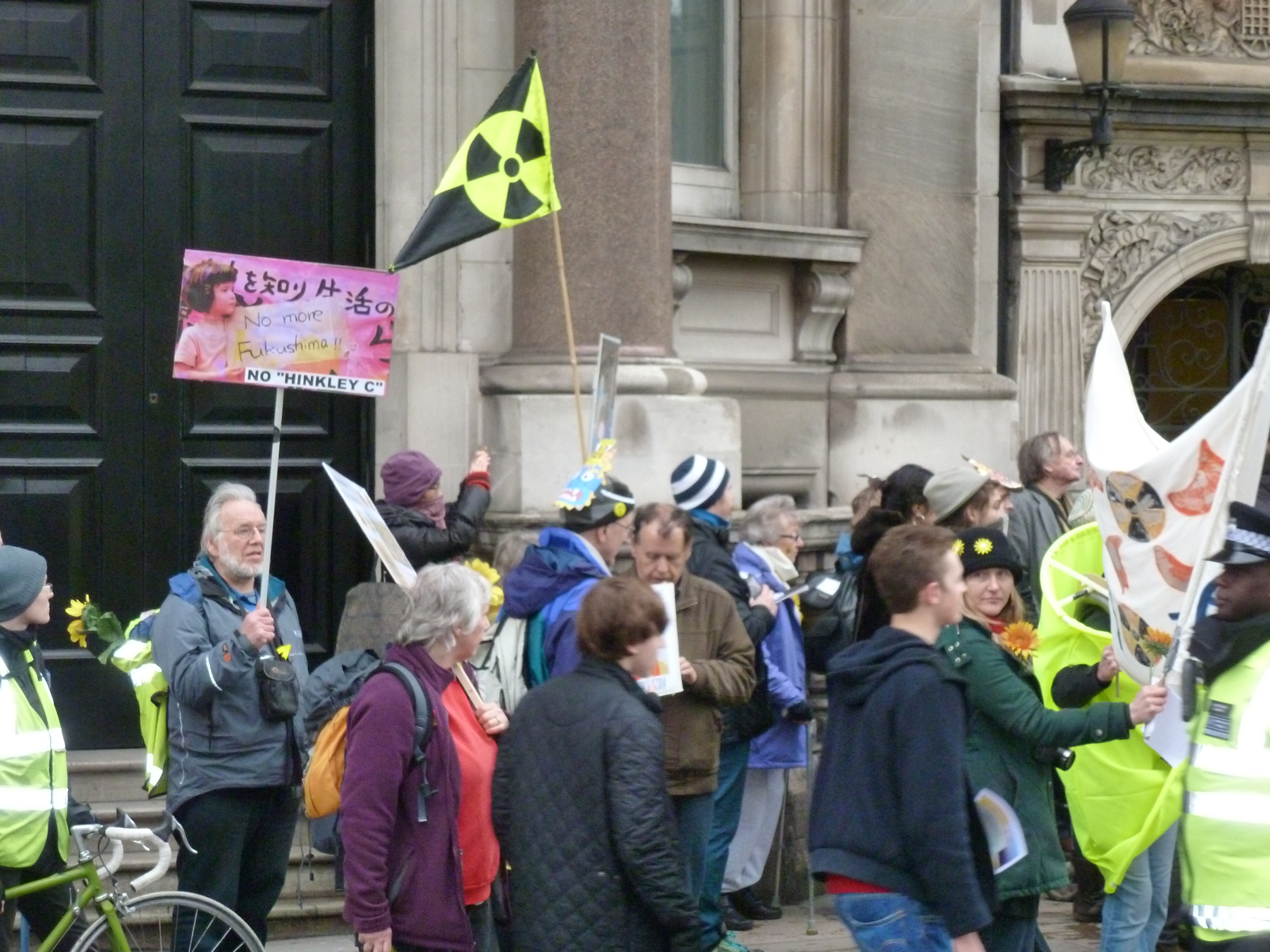


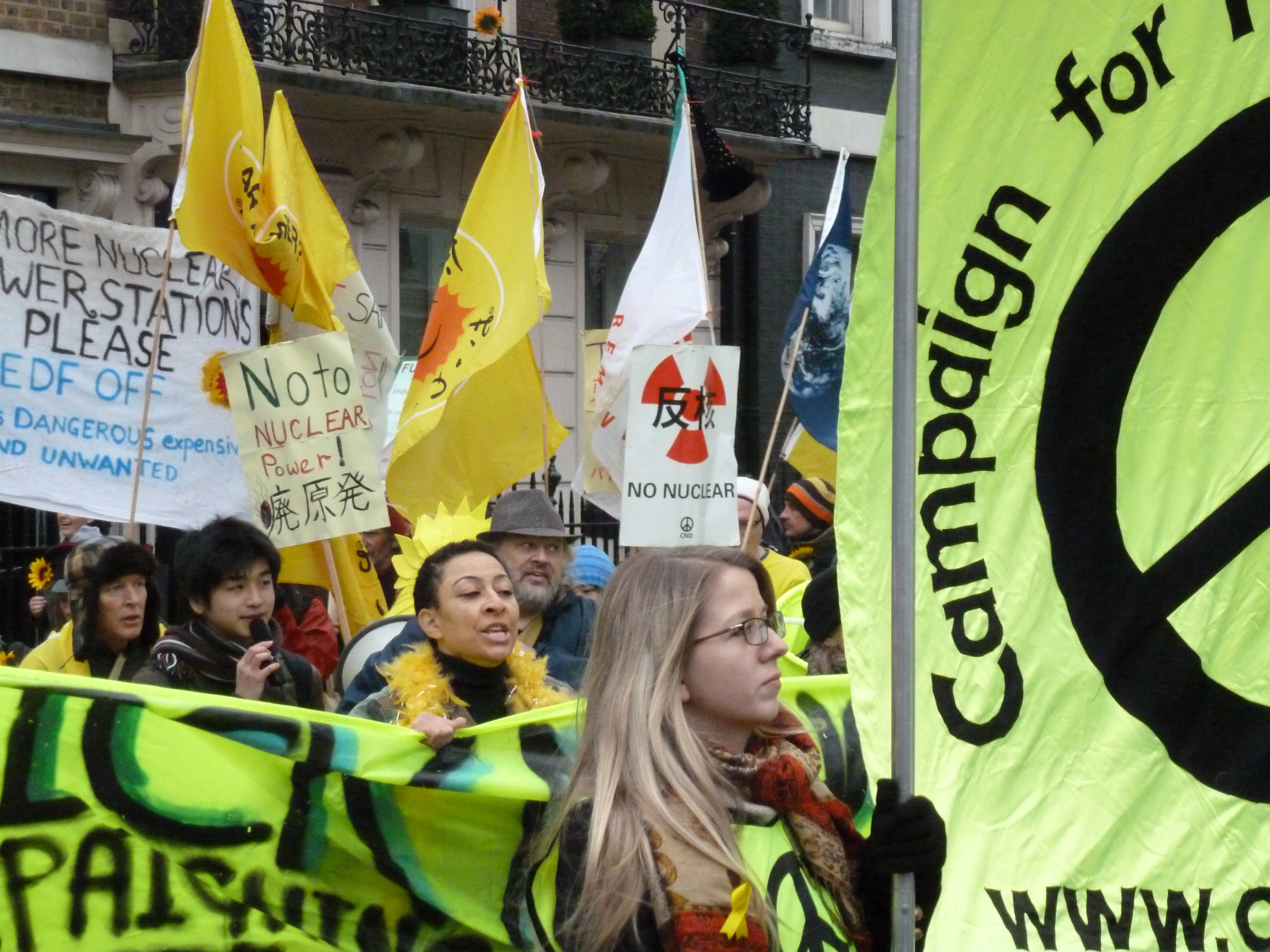

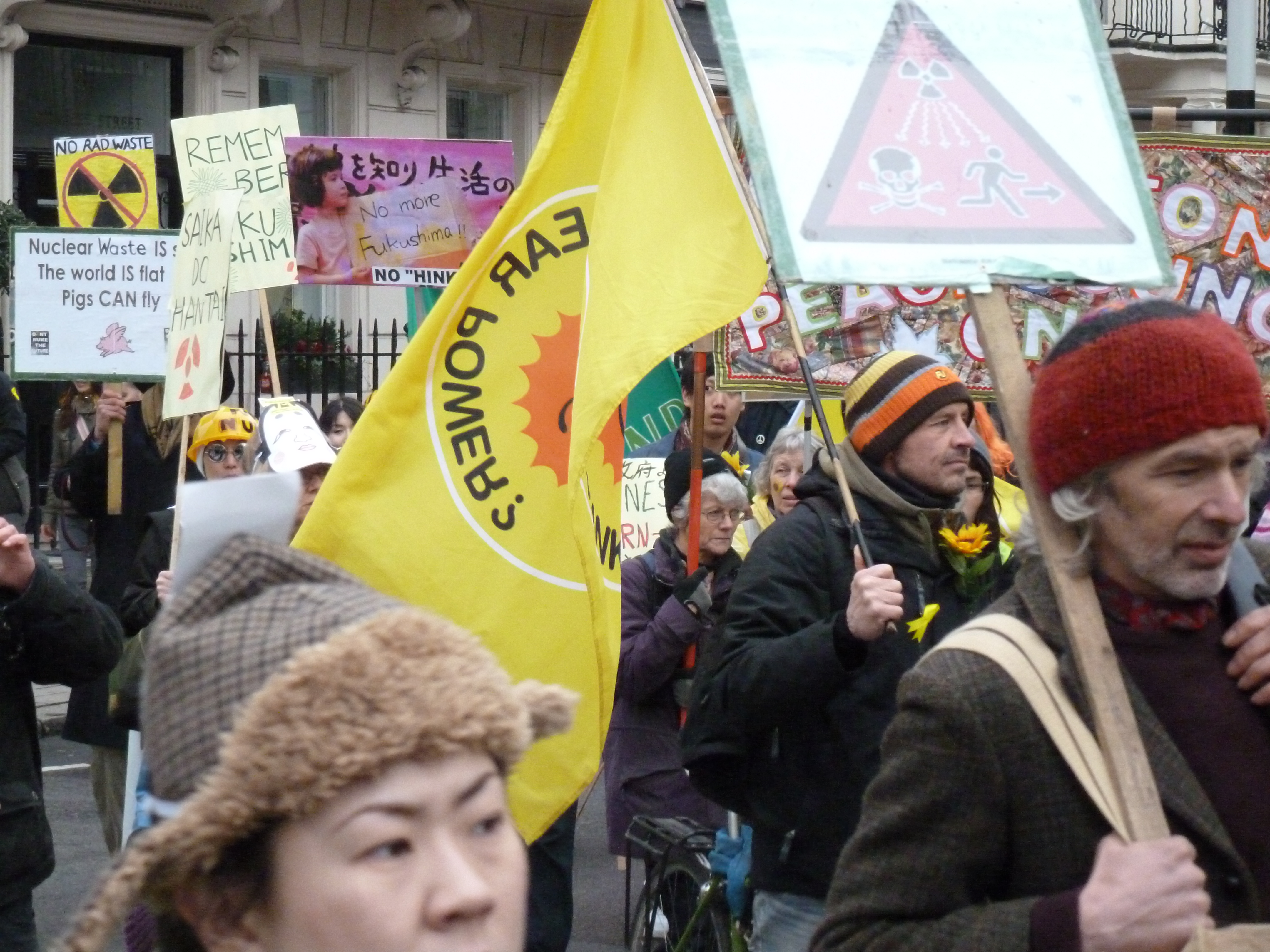

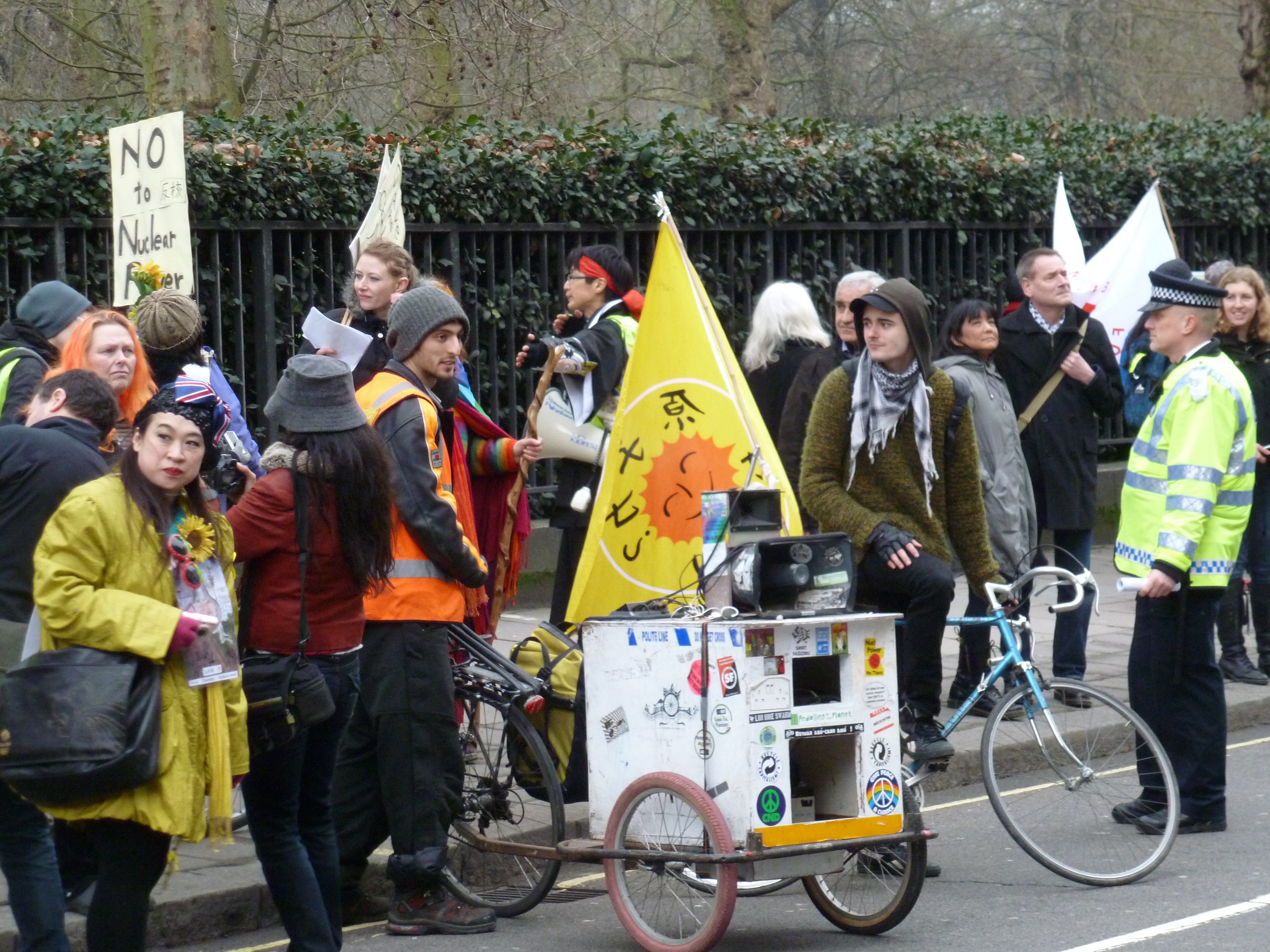
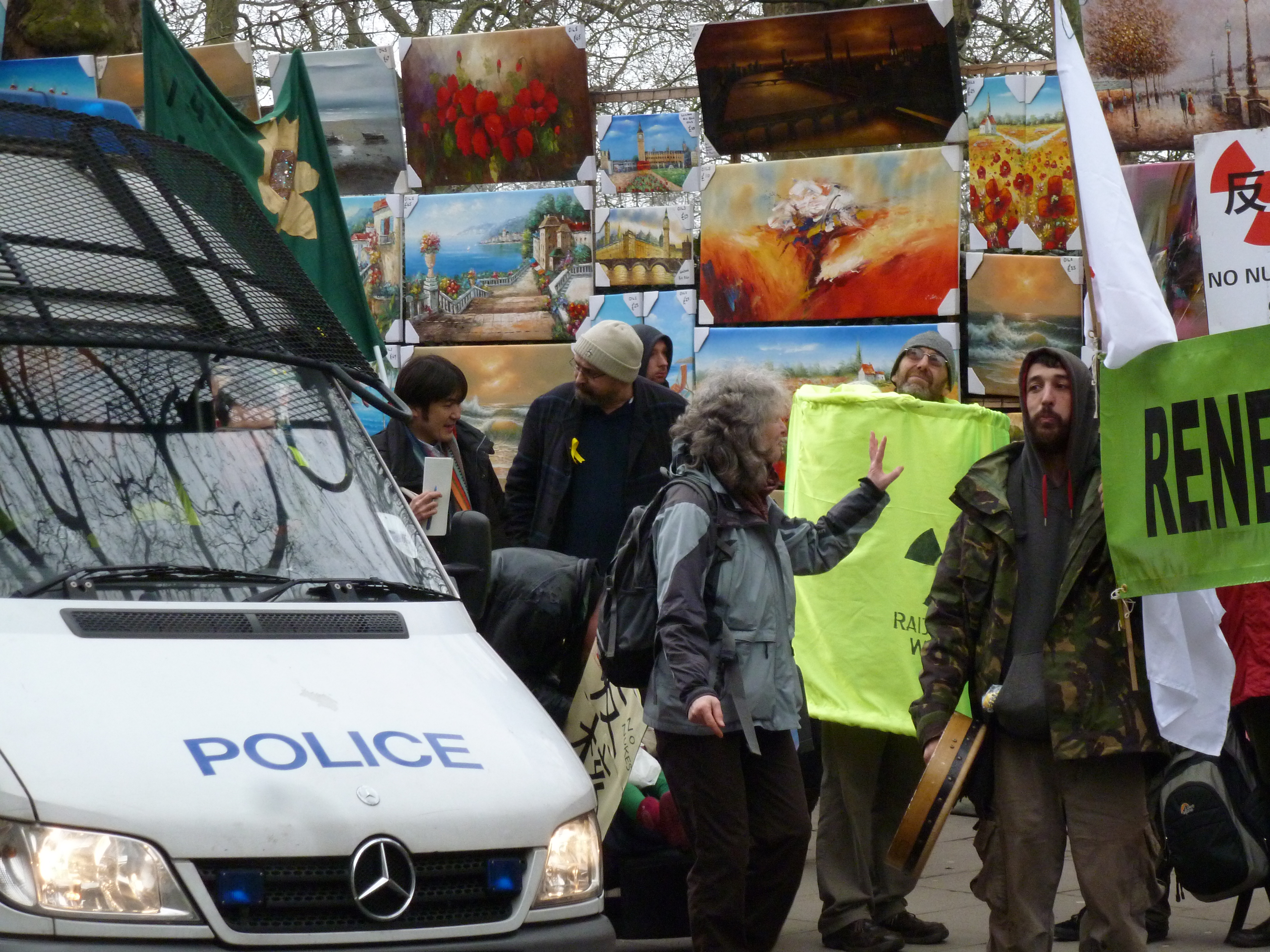
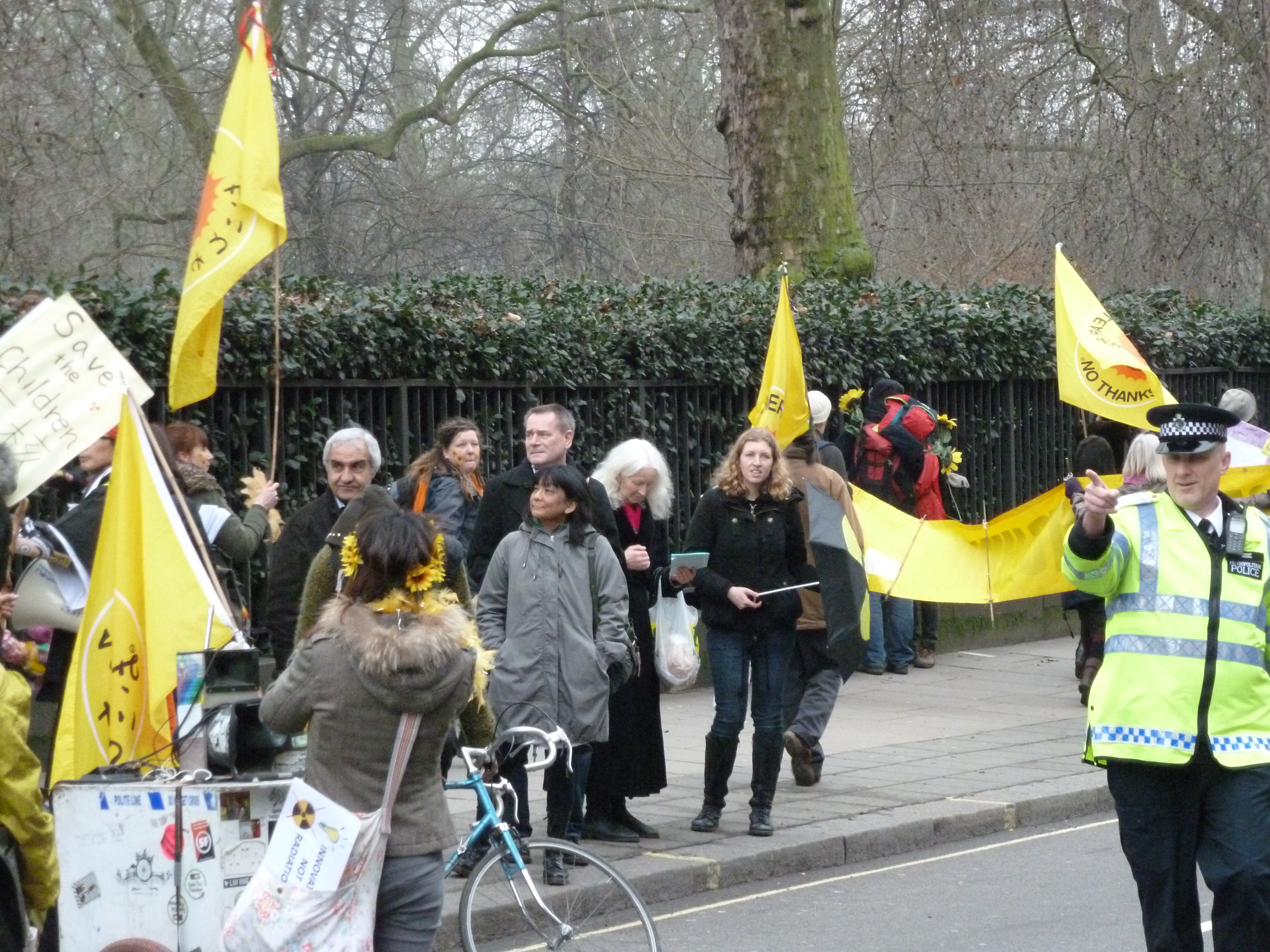
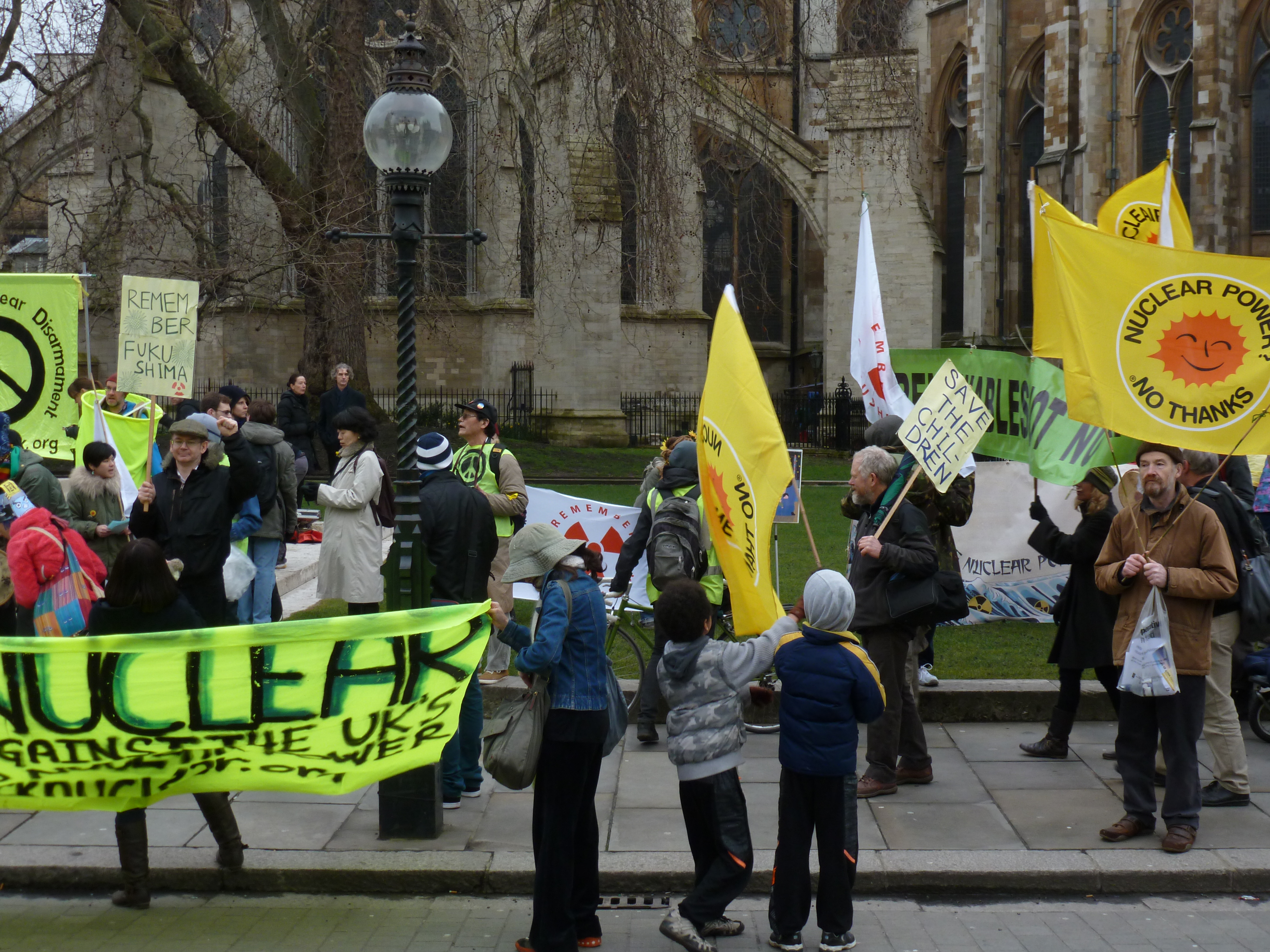
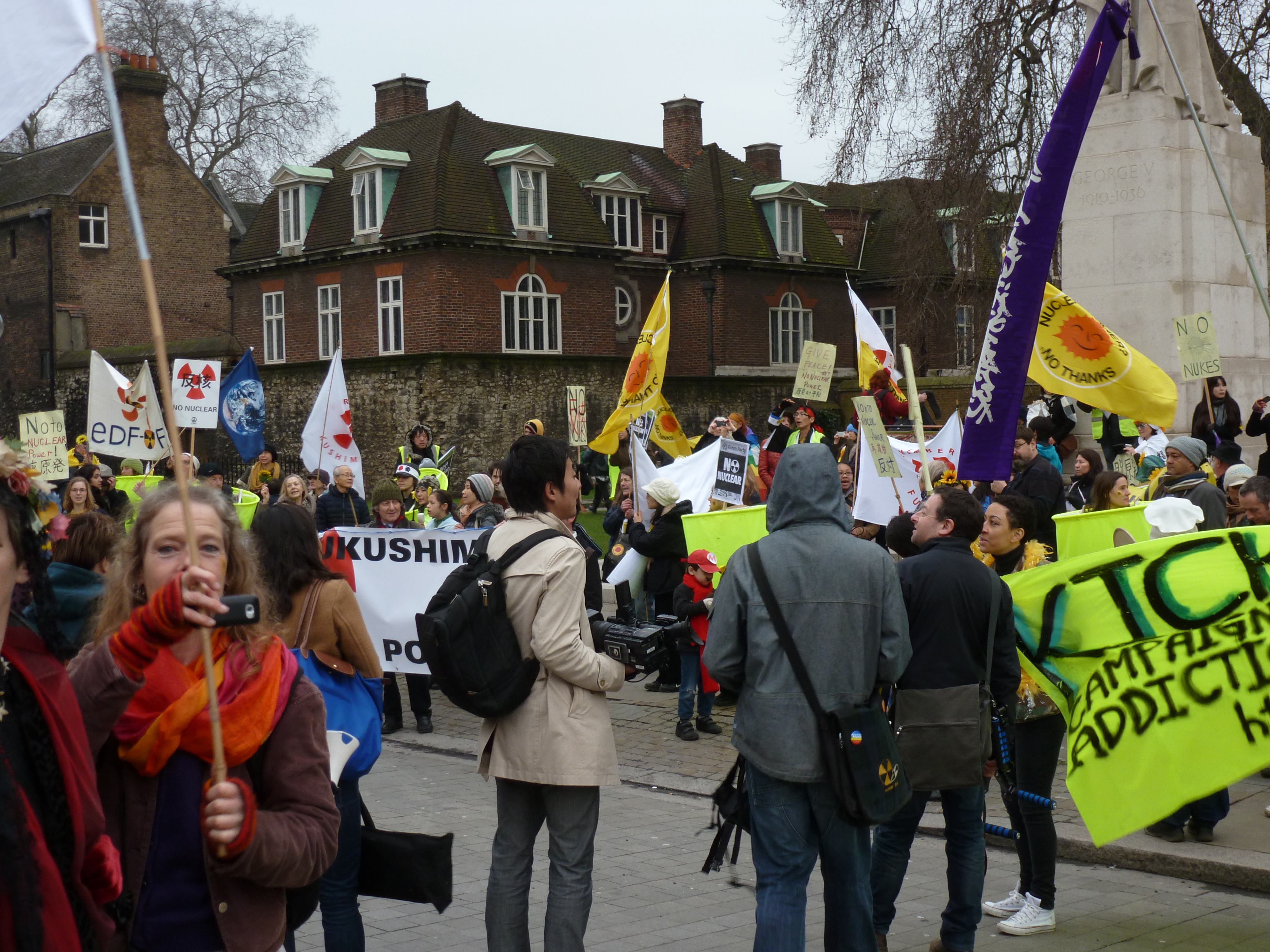
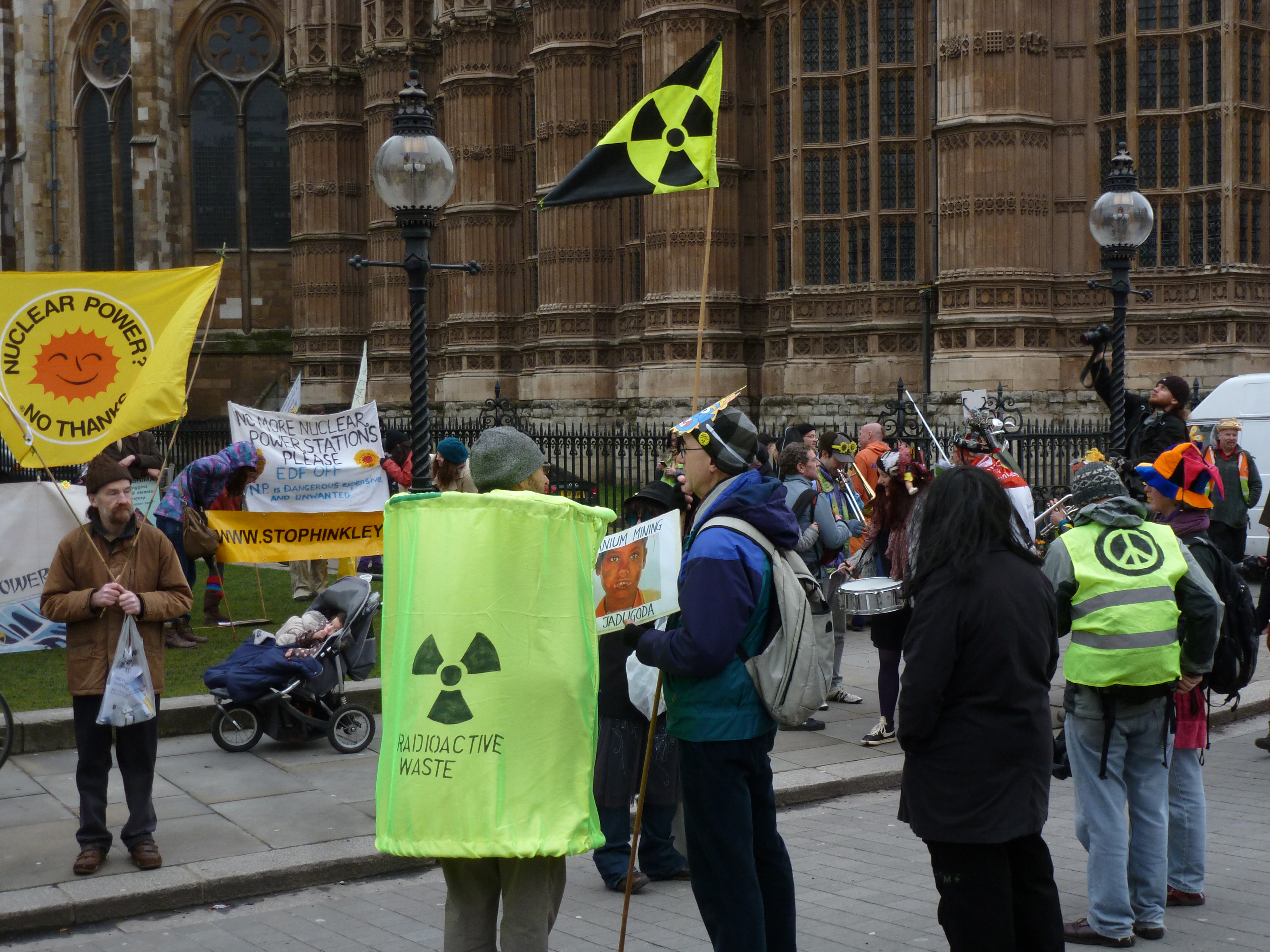
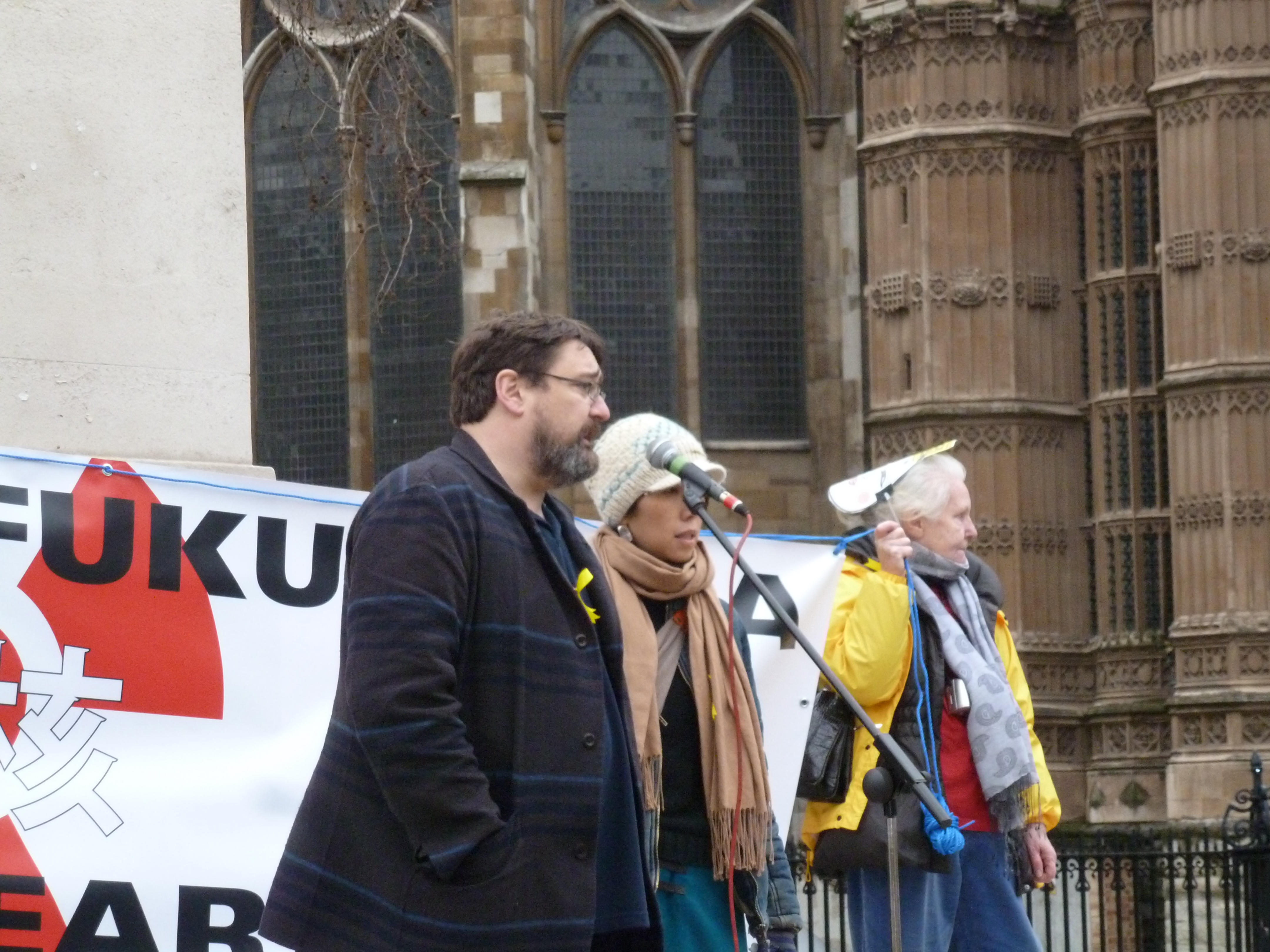
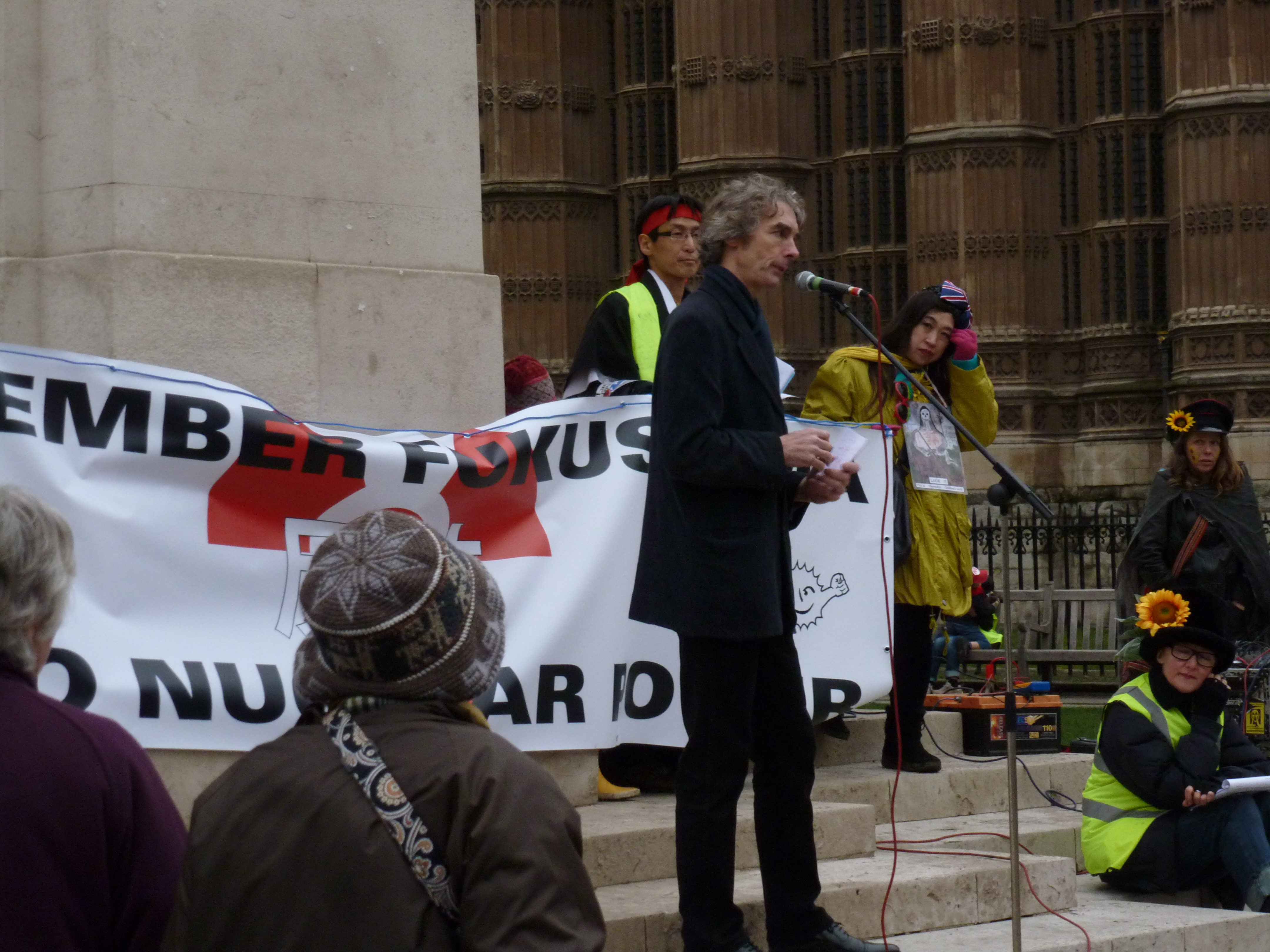
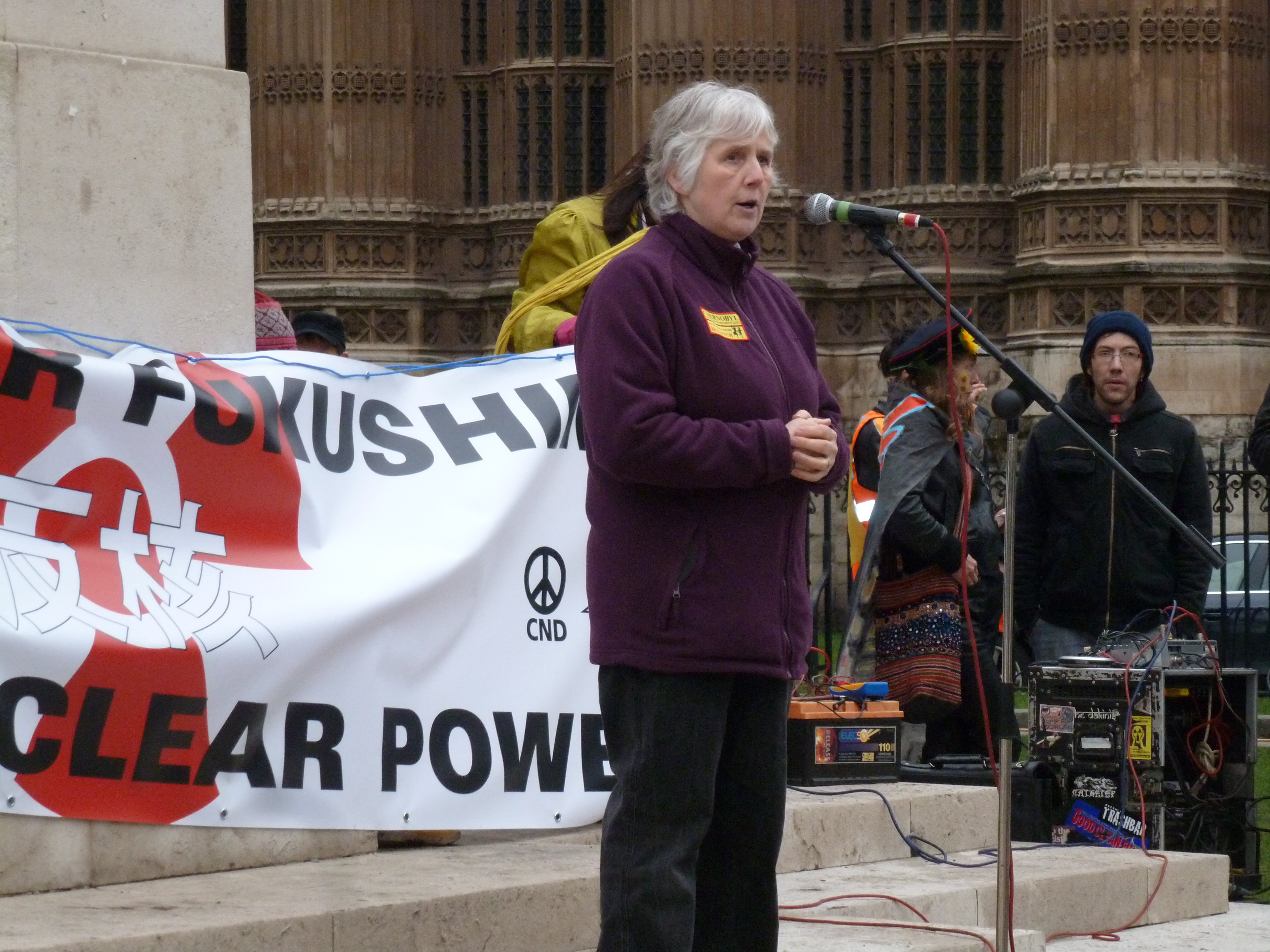
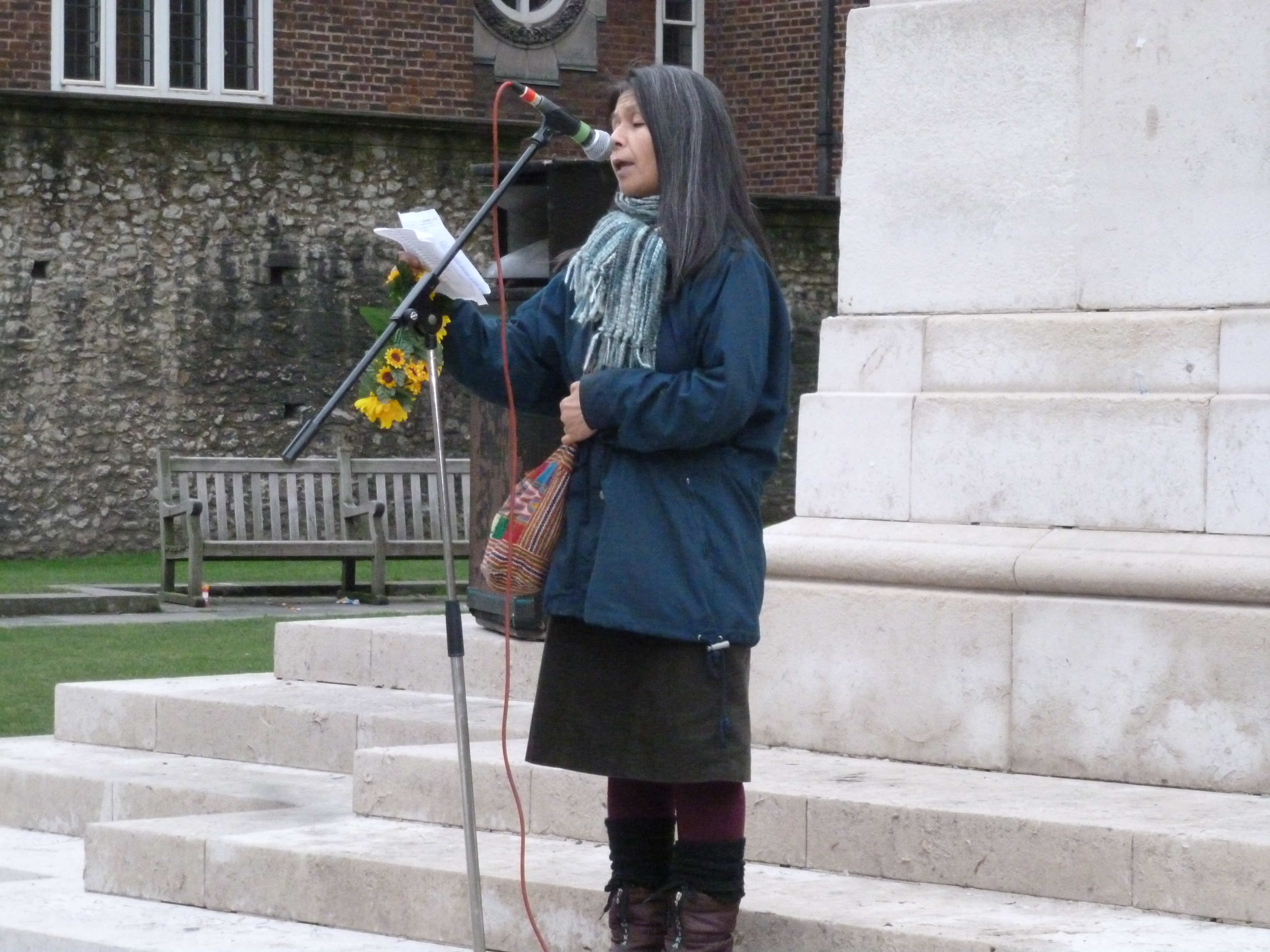
Germany – Anti-Nuclear Protesters Commemorate Fukushima Disaster

Anti-Nuclear protesters use a Geiger counter to measure the radioactive contamination of a citizen on March 9, 2013 in Hildesheim, Germany. Anti-Nuclear protesters gather in a radius of 40 kilometres around the nuclear plant Grohnde to demonstrate the impact of a nuclear disaster.


Russia’s zeal to bank on rising Arctic melt spurs concerns of likely ecological toll
http://www.bellona.org/articles/articles_2013/northern_sea_route
Anna Kireeva, 07/03-2013 – Translated by Maria Kaminskaya
MURMANSK – With the Arctic ice cover receding at alarming rates, freeing northern waterways to accommodate more sea-going traffic, Russia has been eager to start fully using the Northern Sea Route – a shipping corridor stretching along Russia’s vast northern coastline from the Barents Seain the country’s northwest past Siberia all the way to the Far East – for commercial shipping: passing legislation, restoring a dedicated state supervisory agency, building a new nuclear icebreaker, and allocating money for new Arctic-based search and rescue missions… But has anyone accounted for the ecological risks of increased Arctic traffic?

The bill governing the use of the Northern Sea Route – Federal Law No. 132-FZ – took effect just over a month ago, 180 days after it was signed by Russian President Vladimir Putin. Its full title is “On Amendments to Certain Legislative Acts of the Russian Federation Concerning State Regulation of Merchant Shipping in the Area of the Northern Sea Route.”
The law requires shipowners to hold compulsory civil liability insurance against damage resulting from pollution, or against any other damage caused by a vessel, or to be covered by other financial provisions against such liability. Absent of such a coverage, a vessel cannot call into or leave a port on the territory of the Russian Federation, nor can it obtain a permit for navigation in the waters of the Northern Sea Route.
The law defines the Northern Sea Route as the water area adjacent to the northern coastline and encompassing Russia’s internal sea waters, territorial sea, contiguous zone, and exclusive economic zone. On the east, this water area is limited by the demarcation line constituting the maritime boundary between Russia and the United States and the parallel of Cape Dezhnev in the Bering Strait, and on the west, by the meridian of Cape Zhelaniya to the Novaya Zemlya Archipelago, the eastern coastline of the Novaya Zemlya archipelago, and the western borders of the straits of Matochkin Shar, Kara Gates, and Yugorsky Strait.
This same law provides for the establishment of a Moscow-based federal state agency, the Northern Sea Route Administration. This will be the federal entity responsible for processing applications for, and issuing, permits granting shipowners the right to use the Northern Sea Route. The price will depend on the actual services rendered.
Arctic cargo traffic expected to rise
The Northern Sea Route, sometimes called the Northeast Passage, is the shortest maritime link between the markets of Northwest Europe and the Pacific region, and traffic along this route is growing each year.
Four transit voyages were already made along the Northern Sea Route in 2010, carrying 111,000 tons of cargo. In 2011, cargo shipments along the route increased seven-fold, reaching over 800,000 tons.
Arnold Gunderen and FOE snubbed at NRC licensing – San Onofre coverup!
Podcast: February 17, 2013 – The Games People Play (Part 1)
Published on 9 Mar 2013
http://www.fairewinds.com/
http://fairewinds.org/content/games-p…
http://fairewinds.org/donations
In this week’s podcast, Fairewinds looks at how difficult it is for the public to meaningfully participate in the Nuclear Regulatory Commission’s licensing process. Arnie Gundersen was retained by Friends of the Earth to assess major problems at the San Onofre nuclear plant in California that have caused a year long shutdown. Arnie met with the NRC this week concerning his analysis of what went wrong and how the problems were foreseeable. In this podcast, Arnie discusses how Southern California Edison deliberately withheld information to make his technical analysis more difficult to accomplish. Fairewinds taped the meeting, so our podcast listeners can hear for themselves the difficulties Arnie encountered and the games the nuclear industry plays to prevent public participation
http://www.youtube.com/watch?v=Ncc8-PV4dcI
(Part 2)
http://www.youtube.com/watch?v=sSOMwqW9KCY
(Part 3)
http://www.youtube.com/watch?v=_HWz3cx0Mrk
(Part 4)
http://www.youtube.com/watch?v=iTkLqVSbn_g
(Part 5)
http://www.youtube.com/watch?v=VLFCALfSLLw
(Part 6)
http://www.youtube.com/watch?v=vc2M1UhhwiA
(Part 7)
http://www.youtube.com/watch?v=PsKzw6qb7Kw
(Part 8)
Our ignorance. 15 May 2011
Published on 15 May 2011
Our ignorance would be worse disaster ever for next generations.
http://aristoman.wordpress.com/
London Anti nuclear 9 March 2013
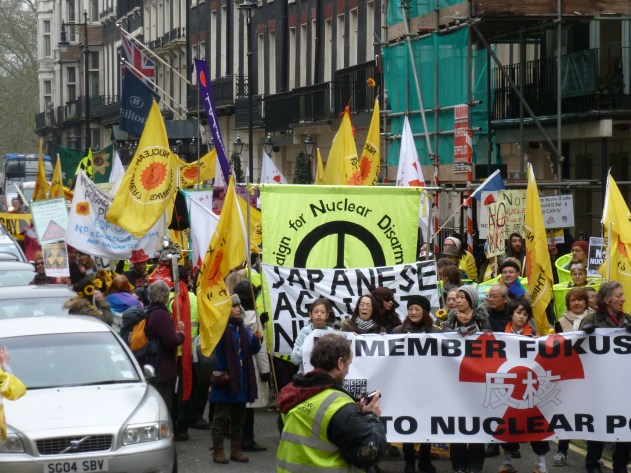
A quick picture of the demonstration moving through the streets of the west end of london on their way to TEPCO headquarters.. more info and media on this demonstration will be available as soon as possible.
It was a great day with many speeches and a message of thanks from ms Muto from japan. A Hare Krishna group turned up and fed everyone, there was music and chanting and the event went off peacefully and respectfully.
Saikado Hantai!
And a message here from JANUK ….

| JAN UK | 10 March 03:08 |
Thank you everyone to have come and joined the London demonstration in the very cold weather but in international solidarity with the people in Fukushima, Japan and the world! We hope some of you who live in/near London can make it again on Monday next week to join our vigil/Parliamentary meeting. We hope we’ll see each other in March next year with happy smiles after stopping all the nuclear power stations (and bomb factories and everything that violate the people’s happiness) in the world…
Nuclear waste: too hot to handle?
“…And then comes the real challenge – to determine if the ground beneath a volunteer community is geologically suitable for a repository. This daunting endeavour requires a decades-long process that is both politically sensitive and technically complex. Inevitably, surprises occur as studies go underground….”

18 February 2013 by William M. Alley and Rosemarie Alley
Cumbria’s decision to veto an underground repository for the UK shows how hard it is to find a long-term solution
THERE are 437 nuclear power reactors in 31 countries around the world. The number of repositories for high-level radioactive waste? Zero. The typical lifespan of a nuclear power plant is 60 years. The waste from nuclear power is dangerous for up to one million years. Clearly, the waste problem is not going to go away any time soon.
In fact, it is going to get a lot worse. The World Nuclear Association says that 45 countries without nuclear power are giving it serious consideration. Several others, including China, South Korea and India, are planning to massively expand their existing programmes. Meanwhile, dealing with the waste from nuclear energy can be put off for another day, decade or century.
It’s not that we haven’t tried. By the 1970s, countries that produced nuclear power were promising that repositories would be built hundreds of metres underground to permanently isolate the waste. Small groups of technical experts and government officials laboured behind closed doors to identify potential sites. The results – produced with almost no public consultation – were disastrous.
In 1976, West German politicians unilaterally selected a site near the village of Gorleben on the East German border for a repository, fuelling a boisterous anti-nuclear movement that seems to have no end in sight.
OP-ED: Nuclear Emptiness, Nuclear Hope
“…It is hopeful that someone as pitilessly realistic as Henry Kissinger realizes that there is no way out but abolition….”
Saturday, March 9, 2013 – 09:57

Schultz, Kissinger, Perry and Nunn, those quintessentially establishment figures, have just posted in the quintessentially establishment Wall Street Journal their fifth editorial since 2007 advocating urgent changes enabling the eventual abolition of nuclear weapons on planet Earth.
Computer modeling tells us that if even a small fraction of the world’s nuclear arsenals are detonated in a war, doesn’t matter where—could be Pakistan-India, Israel-Iran, U.S.-Russia or China or Iran—the amount of soot thrown skyward could curtail agriculture on the planet for a decade—effectively a death sentence for all.
So why do we hesitate? Are these weapons worth the money they are sucking away from our schools and firefighting equipment and bridge repairs? Why are Russian and American nuclear missiles still pointed at each other on high alert?
Aboriginal rock art at risk from mining – interactive map
- guardian.co.uk, Friday 8 March 2013 06.00 GMT
One of the world’s biggest uranium producers has found a significant deposit in a remote tropical Australian mountain range near sandstone galleries holding some of the oldest and most spectacular rock art on the planet
Drag the slider to switch between rock art sites and mines/mining plans on the guardian link
And Further reading might tell us who the mysterious mining company is?
“…Angularli prospect, Wellington Range exploration project
Australian uranium discovery threatens ancient indigenous cave art:

Paul Taçon
One of the world’s biggest uranium producers has found a significant deposit in a remote tropical Australian mountain range near sandstone galleries holding some of the oldest and most spectacular rock art on the planet. After years of drilling, Canadian-based mining company Cameco has reported the find in the Wellington Range, where the thousands of Aboriginal artworks adorning cliffs and caves include a painting of the extinct dog-like creature, the thylacine, made in a style that is at least 15,000 years old.

Courtesy of Paul Taçon, Griffith University
“The importance of this art site is that it’s like a library,” Ronald Lamilami, a traditional Aboriginal landowner in western Arnhem Land and a custodian for the art, told The Global Mail, which on Friday (Mar. 8) published a detailed feature and map of the rock-art sites at risk nationwide. Lamilami said he fears if mining goes ahead, the works of his ancestors will be damaged.
The archaeologist Prof Paul Taçon, who has worked with Lamilami to document and date the artwork, said that dust and visitors from mining exploration could potentially damage works at the Northern Territory’s Djulirri, Malarrak and Bald Rock galleries. (Guardian Mar. 8, 2013)
> See also: Rock Art Riches: The Devastating Cost of Australia’s Mining Boom  , by Debra Jopson, The Global Mail, March 8, 2013
Cameco finds “significant” uranium deposit in Arnhem Land: Cameco Australia has announced it has discovered a significant uranium deposit near the Cobourg Peninsula in Arnhem Land. (ABC Mar. 28, 2012)
The announcement was made on March 27, 2012, by Mark King of Cameco Australia during his presentation titled “Exploration for unconformity-style uranium deposits geology and mineralisation of the Angularli Prospect Wellington Range Project, West Arnhem Land” at the 13th Annual Geoscience Exploration Seminar (AGES) in Alice Springs.
“Although the area has not been explored in the detail necessary for resource definition and modelling, intersections of 20.2 m at 5.2% U3O8 (including 0.5 m at 27.8% U3O8) not only confirms the exploration methodology, but ensures that the Angularli prospect, the Angularli trend, and parallel structures will remain a focus in Arnhem Land for Cameco through the foreseeable future.” (from the abstract of Mark King’s presentation)….”
Images from http://www.theglobalmail.org/feature/rock-art-riches-the-devastating-cost-of-australias-mining-boom/570/
1 This Month

of the week – Shut Down Drone Warfare!


Tell the Ukrainian Government to Drop Prosecution of Peace Activist Yurii Sheliazhenko

Petition to revoke the licensing of the Near Surface Nuclear Disposal Facility (NSDF) at Chalk River. https://www.ourcommons.ca/petitions/en/Petition/Details?Petition=e-7247
To see nuclear-related stories in greater depth and intensity – go to https://nuclearinformation.wordpress.com
-
Archives
- April 2026 (103)
- March 2026 (251)
- February 2026 (268)
- January 2026 (308)
- December 2025 (358)
- November 2025 (359)
- October 2025 (376)
- September 2025 (257)
- August 2025 (319)
- July 2025 (230)
- June 2025 (348)
- May 2025 (261)
-
Categories
- 1
- 1 NUCLEAR ISSUES
- business and costs
- climate change
- culture and arts
- ENERGY
- environment
- health
- history
- indigenous issues
- Legal
- marketing of nuclear
- media
- opposition to nuclear
- PERSONAL STORIES
- politics
- politics international
- Religion and ethics
- safety
- secrets,lies and civil liberties
- spinbuster
- technology
- Uranium
- wastes
- weapons and war
- Women
- 2 WORLD
- ACTION
- AFRICA
- Atrocities
- AUSTRALIA
- Christina's notes
- Christina's themes
- culture and arts
- Events
- Fuk 2022
- Fuk 2023
- Fukushima 2017
- Fukushima 2018
- fukushima 2019
- Fukushima 2020
- Fukushima 2021
- general
- global warming
- Humour (God we need it)
- Nuclear
- RARE EARTHS
- Reference
- resources – print
- Resources -audiovicual
- Weekly Newsletter
- World
- World Nuclear
- YouTube
-
RSS
Entries RSS
Comments RSS
 nuclear-news