UK, USA, paralysed, but need permanent deep burial of nuclear wastes
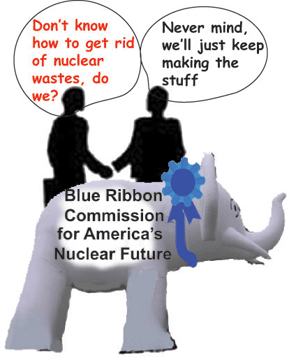 In the United States, efforts to build a repository are in the doldrums
At the Fukushima Daiichi nuclear plant in Japan, spent fuel stored above ground at reactors is likely to have been a major source of contamination following the earthquake and tsunami in 2011. At the last count, the clean-up there is expected to cost trillions of yen, or hundreds of billions of dollars.
In a hole It is in Britain’s best interests to keep looking for a site for a deep nuclear-waste repository. Nature, 05 February 2013 The best way to dispose of nuclear waste is to bury it deep underground. With the right mixture of geology and engineering, researchers think, it should be possible to contain highly radioactive material safely for the many thousands of years that it will take to decay.
Scientists agree on this. The industry thinks the same way, and so do regulators, politicians and most environmental groups. Yet despite the expert endorsement, plans for a deep geological repository in Britain effectively ground to a halt last week, after a local council voted against plans to look for a suitable site…….
why has the process come up empty again? The answer is a lack of political will at almost every level of government. Critics say that the Nuclear Decommissioning Authority, the body responsible for the repository, never did much to try to sell the facility to local residents or to address their concerns about what it might do to property prices or tourism. At a national level, politicians offered only the vaguest promise of ‘economic development’ in exchange for taking the waste. Meanwhile, local politicians advocated an alternative plan: to build more short-term storage at Sellafield, thereby creating jobs in the near-term without making long-term commitments.
“There are moral, financial and environmental reasons to make deep geological disposal work.” Continue reading
Uranium Film Festival reaches Mumbai
 International Uranium Film fest is here from February 11http://www.dnaindia.com/mumbai/report_international-uranium-film-fest-is-here-from-february-11_1797950, Feb 9, 2013, Place: Mumbai | Agency: DNA The International Uranium Film Festival is going to hit the city on February 11 and 12 at the SP Jain Auditorium at Bhawan’s College, Andheri (W). Many of the Indian and foreign films to be screened at the festival are critically acclaimed, international award-winning documentaries.
Scheduled to be held from 6 to 9.30 pm, the festival is dedicated to films about Uranium and the possible dangers it poses to the environment and the survival of humanity from both its military and peaceful uses. The festival includes documentary and fiction films on issues like Uranium mining, nuclear power plants, atomic bombs, nuclear waste, radioactive risks, nuclear medicine, Hiroshima, Three Mile Island, Chernobyl and Fukushima.Waste from nuclear power plants remains radioactive for more than one lakh years. The films screened will raise questions like how our coming generations will protect themselves from this deathly waste. The festival will stimulate discussions and encourage the production of new documentaries, movies and animated films about the nuclear or radioactive issue.
The international festival was inaugurated in New Delhi on January 4 and has made its way to Mumbai from cities like Shillong, Ranchi, Manipal, Hyderabad, Pune, Bangalore, Chennai and Thrissur.
The Mumbai edition of the festival is being presented by the 7 Islands Film Festival, sponsored by Yusuf Meherally Centre, Shrividya Sansthan and Bhawan’s Cultural Centre, and supported by NGOs Janhit Seva Samiti, Konkan Bachao Samiti, Konkan Vinashkari Prakalp Virodhi Samiti, Muktiyaan Loksanskritik Sanghatana and other anti-nuclear activists in the city. Entry is free.
Hundreds of calls to Virginia’s Governor McDonnell to keep ban on uranium mining
 Va. governor hearing from public on uranium mining http://www.nbc12.com/story/21089999/va-governor-hearing-from-public-on-uranium-mining
 Feb 09, 2013 RICHMOND, Va. (AP) – Gov. Bob McDonnell is hearing from hundreds of people who want him to keep in place a ban on uranium mining in Virginia.The governor’s office says as of Friday, 894 calls, letters, emails and faxes were received in support of the ban, with 171 support mining.
The call on the ban is not McDonnell’s to make but he could keep the issue alive this year. He’s been asked to use his executive powers to direct the drafting of regulations for mining. The General Assembly would still have to act to end a decades-old prohibition on uranium mining.
The debate is being fueled by a company’s quest to tap a deposit of the ore in Pittsylvania County.
McDonnell has said he has not arrived at a position on the issue.
Japan’s government curtails press freedom about Fukushima nuclear situation
 Nuclear power and press freedom, Japan Times, FEB 10, 2013 Japan fell
from 22nd place to 53rd in the rankings of press freedom last year,
according to the nonprofit organization Reporters Without Borders.
 Japan’s plummet was attributed to a single factor — the lack of access
to information related to the disaster at Tokyo Electric Power Co.’s
Fukushima No. 1 nuclear power plant.
In the past, Japan could be relatively proud of its reputation for
press freedom compared with that of most countries. But being ranked
lower lately than countries such as El Salvador or Haiti is an
embarrassing reminder that press freedom can quickly erode under
pressure from the government and corporations.
In reporting on the serious disaster at the Fukushima No. 1 nuclear
power plant, many reporters have met with restricted access, lack of
transparency and even lawsuits. Continue reading
VIDEO documentary reveals secrets of Chernobyl nuclear disaster
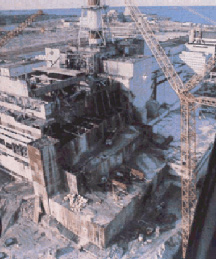 it is thanks to these men that the worst was avoided; a second explosion, ten times more powerful than Hiroshima which would have wiped out more than half of Europe. This was kept secret for twenty years by the Soviets and the West alike.
As time went on millions of people suffered radiation related health problems such as leukemia and thyroid cancer and around 4,000 people have died as a result of the long-term effects of the accident.
VIDEO http://topdocumentaryfilms.com/the-battle-of-chernobyl/#disqus_thread The Battle of Chernobyl It’s a documentary which analyzes the Thursday 26th April 1986 that became a momentous  date in modern history, when one of the reactors at the Chernobyl nuclear power station in northern Ukraine, exploded. It was the most significant reactor failure in the history of nuclear power, a Maximum Credible Accident (MCA). Continue reading
Stories and pictures of abandoned nuclear power plants
iPctures: Gone Fission: 11 Unfinished Nuclear Power Plants http://weburbanist.com/2013/02/10/gone-fission-11-unfinished-nuclear-power-plants/ These 11 unfinished, abandoned, canceled, mothballed and/or suspended nuclear power plants will, for better or worse, never know the warmth of split atoms.
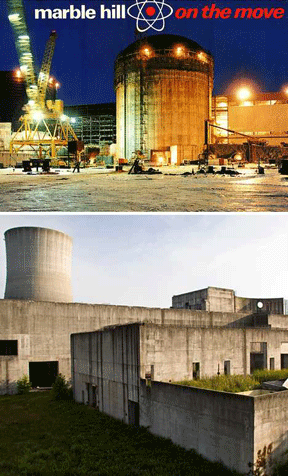 Lemoniz Nuclear Power Plant, Spain Construction of the Lemóniz Nuclear Power Plant, located on the Bay of Biscay on Spain’s northern coast, began in the mid-1970s but was dogged from its inception by violent opposition from ETA, the terrorist organization dedicated to the independence of Spain’s Basque country. The group managed to smuggle bombs into the facility on several occasions in 1978 and 1979 resulting in a number of fatalities and delaying the plant’s construction……
Marble Hill Nuclear Power Station, Indiana, USA (at left) From 1977 to 1984, Public Service Company of Indiana (PSI) spent approximately $2.5 billion to build the Marble Hill Nuclear Power Station near Hanover, Indiana, and by the time the financial tap ran dry it was only half-finished! The political and environmental landscape had changed quite a bit over those 7 years with the biggest speed bump being the Three Mile Island crisis in 1979. With costs spiraling out of control and the state government reluctant to provide funding, PSI abandoned the project and auctioned off most of the salvageable material for a mere pittance.
Equipment and parts from the Marble Hill Nuclear Power Station continued to be sold off in the early to mid-1990s but by the year 2000 everything of value had been sold. Since 2008, slow and steady demolition under the auspices of MCM Management Corp. has seen first the fuel-handling building and then the twin reactor containment buildings gradually reduced to mounds of scrap. The bright side, if any, is that none of the demolished material is radioactive.
Bataan Nuclear Power Plant, Philippines Continue reading
Fukushima nuclear crisis documents to be available on the web
Nuclear crisis info to be put on Web / About 900,000 pages of documents to be digitized, available in about 2 years The Yomiuri Shimbun, 11 Feb 13,The Nuclear Regulation Authority plans to digitize about 900,000 pages of documents related to the Fukushima nuclear crisis, with an eye to making them publicly available online in about two years, it has been learned.
According to NRA officials, some of the material has not been released before, and includes radioactivity monitoring results, how people were irradiated and evacuation plans worked out by local governments.
The project is intended to bring together–and make accessible–the masses of documents stored by ministries and agencies on the crisis at the Fukushima No. 1 nuclear power plant.
The digitization will not include material compiled by the plant’s operator, Tokyo Electric Power Co. The officials said these documents do not belong to the government…… http://www.yomiuri.co.jp/dy/national/T130210002924.htm
Legal action by residents of Fukushima, Miyagi, Ibaraki against Japanese govt and TEPCO
NHK: Residents from outside Fukushima to sue gov’t over radioactive contamination — Compensation for health concerns (VIDEO) http://enenews.com/nhk-residents-miyagi-ibaraki-sue-govt-fukushima-contamination-victims-request-compensation-health-concerns-video
Title: Fukushima people to sue govt., TEPCO
Source: NHK
Date: Feb. 8, 2013
h/t Anonymous tip
[…] About 350 residents of Fukushima, Miyagi, Ibaraki and other prefectures will participate in the [class] action against the national government and Tokyo Electric Power Company.
At a news conference on Friday in Fukushima City, their representatives said they will demand that the defendants reduce the radiation levels of the areas where they have homes to those before the nuclear accident in March 2011.
They will also seek some 550 dollars per plaintiff per month in compensation for health concerns and indirect damage to their businesses. […]
NHK: “Some evacuees are so fed up they’re taking legal action…”
Lawyer: “This case has huge significance because we’re trying to show that blame not only lies with Tepco, but also with the government.”
UK nuclear price guarantee a tricky and controversial question
Lid to be kept on nuclear price guarantee – strike price ‘won’t reach three figures’ : http://www.thisismoney.co.uk/money/markets/article-2276494/Lid-kept-nuclear-price-guarantee–strike-price-wont-reach-figures.html#ixzz2Kc9vIVuf By JON REES 10 February 2013 The wholesale price guaranteed by the Government for nuclear power generation is likely to be less than £100 a megawatt hour.
Nuclear investors will be compensated if the price falls below the agreed level, but if the price is higher the energy giants must pay the difference to consumers.
Sources close to the negotiations with the Government last week claimed that the guaranteed figure – known as the strike price – ‘will not reach three figures’, which is considerably less than the £140 per megawatt hour equivalent for offshore wind.
If the strike price is set at a level that is seen as being too high it will prove politically controversial as EDF – the only company with firm plans to build new nuclear plants before 2020 – is owned by the French.
A spokesman for the Department of Energy and Climate Change said: ‘No commitment has been made on commercial terms or a strike price.’
Florida nuclear companies got $1 billion from customers, for non existent power plants
Time to repeal nuclear recovery lawhttp://www.sun-sentinel.com/news/opinion/fl-sccol-oped0210-20130210,0,5173814.story, By Susan Clary February 10, 2013 With the help of the Florida Legislature, two energy companies have been able to collect more than $1 billion from utility customers for the construction of nuclear power plants with no guarantee they would ever be built. Continue reading
UK’s new nuclear fleet may be simply unaffordable
UK nuclear plans flicker over cost By: Tracey Boles Express UK, February 10, 2013 ENERGY secretary Ed Davey warned yesterday that he will not do a deal to fund new reactors “at any price” as fears mount that interested utilities cannot afford to build them.French state-owned utility EDF Energy and the Government are negotiating a “strike price” for the new reactors, the unit cost of electricity which would underpin investment plans for EDF’s two reactors at Hinkley Point in Somerset.
Keeping the price from being set high would involve taxpayer subsidy. Davey said yesterday he was seeking a “fair price for the consumer”.
Earlier this month, EDF’s partner Centrica withdrew from the UK’s planned nuclear programme because of increasing costs and delays. EDF has also been seeking Chinese state investment to little avail so far…… EDF have always argued that the price must be fair to both sides or it will not be sustainable. “It has to be high enough to encourage investors,” said a source close to negotiations.
Another senior industry source said: “EDF has a huge debt pile in France, and Paris will want to be sure the UK is a good place to put money more than their own market.” …
Iceland’s step forward for freedom of information
Iceland wants to be seen as the ideal place for online media and data storage banks to locate their servers in order to shield themselves from the threats of censorship, filtering and closure, and to provide the best protection for the personal data of their users.
NEW LEGISLATION TO PROVIDE EXEMPLARY PROTECTION FOR FREEDOM OF INFORMATION 21 JUNE 2010. HTTP://EN.RSF.ORG/ISLANDE-NOUVEL-ARTICLE-18-06-2010,37771.HTML Iceland’s parliament, the Alpinghi, has unanimously approved a resolution known as the Icelandic Modern Media Initiative (IMMI) that calls on the government to draft legislation in line with its recommendations for the protection of media, journalists and bloggers.
Reporters Without Borders hails this ambitious and positive initiative, adopted on 15 June, and calls on the government to do its utmost to respect the parliament’s will when it drafts the law.
“This proposal is on the right track,” Reporters Without Borders said. “It regards freedom of expression as a fundamental right and would create optimal conditions for investigative journalism. Even if the precise impact of this proposed law remains to be seen, especially as regard journalists’ legal protection, Iceland has established itself as a pioneer.”
The press freedom organisation added: “We hope this will serve as an example to other governments. It is certainly a promising departure from the general tendency, especially in democratic countries, for press freedom to be eroded and for harassment of journalists and their sources to increase.” Continue reading
Small scale solar energy will revolutionise Ghana’s rural communities
Solar energy to power rural electricity launched, Ghana Business News, February 10, 2013 A new life changing solar energy system aimed at augmenting rural electricity power generation using the sun’s direct energy has been launched in Accra.
Dubbed Solar2Africa400, the system consists of a portable folding solar panel, a cable, a connector and a 400-watt power inverter.
It is aimed at responding to the growing demand for off-grid electrification solutions and support government’s efforts at cutting down the cost of extending the national grid to island and lakeside communities.
The innovation was born out of collaboration between Power for Africa, a United Kingdom based company, which designed the system for developing countries such as Ghana and Gem Technologies, a Ghanaian company. Continue reading
Germany moving ahead with solar energy storage
Germany To Announce Energy Storage Subsidy? http://www.energymatters.com.au/index.php?main_page=news_article&article_id=3584 Germany blazed the trail for solar PV uptake and it appears the nation may be about to do the same for energy storage.
Rumour has it that early this week Germany’s government will announce an initiative to support the purchase of battery based energy storage systems integrated with solar panel arrays.
Owners of solar power systems up to 30kW capacity will be entitled to low-interest loans from state-owned bank KfW and a repayment allowance from the Ministry of Environment that will cover 30% of the cost of an energy storage system. Continue reading
What if India had a nuclear disaster?
Tamil terrorists from Sri Lanka are now in India. They are highly resourceful and fully cognizant of the spectacular impact they can create. A terrorist attack on an Indian nuclear plant will dwarf the Chernobyl disaster
A Nuclear Disaster Will Trigger Disintegration of India Lanjaweb, February 10th, 2013 Dilrook Kannangara According to Gorbachev, the 1986 Chernobyl nuclear disaster has a lot to do in the collapse of the Soviet Union in 1991. He revealed this in a book he wrote. Previously his Glasnost program was blamed in most part for the fall. But the veteran explains how people demanded more transparency from the government following the disaster which forced the government to come up with the Glasnost program. Obviously economic woes and inevitable change took over the momentum but the trigger could well be the Chernobyl (in the Republic of Ukraine) disaster in April 1986. It highlighted the fallibility of the Union that won most of its wars and its leaders projected to be in total charge.
Triggers Within and Without….. Though India boasts to be the world’s largest democracy, its people hardly enjoy democratic rights. Freedom of expression has been severely curtailed through state controlled or influenced media entities. Dissent on national issues is not tolerated. Old friends including Russia have been marginalised with France and USA emerging as India’s new bedfellows.
A Nuclear Disaster Continue reading
1 This Month

Protect Sazan Island from the Trump family! https://secure.avaaz.org/campaign/en/protect_sazan_island_from_the_trump_family_loc/?bqFCVab&v=174511&cl=22707147157&_checksum=5e9dde668860e8231c33699735e16a1fbf22ab2cb01da50c999fe8732b9775ef&utm_source=email&utm_medium=blast_email&utm_campaign=174511


Cuba Is Not a Failed State – It Is a Besieged State
PETITION: “Global Appeal to Endorse Palestinian Right of Return of Refugees”
To see nuclear-related stories in greater depth and intensity – go to https://nuclearinformation.wordpress.com
-
Archives
- June 2026 (129)
- May 2026 (306)
- April 2026 (356)
- March 2026 (251)
- February 2026 (268)
- January 2026 (308)
- December 2025 (358)
- November 2025 (359)
- October 2025 (376)
- September 2025 (257)
- August 2025 (319)
- July 2025 (230)
-
Categories
- 1
- 1 NUCLEAR ISSUES
- business and costs
- climate change
- culture and arts
- ENERGY
- environment
- health
- history
- indigenous issues
- Legal
- marketing of nuclear
- media
- opposition to nuclear
- PERSONAL STORIES
- politics
- politics international
- Religion and ethics
- safety
- secrets,lies and civil liberties
- spinbuster
- technology
- Uranium
- wastes
- weapons and war
- Women
- 2 WORLD
- ACTION
- AFRICA
- Atrocities
- AUSTRALIA
- Christina's notes
- Christina's themes
- culture and arts
- Events
- Fuk 2022
- Fuk 2023
- Fukushima 2017
- Fukushima 2018
- fukushima 2019
- Fukushima 2020
- Fukushima 2021
- general
- global warming
- Humour (God we need it)
- Nuclear
- RARE EARTHS
- Reference
- resources – print
- Resources -audiovicual
- Weekly Newsletter
- World
- World Nuclear
- YouTube
-
RSS
Entries RSS
Comments RSS
 nuclear-news