No One in Charge of Risk – USA’s plan to put nuclear waste materials into consumer “goods”
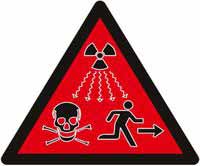 “Nothing has changed since 2000 that would justify lifting its current
ban. Rather, just the opposite: since then the National Academy of
Sciences has acknowledged that there is no safe level of radiation
exposure, and we’ve learned that women are even more vulnerable to
radiation than men (while children have long been known to be more
vulnerable than adults).”
NIRS and other advocacy organizations are currently engaged in a
campaign to submit comments before the Feb. 11 deadline to ask the
Energy Department to withdraw this proposal.
 Multimillion Dollar Bonanza: Nuclear Waste from US Weapons Industry To
Be Sold for Profit? By William Boardman Global Research, February 05,
2013
Consortiumnews 4 February 2013 “……No One in Charge of Risk
There is no federal agency with responsibility for such oversight or
enforcement [of radioactive materials in consumer products] . This regulatory vacuum was illuminated by the discovery
in 2009 of thousands of contaminated consumer products from China,
Brazil, France, Sweden and other countries, as reported by Mother
Nature Network:
“The risk of radiation poisoning is the furthest thing from our minds
as we shop for everyday items like handbags, furniture, buttons, chain
link fences and cheese graters. Unfortunately, it turns out that our
trust is misplaced thanks to sketchy government oversight of recycled
materials.
“The discovery of a radioactive cheese grater led to an investigation
that found thousands of additional consumer products to be
contaminated. The source is recycled metals tainted with Cobalt-60, a
radioactive isotope that can cause cancer with prolonged exposure.”
According to a Scripps Howard News Service investigation in 2009,
records of the Nuclear Regulatory Commission “… show 18,740 documented
cases involving radioactive materials in consumer products, in metal
intended for consumer products or other public exposure to radioactive
material.
“The U.S. Government Accountability Office estimates there are some
500,000 unaccounted for radioactively contaminated metal objects in
the U.S., and the NRC estimates that figure is around is 20 million
pounds of contaminated waste….
“In 2006 in Texas, for example, a recycling facility inadvertently
created 500,000 pounds of radioactive steel byproducts after melting
metal contaminated with Cesium-137, according to U.S. Nuclear
Regulatory Commission records. In Florida in 2001, another recycler
unintentionally did the same, and wound up with 1.4 million pounds of
radioactive material.”
Nuclear engineer Arnie Gunderson echoed Markey’s warning in his Jan.
13 podcast, pointing out that the nuclear industry has been trying to
do something like this for decades. The reason, he explained, was that
radioactive materials are now liabilities for those who own them and
are responsible for protecting them and eventually storing them
safely. But if they can sell the material, the liability instantly
becomes an asset.
NIRS, the Nuclear Information and Resource Service, has come out
strongly against the Energy Department initiative, noting the long
history of the industry to unburden itself of its radioactive waste
and any responsibility for it:
“We’ve fought this battle before. In the late 1980s, NRC adopted a
policy it called ‘Below Regulatory Concern (BRC),’ that would have
allowed about 30% of the nation’s ‘low-level’ radioactive waste to be
treated as normal garbage and dumped in landfills, be burned in
incinerators, and yes, be recycled into consumer products….
“NIRS and our allies responded with one of our largest organizing
campaigns ever…. 15 states passed laws banning BRC within their
borders. Hearings were held in the House and in 1992, Congress
officially overturned the BRC policy.”
The grassroots action contributed to Secretary Richardson’s ban on
selling radioactive metals for commercial use, the ban that the
current Energy Department proposal would overturn. The department has
offered no new basis for its recycling program beyond streamlining
what it proposed before. NIRS counters that:
“Nothing has changed since 2000 that would justify lifting its current
ban. Rather, just the opposite: since then the National Academy of
Sciences has acknowledged that there is no safe level of radiation
exposure, and we’ve learned that women are even more vulnerable to
radiation than men (while children have long been known to be more
vulnerable than adults).”
NIRS and other advocacy organizations are currently engaged in a
campaign to submit comments before the Feb. 11 deadline to ask the
Energy Department to withdraw this proposal.
http://www.globalresearch.ca/arms-industrys-nuclear-waste-to-be-sold-for-profit-recycling-radioactive-metals-disputed/5321818
No comments yet.
1 This Month

10 March A LIVE WEBINAR THE REAL EFFECTS OF NUCLEAR POWER
What the Industry Isn’t Telling Us
1:00 PM Mountain, 2 pm Central, 3 pm Eastern. Live on the Keepers of the Water Facebook page

18 March Webinar @ 1 PM EST: An Assessment of SMR Projects: The Case of Canada
register for the zoom:
https://us02web.zoom.us/webinar/register/WN_o8BIIOUvQ2ONJR1nta65DQ#/registration


of the week – STOP SMALL MODULAR REACTORS IN CANADA
To see nuclear-related stories in greater depth and intensity – go to https://nuclearinformation.wordpress.com
-
Archives
- March 2026 (9)
- February 2026 (268)
- January 2026 (308)
- December 2025 (358)
- November 2025 (359)
- October 2025 (376)
- September 2025 (258)
- August 2025 (319)
- July 2025 (230)
- June 2025 (348)
- May 2025 (261)
- April 2025 (305)
-
Categories
- 1
- 1 NUCLEAR ISSUES
- business and costs
- climate change
- culture and arts
- ENERGY
- environment
- health
- history
- indigenous issues
- Legal
- marketing of nuclear
- media
- opposition to nuclear
- PERSONAL STORIES
- politics
- politics international
- Religion and ethics
- safety
- secrets,lies and civil liberties
- spinbuster
- technology
- Uranium
- wastes
- weapons and war
- Women
- 2 WORLD
- ACTION
- AFRICA
- Atrocities
- AUSTRALIA
- Christina's notes
- Christina's themes
- culture and arts
- Events
- Fuk 2022
- Fuk 2023
- Fukushima 2017
- Fukushima 2018
- fukushima 2019
- Fukushima 2020
- Fukushima 2021
- general
- global warming
- Humour (God we need it)
- Nuclear
- RARE EARTHS
- Reference
- resources – print
- Resources -audiovicual
- Weekly Newsletter
- World
- World Nuclear
- YouTube
-
RSS
Entries RSS
Comments RSS
 nuclear-news
Leave a comment