Cyber war – China’s advanced espionage
 It’s global cyber war out there, Financial Review. CHRISTOPHER JOYE
02 JAN 2013“…..Since 2003 the Chinese have executed advanced
cyber-espionage operations against the West, including Australia,
stealing hundreds of billions worth of business and military secrets
in what United States officials say is “the greatest transfer of
wealth in history”.
The Chinese were fingered in the hacking of Barack Obama’s and John
McCain’s computers in the 2008 US presidential election campaign. Continue reading
Tarapur Atomic Power Station (TAPS) – people’s lives in danger
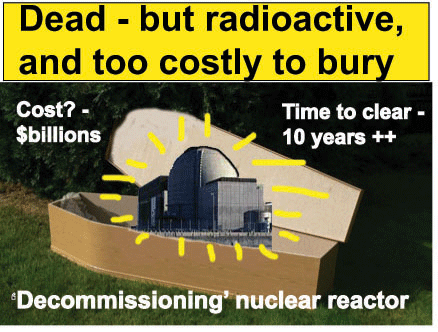
The decommissioning cost of a nuclear reactor (about $300 million-5.6 billion) is more than the cost of construction and commissioning. That’s why TAPS hasn’t been decommissioned despite the American manufacturers’ advice to the government to do so in 1995
 When life is cheaper than nuclear power, Jan 7, 2013, By Dilnaz Boga | Place: Mumbai | Agency: DNA Poonam Hambire, a resident of Ghivali village, 12km from Boisar in Thane district, is at the forefront of the anti-nuclear agitation against the Tarapur Atomic Power Station (TAPS). “Women have to come forward as false cases are slapped against the male protesters in Tarapur,” she alleges.
Her village lies within the 1.6km radius around one the country’s oldest nuclear reactors built by General Electric in the 1960s. It’s the same model as Japan’s Fukushima reactor. The effects of radiation are obvious in every home not only in Ghivali but also in the neighbouring villages. Continue reading
Japanese government’s nuclear reprocessing plans likely to be colossal waste of money
 But the continued operation of the Monju reactor is uncertain due to
frequent malfunctions. The Japanese government has admitted that it
may not be put into commercial use until 2050, prompting criticism
that the Rokashomura facility was a colossal waste of money.
 Japan Could Reprocess Nuclear Fuel from Korea
http://www.energytribune.com/69930/japan-could-reprocess-nuclear-fuel-from-korea-2
January 07, 2013 From Chosun Ilbo The Japanese government is
considering reprocessing spent nuclear fuel rods from Korea, Vietnam
and other Asian countries, the Tokyo Shimbun reported Sunday. Japan is
the only country in the world that has no nuclear weapons but the
facilities to reprocess spent nuclear fuel rods capable of producing
weapons-grade plutonium.
An advisory council to the Democratic Party of Japan in a report last
May said reprocessing spent nuclear fuel rods would “strengthen”
Japan’s diplomacy, security and the country’s economy as well as
“contribute to the peaceful use of atomic energy.”
The report suggests using the Rokashomura nuclear reprocessing plant
in Aomori Prefecture, which will become obsolete if Japan scraps all
its own nuclear power plants in the 2030s. Continue reading
Russia to make $squillions out of its nuclear sales to India
 India-Russia nuclear ambitions and mounting tensions in Sri Lanka,
Daily Mirror, by Dulip Jayawardena, 08 JANUARY 2013
KUNDANKULAM NUCLEAR POWER PLANT “……. the Russian President
Vladimir Putin paid a stand –alone visit to India on December 25 ,2012
for 15 hours to sign an agreement to collaborate to construct another
16 to 18 nuclear energy plants in India of 1000 MW each. At present
prices the total cost of these plants is a staggering US $ 45 billion! Continue reading
Everybody near Sizewell nuclear site will get anti-radiation pills
Suffolk: Whole town to get anti-radiation pills as part of N-plant
safety plan, EEADT24 By David Green, January 7, 2013 THE entire
population of a Suffolk town will be issued with “standby” supplies of
anti-radiation pills if proposals put out to public consultation today
are approved.

People living and working in Leiston, as well as schools, would also
be given annual calendars setting out the procedures for use in the
event of a major release of radioactivity from the Sizewell nuclear
site. Continue reading
Chrystal River nuclear plant’s financial mess
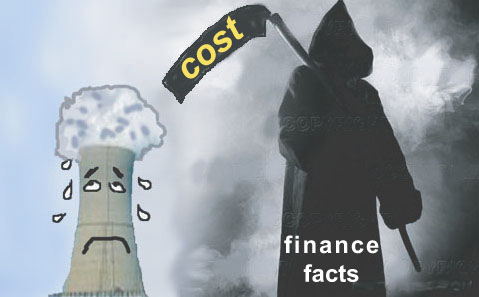 No decision yet on Crystal River nuclear plant
http://www2.tbo.com/news/business/2013/jan/07/no-decision-yet-on-crystal-river-nuclear-plant-ar-600253/
By The Associated Press January 07, 2013 TALLAHASSEE —
Progress Energy is still undecided on whether to repair or shut down
its crippled nuclear power plant in Crystal River.
That means that the state’s second-largest power company could have to
refund customers $100 million under a prior settlement between the
utility and consumer advocates. That settlement calls for the refund
if repairs had not begun by the end of 2012.
A lawyer for the utility company told state regulators Monday that
Progress expects to have a decision about the plant by this summer –
although he didn’t rule out an announcement before then.
The reactor has been down since late 2009, when its concrete
containment building cracked during a maintenance and upgrade project.
Officials say fixing the plant would likely take several years and
cost billions.
Rupert Murdoch shows his ignorance about climate change
 Murdoch right on carbon and trees, were it that simple, The Age, Tom
Arup. January 8, 2013 Media mogul Rupert Murdoch was right to say the
world’s forests are growing faster and thicker because there is more
carbon dioxide in the atmosphere, a leading climate scientist says.
But it does not mean the world is better off for rising greenhouse gas
emissions.
Mr Murdoch tweeted to 388,000 followers on Monday: ”World growing
greener with increased carbon. Thirty years of satellite evidence.
Forests growing faster and thicker.”
Mr Murdoch then referred followers to an article on the topic in The
Wall Street Journal last week by Matt Ridley, a prominent climate
change sceptic.
CSIRO’s Pep Canadell, also executive director of the Global Carbon
Project, said it was correct to say that increased concentration of
carbon dioxide in the atmosphere meant vegetation is becoming
greener….. But Dr Canadell said it did not mean the proportion of
total human greenhouse gases being absorbed by forests and other
terrestrial carbon sinks had increased as forests had become greener.
Studies by the Global Carbon Project have found the accumulation of
carbon dioxide in the atmosphere is faster than the growth of
terrestrial carbon sinks such as forests…… Forests can also only
absorb so much carbon dioxide, and will reach a saturation point. That
saturation point could be reached within the century, he said.
Nor does the increased ”greening” of forests due to higher carbon
dioxide emissions mean the loss of global forests has stopped.
A 2010 study by the UN Food and Agriculture Organisation found that
between 2000 and 2010 5.2 million hectares of forest a year was lost
globally, an area about the size of Costa Rica.
http://www.theage.com.au/environment/climate-change/murdoch-right-on-carbon-and-trees-were-it-that-simple-20130107-2ccuu.html#ixzz2HQFV2V6e
No evacuation plans for India’s dangerous Tarapur nuclear facility
 Nuclear troubles When life is cheaper than nuclear power, Jan 7, 2013, By Dilnaz Boga | Place: Mumbai | Agency: DNA
“……All nuclear-spent fuel from India is being brought to BARC, Tarapur, for reprocessing and later, cooling, storing and intermediate burial-storage, amounting to high concentration of nuclear activity material in Tarapur. Tandel explains that NPCIL has no evacuation routes for the villagers in case of emergency, or even any medical facilities, food or a shelter plan. Also, residents of Palghar and Dahanu are also at high risk. “Hence, we are opposing the expansion of the facility and the port that Jindal is going to build here,” says Tandel.
Every fortnight, the authorities take samples of soil and water for testing from the villages in the plant’s vicinity, but the results are never shared with the inhabitants…. “Labourers and contractuals are appointed from the roadside. There is no proper health procedure. They die on the roadside after their contracts are through…. Scientist Dr V Pugazhenthi, who had conducted a survey in Chinchani village, 8km from the plant two years ago, said cases of neuroblastoma can be attributed to radiation. “Even 40km away from the plant cases of unexplained anaemia, Down’s Syndrome, tumours, high rate of abortions and miscarriages and multiple myeloma are seen.” http://www.dnaindia.com/mumbai/report_when-life-is-cheaper-than-nuclear-power_1786292
France’s nuclear energy inextricably entwined with nuclear weaponry
as civilian and military nuclear programs
have been intertwined for decades, cutting financing for civilian
nuclear research projects would increase the cost of maintaining the
nuclear arsena
 A French nuclear exit? e! Science News, January 7, 2013 France has
been held up, worldwide, as the forerunner in using nuclear fission to
produce electricity. However, a third of the nation’s nuclear reactors
will need replacing in the next decade, and public opinion has shifted
toward reducing reliance on nuclear power. In a special issue of the
Bulletin of the Atomic Scientists, published by SAGE four articles
explore whether France has the means or desire to unplug from nuclear
power. Continue reading
Special dangers of ionising radiation in space
 there are two things those astronauts have shown us. First, there are genetic changes and damage happening even within the relatively safe confines we’ve traveled thus far. Second, there is a hell of a lot we don’t know about how radiation exposure and risk works in outer space.
How space radiation hurts astronauts, Boing Boing, Maggie Koerth-Baker, Jan 4, 2013 “……We know the rates of cancer for survivors of the nuclear bombs dropped on Hiroshima and Nagasaki, but that radiation isn’t really comparable to the stuff in Galactic Cosmic Radiation. In particular, Cucinotta is concerned about particles known as HZE ions.
These particles are very heavy and very fast and we don’t experience them here on the ground. They’re the kind of things that get filtered out and broken down by Earth’s defense systems. But HZE ions can cause more damage, and different kinds of damage, than the radiation scientists are really familiar with. We know this because scientists actually compare samples of astronauts’ blood before and after a spaceflight. Continue reading
Continuing strong renewable energy growth in China
 China’s Strong Renewable Energy Growth Continues Clean Technica, http://cleantechnica.com/2013/01/07/china-increases-overall-renewable-energy-capacity/#jmKrVGDEZY5PCtxO.99
January 7, 2013, Joshua S Hill In good news for planet Earth, and news
that should conversely kick us Western nations up the proverbial,
China has again stretched its renewable energy installed capacity,
 increasing its wind energy capacity up to 56 megawatts at the end of
October 2012, and increasing its hydro power capacity to 206
megawatts.
China’s renewable energy capacity installation growth has
been impressive, and even more so when you consider that its growth
has been higher than the global average.
The global average growth of wind energy capacity over the past decade
was only 25% while China’s wind energy capacity rose at an annual
average growth of 60%.
When it comes to solar, the average global growth was 44%, while China
managed 50% over the same time period.
It’s good news to see China reaching and beating goals it has set for
itself, especially in light of its recently introduced 12th Five-Year
Plan, in which China has set a target of increasing its total
renewable energy consumption to 478 million tonnes of coal equivalent.
This would represent approximately 9.5% of the overall energy
consumption in the country by 2015.
Earth’s Forecast Looks Warm and Full of Volcano Eruptions -Not good for nuclear future
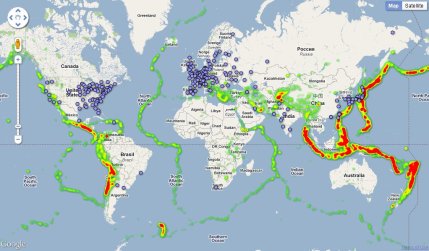
Worldwide map of nuclear power stations and earthquake zones (Maptd)
As Planet Warms, More Lava Could Find Surface
6 January 2013
scientificamerican
Over a long enough time scale, warmer temperatures mean increased volcanic activity, according to new research
By Nathanael Massey and ClimateWire
The effect of volcanic eruptions on climate has been one of the more hotly contested topics in the global warming debate. Seized upon briefly by climate skeptics as analternative to human-caused warming, eruptions are now understood by mainstream science to result most often in net cooling for a period of up to several years.
Few researchers, however, have considered that an inverse relationship might also exist — that over time, climate might have an effect on the planet’s igneous activity.
Yet those are precisely the findings of new research from the GEOMAR Helmholtz Center for Ocean Research Kiel in Germany. Operating over a long enough time scale, sustained warmer temperatures lead to increased frequency of volcanic activity, the research finds.
Building off research by the Collaborative Research Center, which spent 10 years exploring volcanic regions, the GEOMAR team analyzed the layers of ash left in sea beds in Central America. From these, the team was able to reconstruct a history of eruptions dating back some 460,000 years, said volcanologist Steffen Kutterolf.
In analyzing that historical record, the researchers saw a distinct pattern emerge, he said. “There were periods when we found significantly more large eruptions than others,” he said.
Hampton Roads lawmakers NOT in favour of Virginia uranium mining
 Uranium debate coming http://blog.vivianpaige.com/2013/01/07/uranium-debate-coming/ All Politics is local
The debate on uranium mining in Virginia is destined to be a part of the General Assembly session, which opens Wednesday. The Virginian-Pilot had a front page story today about it. Included with the story is a list of the Hampton Roads lawmakers and their stances on lifting the ban, as follows:
| Against mining | Undecided | No response |
| Sen. Kenny Alexander, D-Norfolk | Sen. Harry Blevins, R-Chesapeake | Sen. Mamie Locke, D-Hampton |
| Sen. Louise Lucas, D-Portsmouth | Sen. Frank Wagner, R-Virginia Beach | Sen. John Miller, D-Newport News |
| Sen. Jeff McWaters, R-Virginia Beach | Del. Lionell Spruill, D-Chesapeake | Del. Algie Howell, D-Norfolk |
| Sen. Ralph Northam, D-Norfolk | Del. Barry Knight, R-Virginia Beach | Del. Bob Purkey, R-Virginia Beach |
| Del. John Cosgrove, R-Chesapeake | Sen. Tommy Norment, R-James City County | Del. Bob Tata, R-Virginia Beach |
| Del. Daun Hester, D-Norfolk | Del. Chris Jones, R-Suffolk | |
| Del. Sal Iaquinto, R-Virginia Beach | ||
| Del. Matthew James, D-Portsmouth | ||
| Del. Lynwood Lewis, D-Accomack County | ||
| Del. Chris Stolle, R-Virginia Beach | ||
| Del. Ron Villanueva, R-Virginia Beach | ||
| Del. Johnny Joannou, D-Portsmouth |
This is not, as you can see, a partisan issue. Perhaps the most interesting part of this is that none are willing – yet – to admit support of lifting the ban.
Inadequate emergency plan for UK’s Sizewell nuclear power station
Sizewell nuclear incident plan post Fukushima ‘inadequate’, BBC News,
7 Jan 13, Sizewell C could be built next to the existing A and B
nuclear power stations
Changes to Suffolk’s emergency plan for Sizewell nuclear power station
after the Fukushima disaster in Japan have been called “totally
inadequate”.
Suffolk Resilience Forum, made up of local councils and groups, is
reviewing incident plans for nearby residents.
An inner emergency zone is to be extended from 1.5 miles (2.4km) to
2.3 miles (4km) with an outer precautionary area of 9 miles (15km).
Shut Down Sizewell campaigners said the danger zone should be 18 miles
(30km)……..
Charles Barnett, from the Shut Down Sizewell Campaign, welcomed the
review but called the 1.5 mile (4km) radius of danger “totally
inadequate”.
He said: “The precaution zone should be 18 miles (30km) so that
hundreds of thousands of people would be made aware of the dangers.
“Fukushima has demonstrated that nuclear power stations should be
closed down as the only safe precaution and we are working towards
that….. Consultation and information documents have been circulated
and views are invited from the public up to the closing date of 8
April for publication of a detailed plan in June.
http://www.bbc.co.uk/news/uk-england-suffolk-20937668
British Somalis feel compelled by MI5 to spy on own community
“When they say, ‘We gave this to you, we can take it away from you whenever we want,’ it sends a terrible signal. It shows Somalis they’ll never be part of the nation. You might have been born here, you might have been brought up here, but we can take it all away from you,”
Mon Jan 7, 2013 1:15PM GMT
Press TV

There is growing anger among many of Britain’s 400,000 Somalis about how they treated at Britain’s ports, many of them complaining that they are being pressured to spy on their fellows with Somali nationalities, the Independent reported.
Somali elders in London held a gathering before Christmas to discuss the issue of coercive spying, which many young Somalis are depressingly familiar with, said Mohammed Elmi, the head of Somali Diaspora UK.
“Out of the 33 boroughs represented, 17 said they had community members who felt pressured to spy,” Elmi stated.
“The community is very keen to cooperate with the UK government and security. What is unacceptable is any form of coercion or pressure,” he said.
Growing concerns about such tactics being used by the British spying apparatus were first revealed by the Independent in 2009, when it said in a report that security services had threatened five east African Muslim men with sanctions unless they accepted to work for them as informant.
“Three of the five were approached after returning from family holidays. One of the men, Mahdi Hashi, had his citizenship revoked late last year by the Home Office and was suddenly rendered from a jail in Djibouti to the United States – an incident which has caused consternation among many British Somalis,” according to the report.
Such stories of coercion may backfire on the intelligence-gathering community, the report says.
Jamal Osman, a British filmmaker from Somalia who has won awards for his reports from his war-torn homeland, says he has often been approached by security officials at airports.
1 This Month
22 June – Virtual Event –Climate Change: New Data, New Debate

Monday, June 22, 2026 2:30 p.m. – 3:15 p.m. CT
YouTube. Register here

Protect Sazan Island from the Trump family! https://secure.avaaz.org/campaign/en/protect_sazan_island_from_the_trump_family_loc/?bqFCVab&v=174511&cl=22707147157&_checksum=5e9dde668860e8231c33699735e16a1fbf22ab2cb01da50c999fe8732b9775ef&utm_source=email&utm_medium=blast_email&utm_campaign=174511
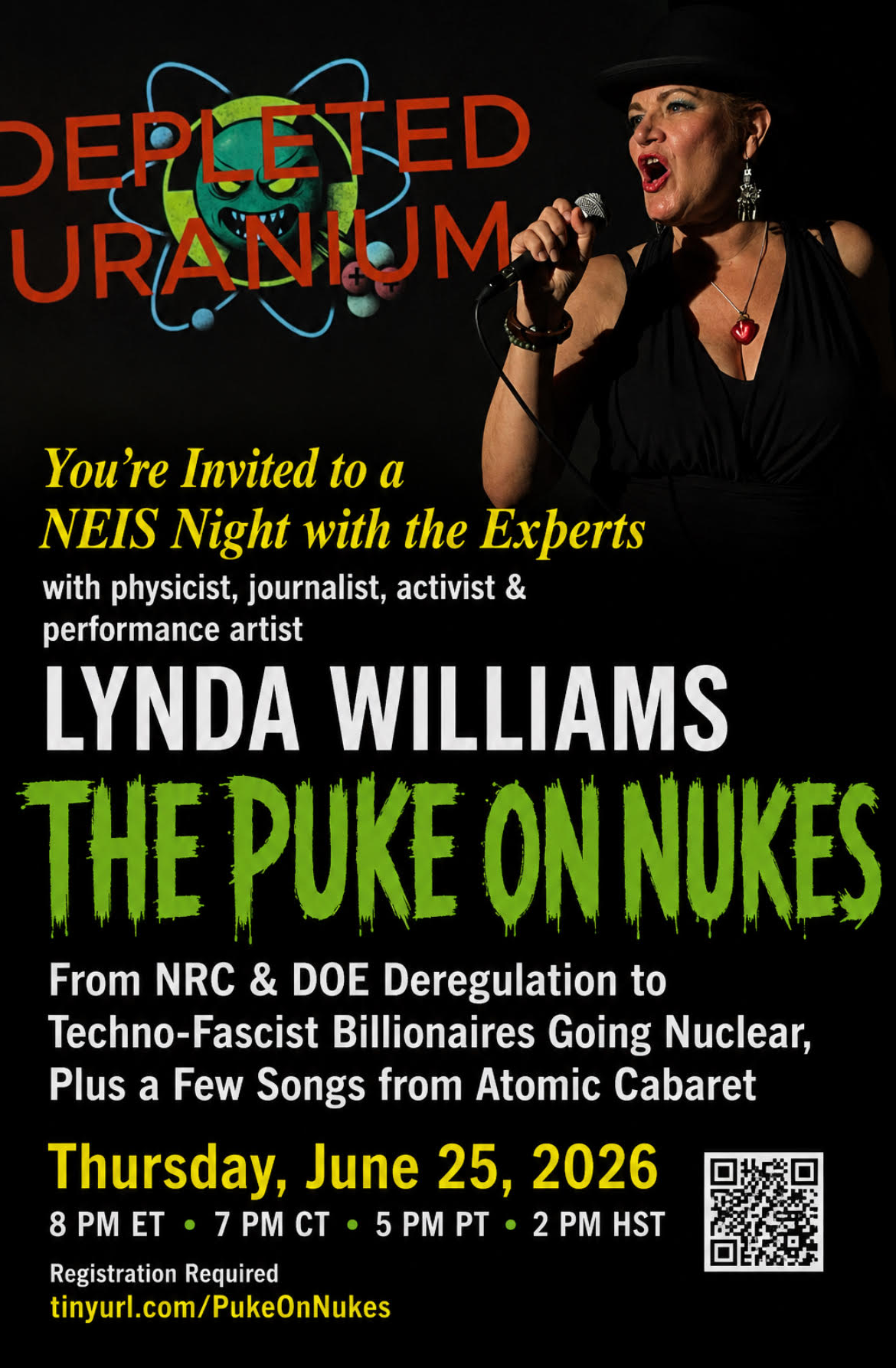
25 June- THE PUKE ON NUKES
Thursday, June 25, 2026
7pm Central Time (8pm ET, 6pm MT, 5pm PT) UTC – 5
From NRC & DOE Deregulation to Techno-Fascist Billionaires Going Nuclear, Plus a Few Songs from Atomic Cabaret REGISTER
26 June – Radiation Trainwreck at the NRC / Join the Protect Better Campaign – https://us02web.zoom.us/meeting/register/4ZlZ5_qLSHGiLSCg8FF6Bg#/registration


Cuba Is Not a Failed State – It Is a Besieged State
PETITION: “Global Appeal to Endorse Palestinian Right of Return of Refugees”
To see nuclear-related stories in greater depth and intensity – go to https://nuclearinformation.wordpress.com
-
Archives
- June 2026 (193)
- May 2026 (306)
- April 2026 (356)
- March 2026 (251)
- February 2026 (268)
- January 2026 (308)
- December 2025 (358)
- November 2025 (359)
- October 2025 (376)
- September 2025 (257)
- August 2025 (319)
- July 2025 (230)
-
Categories
- 1
- 1 NUCLEAR ISSUES
- business and costs
- climate change
- culture and arts
- ENERGY
- environment
- health
- history
- indigenous issues
- Legal
- marketing of nuclear
- media
- opposition to nuclear
- PERSONAL STORIES
- politics
- politics international
- Religion and ethics
- safety
- secrets,lies and civil liberties
- spinbuster
- technology
- Uranium
- wastes
- weapons and war
- Women
- 2 WORLD
- ACTION
- AFRICA
- Atrocities
- AUSTRALIA
- Christina's notes
- Christina's themes
- culture and arts
- Events
- Fuk 2022
- Fuk 2023
- Fukushima 2017
- Fukushima 2018
- fukushima 2019
- Fukushima 2020
- Fukushima 2021
- general
- global warming
- Humour (God we need it)
- Nuclear
- RARE EARTHS
- Reference
- resources – print
- Resources -audiovicual
- Weekly Newsletter
- World
- World Nuclear
- YouTube
-
RSS
Entries RSS
Comments RSS
 nuclear-news