Belgium to build ‘battery island’ to store wind farm energy
“…The Belgian island project is part of the country’s phase-out of nuclear energy and shift towards renewables. The country, which has for years received more than half of its electricity from its two nuclear power plants, Doel and Tihange, wants to shut down all its reactors by 2025; wind farms on the North Sea are an essential part of this strategy.
The country had just 1,078 megawatts of wind power connected to the grid in 2011, but the output is expected to expand to more than 4,000 megawatts by 2020, according to a European Wind Energy Association report.
The island will also double as a resting place for gulls and other sea birds, Minister Lanotte said. They will be fed there, and will be less inclined to bother people on the mainland, he explained….”
Published: 19 January, 2013, 12:43
RT
Belgium plans to build a horseshoe-shaped artificial island off its North Sea coast to store energy generated by its wind farms. The project will also double as attraction for sea birds (and possibly flocks of tourists).
The ambitious undertaking was unveiled this week by Belgian North Sea Minister Johan Vande Lanotte, as he reported on the implementation of marine special planning.
The island is planned to be built over the course of five years about three to four kilometers off the coast near the village of Wenduine in the province of West Flanders. It will be about three kilometers in diameter, and will have a giant water reservoir occupying most of its territory.
Energy will be stored by pumping seawater inside the reservoir. It is then recovered when needed by guiding the water back into the sea through a hydropower plant at the heel of the ‘horseshoe.’
Storing excess energy is a common problem for electric grid management. Consumption of electricity varies greatly between daytime and nighttime, so balancing the load often requires generating and storing extra energy overnight and releasing those reserves during peak hours. This is a particular issue for many forms of green energy; for example, the output of a wind farm depends on whether there is enough wind to spin its turbines.
Pumping water uphill is the most widely used approach to storing this energy, and is a technique that has been used since the late 19th century. However, those reservoirs are usually built inland in a mountainous areas and store freshwater. The Yanbaru Seawater Pumped Storage Power Station – launched in 1999 in Okinawa, Japan – was the first facility to use seawater for this purpose.
A notable exception is tidal power plants, where extra seawater may be pumped up during the high tide and released during the low tide to boost the plant’s efficiency.
The Belgian island project is part of the country’s phase-out of nuclear energy and shift towards renewables. The country, which has for years received more than half of its electricity from its two nuclear power plants, Doel and Tihange, wants to shut down all its reactors by 2025; wind farms on the North Sea are an essential part of this strategy.
The country had just 1,078 megawatts of wind power connected to the grid in 2011, but the output is expected to expand to more than 4,000 megawatts by 2020, according to a European Wind Energy Association report.
The island will also double as a resting place for gulls and other sea birds, Minister Lanotte said. They will be fed there, and will be less inclined to bother people on the mainland, he explained.
Belgium is currently seeking potential members for a consortium that would operate the battery island. No detailed project has been penned yet, but the government estimates that its cost would be about the same as a wind farm, Lanotte said.
http://rt.com/news/belgium-battery-island-renewable-319/
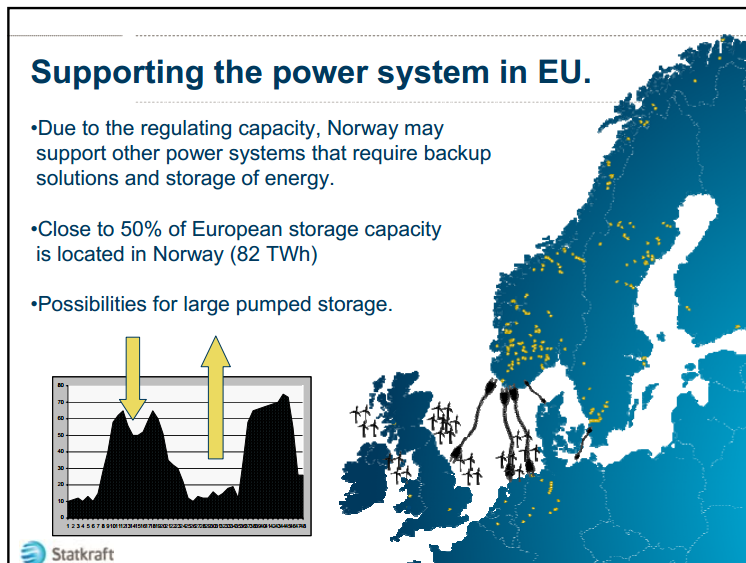
Offshore Wind Energy Storage in Norwegian Power Plants
From an electrical island in Tyssedal to ”swinging” business with Europe
German Norwegian Offshore Wind Energy Conference Bergen, 4th of May 2010
No comments yet.
1 This Month

of the week – Shut Down Drone Warfare!


Tell the Ukrainian Government to Drop Prosecution of Peace Activist Yurii Sheliazhenko

Petition to revoke the licensing of the Near Surface Nuclear Disposal Facility (NSDF) at Chalk River. https://www.ourcommons.ca/petitions/en/Petition/Details?Petition=e-7247
To see nuclear-related stories in greater depth and intensity – go to https://nuclearinformation.wordpress.com
-
Archives
- April 2026 (68)
- March 2026 (251)
- February 2026 (268)
- January 2026 (308)
- December 2025 (358)
- November 2025 (359)
- October 2025 (376)
- September 2025 (257)
- August 2025 (319)
- July 2025 (230)
- June 2025 (348)
- May 2025 (261)
-
Categories
- 1
- 1 NUCLEAR ISSUES
- business and costs
- climate change
- culture and arts
- ENERGY
- environment
- health
- history
- indigenous issues
- Legal
- marketing of nuclear
- media
- opposition to nuclear
- PERSONAL STORIES
- politics
- politics international
- Religion and ethics
- safety
- secrets,lies and civil liberties
- spinbuster
- technology
- Uranium
- wastes
- weapons and war
- Women
- 2 WORLD
- ACTION
- AFRICA
- Atrocities
- AUSTRALIA
- Christina's notes
- Christina's themes
- culture and arts
- Events
- Fuk 2022
- Fuk 2023
- Fukushima 2017
- Fukushima 2018
- fukushima 2019
- Fukushima 2020
- Fukushima 2021
- general
- global warming
- Humour (God we need it)
- Nuclear
- RARE EARTHS
- Reference
- resources – print
- Resources -audiovicual
- Weekly Newsletter
- World
- World Nuclear
- YouTube
-
RSS
Entries RSS
Comments RSS
 nuclear-news
Leave a comment