USA -Wolves spotted at Idaho nuclear facility
January 8, 2013
The Associated Press

IDAHO FALLS, IDAHO — Idaho National Laboratory officials say two wolves have been spotted on the 890-square-mile nuclear facility that is off limits to hunters.
INL spokeswoman Carisa Shultz tells the Post Register (http://bit.ly/V9j65r) that workers spotted the wolves Saturday outside the fence of the Advanced Test Reactor Complex.
Idaho Fish and Game spokesman Gregg Losinski says an elk herd has learned it’s a safe place from human hunters so it’s likely wolves could figure that out also.
Jeff Gould of Idaho Fish and Game says the wolves are probably just passing through and it’s unlikely they’ll set up a home range in the desert.
INL officials have reminded employees to be alert when outside the fence.
Information from: Post Register, http://www.postregister.com
Rolls-Royce Expands Nuclear Operations With US Buyout
Plant Operation
8 Jan (NucNet): Rolls-Royce Holdings is expanding its nuclear energy operations with the purchase for an undisclosed sum of US engineering company PKMJ Technical Services.
The acquisition aims to accelerate growth in nuclear services, London-based Rolls-Royce said in a statement today.

Rolls-Royce already has nuclear services facilities in Williamson, New York state, and Peterborough, in Canada, and a nuclear instrumentation and control facility based in Chattanooga, Tenessee. Last year Rolls-Royce acquired R Brooks Associates, a leading specialist civil nuclear reactor services business in the US.
The company also announced last year a collaboration with Hitachi to work on new nuclear reactors in the UK. In September 2011, Rolls-Royce signed a memorandum of understanding and cooperation covering nuclear energy with Russia’s state nuclear corporation Rosatom.
French Cuts Spur Debate on their Nuclear Deterrence Budget
“…Around 130 million euros of the annual 750 million euro research and technology budget is spent on studies for the deterrent, and the amount is expected to double by 2016, then decrease while the development money will rise, a July French Senate report said….”
“…There needs to be debate on topics such as the range of ballistic missiles, the number of submarines and possible cooperation with Britain beyond research on warheads, the source said.
Britain, for example, is due to decide in 2016 whether to maintain four missile submarines or cut to three when it signs construction contracts for the Successor next-generation fleet….”

8 January 2013
Indiandefence.com
PARIS — An impending wave of cuts in public spending in France calls for a debate on the elements that make up the country’s nuclear deterrent, with a big question mark over whether to maintain the carrier-borne air wing, a report from influential think tank Centre d’Etude et de Prospective Stratégique (CEPS) said.
The report, “Defense Without the Cosmetics: A Platform of Proposals for Defense and National Security,” seeks to open public debate on the traditionally sacred and unquestioned realm of nuclear deterrence ahead of the publication of the official white paper on defense and national security, due in a few weeks.
The CEPS report is due to be published at the end of this month.
The call to update nuclear doctrine comes as concern rises in some quarters over what is seen as an attempt by a military pro-nuclear lobby to impose an artificial “consensus,” two civilian sources said.
“It’s locked down,” a defense expert said. Anyone who questions the deterrent doctrine is subject to “eviction or ridicule.”
Short-Circuiting the Minister
In what is described as a “short circuiting” of the defense minister, officers from the Chief of the Defense Staff pushed to block any policy changes in the deterrent force at a restricted council meeting at the Elysée presidential office, a political source said.
The meeting, held in the second half of December, was an attempt by the military to persuade the president, the political authority on the nuclear deterrent, to “change nothing,” the source said.
The defense minister and his private office realize the budgetary weight of the nuclear force and the decisions needed for future-generation programs, but there is little room for discussion as the concept of operations has been frozen for decades, the source said.
Destination of Japanese Plutonium Unclear ??

Jan. 8, 2013
Global Security Newswire
Japan intends to continue generating plutonium despite having paused preparation of a facility at its Rokkasho site for generating nuclear power plant fuel from the bomb-usable material, theAssociated Press reported on Monday.
The developmental facility was originally scheduled in 2014 to begin converting the plutonium intomixed-oxide fuel, but construction has been on hold since the Fukushima Daiichi nuclear power plant disaster in 2011.
Japan has stockpiled sufficient plutonium to power hundreds of atomic armaments, and the island nation would run afoul of nonproliferation commitments by potentially determining it has no peaceful use for the substance.
If the country stopped separating plutonium from spent atomic fuel at Rokkasho, domestic atomic energy sites with limited room would be forced to retake custody of roughly 3,000 tons of unwanted material. Political appetite appears limited for constructing a site to deal with such substances over an extended period, according to AP.
Tokyo last year halted preparation of the Monju fast-breeder reactor, which was intended to recycle used power plant material as an alternative to reprocessing it for plutonium.
Meanwhile, a high-level South Korean Foreign Ministry insider on Monday said his country does not plan to seek Japanese treatment of its used atomic reactor material, Kyodo News reported.
more links on that here..
RELATED GSN STORIES
- Japan Ramping Up Plutonium Production Despite Reactor Shutdowns
- U.S. Official Rejects Call For International Nuclear Security Standards
- Senate Appropriators Approve Full Budget Request For Savannah River Site
- U.K. Plans Subterranean Plutonium Storage Site
- Blast at French Atomic Site Kills One
Source for this
http://www.nti.org/gsn/article/destination-japanese-plutonium-remains-unclear/
Idaho Governor Underscores Commitment to Keep Nuclear Waste Out of Idaho
By AARON KUNZ
TUE JANUARY 8, 2013

Idaho Governor Butch Otter underscored his commitment Monday to keeping more spent nuclear waste from entering Idaho. EarthFix Reporter Aaron Kunz explains.
Governor Butch Otter organized the Leadership in Nuclear Energy Commission almost a year ago. The goal was for that group to determine what the Idaho National Laboratory future might be. The laboratory is the nations lead nuclear research facility.
When the LINE Commission released its preliminary report last month, it included revisiting Idaho’s 1995 agreement with the federal government that caps the amount of nuclear waste allowed to be shipped to Idaho.
Governor Otter downplayed the recommendation in his State of the State Address.
Otter: “I’m as committed as ever to enforcing the terms of our 1995 agreement with the federal government to get all nuclear waste out of Idaho by 2035.”
The LINE Commission will submit their final recommendations with Governor Otter by the end of the month. The public comment period closed last Friday.
Copyright 2013 Northwest Public Radio
Listen to Broadcast here
http://www.nwpr.org/post/idaho-governor-underscores-commitment-keep-nuclear-waste-out-idaho
Iran to address nuclear concerns if rights respected: Mehmanparast -Press TV

The recognition of Iran’s peaceful nuclear activities in legal terms and provision of technical assistance by the International Atomic Energy Agency (IAEA) to Tehran have been already discussed in various sessions, Iran Foreign Ministry Spokesman Ramin Mehmanparast said on Tuesday.
“They have never been able to provide real evidence at sessions and meetings for their claims. However, we have announced that if a comprehensive agreement is reached between the Islamic Republic and the IAEA, under which all [Iranian] nuclear activities are fully recognized, and we are fully provided with nuclear and fuel cycle technology, we will be ready to take the necessary measures to allay their concerns,” Mehmanparast told reporters in Tehran.
Mehmanparast described the recent meetings between Tehran and the nuclear body as constructive, adding that the talks revolved around “technical aspects” of Iran’s nuclear activities.
The Foreign Ministry spokesman further highlighted Iran’s sustained cooperation with the IAEA and said the Islamic Republic is determined to pursue all its nuclear rights under the Non-Proliferation Treaty (NPT).
The United States, Israel and some of their allies have repeatedly accused Iran of pursuing non-civilian objectives in its nuclear energy program.
Iran rejects the allegations, arguing that as a committed signatory to the NPT and a member of the IAEA, it has the right to use nuclear technology for peaceful purposes.
In addition, the IAEA has conducted numerous inspections of Iran’s nuclear facilities but has never found any evidence showing that Iran’s civilian nuclear program has been diverted toward military objectives.
MRS/SS/IS
http://www.presstv.ir/detail/2013/01/08/282451/iran-ready-to-address-nuclear-concerns/
Even in “short trips” radiation damages astronoauts
 But what’s interesting, and concerning, is that even with those protections we do see signs of radiation damage to astronauts,Cucinotta told me. The big thing is cataracts — changes in the lens of the eye that make it more opaque.
There’s also probably an increased risk of cancer, though it’s difficult to estimate how much, exactly. That’s because we don’t have human epidemiological data about the kind of radiation astronauts are exposed to.
How space radiation hurts astronauts, Boing Boing, Maggie Koerth-Baker, Jan 4, 2013 Space is full of radiation. It’s impossible to escape. Imagine standing in the middle of a dust storm, with bits of gravel constantly swirling around you, whizzing by, pinging against your skin. That’s what radiation is like in space. The problem is that, unlike a pebble or a speck of dirt, ionizing radiation doesn’t bounce off human flesh. It goes right through, like a cannonball through the side of the building, leaving damage behind.
Last week, researchers at the University of Rochester Medical Center published a study that suggests long exposures to galactic cosmic radiation — like the kind astronauts might experience on a trip to Mars — could increase the risk of developing Alzheimer’s disease…..
Galactic cosmic radiation — also called galactic cosmic rays — is the kind of radiation that researchers are most worried about. Continue reading
Japan’s government gambling with climate/nuclear disaster risks
Japan’s Pro-Nuclear Cabinet Fight Future Disaster With Reformed
Policies, The International, By Abbie Saunders JANUARY 07,
2013“……..The American Nuclear Society suggests that “one of the
most effective ways to reduce global carbon-dioxide emissions in the
future is by making increasing use of nuclear energy to replace fossil
fuels”. But Kurt Kleiner for Nature Reports maintains a different
stance.
 Kleiner suggests that while the operation of a nuclear power plant
itself has “near-zero carbon emissions”, it is the initial
construction of these plants that damages their eco-friendly
reputation. He points to the sources of nuclear energy as the problem:
“uranium has to be mined, processed and transported, waste has to be
stored, and eventually the plant has to be decommissioned. All these
actions produce carbon emissions.”
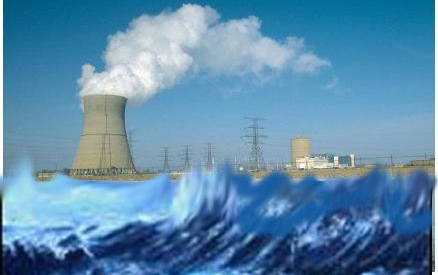 Whilst nuclear energy itself may be considered more eco-friendly than
exhaustible energy sources, renowned Japan correspondent Lucy
Birmingham points to the country’s history of natural disasters as a
potential danger. In November 2012, following the destruction of
Hurricane Sandy, she poignantly remarked that “nuclear power and
superstorms don’t mix”. She suggests that both floods and droughts can
severely damage nuclear reactors, causing them to release potentially
fatal radioactive materials.
It is this reality that prompts the Japanese population to protest.
Since Fukushima, the citizens of Japan have become increasingly
concerned about the dangers of nuclear energy. If the government’s
primary responsibility is the security of its citizens, is Shinzo
Abe’s attempt to bolster the economy and Japan’s carbon footprint one
risk too far for the environment and the welfare of the people
residing in potential risk areas?….”
Los Alamos nuclear weapons lab security risk with Chinese technology
 Opposing Views on Congress’ Claims Huawei Technologies
http://www.youtube.com/watch?v=DKYmL4JwNsY
 The report said that based on classified and unclassified information,
Huawei and ZTE ‘cannot be trusted to be free of foreign state
influence’ and pose ‘a security threat to the United States and to our
systems.’.
 (includes video) National security concerns at Los Alamos? U.S.
nuclear weapons hub discovers Chinese-made telecom gizmos embedded in
its network
So-called network switches are used to manage data traffic on computer networks
Los Alamos National Laboratory manages America’s arsenal of nuclear weapons
Exact number of the switches within the labor’s network infrastructure
is unknown
At least two Chinese-made ‘components’ removed from the network
Chinese manufacturer insists its products pose no security threat to the U.S.
Chinese company barred from buying U.S. corporation with officials
citing national security risks
House Intelligence Committee report says Chinese manufacturer ‘cannot
be trusted’
Mail Online, By REUTERS REPORTER, 7 Jan 13, “….. The discovery
raises concerns about procurement practices by U.S. departments
responsible for national security. The U.S. government and Congress
have raised concerns about Huawei and its alleged ties to the Chinese
military and government. Continue reading
America’s Council on Foreign Relations (CFR) computers attacked by China?
Chinese Hackers Suspected in Cyber Attack on Council on Foreign
Relations, Washington Free Beacon, Advanced cyberespionage attack
employed ‘drive-by’ method on CFR website BY: Bill Gertz December 27,
2012
Computer hackers traced to China carried out an advanced
cyberespionage attack against one of America’s most elite foreign
policy web groups – the website of the Council on Foreign Relations
(CFR).
According to private computer-security forensic specialists, the
hacking incident involved a relatively new type of ploy called a
“drive-by” website cyber attack that was detected around 2:00 p.m. on
Wednesday.
The specialists, who spoke on condition of anonymity, said the attack
involved penetrating the computer server that operates the New York
City-based CFR’s website and then using the pirated computer system to
attack CFR members and others who visited or “drove by” the site…… Continue reading
Cyber war – China’s advanced espionage
 It’s global cyber war out there, Financial Review. CHRISTOPHER JOYE
02 JAN 2013“…..Since 2003 the Chinese have executed advanced
cyber-espionage operations against the West, including Australia,
stealing hundreds of billions worth of business and military secrets
in what United States officials say is “the greatest transfer of
wealth in history”.
The Chinese were fingered in the hacking of Barack Obama’s and John
McCain’s computers in the 2008 US presidential election campaign. Continue reading
Tarapur Atomic Power Station (TAPS) – people’s lives in danger
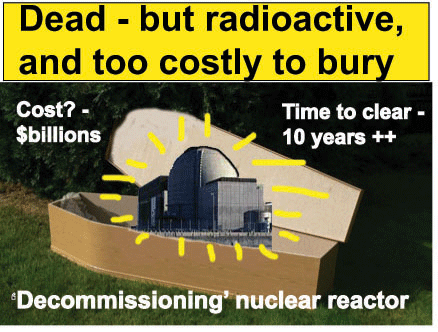
The decommissioning cost of a nuclear reactor (about $300 million-5.6 billion) is more than the cost of construction and commissioning. That’s why TAPS hasn’t been decommissioned despite the American manufacturers’ advice to the government to do so in 1995
 When life is cheaper than nuclear power, Jan 7, 2013, By Dilnaz Boga | Place: Mumbai | Agency: DNA Poonam Hambire, a resident of Ghivali village, 12km from Boisar in Thane district, is at the forefront of the anti-nuclear agitation against the Tarapur Atomic Power Station (TAPS). “Women have to come forward as false cases are slapped against the male protesters in Tarapur,” she alleges.
Her village lies within the 1.6km radius around one the country’s oldest nuclear reactors built by General Electric in the 1960s. It’s the same model as Japan’s Fukushima reactor. The effects of radiation are obvious in every home not only in Ghivali but also in the neighbouring villages. Continue reading
Japanese government’s nuclear reprocessing plans likely to be colossal waste of money
 But the continued operation of the Monju reactor is uncertain due to
frequent malfunctions. The Japanese government has admitted that it
may not be put into commercial use until 2050, prompting criticism
that the Rokashomura facility was a colossal waste of money.
 Japan Could Reprocess Nuclear Fuel from Korea
http://www.energytribune.com/69930/japan-could-reprocess-nuclear-fuel-from-korea-2
January 07, 2013 From Chosun Ilbo The Japanese government is
considering reprocessing spent nuclear fuel rods from Korea, Vietnam
and other Asian countries, the Tokyo Shimbun reported Sunday. Japan is
the only country in the world that has no nuclear weapons but the
facilities to reprocess spent nuclear fuel rods capable of producing
weapons-grade plutonium.
An advisory council to the Democratic Party of Japan in a report last
May said reprocessing spent nuclear fuel rods would “strengthen”
Japan’s diplomacy, security and the country’s economy as well as
“contribute to the peaceful use of atomic energy.”
The report suggests using the Rokashomura nuclear reprocessing plant
in Aomori Prefecture, which will become obsolete if Japan scraps all
its own nuclear power plants in the 2030s. Continue reading
Russia to make $squillions out of its nuclear sales to India
 India-Russia nuclear ambitions and mounting tensions in Sri Lanka,
Daily Mirror, by Dulip Jayawardena, 08 JANUARY 2013
KUNDANKULAM NUCLEAR POWER PLANT “……. the Russian President
Vladimir Putin paid a stand –alone visit to India on December 25 ,2012
for 15 hours to sign an agreement to collaborate to construct another
16 to 18 nuclear energy plants in India of 1000 MW each. At present
prices the total cost of these plants is a staggering US $ 45 billion! Continue reading
Everybody near Sizewell nuclear site will get anti-radiation pills
Suffolk: Whole town to get anti-radiation pills as part of N-plant
safety plan, EEADT24 By David Green, January 7, 2013 THE entire
population of a Suffolk town will be issued with “standby” supplies of
anti-radiation pills if proposals put out to public consultation today
are approved.

People living and working in Leiston, as well as schools, would also
be given annual calendars setting out the procedures for use in the
event of a major release of radioactivity from the Sizewell nuclear
site. Continue reading
1 This Month

of the week – Shut Down Drone Warfare!


Tell the Ukrainian Government to Drop Prosecution of Peace Activist Yurii Sheliazhenko

Petition to revoke the licensing of the Near Surface Nuclear Disposal Facility (NSDF) at Chalk River. https://www.ourcommons.ca/petitions/en/Petition/Details?Petition=e-7247
To see nuclear-related stories in greater depth and intensity – go to https://nuclearinformation.wordpress.com
-
Archives
- April 2026 (68)
- March 2026 (251)
- February 2026 (268)
- January 2026 (308)
- December 2025 (358)
- November 2025 (359)
- October 2025 (376)
- September 2025 (257)
- August 2025 (319)
- July 2025 (230)
- June 2025 (348)
- May 2025 (261)
-
Categories
- 1
- 1 NUCLEAR ISSUES
- business and costs
- climate change
- culture and arts
- ENERGY
- environment
- health
- history
- indigenous issues
- Legal
- marketing of nuclear
- media
- opposition to nuclear
- PERSONAL STORIES
- politics
- politics international
- Religion and ethics
- safety
- secrets,lies and civil liberties
- spinbuster
- technology
- Uranium
- wastes
- weapons and war
- Women
- 2 WORLD
- ACTION
- AFRICA
- Atrocities
- AUSTRALIA
- Christina's notes
- Christina's themes
- culture and arts
- Events
- Fuk 2022
- Fuk 2023
- Fukushima 2017
- Fukushima 2018
- fukushima 2019
- Fukushima 2020
- Fukushima 2021
- general
- global warming
- Humour (God we need it)
- Nuclear
- RARE EARTHS
- Reference
- resources – print
- Resources -audiovicual
- Weekly Newsletter
- World
- World Nuclear
- YouTube
-
RSS
Entries RSS
Comments RSS
 nuclear-news