Hitachi President protests nuclear-free future in Japan -Quote of the week
http://enformable.com/2012/12/hitachi-president-protests-nuclear-free-future-in-japan/
Hiroaki Nakanishi, the president of Hitachi, told reporters that even in the wake of the Fukushima Daiichi nuclear disaster, it would “be impossible” for Japan to reduce dependence on nuclear power, and used the importance of “protecting the environment” as one of his arguments.
“It is impossible to end nuclear power generation and do everything with renewable energy such as solar and wind power generation,”

India is on the cusp of a solar energy revolution. The Jawaharlal Nehru National Solar Mission (JNNSM) kick-started the development of large, mega-watt scale, solar plants….
Training under way for new nuclear plant operators – Old nuclear is finished!
By Ray Henry Associated Press Posted December 26, 2012 at 4 a.m.
While the nuclear industry had earlier proposed a larger building campaign, low natural gas prices coupled with uncertainty after last year’s disaster at a Japanese nuclear plant have scaled back those ambitions.
“This is where nuclear power is going,” said Jason Hayes, who is training to become asenior reactor operator for the new reactors at Plant Vogtle. He left a job as a control room supervisor at a nuclear plant in Mississippi because he wanted to tie his career to the emerging technology. “If there is going to be a nuclear power industry, I figured I’d go to where it’s going to be.”
“The biggest difference is the digital aspect of it,” said Greg Crosby, a training coordinator for Southern Co. “We’re almost totally digital.”
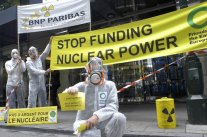
WAYNESBORO, Ga. — Utility companies are preparing a new wave of workers to run first-of-their-kind nuclear plants, a process certain to influence how workers are trained on the new technology for decades to come.
Southern Co. in Georgia and SCANA Corp. in South Carolina are the first to prepare new workers to run a recently approved reactor design never before built in the United States. Training like it will be repeated over the decades-long lifetime of those plants and at other new ones that may share the technology in years to come.
Both power companies are building pairs of Westinghouse Electric Corp. AP1000 reactors at Plant Vogtle near Augusta and SCANA Corp.’s Summer Nuclear Station northwest of Columbia, S.C. While the nuclear industry had earlier proposed a larger building campaign, low natural gas prices coupled with uncertainty after last year’s disaster at a Japanese nuclear plant have scaled back those ambitions.
EDF declines comment on China nuclear probe report – Reuters
PARIS | Wed Dec 26, 2012 11:11am GMT
(Reuters) – Electricite de France (EDF.PA) on Tuesday declined to comment on a report of a probe into its recent partnership with a Chinese utility to develop a new type of nuclear reactor.
Several French news websites cited a forthcoming article in satirical weekly Le Canard Enchaine, due to appear on Wednesday, as saying that French finance-ministry inspectors had begun an inquiry into the terms of the China agreement.
“We have no reaction,” a spokeswoman for EDF said, adding she had not seen the forthcoming article. The French finance ministry was unavailable for comment.
EDF had said in November that the agreement with China Guangdong Nuclear PowerCorporation Holding GDNCP.UL was to develop a concept for a 1,000-MW reactor. This would be cheaper and smaller than the 1,600-MW EPR reactor blamed for the loss of a landmark project in Abu Dhabi in 2009.
(Reporting by Lionel Laurent and Gerard Bon; editing by Patrick Graham)
http://uk.reuters.com/article/2012/12/26/uk-edf-china-nuclear-idUKBRE8BO03K20121226
India Claims Problems With Russian-Leased Nuclear Sub
02:29 26/12/2012
MOSCOW, December 26 (RIA Novosti) – India has asked Russia to replace the faulty parts on the leased Nerpa nuclear-powered submarine as they affect its operational readiness, the Times of India reported.
The Navy sources cited by the newspaper on Tuesday did not specify the components that needed the replacement but said they “were critical for the operations of the submarine.”
Neither Russian nor Indian defense ministries have officially commented on the report.
The Russian-built Akula II class nuclear attack submarine was inducted into the Indian Navy as INS Chakra in April.
The lease contract, worth over $900 million, was drawn up after an agreement between Moscow and New Delhi in January 2004, in which India agreed to fund part of the Nerpa’s construction.
However, shortly after the start of sea trials in November 2008, an accident on board the submarine killed 20 sailors and technical due to a toxic gas leak when the automatic fire extinguishing system malfunctioned.
The Nerpa was finally handed over to India in January after prolonged and costly repairs.
Hitachi CEO: Still in talks on Lithuania nuclear project?
Published: Wednesday December 26, 2012 MYT 7:15:00 AM
The Star online
TOKYO: Japan’s Hitachi Ltd remains in talks with Lithuania over its plans to build a nuclear plant after the European country’s new centre-left government said it could shelve nuclear projects, the company’s top executive said on Tuesday.

Hitachi, a century-old conglomerate that designs and builds nuclear power plants with General Electric Co in two joint ventures, has shifted its focus overseas as Japan shuns nuclear energy in the wake of the worst radiation crisis in 25 years at the Fukushima Daiichi nuclear plant last year.
Hitachi’s nuclear joint venture had been lined up to supply a nuclear energy plant to Lithuania under the country’s previous government, which lost power in October.
“There might be a slight lag in the time period, but the talks have not been completely suspended,” Hiroaki Nakanishi, Chief Executive of Hitachi, said at a press briefing.
Nakanishi said he did not think the worldwide market for nuclear energy would shrink, but said it was impossible to form a sales outlook for Hitachi’s nuclear business before Japan’s own energy policy has been concluded.
The company has previously said it aimed to reach 360 billion yen ($4.25 billion) in sales in the nuclear business by fiscal year 2020. Hitachi’s power systems division, which includes its thermal and nuclear power business, logged 832.4 billion yen in sales the year ended March.
Nuclear safety watchdog criticises Sellafield’s emergency readiness
Report finds errors by fire officers during practice exercise could have led to ‘prolonged release of radioactive material off-site’
- The Guardian, Wednesday 26 December 2012 18.43 GMT

A damning report by safety experts has revealed that staff at Britain’s most important nuclear site did “not have the level of capability required to respond to nuclear emergencies effectively”.
In response to a freedom of information request, the Office for Nuclear Regulation (ONR), an arm of the Health and Safety Executive (HSE), said errors by senior fire officers in a preparedness exercise at Sellafield “could have led to delays in responding to the nuclear emergency and a prolonged release of radioactive material off-site”.
The criticism is revealed at a critical time for the nuclear industry, which is trying to build public confidence after the crisis at the Fukushima nuclear plant while drawing up plans to construct a new generation of atomic power stations in Britain.
It is also an embarrassment to Nuclear Management Partners, the private sector consortium which runs Sellafield and is part-owned by Areva, the French engineering company that has prepared the design for a proposed reactor at Hinkley Point in Somerset.
The initial report from the ONR led to an improvement notice being issued to the Cumbrian site, ordering it to improve its training and wider preparedness to deal with emergencies.
Two HSE fire specialists had watched a safety exercise in December 2011 which tested the Sellafield fire and rescue service’s ability to search for two people after a fictional accident that led to the spillage of radioactive liquid and an aerial release of radioactivity. Although the exercise presented “simple scenarios under ideal conditions”, the service’s “resources were stretched” and “there were insufficient numbers of firefighters to achieve the objectives”, according to the HSE report.
A spokesman for Sellafield said the successful introduction of an integrated risk management plan (IRMP) had subsequently led to the improvement notice issued in February 2012 being “closed out” by the ONR.
“This IRMP is the first of its kind for Sellafield Ltd and ONR has asked Sellafield Ltd if it would be happy to share it as good practice with other operators. A number of key improvements are being progressed to achieve the implementation of the IRMP, including enhanced training for SF&RS [Sellafield fire and rescues service] firefighters and officers,” he added.
The inspectors found evidence of “significant deficiencies around availability of resources, frequency and quality of training, competency and operational preparedness”.
The report, obtained by the website NuclearSpin, also said that Sellafield had already “identified the need to improve arrangements in this area [but] no effective remedial action was put in place”.
The service is a critical part of Sellafield’s management of nuclear safety and the HSE found it in breach of its licence conditions and the Management of Health and Safety at Work Regulations 1999.
This is not the first time the plant has been criticised by the HSE. A report in 2010 disclosed a number of safety problems at the site and the HSE ordered the closure for safety reasons of a plant for solidifying highly radioactive liquid waste. The executive also refused to endorse a “lifetime plan” outlining schedules for decommissioning the site over the next 110 years.
Fukushima kids overweight as risk of exposure to radiation forces kids indoors

Drawing by Erika, age 17, Koriyama City, Fukushima. (Geoff Read)
Published: 25 December, 2012, 17:53
RT
Kids in Fukushima Prefecture are becoming increasingly overweight, as they are denied daily exercise in schoolyards due to the risk posed by exposure to nuclear radiation in the area, governments’ health report reveals.
The report argues that an increasing number of kids are weighing 20 per cent more than their standard based on their height, reported Kyodo News.
The study was released by the Ministry of Education, Culture, Sports, Science and Technology.
Since June 2011 more than half the public institutions in Fukushima, which is just under 450 schools, have limited their outdoor activities during school hours. As of September 2012, 71 elementary and junior high schools still adhere to such restrictions, according to the prefectural education board.
Their main concern is fear of exposure to radiation released from the Fukushima Daiichi complex.
Earlier, alarming reports of children developing potentially cancerous abnormalities have been making news as early as July.
A report by Fukushima Medical University first published this April and updated in July revealed that 36 per cent of Fukushima children have unusually overgrown thyroid glands, and could be prone to cancer.
Of 38,000 children examined, 13,000 had cysts or nodules as large as five millimeters, the Health Management Surveystated, which made doctors around the globe rate Japan’s reaction to the aftermath of the Fukushima disaster as“ultimately medical irresponsibility.”
A message from Fukushima, “Documenting Ian” -Play Until You Cry
documenting ian, blog
Thursday, December 20, 2012
Play until you cry

I was shown around “Smile Park” by Ms. Tomita, a Red Cross staff member.
No control over radiation-contaminated products
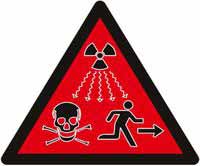 The potential danger comes, however, from the cumulative effect of proximity to radiation, particularly over time and in relation to other contaminants. The precise degree of that danger has not yet been definitively determined for low-level radiation, such as that contained in commonplace goods and materials…..
Because the amount of tainted metals in circulation is unknown, the cumulative overall health effect — now and over time — is impossible to calculate. Whatever it is, there is little debate that unnecessary exposure to radiation is best avoided.
“There is no threshold of exposure below which low levels of ionizing radiation can be demonstrated to be harmless or beneficial,”
 Recycled radioactive metal contaminates consumer products: “It’s your worst nightmare,” Engineering Evil, October 20, 2012
2009 report posted for filing Distributed by Scripps Howard News Service, http://www.scrippsnews.com I don’t believe a single thing has been done about this crisis since this report. Not even a simple mention in the nightly news.
Thousands of everyday products and materials containing radioactive metals are surfacing across the United States and around the world.
Common kitchen cheese graters, reclining chairs, women’s handbags and tableware manufactured with contaminated metals have been identified, some after having been in circulation for as long as a decade. So have fencing wire and fence posts, shovel blades, elevator buttons, airline parts and steel used in construction.
A Scripps Howard News Service investigation has found that — because of haphazard screening, an absence of oversight and substantial disincentives for businesses to report contamination — no one knows how many tainted goods are in circulation in the United States.
But thousands of consumer goods and millions of pounds of unfinished metal and its byproducts have been found to contain low levels of radiation, and experts think the true amount could be much higher, perhaps by a factor of 10. Continue reading
VIDEOS (4) – No “Safe Dose of” Any Ionising Radiation
 Rense – No ‘Safe’ Dose Of Any Radiation 1-4
http://zen-haven.com/rense-no-safe-dose-of-any-radiation-1-4/?utm_source=rss&utm_medium=rss&utm_campaign=rense-no-safe-dose-of-any-radiation-1-4
December 25, 2012 by Zen-Haven
Author: Jeff Rense
PETITION: “Recycling” with radioactive materials is NOT acceptable!
 Nothing has changed since 2000 that would justify lifting its current
ban. Rather, just the opposite: since then the National Academy of
Sciences has acknowledged that there is no safe level of radiation
exposure, and we’ve learned that women are even more vulnerable to
radiation than men (while children have long been known to be more
vulnerable than adults). The DOE’s proposal flies in the face of what
our society values most: protecting our children. It must be stopped
before it starts
 Tell DOE: “Recycling” with radioactive materials is NOT acceptable!
Petition http://org2.democracyinaction.org/o/5502/p/dia/action/public/?action_KEY=12406 25 Dec 12,
The Department of Energy (DOE) is considering a plan to allow
radioactively-contaminated metal from nuclear weapons facilities to be
“recycled.” This would allow this toxic metal to be mixed with clean
recycled metal and enter into normal commerce—where it could be turned
into anything from your next pants zipper to baby toys. Act below to
stop this outrage! Continue reading
Hiding the facts on Fukushima decontamination
Report from Japan: Radioactive fallout around Fukushima incineration plant being hidden — “It’s very odd” (VIDEOS) http://enenews.com/report-radioactive-fallout-around-fukushima-incineration-plant-being-hidden-very-odd-videos
December 24th, 2012
Title: Decontamination is for hiding the fact, fallout from Fukushima incinerator plant, Dec 2012
Source: Birdhairjp
Date Dec 23, 2012
Decontamination is for hiding the fact, fallout from Fukushima incinerator plant, Dec 2012, a thorough decontamination work is being conducted around “Healthy Land Fukushima”. Vast amounts of plastic container bags are piled up for a small area decontamination. Contaminations, surface soil, vegetation, falllen leaves, dust with radioactive particles are stuffed in them. They removed tree barks for reducing radiation level. It’s very odd.
Fukushima cleanup:high pressure hoses just spread nuclear radiation
CNN: Experts call Japan cleanup effort meaningless — An endless task that’s simply spreading around radiation (VIDEO) http://enenews.com/cnn-experts-call-japan-cleanup-effort-meaningless-an-endless-task-thats-simply-spreading-around-radiation-video
 December 23rd, 2012
Source: CNN
Author: Alex Zolbert
Date: December 23, 2012
Description: It’s an endless task cleaning the nuclear fallout at Japan’s Fukushima plant
At 2:30 in
Some question if this cleanup is really worth it.
Critics, including some academics in Japan, experts on radiation and nuclear energy, call efforts like these meaningless. Using high pressure hoses spreads the radiation.
Watch the video here
Problems, $900 lawsuits – Vogtle Nuclear Plant now years away
The delays and cost pressures have created friction between the
construction partners and utility companies that will serve as the
plant’s owners, escalating into a series of lawsuits totaling more
than $900 million.
New Nuclear Plant Hits Some Snags, WSJ, By REBECCA SMITH, 23 Dec 12
The first newly licensed nuclear-power plant to be built in the U.S.
in decades, the Vogtle project in Georgia, has run into construction
problems and may be falling years behind schedule, according to an
engineering expert advising the state. Continue reading
Community owned solar farm – a model for investment
With over 59 million renters, more than 96 million poorly sited properties and 148 million people for whom cost is a barrier to acquiring a solar power system, community owned solar farms are likely to spring up right across the USA in the years ahead.
Colorado’s 500kW Community-Owned Solar Farm http://www.energymatters.com.au/index.php?main_page=news_article&article_id=3528 25 Dec 12
Clean Energy Collective (CEC) recently held a Grand Opening ceremony for its Colorado Springs Community-Owned Solar Farm.
With a 500 kW capacity and consisting of 2,210 solar panels, the facility currently generates enough to power 100 homes.
Based on a community ownership model, investors are able to participate for as little as $565; Continue reading
1 This Month

of the week – Shut Down Drone Warfare!


Tell the Ukrainian Government to Drop Prosecution of Peace Activist Yurii Sheliazhenko

Petition to revoke the licensing of the Near Surface Nuclear Disposal Facility (NSDF) at Chalk River. https://www.ourcommons.ca/petitions/en/Petition/Details?Petition=e-7247
To see nuclear-related stories in greater depth and intensity – go to https://nuclearinformation.wordpress.com
-
Archives
- April 2026 (57)
- March 2026 (251)
- February 2026 (268)
- January 2026 (308)
- December 2025 (358)
- November 2025 (359)
- October 2025 (376)
- September 2025 (257)
- August 2025 (319)
- July 2025 (230)
- June 2025 (348)
- May 2025 (261)
-
Categories
- 1
- 1 NUCLEAR ISSUES
- business and costs
- climate change
- culture and arts
- ENERGY
- environment
- health
- history
- indigenous issues
- Legal
- marketing of nuclear
- media
- opposition to nuclear
- PERSONAL STORIES
- politics
- politics international
- Religion and ethics
- safety
- secrets,lies and civil liberties
- spinbuster
- technology
- Uranium
- wastes
- weapons and war
- Women
- 2 WORLD
- ACTION
- AFRICA
- Atrocities
- AUSTRALIA
- Christina's notes
- Christina's themes
- culture and arts
- Events
- Fuk 2022
- Fuk 2023
- Fukushima 2017
- Fukushima 2018
- fukushima 2019
- Fukushima 2020
- Fukushima 2021
- general
- global warming
- Humour (God we need it)
- Nuclear
- RARE EARTHS
- Reference
- resources – print
- Resources -audiovicual
- Weekly Newsletter
- World
- World Nuclear
- YouTube
-
RSS
Entries RSS
Comments RSS
 nuclear-news