South Korea’s and Japan’s nuclear operators – not to be trusted
Now, South Korea wants to develop uranium enrichment technology in violation of its commitments under the 1992 Joint Declaration on the Denuclearization of the Korean Peninsula.
South Korea has no legitimate need for enrichment technology (there is ample global enrichment capacity) and there are serious proliferation concerns as enrichment provides a direct route to nuclear weapons material in the form of highly-enriched uranium…..
Japan’s plutonium program demonstrably fans regional proliferation tensions.
How can we trust nuclear, if we can’t trust its operators? The Punch, by Jim Green 13 DEC “……Widespread safety breaches and proliferation concerns in North Asia are recent manifestations of the problem. In May, fiveengineers were charged with covering up a potentially dangerous power failure at South Korea’s Kori-I reactor which led to a rapid rise in the reactor core temperature. The accident occurred because of a failure to follow safety procedures. A manager decided to conceal theincident and to delete records, despite a legal obligation to notify the Nuclear Safety and Security Commission.
In October, authorities temporarily shut down two reactors at separateSouth Korean nuclear plants after system malfunctions. In November, a
major scandal was revealed involving the systematic use of forged
quality and safety warranties for nuclear reactor parts such as fuses,
switches, heat sensors, and cooling fans. The current total stands at
8601 reactor parts, 10 firms and six reactors. Plant owner Korea Hydro
and Nuclear Power has acknowledged possible bribery and collusion by
its own staff members as well as corruption by firms supplying reactor
parts.
Inadequate and compromised regulation has been a factor behind the
problems in South Korea’s nuclear industry – just as it was a key
factor behind the Fukushima disaster in Japan..
The International Energy Agency (IEA) said Seoul needs to rebuild
public trust by boosting transparency and improving regulation.
According to the IEA, “recent incidents at Korean nuclear facilities
should serve as a timely reminder to the government that the nuclear
regulatory authority must maintain an enhanced profile, be
well-resourced and able to take independent decisions.”
There is a recurring patterns: inadequate regulation and inadequate
nuclear safety practices lead to accidents and scandals; public
controversy and media interest ensue; expressions of sorrow and
promises of reform are solemnly offered; then it’s business as usual
as soon as the public and media interest die down.
Australian governments and uranium companies could help to break the vicious cycle by making uranium exports conditional on adequate safety standards and proper regulation – but they don’t.
They do nothing except react with mock indignation at any suggestion
that their silence and inaction makes them partly culpable for
inadequate safety standards and inadequate regulation in uranium
customer countries, and for the accidents that inevitably follow such
as the Fukushima disaster.
Even more troubling is the willingness of successive Australian governments to turn a blind eye to weapons proliferation concerns in North Asia. In 2004, South Korea disclosed information about a rangeof illegal secret nuclear weapons research over the preceding 20
years.
The Board of Governors of the International Atomic Energy Agency
(IAEA) described South Korea’s secret nuclear research as a matter of
“serious concern” – but did nothing about it…….
Now, South Korea wants to develop uranium enrichment technology inviolation of its commitments under the 1992 Joint Declaration on the Denuclearization of the Korean Peninsula.
South Korea has no legitimate need for enrichment technology (there isample global enrichment capacity) and there are serious proliferationconcerns as enrichment provides a direct route to nuclear weapons material in the form of highly-enriched uranium…..
Japan’s plutonium program demonstrably fans regional proliferation tensions. A March 1993 diplomatic cable from then US Ambassador
Armacost in Tokyo posed these questions: “Can Japan expect that if it
embarks on a massive plutonium recycling program that Korea and other
nations would not press ahead with reprocessing programs? Would not
the perception of Japan’s being awash in plutonium and possessing
leading edge rocket technology create anxiety in the region?”
Since 1993, Japan’s plutonium stockpile has grown and regional
tensions have worsened. ….. http://www.thepunch.com.au/articles/how-can-we-trust-nuclear-if-we-cant-trust-its-operators/
No comments yet.
1 This Month
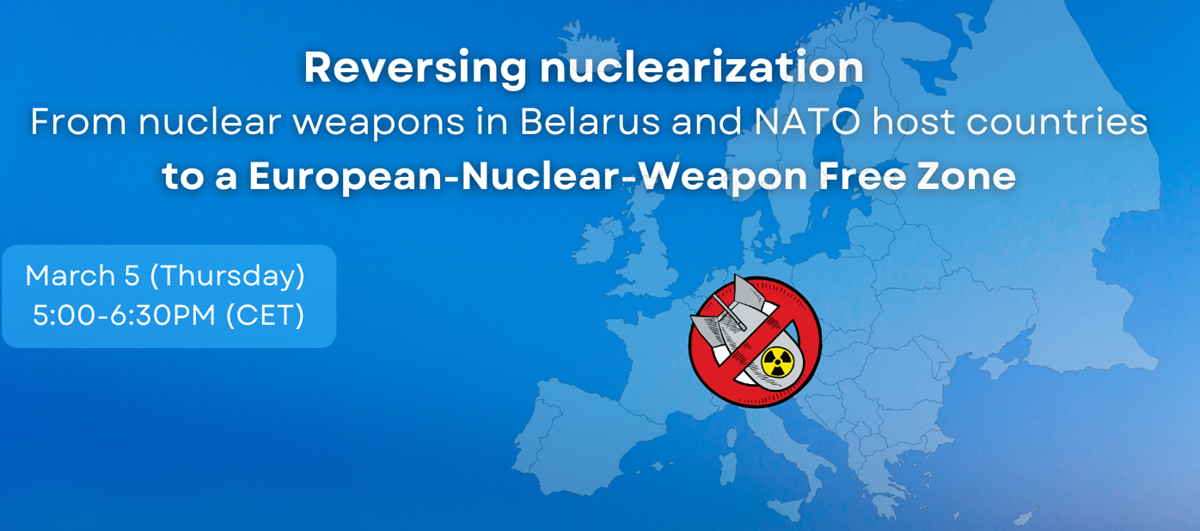
5 March -Online – Reversing nuclearization:
From nuclear weapons in Belarus and NATO host countries to a European-Nuclear-Weapon Free Zone
11am-12:30pm Eastern Time USA / 5pm-6:30pm CET

of the week – Advocating for a
nuclear free beach – https://www.samuellawrencefoundation.org/
The Samuel Lawrence Foundation advocates for a Nuclear Waste Free Beach at San Onofre, join us and take action!
10 March A LIVE WEBINAR THE REAL EFFECTS OF NUCLEAR POWER
What the Industry Isn’t Telling Us
1:00 PM Mountain, 2 pm Central, 3 pm Eastern. Live on the Keepers of the Water Facebook page

18 March Webinar @ 1 PM EST: An Assessment of SMR Projects: The Case of Canada
register for the zoom:
https://us02web.zoom.us/webinar/register/WN_o8BIIOUvQ2ONJR1nta65DQ#/registration

of the week – STOP SMALL MODULAR REACTORS IN CANADA
To see nuclear-related stories in greater depth and intensity – go to https://nuclearinformation.wordpress.com
-
Archives
- March 2026 (51)
- February 2026 (268)
- January 2026 (308)
- December 2025 (358)
- November 2025 (359)
- October 2025 (376)
- September 2025 (258)
- August 2025 (319)
- July 2025 (230)
- June 2025 (348)
- May 2025 (261)
- April 2025 (305)
-
Categories
- 1
- 1 NUCLEAR ISSUES
- business and costs
- climate change
- culture and arts
- ENERGY
- environment
- health
- history
- indigenous issues
- Legal
- marketing of nuclear
- media
- opposition to nuclear
- PERSONAL STORIES
- politics
- politics international
- Religion and ethics
- safety
- secrets,lies and civil liberties
- spinbuster
- technology
- Uranium
- wastes
- weapons and war
- Women
- 2 WORLD
- ACTION
- AFRICA
- Atrocities
- AUSTRALIA
- Christina's notes
- Christina's themes
- culture and arts
- Events
- Fuk 2022
- Fuk 2023
- Fukushima 2017
- Fukushima 2018
- fukushima 2019
- Fukushima 2020
- Fukushima 2021
- general
- global warming
- Humour (God we need it)
- Nuclear
- RARE EARTHS
- Reference
- resources – print
- Resources -audiovicual
- Weekly Newsletter
- World
- World Nuclear
- YouTube
-
RSS
Entries RSS
Comments RSS
 nuclear-news
Leave a comment