Conflict of interest in Japanese scientists on International Commission on Radiological Protection (ICRP)
The doctor on the parliamentary panel, Hisako Sakiyama, is outraged about utility funding for Japan’s ICRP members. She fears that radiation standards are being set leniently to limit costly evacuations.
“The assertion of the utilities became the rule. That’s ethically unacceptable. People’s health is at stake,” she says. “The view was twisted so it came out as though there is no clear evidence of the risks, or that we simply don’t know.”
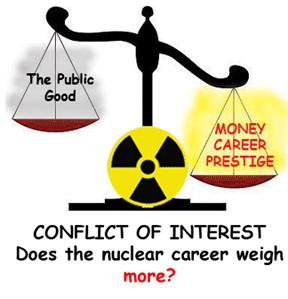 Japanese Radiation Regulators Admit Conflict of Interest, Laboratory Equipment, 12 Dec 12 Yuri Kageyama Influential scientists who help set Japan’s radiation exposure limits have for years had trips paid for by the country’s nuclear plant operators to attend overseas meetings of the world’s top academic group on radiation safety.
The potential conflict of interest is revealed in one sentence buried in a 600-page parliamentary investigation into last year’s Fukushima Dai-Ichi nuclear power plant disaster and pointed out to The Associated Press by a medical doctor on the 10-person investigation
panel.
Some of these same scientists have consistently given optimistic assessments about the health risks of radiation, interviews with the scientists and government documents show. Their pivotal role in setting policy after the March 2011 tsunami and ensuing nuclear meltdowns meant the difference between schoolchildren playing outside or indoors and families staying or evacuating their homes.
One leading scientist, Ohtsura Niwa, acknowledged that the electricity industry pays for flights and hotels to go to meetings of the International Commission on Radiological Protection, and for overseas members visiting Japan………
The doctor on the parliamentary panel, Hisako Sakiyama, is outraged about utility funding for Japan’s ICRP members. She fears that radiation standards are being set leniently to limit costly evacuations.
“The assertion of the utilities became the rule. That’s ethically unacceptable. People’s health is at stake,” she says. “The view was twisted so it came out as though there is no clear evidence of the risks, or that we simply don’t know.”
The ICRP, based in Ottawa, Canada, does not take a stand on any
nation’s policy. It is a charity that relies heavily on donations, and
members’ funding varies by nation. The group brings scientists
together to study radiation effects on health and the environment, as
well as the impact of disasters such as Chernobyl and Fukushima. In
Japan, ICRP members sit on key panels at the prime minister’s office
and the education ministry that set radiation safety policy.
The Fukushima meltdowns, the worst nuclear disaster since Chernobyl,
brought a higher level of scrutiny to Japan’s nuclear industry,
revealing close ties between the regulators and the regulated. Last
month, some members of a panel that sets nuclear plant safety
standards acknowledged they received research and other grant money
from utility companies and plant manufacturers. The funding is not
illegal in Japan.
Niwa, the only Japanese member to sit on the main ICRP committee,
defends utility support for travel expenses, which comes from the
Federation of Electric Power Companies of Japan through another
radiation organization. Costs add up, he says, and he has spent tens
of thousands of yen (thousands of dollars) of his personal money on
ICRP projects and efforts to decontaminate Fukushima. All ICRP members
fly economy, except for long flights such as between Argentina and
Japan, he says.
The Federation declined comment…….
The parliamentary investigation found that utilities have repeatedly
tried to push Japanese ICRP members toward a lenient standard on
radiation from as far back as 2007.
Internal records at the Federation of Electric Power Companies
obtained by the investigative committee showed officials rejoicing
over how their views were getting reflected in ICRP Japan statements.
Even earlier, Sakai received utility money for his research into
low-dose radiation during a 1999-2006 tenure at the Central Research
Institute of Electric Power Industry, an organization funded by the
utilities…….
Yoshiharu Yonekura, president of the National Institute of
Radiological Sciences and an ICRP member, brushes off the worries and
says such abnormalities are common.
The risk is such a non-concern in his mind that he says with a smile,
“Low-dose radiation may be even good for you.”
No comments yet.
1 This Month
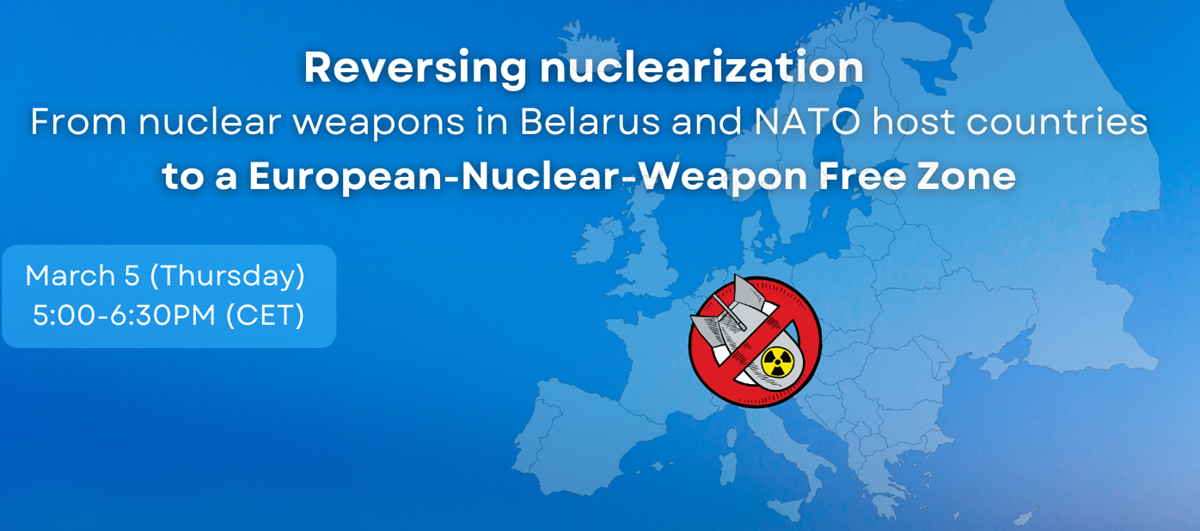
5 March -Online – Reversing nuclearization:
From nuclear weapons in Belarus and NATO host countries to a European-Nuclear-Weapon Free Zone
11am-12:30pm Eastern Time USA / 5pm-6:30pm CET

of the week – Advocating for a
nuclear free beach – https://www.samuellawrencefoundation.org/
The Samuel Lawrence Foundation advocates for a Nuclear Waste Free Beach at San Onofre, join us and take action!

10 March A LIVE WEBINAR THE REAL EFFECTS OF NUCLEAR POWER
What the Industry Isn’t Telling Us
1:00 PM Mountain, 2 pm Central, 3 pm Eastern. Live on the Keepers of the Water Facebook page

18 March Webinar @ 1 PM EST: An Assessment of SMR Projects: The Case of Canada
register for the zoom:
https://us02web.zoom.us/webinar/register/WN_o8BIIOUvQ2ONJR1nta65DQ#/registration

of the week – STOP SMALL MODULAR REACTORS IN CANADA
To see nuclear-related stories in greater depth and intensity – go to https://nuclearinformation.wordpress.com
-
Archives
- March 2026 (51)
- February 2026 (268)
- January 2026 (308)
- December 2025 (358)
- November 2025 (359)
- October 2025 (376)
- September 2025 (258)
- August 2025 (319)
- July 2025 (230)
- June 2025 (348)
- May 2025 (261)
- April 2025 (305)
-
Categories
- 1
- 1 NUCLEAR ISSUES
- business and costs
- climate change
- culture and arts
- ENERGY
- environment
- health
- history
- indigenous issues
- Legal
- marketing of nuclear
- media
- opposition to nuclear
- PERSONAL STORIES
- politics
- politics international
- Religion and ethics
- safety
- secrets,lies and civil liberties
- spinbuster
- technology
- Uranium
- wastes
- weapons and war
- Women
- 2 WORLD
- ACTION
- AFRICA
- Atrocities
- AUSTRALIA
- Christina's notes
- Christina's themes
- culture and arts
- Events
- Fuk 2022
- Fuk 2023
- Fukushima 2017
- Fukushima 2018
- fukushima 2019
- Fukushima 2020
- Fukushima 2021
- general
- global warming
- Humour (God we need it)
- Nuclear
- RARE EARTHS
- Reference
- resources – print
- Resources -audiovicual
- Weekly Newsletter
- World
- World Nuclear
- YouTube
-
RSS
Entries RSS
Comments RSS
 nuclear-news
Leave a comment