Japan’s inadequate response to its Fukushima radiation victims
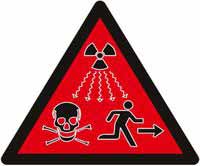 U.N. envoy: Japan should do more for nuclear victims, Asahi Shimbun November 27, 2012 THE ASSOCIATED PRESS A United Nations rights investigator said Nov. 26 that Japan hasn’tdone enough to protect the health of residents and workers affected by the Fukushima nuclear accident.
Anand Grover, U.N. special rapporteur on the right to health, said the government has adopted overly optimistic views of radiation risks and has conducted only limited health checks after the partial meltdowns at several reactors at the Fukushima No.1 nuclear power plant caused by an earthquake and tsunami in 2011.
Several investigations, including one conducted by a parliament-appointed panel, have criticized the government for alleged cover-ups and delays in disclosing key radiation information, causing evacuees to be unnecessarily exposed to radiation. That has also
caused deep-rooted public distrust of the government and nuclear industry.
Although he welcomed ongoing health checks of affected residents,
Grover said they were too narrow in scope because they are only
intended to cover Fukushima’s 2 million people, and that only children
are being given thyroid tests, even though the impact of radiation
went far beyond Fukushima’s borders. He said the health survey should
cover “all radiation-affected zones” stretching across much of the
northeastern half of the main Japanese island of Honshu. So far, only
one-quarter of Fukushima’s population has been covered.
Many nuclear plant workers on short-term contracts have no access to
permanent health checks, and many residents complained that they have
not been allowed access to their own health check results, Grover
said.
“The scope of the survey is unfortunately narrow as they draw on the
limited lessons from the Chernobyl accident and ignore epidemiological
studies that point to cancer as well as other diseases in low-dosage
radiation,” Grover said. “Chernobyl is not a good example, whose study
in the first three years was a blackout. So we don’t have data.”
He said the government’s use of a radiation threshold of 20
millisieverts per year–an annual cap set for nuclear industry workers
that is more than 10 times the three-year limit for ordinary
citizens–in determining off-limits areas around the plant conveys a
misleading message that doses up to that level are safe. The
government has emphasized that message by saying in official
publications, school booklets and in conferences that there is no
clear evidence of a direct risk of cancer if a person is exposed to
radiation doses of up to five times that level.
He said in Chernobyl the obligatory resettlement threshold limit was
just one-quarter of Japan’s.
There are some studies that say radiation exposures of up to 100
millisieverts per year show no clear evidence of higher cancer risks,
he said. “But that is controversial. And there are a lot of studies
which indicate otherwise. The government need not say which is right.
The government has to err on the side of caution and be inclusive,” he
said….. http://ajw.asahi.com/article/0311disaster/fukushima/AJ201211270010
No comments yet.
1 This Month

of the week – Shut Down Drone Warfare!


Tell the Ukrainian Government to Drop Prosecution of Peace Activist Yurii Sheliazhenko

Petition to revoke the licensing of the Near Surface Nuclear Disposal Facility (NSDF) at Chalk River. https://www.ourcommons.ca/petitions/en/Petition/Details?Petition=e-7247
To see nuclear-related stories in greater depth and intensity – go to https://nuclearinformation.wordpress.com
-
Archives
- March 2026 (244)
- February 2026 (268)
- January 2026 (308)
- December 2025 (358)
- November 2025 (359)
- October 2025 (376)
- September 2025 (257)
- August 2025 (319)
- July 2025 (230)
- June 2025 (348)
- May 2025 (261)
- April 2025 (305)
-
Categories
- 1
- 1 NUCLEAR ISSUES
- business and costs
- climate change
- culture and arts
- ENERGY
- environment
- health
- history
- indigenous issues
- Legal
- marketing of nuclear
- media
- opposition to nuclear
- PERSONAL STORIES
- politics
- politics international
- Religion and ethics
- safety
- secrets,lies and civil liberties
- spinbuster
- technology
- Uranium
- wastes
- weapons and war
- Women
- 2 WORLD
- ACTION
- AFRICA
- Atrocities
- AUSTRALIA
- Christina's notes
- Christina's themes
- culture and arts
- Events
- Fuk 2022
- Fuk 2023
- Fukushima 2017
- Fukushima 2018
- fukushima 2019
- Fukushima 2020
- Fukushima 2021
- general
- global warming
- Humour (God we need it)
- Nuclear
- RARE EARTHS
- Reference
- resources – print
- Resources -audiovicual
- Weekly Newsletter
- World
- World Nuclear
- YouTube
-
RSS
Entries RSS
Comments RSS
 nuclear-news
Leave a comment