A warning on Mixed-Oxide Fuel (MOX) nuclear fuel plan
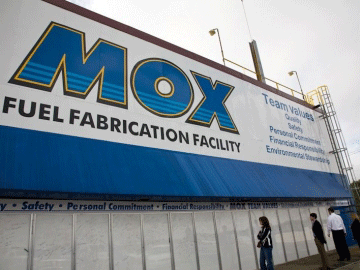 MOX stands for “Mixed-Oxide Fuel.” It is a nuclear power reactor fuel made from plutonium mixed with uranium. The U.S. Department of Energy (DOE) wants to make experimental MOX fuel using plutonium from dismantled nuclear weapons.
Use of MOX fuel fails as a means of getting rid of plutonium. Instead, the plutonium just becomes part of the lethal soup of ingredients termed “high-level nuclear waste”
What is MOX? http://www.nirs.org/factsheets/basicmoxinfo.htm The giant French nuclear firm Cogema, Duke Power and Virginia Power have formed a consortium to create and use plutonium MOX fuel in civilian atomic reactors in North and South Carolina and Virginia.
If their effort is successful, plutonium would be trucked from nuclear weapons depots in the west to the Savannah River Plant on the South Carolina/Georgia border, where new plutonium processing plants would be built. This new MOX fuel would then be trucked to commercial reactors in the Southeast, in order to turn this plutonium into high-level radioactive waste.
The MOX program is dangerous and unnecessary. More than 200 environmental and other organizations across the world have signed an International NIX MOX statement and have pledged to work to stop this program in the U.S. and similar programs in Russia, France and England.
What is MOX?
MOX stands for “Mixed-Oxide Fuel.” It is a nuclear power reactor fuel made from plutonium mixed with uranium. The U.S. Department of Energy (DOE) wants to make experimental MOX fuel using plutonium from dismantled nuclear weapons.
There is no doubt that we must contain the plutonium from nuclear
warheads. It must neither enter the environment–where it can poison
drinking water and virtually everything else with which it comes into
contact–nor be accessible to terrorists or others who might wish to
build atomic bombs.
But using plutonium as reactor fuel accomplishes neither of those goals.
MOX fuel requires processing of plutonium before the fuel is
fabricated, creating new plutonium-laced waste, added worker
exposures, and releases to the environment.
Transportation of the plutonium, even when armed guards are deployed,
is an open invitation to terrorists or others seeking this deadly
material.
Use of MOX in nuclear reactors is not safe, and could result in
serious accidents.
Use of MOX would add to our nation’s immense radioactive waste burden,
and would make it more difficult to find scientifically-defensible
solutions to our atomic waste problems.
MOX doesn’t get rid of plutonium
Inside a nuclear reactor, only some of the plutonium in MOX fuel gets
“fissioned,” or converted into other radioactive elements. These
include such deadly elements as Strontium-90, Cesium-137, Iodine-129
and many, many more.
While some plutonium is split by fission, new plutonium is being made
in the reactor. This is because every commercial nuclear reactor
produces plutonium as a waste product of its operation; the average
commercial reactor produces some 500 pounds of plutonium per year (it
takes about 20 pounds to make a Nagasaki-size bomb).
Use of MOX fuel fails as a means of getting rid of plutonium. Instead, the plutonium just becomes part of the lethal soup of ingredients termed “high-level nuclear waste” which every reactor creates, and for
which there is no means of safe long-term storage. Plutonium-239
itself is hazardous for 240,000 years.
MOX is dangerous
Use of MOX fuel attacks commercial nuclear reactors where they are the
weakest. Many reactors are aging prematurely, and cracks are appearing
in vital reactor components. Most atomic reactors were not originally
designed to use MOX fuel and MOX makes key reactor components age even
faster.
Because of its high “neutron flux” levels, the reactor pressure vessel
can become embrittled and fail during accident conditions. A nuclear
accident involving MOX fuel could cause a meltdown more serious than
Three Mile Island or Chernobyl, because the levels of radiation inside
a reactor using MOX are even higher than in a normal atomic reactor.
MOX is an economic bailout for a failed industry
There are valid alternatives to the use of MOX fuel. Thus the
Department of Energy’s program–and the nuclear utilities’ willingness
to participate in this program–makes little sense until one
understands that the DOE intends to pay nuclear utilities tax dollars
to use MOX fuel.
Not only is this an unconscionable use of your money, but it creates a
subsidy to allow uneconomical nuclear reactors—which would have to
compete with other electricity sources under utility deregulation–to
operate. Nuclear reactors that aren’t economical should close, not be
propped up by an unnecessary, dangerous federal program.
Alternatives to MOX
The major alternative to MOX fuel is to immobilize warhead plutonium
in a form so that no one can get at it, and that is unlikely to leak
into the environment. Vitrification–merging the plutonium with glass,
then mixing it with existing high-level waste–is one promising
technology. This process still involves the handling of plutonium, and
would require the utmost vigilance to ensure that the lethal material
does not enter the environment.
But using MOX as a fuel perpetuates the myth that plutonium is a
commodity. Use of MOX would set up a reprocessing infrastructure that
would allow continued use of plutonium as a fuel for centuries to
come. Using plutonium in commercial reactors would be the first step
toward the nuclear industry’s goal of recovering more plutonium from
irradiated nuclear fuel by reprocessing. This option has been rejected
time and again by the U.S. government as uneconomical, unsafe, and
prone to nuclear weapon’s proliferation concerns, and so should be
rejected again. NIX MOX!
Nuclear Information and Resource Service
1424 16th Street NW, #404,
Washington, DC 20036
202.328.0002; f: 202.462.2183;
nirsnet@nirs.org
www.nirs.org
No comments yet.
1 This Month

of the week – Shut Down Drone Warfare!


Tell the Ukrainian Government to Drop Prosecution of Peace Activist Yurii Sheliazhenko

Petition to revoke the licensing of the Near Surface Nuclear Disposal Facility (NSDF) at Chalk River. https://www.ourcommons.ca/petitions/en/Petition/Details?Petition=e-7247
To see nuclear-related stories in greater depth and intensity – go to https://nuclearinformation.wordpress.com
-
Archives
- March 2026 (244)
- February 2026 (268)
- January 2026 (308)
- December 2025 (358)
- November 2025 (359)
- October 2025 (376)
- September 2025 (257)
- August 2025 (319)
- July 2025 (230)
- June 2025 (348)
- May 2025 (261)
- April 2025 (305)
-
Categories
- 1
- 1 NUCLEAR ISSUES
- business and costs
- climate change
- culture and arts
- ENERGY
- environment
- health
- history
- indigenous issues
- Legal
- marketing of nuclear
- media
- opposition to nuclear
- PERSONAL STORIES
- politics
- politics international
- Religion and ethics
- safety
- secrets,lies and civil liberties
- spinbuster
- technology
- Uranium
- wastes
- weapons and war
- Women
- 2 WORLD
- ACTION
- AFRICA
- Atrocities
- AUSTRALIA
- Christina's notes
- Christina's themes
- culture and arts
- Events
- Fuk 2022
- Fuk 2023
- Fukushima 2017
- Fukushima 2018
- fukushima 2019
- Fukushima 2020
- Fukushima 2021
- general
- global warming
- Humour (God we need it)
- Nuclear
- RARE EARTHS
- Reference
- resources – print
- Resources -audiovicual
- Weekly Newsletter
- World
- World Nuclear
- YouTube
-
RSS
Entries RSS
Comments RSS
 nuclear-news
Leave a comment